Why is Cold Isostatic Press (CIP) equipment required during the forming stage of KNTO ceramic green bodies? Achieve Uniformity
Updated 3 months ago
Cold Isostatic Press (CIP) equipment is required for KNTO ceramic green bodies to eliminate internal density gradients and ensure structural uniformity through omnidirectional pressure. By applying equal force from all directions via a high-pressure liquid medium, CIP prevents deformation, cracking, and microstructural flaws that typically occur during the high-temperature sintering process (1030°C to 1080°C).
Cold Isostatic Pressing provides the necessary physical foundation for high-performance ceramics by forcing powder particles into a dense, homogeneous state. This isotropic compression is the only reliable way to ensure uniform shrinkage and mechanical integrity in the final sintered product.
Overcoming the Limitations of Uniaxial Pressing
The Failure of Unidirectional Force
Traditional uniaxial or "die" pressing applies force from a single axis, which often results in uneven density distribution throughout the green body. These internal density variations become "weak points" that lead to warping or structural failure once the ceramic is subjected to high heat.
Eliminating Mold Wall Friction
In standard mechanical pressing, friction between the powder and the mold walls creates stress gradients that hinder uniform compaction. CIP bypasses this issue by sealing the powder in a flexible mold and submerging it in liquid, ensuring that every surface receives identical pressure.
Reducing Bridging Voids
Initial shaping often leaves "bridging voids" where granulated particles fail to settle tightly together. High-pressure CIP, often reaching 200 MPa to 300 MPa, forces these particles to rearrange and bond, significantly increasing the relative density of the green body to approximately 62%.
The Role of Isotropic Compression in Quality Control
Uniform Shrinkage During Sintering
Ceramics naturally shrink as they densify during the sintering stage. If the green body has a uniform internal density provided by CIP, it will shrink at an equal rate in all directions, maintaining its intended shape and dimensional accuracy.
Prevention of Micro-Cracks
Uneven stress distribution in a green body acts as a precursor to micro-cracks. By applying balanced, omnidirectional pressure, CIP ensures that internal air pockets are eliminated and particles are packed consistently, which prevents these cracks from propagating during thermal expansion.
Ensuring Mechanical Performance
For KNTO ceramics, mechanical strength is highly dependent on a uniform microstructure. CIP provides a consistent foundation that ensures the finished ceramic achieves the high density and structural integrity required for demanding industrial applications.
Understanding the Trade-offs
Process Complexity and Speed
Compared to rapid uniaxial pressing, CIP is a more time-consuming process involving sealing, pressurization, and decompression cycles. This makes it less suitable for high-speed mass production of simple shapes where lower density tolerances might be acceptable.
Equipment and Tooling Costs
The initial investment for a high-pressure CIP system is significantly higher than for standard laboratory hydraulic presses. Additionally, the process requires specialized flexible molds (typically rubber or polyurethane) that must be maintained and replaced over time.
Post-Processing Requirements
Because CIP uses flexible molds, the resulting green body may lack the precise outer surface finish provided by a rigid steel die. This often necessitates additional green machining or finishing steps before the ceramic is fired in the kiln.
Making the Right Choice for Your Project
Choosing to implement CIP depends on your specific performance requirements and the complexity of the ceramic component.
- If your primary focus is mechanical strength: CIP is non-negotiable, as it is the only way to eliminate the internal voids that cause structural failure under load.
- If your primary focus is dimensional precision: Utilize CIP to ensure uniform shrinkage rates, which prevents the warping and distortion common in uniaxial pressing.
- If your primary focus is rapid, low-cost prototyping: Initial uniaxial pressing may suffice for basic testing, but CIP should be integrated as you move toward final-stage performance validation.
By utilizing Cold Isostatic Pressing, manufacturers can transform loose ceramic powders into high-density green bodies capable of surviving the rigorous thermal demands of the sintering process.
Summary Table:
| Feature | Impact on KNTO Ceramic Green Bodies |
|---|---|
| Pressure Direction | Omnidirectional (Isotropic) pressure eliminates internal stress gradients. |
| Compaction Density | Achieves ~62% relative density by forcing particle rearrangement. |
| Structural Integrity | Eliminates bridging voids and prevents micro-crack propagation. |
| Sintering Result | Ensures uniform shrinkage and dimensional accuracy at 1030°C-1080°C. |
| Friction Control | Flexible molds bypass wall friction issues common in uniaxial pressing. |
Elevate Your Material Research with Precision Engineering
At [Brand Name], we understand that high-performance ceramics like KNTO require flawless preparation. We provide complete laboratory sample preparation solutions designed specifically for material science. Our specialized Cold Isostatic Presses (CIP) and Warm Isostatic Presses (WIP) are engineered to eliminate the density gradients that cause structural failure, ensuring your green bodies are ready for rigorous sintering.
Beyond isostatic pressing, our extensive lineup supports every stage of your workflow:
- Powder Processing: High-energy planetary ball mills, jet mills, and cryogenic grinders.
- Compaction & Forming: Standard lab presses, XRF pellet presses, and vacuum hot presses.
- Sizing & Mixing: Sieve shakers, powder mixers, and high-efficiency defoaming mixers.
Whether you are scaling production or conducting fundamental research, our equipment delivers the reliability and precision your materials demand. Contact our technical team today to discuss how our solutions can optimize your lab's efficiency and product quality.
References
- Weiru Wen, Ke Wang. Machine learning-enabled atomistic insights into phase boundary engineering of solid-solution ferroelectrics. DOI: 10.1038/s41524-025-01829-6
Mentioned Products
- Small Liquid Nitrogen Cryogenic Grinder for Ultrafine Grinding of Heat-Sensitive Materials in Laboratories
- Low Temperature Laboratory Knife Mill Cryogenic Sample Grinder Material Science Powder Processing
- 5 Ton Single Punch Tablet Press Laboratory Small Batch Production
- 500g Capacity Water Cooled Low Temperature Grinder with Variable Speed and Safety Cover
- Liquid Nitrogen Cryogenic Grinder for Plastic and Heat-Sensitive Materials
People Also Ask
- What are the advantages of using liquid nitrogen Cryomilling? Achieve ultra-fine grains and high chemical purity.
- How does liquid nitrogen as a processing medium affect copper powder beyond cooling? Impacts on Purity & Sintering
- What is the function of liquid nitrogen cryogenic grinding in the initial preparation of PHBH polymer powder? Key Roles
- Why is liquid nitrogen cryogenic grinding used for coal and microbial experiments? Preserve Sample Integrity
- Why use liquid nitrogen cryogenic grinding for polymer degradation? Preserve sample integrity & prevent thermal damage

Tech Team · PowderPreparation
Last updated on Jun 03, 2026
Related Products
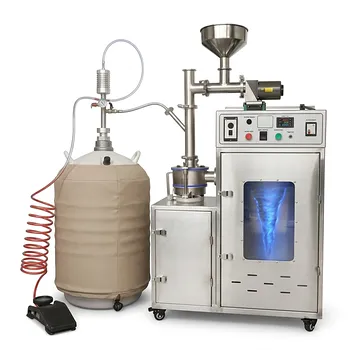
Small Liquid Nitrogen Cryogenic Grinder for Ultrafine Grinding of Heat-Sensitive Materials in Laboratories
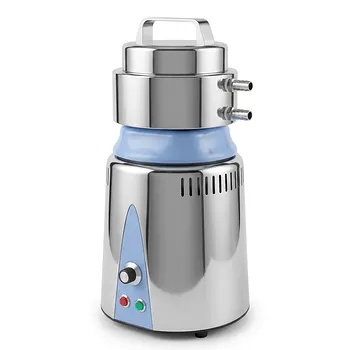
Low Temperature Laboratory Knife Mill Cryogenic Sample Grinder Material Science Powder Processing
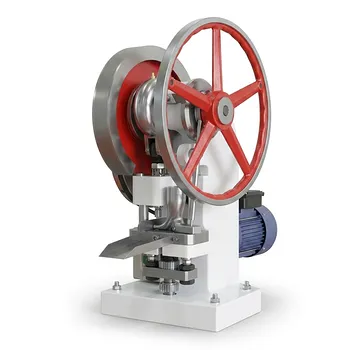
5 Ton Single Punch Tablet Press Laboratory Small Batch Production
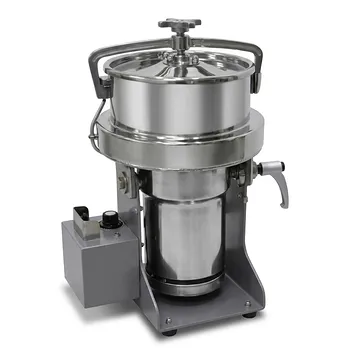
500g Capacity Water Cooled Low Temperature Grinder with Variable Speed and Safety Cover
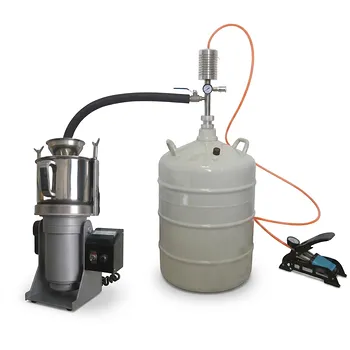
Liquid Nitrogen Cryogenic Grinder for Plastic and Heat-Sensitive Materials
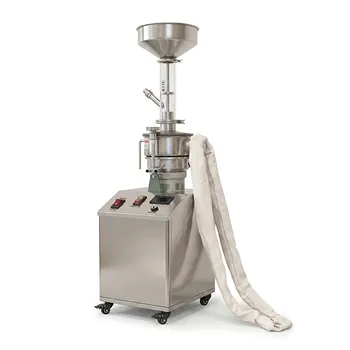
Small Liquid Nitrogen Cryogenic Grinder for Plastic and Heat-Sensitive Material Sample Preparation
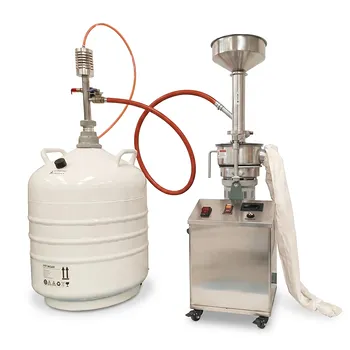
Laboratory Liquid Nitrogen Cryogenic Grinder Polymer Sample Preparation Pulverizer
Heating Temperature Controlled High Energy Vibratory Ball Mill
Laboratory Liquid Nitrogen Cryogenic Grinder for Polymer and Elastomer Materials
6-Ton Small Single-Punch Tablet Press — Laboratory Powder & Granule Tableting Equipment / Tablet Forming Machine
Small Ceramic Structure Laboratory Sand Mill Nanoscale Grinding Dispersion Equipment Seal-less Screen-less Design
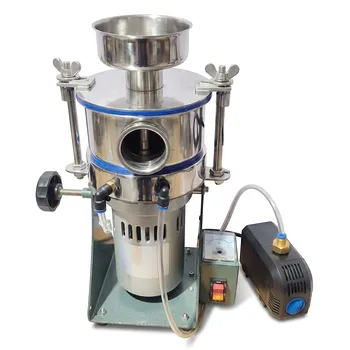
Water Cooled Airflow Ultra Fine Grinder for Low Temperature Material Processing
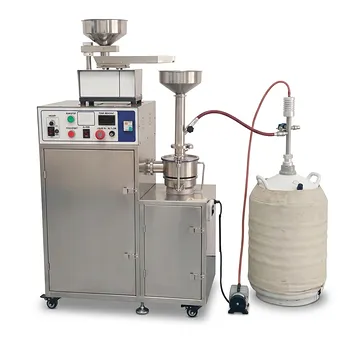
Small Liquid Nitrogen Cryogenic Grinder with Vibratory Feeder for Laboratory Sample Preparation
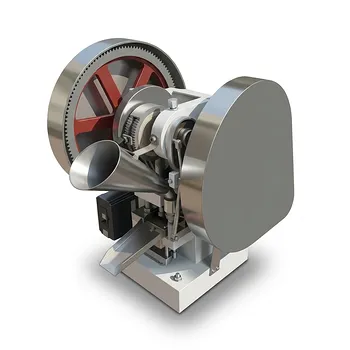
6 Ton Variable Frequency Single Punch Tablet Press
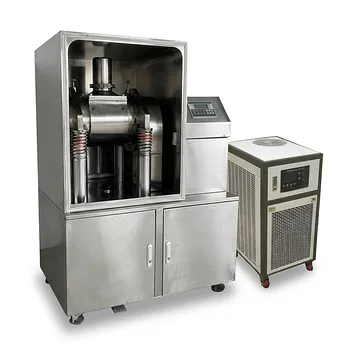
Water Cooled Cryogenic Ultra Fine Cell Wall Breaking Mill
Vibratory Ultra-Low Temperature Ultrafine Grinder for Cryogenic Powder Processing
Manual Tablet Press with Dual Scale Pressure Gauge for Pharmaceutical Food Chemical Laboratory Sample Preparation
Cryogenic Liquid Nitrogen Grinder for Ultrafine Heat-Sensitive Powder Processing
Cryogenic Liquid Nitrogen Grinder for DNA Analysis and Polymer Pulverization with Automatic Cooling and Electromagnetic Impact Technology