Why is an intermittent operation necessary when ball milling high-entropy ceramic powders? Ensure Material Integrity
Updated 5 months ago
Intermittent operation is a critical thermal management strategy used to prevent the excessive heat generated during high-energy ball milling from compromising material integrity. By alternating periods of grinding with rest, operators can precisely control the internal temperature of the milling jar, ensuring that the process remains driven by mechanical force rather than uncontrolled thermal energy.
Core Takeaway: The "grind-and-rest" cycle is necessary to maintain thermal balance within the milling jar, preventing solvent evaporation, material oxidation, and equipment damage while ensuring the uniform dispersion required for high-performance high-entropy ceramics.
Maintaining Chemical and Physical Integrity
Controlling Volatile Dispersants
High-energy ball milling generates significant mechanical heat that can quickly reach the boiling point of common processing agents. If left unchecked, this heat leads to the volatilization of ethanol dispersants, which alters the slurry chemistry and can cause dangerous pressure build-up within the sealed jars.
Preventing Unwanted Phase Transformations
High-entropy ceramics are sensitive to temperature-induced changes during their synthesis phase. Intermittent cooling prevents uncontrolled oxidation or unintended phase transitions that would otherwise degrade the dielectric or mechanical properties of the final ceramic.
Avoiding Mechanochemical Overheating
In some cases, excessive heat can trigger unintended mechanochemical activation or physical-chemical changes in raw materials. Rest periods ensure the synthesis process is governed strictly by the mechanical impact of the milling media rather than thermal degradation.
Optimizing Powder Quality and Dispersion
Preventing Powder Agglomeration
As temperatures rise, fine ceramic powders become prone to "softening" or developing surface charges that lead to powder agglomeration. Intermittent operation keeps the powder cool, ensuring it remains a fine, free-flowing state that is easier to process in subsequent sintering steps.
Minimizing Material "Sticking"
Overheating often causes the raw material to become tacky, leading to it sticking to the grinding balls and jar walls. This "caking" effectively stops the grinding action and results in a non-homogeneous mixture, which is particularly detrimental to the complex stoichiometry of high-entropy materials.
Ensuring Uniform Additive Distribution
High-entropy ceramics often rely on trace amounts of sintering aids (like Li2CO3 or SiO2) that must be perfectly dispersed to work effectively. Controlled temperatures during milling ensure these additives do not clump, allowing them to form a consistent liquid phase during sintering that promotes densification and grain refinement.
Protecting the Milling Infrastructure
Guarding Seals and Bearings
The high-speed rotation of planetary ball mills puts immense stress on precision bearings and motors. Periodic cooling breaks prevent these components from overheating, which extends the service life of the equipment and prevents catastrophic mechanical failure during long-duration runs.
Maintaining Jar Pressure Stability
Continuous milling can lead to a dangerous accumulation of internal pressure due to thermal expansion of the air and solvents inside the jar. Resting periods allow the system to dissipate this heat, protecting the integrity of the mill jar seals and ensuring the safety of the laboratory environment.
Understanding the Trade-offs
Process Time vs. Material Purity
While intermittent milling significantly increases the total processing time, the trade-off is essential for maintaining high purity. Attempting to "speed up" the process by removing rest periods often results in contaminated or poorly mixed powders that fail during the sintering stage.
Energy Efficiency and Equipment Wear
Starting and stopping a heavy planetary mill repeatedly can increase wear on the drive system compared to a steady-state run. However, this is considered a necessary cost to avoid the far more expensive risks of material degradation or the total loss of a high-value high-entropy batch.
How to Apply This to Your Project
Recommendations for Milling Protocols
- If your primary focus is material purity and phase stability: Use longer rest intervals (e.g., 10–15 minutes) to ensure the jar returns to near-ambient temperatures between cycles.
- If your primary focus is equipment longevity and safety: Prioritize the protection of seals and bearings by implementing a strict 1:1 ratio of grinding to cooling time.
- If your primary focus is dispersing small-volume additives: Ensure the milling speed is high enough for impact but use frequent short breaks to prevent the additives from "smearing" due to frictional heat.
Strict adherence to intermittent milling cycles is the only reliable way to guarantee the consistent, high-quality powder required for advanced high-entropy ceramic applications.
Summary Table:
| Key Benefit | Reason for Intermittent Milling | Expected Outcome |
|---|---|---|
| Thermal Management | Prevents solvent evaporation and pressure buildup | Stable slurry chemistry and laboratory safety. |
| Phase Stability | Avoids unwanted oxidation or phase transformations | Maintains high-entropy dielectric and mechanical properties. |
| Powder Quality | Prevents "softening," agglomeration, and sticking | Fine, free-flowing powder with uniform dispersion. |
| Equipment Safety | Protects seals, bearings, and motor from overheating | Extended equipment lifespan and reduced mechanical failure. |
Master High-Entropy Ceramic Synthesis with Professional Lab Equipment
Ensuring material integrity during high-energy milling is critical for high-performance ceramics. [Brand Name] provides complete laboratory sample preparation solutions tailored for material science. We specialize in advanced powder processing and compaction equipment to help you achieve perfect homogeneity and phase stability.
Our extensive product lines include:
- Milling & Grinding: Planetary ball mills, jet mills, disc mills, and liquid nitrogen cryogenic grinders.
- Sizing & Mixing: Vibratory/air-jet sieve shakers and high-efficiency powder/defoaming mixers.
- Compaction & Pressing: Cold/Warm Isostatic Presses (CIP/WIP), vacuum hot presses, XRF pellet presses, and standard lab presses.
Whether you are refining complex stoichiometries or scaling up production, our solutions ensure reliability, safety, and superior material results. Contact our experts today to find the perfect equipment for your high-entropy material research!
References
- Muhammad Waqas Qureshi, Izabela Szlufarska. Predictive screening of phase stability in high-entropy ceramics. DOI: 10.1039/d5ma00079c
Mentioned Products
- Heavy Duty Horizontal Planetary Ball Mill for Efficient Industrial Grinding and Sample Preparation
- Vertical Semi Circular Planetary Ball Mill for Laboratory Precision Grinding
- Vertical Square Planetary Ball Mill for Laboratory Sample Preparation and Nanoscale Grinding
- High Energy Planetary Ball Mill for Nano Scale Grinding and Mechanical Alloying
- Vertical Production Planetary Ball Mill for High Throughput Powder Processing
People Also Ask
- Why grind lime-pozzolan specimens for TG/DTA for 3 mins? Master sample prep for high-precision thermal analysis.
- What is the role of a planetary ball mill in the mechanical activation of ZTA powder? Boost Sintering Performance
- What is the function of a planetary ball mill in wollastonite ceramic prep? Achieve Molecular Homogenization & Reactivity
- How does a planetary ball mill contribute to the homogenization of trace elements? Achieve Sub-Micron Uniformity
- What is the function of a high-performance planetary ball mill in AMZ laminates? Master Ceramic Homogenization.

Tech Team · PowderPreparation
Last updated on May 14, 2026
Related Products

Heavy Duty Horizontal Planetary Ball Mill for Efficient Industrial Grinding and Sample Preparation

Vertical Semi Circular Planetary Ball Mill for Laboratory Precision Grinding

Vertical Square Planetary Ball Mill for Laboratory Sample Preparation and Nanoscale Grinding

High Energy Planetary Ball Mill for Nano Scale Grinding and Mechanical Alloying

Vertical Production Planetary Ball Mill for High Throughput Powder Processing
Single Tank High Energy Vibratory Ball Mill for Laboratory Grinding and Mixing

High Energy Planetary Ball Mill for Nano Scale Grinding and Colloidal Mixing in Material Science Research

High Energy Laboratory Planetary Ball Mill for Nano Grinding and Material Science Sample Preparation

Miniature Planetary Ball Mill with Vacuum Grinding and High Efficiency for Laboratory Sample Preparation

Dual Station Planetary Ball Mill 24L

360° Rotating Omnidirectional Laboratory Planetary Ball Mill for Homogeneous Ultra-Fine Grinding and Mixing
High Energy Hybrid Vibratory Ball Mill for Grinding Mixing and Cell Disruption

High Energy Laboratory Planetary Ball Mill for Nano Grinding and Colloidal Mixing of Hard and Brittle Materials

High Energy Omnidirectional Planetary Ball Mill 16L
Laboratory Nano High Energy Ball Mill Ultrafine Grinding Mechanical Alloying
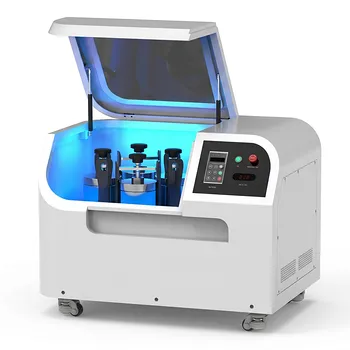
Planetary Ball Mill 12L
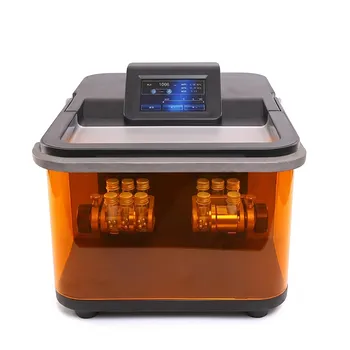
High Throughput Micro Ball Mill for Cryogenic Grinding and Laboratory Cell Disruption

8L Planetary Ball Mill for Laboratory Grinding and Sample Preparation
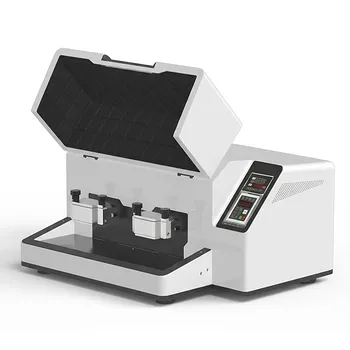
Nanoscale High-Energy Vibratory Ball Mill for Laboratory Sample Preparation, Mechanochemistry, and Mechanical Alloying