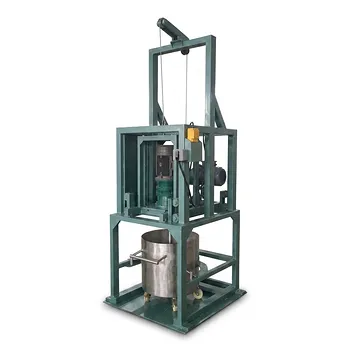
Why use an industrial-grade pan forced mixer for fly ash pre-mixed mortar? Achieve microscopic homogenization.
Updated 4 months ago
Industrial-grade pan forced mixers are the essential standard for fly ash mortar because they provide the intense shear force necessary to achieve microscopic homogenization in under three minutes. This mechanical action ensures that fine fly ash particles are uniformly coated onto aggregate surfaces, preventing the common issues of powder agglomeration and material segregation that compromise structural integrity.
The primary value of a pan forced mixer lies in its ability to convert high torque into mechanical shear, ensuring that stabilizers and fibers are perfectly dispersed throughout the matrix. This process is the only reliable way to guarantee consistent material strength and prevent localized failure in the final mortar application.
The Mechanics of Homogenization
High-Energy Shear Forces
Industrial-grade pan mixers utilize forced circulation to generate high-energy shear forces that gravity-fed or drum mixers cannot replicate. These forces are required to overcome the inter-particle friction of dry materials, ensuring that every component is physically moved and integrated.
Forced Circulation and Rapid Coating
In the preparation of fly ash pre-mixed mortar, the mixer must coat the surface of fine aggregate particles with fly ash within a very narrow timeframe. The forced action achieves this uniform coating in approximately three minutes, creating a consistent bond that is critical for the mortar's eventual compressive strength.
Achieving Microscopic Uniformity
Prevention of Powder Agglomeration
Fly ash and cement are prone to forming "clods" or agglomerates due to moisture or electrostatic forces. The intensive mixing action of a disc or pan mixer breaks down these clusters at a microscopic level, ensuring the stabilizers are reactive rather than trapped in inert lumps.
Stabilizing the Fly Ash Mixing Rate
Consistency is the core guarantee of mortar quality. By utilizing high-torque rotational power, these mixers maintain a stable mixing rate, ensuring that the ratio of fly ash to aggregate remains identical across every cubic meter of the batch.
Managing Complex Additives and Fibers
Fiber Dispersion and ECC Integrity
When specialized materials like polyvinyl alcohol (PVA) fibers are added to create Engineered Cementitious Composites (ECC), standard mixing fails. The pan forced mixer prevents fiber clumping, ensuring uniform dispersion which is vital for maintaining the unique strain-hardening characteristics of the material.
Preventing Component Segregation
During the dry mixing stage, different particle weights (like manufactured sand vs. fly ash) tend to separate. The continuous, forced movement of an industrial-grade mixer prevents this segregation, ensuring that the stabilizers like lime and cement achieve thorough contact with all soil or sand particles.
Understanding the Trade-offs
Mechanical Wear and Maintenance
The same high-energy shear forces that ensure uniformity also lead to significant abrasive wear on the mixer's internal liners and blades. Operators must implement a rigorous inspection schedule to replace wear parts, as degraded blades will fail to provide the necessary forced circulation.
Energy Consumption vs. Quality
Industrial pan mixers require significantly more power and higher torque than free-fall mixers. While this increases operational costs, the trade-off is a reduction in material waste and the elimination of "weak spots" in the final construction project caused by poor homogenization.
How to Apply This to Your Project
When selecting or operating mixing equipment for fly ash mortars, your choice should be dictated by the specific technical requirements of the final product.
- If your primary focus is high-strength structural mortar: Utilize a pan forced mixer to ensure a 3-minute homogenization cycle that guarantees microscopic coating of aggregates.
- If your primary focus is fiber-reinforced ECC: Prioritize mixers with high-torque capabilities to prevent fiber clumping and ensure the strain-hardening properties of the composite.
- If your primary focus is soil stabilization or modification: Use forced secondary mixing to break down soil clods and prevent strength inconsistencies caused by stabilizer segregation.
Selecting the right industrial-grade mixing technology is the most critical factor in transforming raw fly ash into a high-performance, predictable construction material.
Summary Table:
| Key Feature | Benefit for Fly Ash Mortar | Impact on Final Product |
|---|---|---|
| High-Energy Shear | Breaks down microscopic powder clods | Prevents localized structural failure |
| Forced Circulation | Rapid coating of aggregates (< 3 mins) | Increases compressive strength |
| High-Torque Power | Uniformly disperses PVA fibers | Ensures strain-hardening in ECC |
| Mechanical Action | Prevents material segregation | Guarantees consistent material density |
Elevate Your Material Preparation with Professional Grade Solutions
Achieving microscopic uniformity in fly ash mortar and advanced composites requires more than just basic mixing—it requires precision engineering. At [Brand Name], we provide complete laboratory sample preparation solutions for material science, specializing in high-performance powder processing and compaction equipment.
From industrial-grade powder mixers and defoaming mixers to our extensive lines of planetary ball mills, jet mills, and sieve shakers, we empower researchers and manufacturers to eliminate material inconsistencies. We also manufacture a full spectrum of hydraulic presses, including Cold/Warm Isostatic Presses (CIP/WIP), hot presses, and vacuum hot presses, ensuring your samples meet the most rigorous standards.
Ready to optimize your lab’s efficiency and material quality?
Contact our experts today for a tailored solution!
References
- Kazuto Fukudome, Mamoru Sakamoto. Study on the Feasibility of Sand Pre-Mixed with Fly-Ash. DOI: 10.2472/jsms.59.733
Mentioned Products
- High Speed Vacuum Planetary Centrifugal Mixer and Defoamer for Industrial Paste Processing
- Industrial Planetary Centrifugal Vacuum Defoaming Mixer for High Viscosity Paste and Advanced Material Science
- Industrial Planetary Centrifugal Vacuum Defoaming Mixer for High Viscosity Paste and Powder Homogenization
- High Efficiency Vacuum Planetary Centrifugal Mixer and Defoaming Machine for Industrial Material Research and Precise Laboratory Powder Dispersion
- Industrial Vacuum Kneader for High-Viscosity Silicone, Rubber, and Compound Mixing
People Also Ask
- Why increase revolution radius for high-viscosity materials? Optimize Mixing Performance with Centrifugal Acceleration
- What is the function of a planetary centrifugal mixer in electrode slurry prep? Achieve high-energy, uniform dispersion.
- Why is a planetary centrifugal mixer utilized for wood powder and HPMC? Achieve uniform dispersion & rapid defoaming.
- How does a planetary centrifugal mixer contribute to the preparation of magnetic polymer composites? Expert Guide
- How does a planetary centrifugal mixer address key challenges in Tyr-CDs@EVA optical films? Ensure Optical Clarity.

Tech Team · PowderPreparation
Last updated on Jun 03, 2026
Related Products
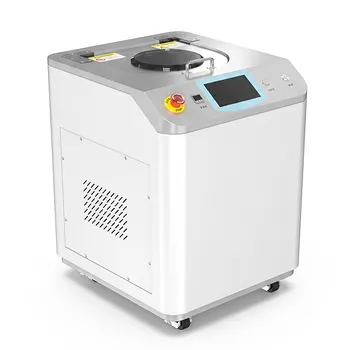
High Speed Vacuum Planetary Centrifugal Mixer and Defoamer for Industrial Paste Processing
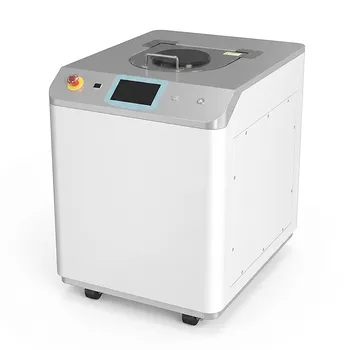
Industrial Planetary Centrifugal Vacuum Defoaming Mixer for High Viscosity Paste and Advanced Material Science
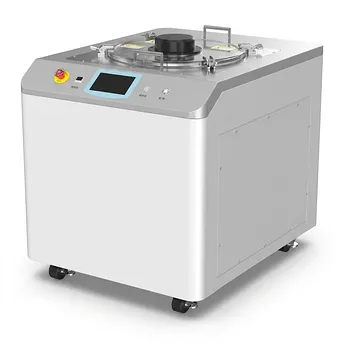
Industrial Planetary Centrifugal Vacuum Defoaming Mixer for High Viscosity Paste and Powder Homogenization
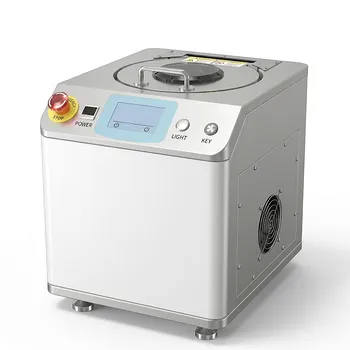
High Efficiency Vacuum Planetary Centrifugal Mixer and Defoaming Machine for Industrial Material Research and Precise Laboratory Powder Dispersion
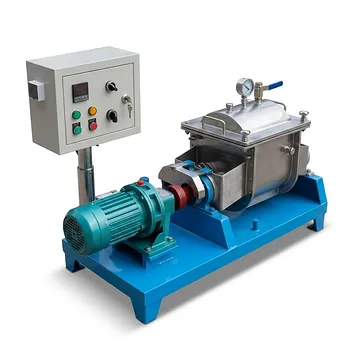
Industrial Vacuum Kneader for High-Viscosity Silicone, Rubber, and Compound Mixing
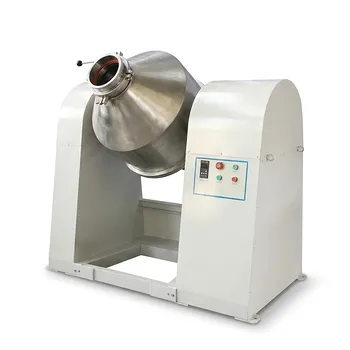
Industrial Double Cone Mixer for Powder Blending and Homogeneous Mixing
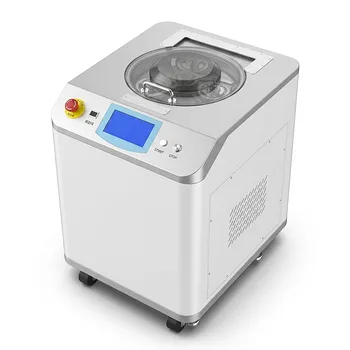
Dual Cup Vacuum Centrifugal Mixer Planetary Paste Defoaming Machine Industrial Material Processor
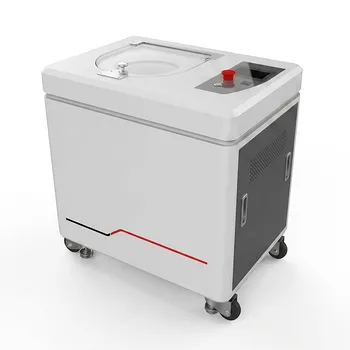
非介入式材料均质机真空脱泡行星搅拌高粘度混合设备
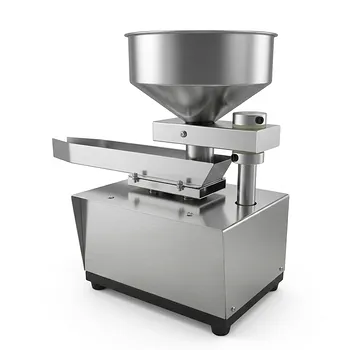
Automatic Vibrating Powder Feeder for Laboratory Material Processing Precision Vibratory Hopper Feeder for Granular and Powder Material Handling Industrial Grade Vibrating Tray Feeder for Consistent Material Sample Preparation
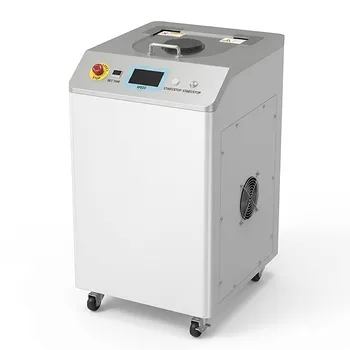
High Viscosity Planetary Centrifugal Vacuum Mixer for Material Defoaming and Uniform Mixing
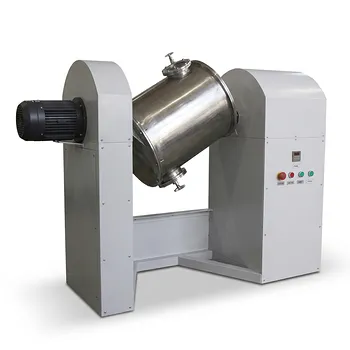
Inclined Mixer for Homogeneous Powder Blending and Grinding
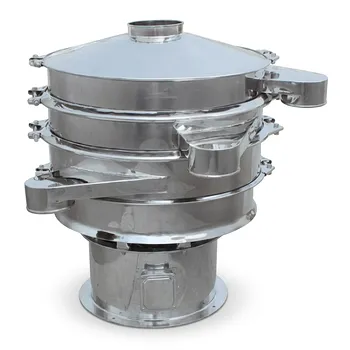
Stainless Steel Rotary Vibrating Sieve High Precision Circular Vibratory Separator Industrial Powder Grading Machine Multi Layer Sifting Equipment
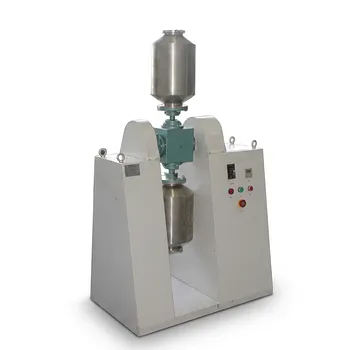
Multi Dimensional Universal Mixer for High Uniformity Powder Blending