Why is an industrial-grade mechanical mixer required when incorporating rigid hyperbranched flame retardants into epoxy?
Updated 5 months ago
Industrial-grade mechanical mixers are essential because they provide the powerful stirring force required to overcome the high viscosity of epoxy resins. This intense mechanical energy is the only way to physically disperse rigid hyperbranched flame retardants into a uniform state. Without this level of force, the additives cannot integrate effectively, leading to structural weak points and inconsistent fire protection.
To achieve a high-performance composite, rigid hyperbranched flame retardants must be perfectly dispersed to form a physical interpenetrating network. Industrial-grade mixing is the critical mechanism that bridges the gap between high-viscosity resin matrices and solid additives, ensuring both safety and structural integrity.
Overcoming Viscosity and Structural Resistance
The Challenge of High-Viscosity Resins
Resin systems such as DGEBA/IPDA possess high natural viscosity that resists the movement of solid additives. Standard mixing tools often lack the torque and shear force necessary to move through these dense fluids effectively. Industrial mixers are designed specifically to maintain consistent agitation despite the fluid's resistance.
Breaking Down Rigid Hyperbranched Additives
Hyperbranched flame retardants often have complex, rigid architectures that tend to clump or agglomerate. High-shear mechanical forces are required to break these clusters apart and ensure individual molecules are distributed throughout the matrix. Without this, the additives remain as localized inclusions rather than integrated components.
Formation of the Physical Interpenetrating Network (IPN)
Why Uniform Dispersion is Non-Negotiable
Uniform distribution is the prerequisite for forming a physical interpenetrating network within the composite. When hyperbranched molecules are evenly spread, they can intertwine with the epoxy chains on a molecular level. This network is what gives the final material its unique performance characteristics.
Consistency in Flame Retardancy
If the flame retardant is poorly mixed, the material will exhibit inconsistent fire resistance. Some areas may be over-concentrated while others remain vulnerable to ignition. Industrial mixing ensures that the flame-retardant properties are homogenized throughout the entire volume of the product.
Reinforcement and Toughening
Beyond fire safety, well-dispersed hyperbranched structures contribute to the mechanical reinforcement of the resin. They act as "toughening agents" that absorb energy and prevent crack propagation. This reinforcement is only possible if the particles are distributed evenly enough to support the entire polymer matrix.
Understanding the Trade-offs and Risks
The Cost of High-Shear Mixing
Industrial-grade mixers represent a significant capital investment and consume more energy than standard equipment. However, attempting to use lower-grade equipment typically results in a "failed batch" where the material does not meet safety or strength standards.
Managing Heat Generation
The intense friction generated by high-power stirring can cause a rapid rise in temperature within the resin. If this heat is not monitored, it may trigger premature curing or degrade the chemical structure of the flame retardant. Precision control and cooling systems are often necessary companions to industrial mixing.
How to Apply This to Your Project
When integrating rigid hyperbranched additives into epoxy systems, your mixing strategy should align with your specific performance requirements:
- If your primary focus is maximum fire safety: Prioritize high-shear industrial mixing to eliminate "hot spots" and ensure the flame retardant is present in every cubic millimeter of the resin.
- If your primary focus is mechanical durability: Focus on achieving a perfect interpenetrating network by balancing mixing intensity with temperature control to prevent resin degradation.
Mastering the dispersion process through industrial-grade mixing is the critical step in transforming raw epoxy and hyperbranched additives into a high-performance, fire-safe composite.
Summary Table:
| Challenge | Industrial Mixing Solution | Key Benefit |
|---|---|---|
| High Resin Viscosity | High torque and shear force | Maintains consistent agitation |
| Additive Clumping | Breaking rigid agglomerates | Molecular-level dispersion |
| Structural Weakness | Physical Interpenetrating Network | Mechanical reinforcement |
| Fire Risk Gaps | Homogenized additive spread | Consistent flame retardancy |
Elevate Your Material Research with Precision Engineering
Achieving the perfect interpenetrating network in high-viscosity resins requires more than just standard equipment. Our laboratory solutions provide the power and precision necessary for the most demanding material science applications.
We provide complete laboratory sample preparation solutions, specializing in:
- Advanced Mixing: High-shear powder mixers and vacuum defoaming mixers for perfect dispersion.
- Size Reduction: Jaw/roll crushers, liquid nitrogen cryogenic grinders, and planetary ball/jet mills.
- Material Compaction: A full spectrum of hydraulic presses, including Cold/Warm Isostatic Presses (CIP/WIP), vacuum hot presses, and XRF pellet presses.
- Analysis Prep: Vibratory/air-jet sieve shakers and high-quality test sieves.
Whether you are developing fire-safe composites or high-performance polymers, our equipment ensures your additives are perfectly integrated for maximum safety and strength.
Ready to optimize your dispersion process? Contact our experts today to find the ideal solution for your lab.
References
- Alexander Battig, Bernhard Schartel. Hyperbranched Rigid Aromatic Phosphorus‐Containing Flame Retardants for Epoxy Resins. DOI: 10.1002/mame.202000731
Mentioned Products
- Industrial Double Cone Mixer for Powder Blending and Homogeneous Mixing
- Dual Cup Vacuum Centrifugal Mixer Planetary Paste Defoaming Machine Industrial Material Processor
- High Speed Vacuum Planetary Centrifugal Mixer and Defoamer for Industrial Paste Processing
- Industrial Vacuum Kneader for High-Viscosity Silicone, Rubber, and Compound Mixing
- High Efficiency Vacuum Planetary Centrifugal Mixer and Defoaming Machine for Industrial Material Research and Precise Laboratory Powder Dispersion
People Also Ask
- How does a double cone mixer contribute to the blending and lubrication stages of tablet production? Expert Insights
- What is the primary function of industrial powder mixers in SLS 3D printing of tablets? Ensure Homogeneity & Accuracy
- What is the necessity of using industrial powder mixers for multi-component inoculants? Achieve Homogeneity & Precision
- What is the function of an industrial powder mixer in NiTiZn preparation? Achieve Homogeneity for 3D Printing
- What is the necessity of using industrial powder mixers? Achieve Perfect Homogeneity in Graphite-Copper Composites

Tech Team · PowderPreparation
Last updated on May 14, 2026
Related Products
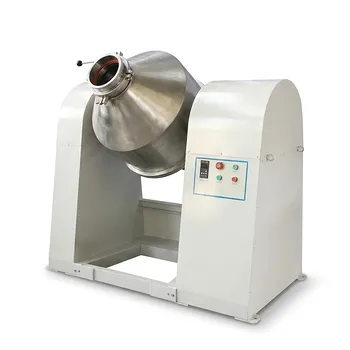
Industrial Double Cone Mixer for Powder Blending and Homogeneous Mixing
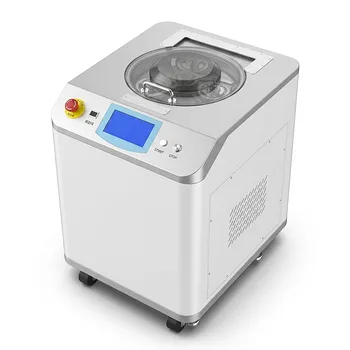
Dual Cup Vacuum Centrifugal Mixer Planetary Paste Defoaming Machine Industrial Material Processor
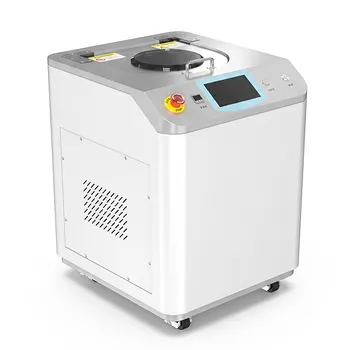
High Speed Vacuum Planetary Centrifugal Mixer and Defoamer for Industrial Paste Processing
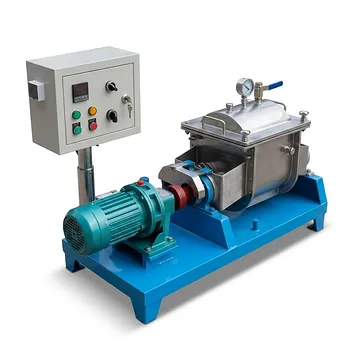
Industrial Vacuum Kneader for High-Viscosity Silicone, Rubber, and Compound Mixing
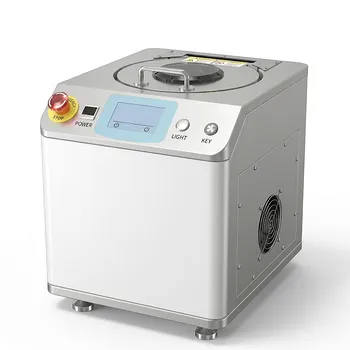
High Efficiency Vacuum Planetary Centrifugal Mixer and Defoaming Machine for Industrial Material Research and Precise Laboratory Powder Dispersion
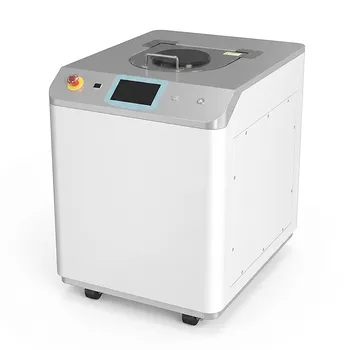
Industrial Planetary Centrifugal Vacuum Defoaming Mixer for High Viscosity Paste and Advanced Material Science
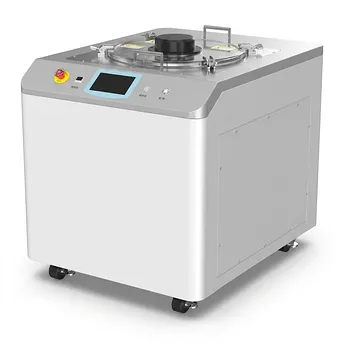
Industrial Planetary Centrifugal Vacuum Defoaming Mixer for High Viscosity Paste and Powder Homogenization
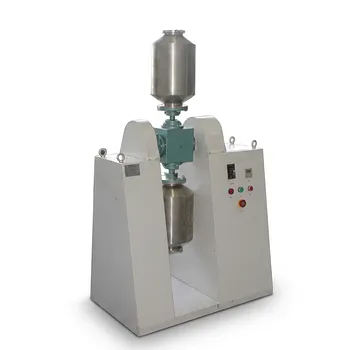
Multi Dimensional Universal Mixer for High Uniformity Powder Blending
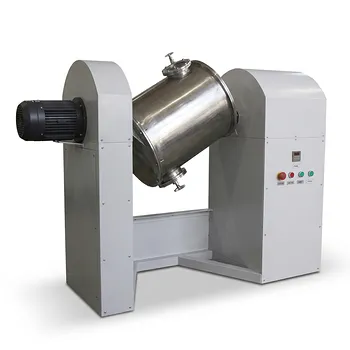
Inclined Mixer for Homogeneous Powder Blending and Grinding
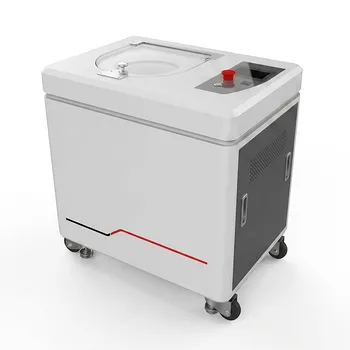
非介入式材料均质机真空脱泡行星搅拌高粘度混合设备
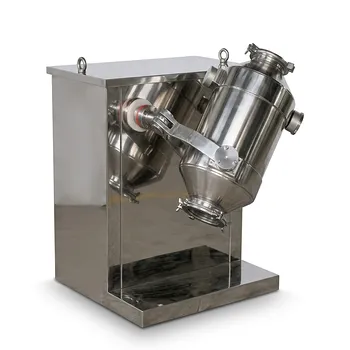
Three-Dimensional Motion Mixer for Laboratory Powder and Granule Blending
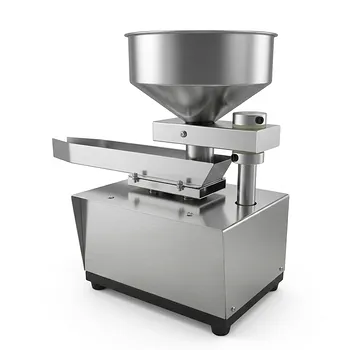
Automatic Vibrating Powder Feeder for Laboratory Material Processing Precision Vibratory Hopper Feeder for Granular and Powder Material Handling Industrial Grade Vibrating Tray Feeder for Consistent Material Sample Preparation
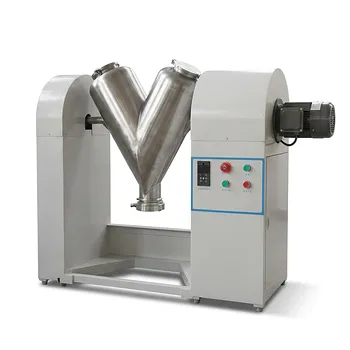
V-Type Powder Mixer for Uniform Blending of Dry Powders and Granules
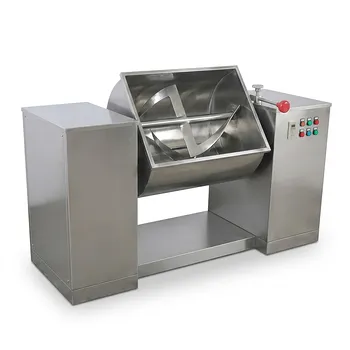
Horizontal Trough Mixer for Uniform Powder and Paste Blending
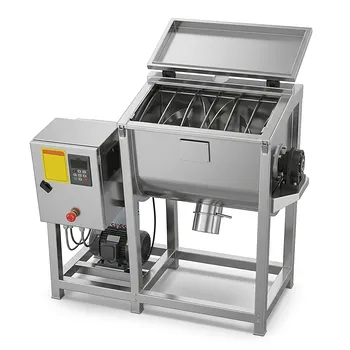
Horizontal Ribbon Mixer for Uniform Powder and Slurry Mixing
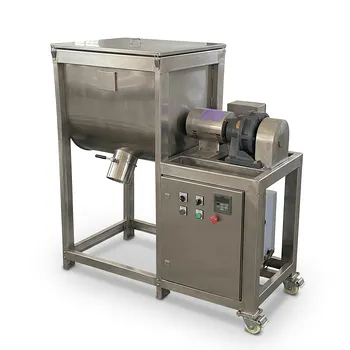
Horizontal Ribbon Mixer for Dry Powder and Slurry Blending
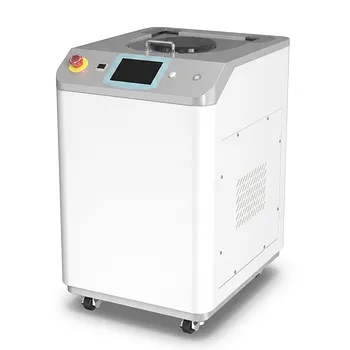
High Viscosity Planetary Centrifugal Mixing and Vacuum Defoaming Machine for Laboratory Material Preparation
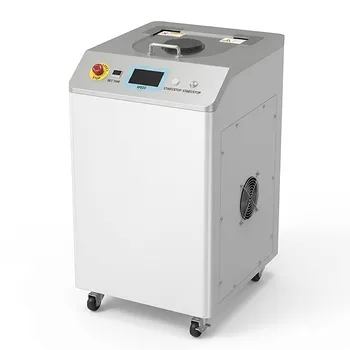
High Viscosity Planetary Centrifugal Vacuum Mixer for Material Defoaming and Uniform Mixing
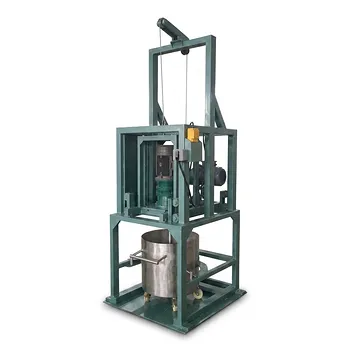
High-Speed Simple Disperser for Efficient Mixing, Dispersion, and Emulsification