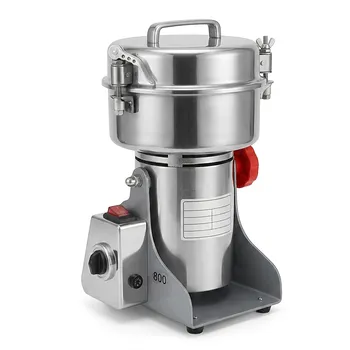
Why is the filling rate of grinding beads strictly controlled during the material milling process? Optimize Efficiency.
Updated 4 months ago
The strict control of the grinding bead filling rate is the primary lever for balancing energy density and mechanical efficiency within a milling chamber. By maintaining a precise volume ratio—often between 70% and 85%—operators ensure there are enough beads to capture and crush particles while leaving sufficient "free space" for those beads to accelerate and deliver high-impact energy. This optimization prevents equipment damage, manages heat generation, and ensures a consistent, high-quality particle size distribution.
Controlling the filling rate optimizes the frequency and intensity of bead collisions. This balance is critical to maximizing particle breakage rates while preventing equipment overheating, excessive media wear, and the "cushioning effect" that destroys milling efficiency.
The Physics of Energy Density and Collision
Optimizing Collision Frequency
Increasing the bead load raises the concentration of media within the chamber, which significantly shortens the distance between individual beads. This proximity ensures a higher probability that material particles will be captured and crushed, directly enhancing the apparent breakage rate constant.
Maintaining Effective Acceleration Space
Grinding beads require "free space" to move and follow a specific trajectory within the chamber. If the filling rate is too high, media movement becomes restricted, preventing the beads from gaining the velocity needed to deliver maximum effective collision energy.
The Impact of Inter-Layer Sliding
Maintaining an optimal filling coefficient ensures that the gaps between beads are completely filled with material. This creates the strongest dynamic force interactions during inter-layer sliding, which is essential for efficient mineral liberation and particle reduction.
Balancing Productivity and Equipment Longevity
Heat Management and Thermal Stability
A significant portion of the energy in a mill is converted into frictional heat. An optimized filling rate prevents the generation of surplus heat that could otherwise degrade temperature-sensitive materials or cause thermal stress to the mill’s internal components.
Minimizing Mechanical Wear and Contamination
An excessively high filling rate increases the mechanical load and friction between the beads and the chamber walls. This leads to accelerated media wear and potential metal or ceramic contamination, which can compromise the purity of the final product.
Stabilizing Output and Yield
Precise control of the filling rate ensures a stable production capacity and consistent particle size. If the rate is too low, the production yield decreases because there are not enough collision events to process the incoming material effectively.
Understanding the Trade-offs
The Danger of the "Cushioning Effect"
When the filling rate exceeds the optimal threshold, the beads and material can create a stable buffer. This cushioning effect absorbs the impact energy that should be used for grinding, significantly lowering the specific productivity of the mill.
Mechanical Overload and Plugging
Overfilling the chamber increases the torque required to rotate the mill, which can lead to mechanical overload. In wet milling systems, this can also cause "plugging," where the flow of material is restricted, leading to pressure spikes and potential equipment failure.
Energy Efficiency vs. Processing Time
While a higher filling rate can shorten the required grinding time by increasing collision frequency, it also consumes more power. Operators must find the "sweet spot" where the energy density is high enough for speed but low enough to avoid wasted electricity and unnecessary equipment strain.
How to Apply This to Your Project
To achieve the best results, you must align your bead filling rate with your specific production objectives and material characteristics.
- If your primary focus is High Throughput and Speed: Increase the bead filling rate to the upper recommended limit (e.g., 80-85%) to maximize collision frequency and shorten processing cycles.
- If your primary focus is Material Purity and Low Contamination: Use a lower, optimized filling rate to reduce the intensity of bead-on-wall friction and minimize media wear.
- If your primary focus is Ultra-Fine Particle Size: Focus on the ball-to-powder ratio, ensuring the loading quantity allows for high-intensity impacts on individual particles rather than a buffered stirring motion.
- If your primary focus is Temperature-Sensitive Processing: Opt for a lower filling rate combined with enhanced cooling to prevent the accumulation of surplus frictional heat.
Maintaining strict control over the bead filling rate transforms a chaotic milling environment into a precision-engineered process for consistent material refinement.
Summary Table:
| Factor | High Filling Rate (>85%) | Low Filling Rate (<70%) |
|---|---|---|
| Collision Frequency | High; faster particle breakage | Low; slower processing time |
| Energy Efficiency | High power consumption; risk of overload | Reduced throughput; wasted motion |
| Heat Generation | High; risk of thermal degradation | Lower; easier thermal control |
| Equipment Wear | Increased media & chamber friction | Lower friction; higher purity |
| Milling Effect | Potential "cushioning" reduces impact | Insufficient collision events |
Precision Sample Preparation Starts Here
Achieving the perfect particle size requires more than just high-quality media; it demands the right equipment and technical expertise. [Your Brand Name] provides complete laboratory sample preparation solutions for material science, specializing in high-performance powder processing and compaction equipment.
Our extensive product lines are designed to help you master every stage of the milling and preparation process:
- Advanced Milling & Grinding: Planetary ball mills, jet mills, sand/bead mills, disc/rotor mills, jaw/roll crushers, and liquid nitrogen cryogenic grinders.
- Sieving & Mixing: Vibratory and air-jet sieve shakers, powder mixers, and defoaming mixers.
- Compaction Solutions: A full spectrum of hydraulic presses, including Cold/Warm Isostatic Presses (CIP/WIP), standard lab presses, XRF pellet presses, and vacuum hot presses.
Whether you are aiming for ultra-fine particle sizes or high-throughput production, we bring the reliability and precision your research demands.
Ready to enhance your lab's efficiency?
Contact Our Technical Experts Today to find the ideal solution for your specific material requirements.
References
- Hironori Tanaka, Ken‐ichi Ogawara. Nanocrystal Preparation of Poorly Water-Soluble Drugs with Low Metal Contamination Using Optimized Bead-Milling Technology. DOI: 10.3390/pharmaceutics14122633
Mentioned Products
- Horizontal Bead Mill for Nanoscale Grinding and Advanced Material Powder Processing
- Laboratory Horizontal Bead Mill for Nanomaterial Wet Grinding and Material Science Research
- Nano Laboratory Bead Mill Desktop Sub Micron Sand Mill Screenless Seal Less Powder Grinder
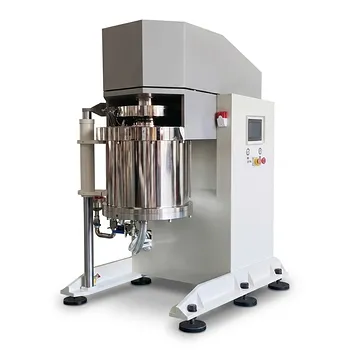
- Vertical Nano Bead Mill for Ceramic Materials with Permanent Magnet Motor and High Efficiency Grinding
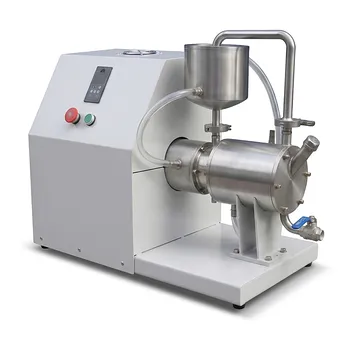
- Laboratory Small Horizontal Sand Mill for Nano Materials Wet Grinding
People Also Ask
- How does the bead filling rate affect the grinding performance and equipment wear in a bead mill? Optimization Guide
- Why is it necessary to precisely control the grinding media loading ratio? Master Nanosuspension Yield & API Stability
- Why is a ceramic lining preferred over stainless steel for a bead mill? Protect Enzymes and Ensure Biomass Purity
- Why is an external cooling circulation system necessary during the high-speed operation of a bead mill? Protect Integrity
- What is the significance of the stirring speed in Budesonide nano-milling? Master Kinetic Energy for Drug Refinement

Tech Team · PowderPreparation
Last updated on May 14, 2026
Related Products
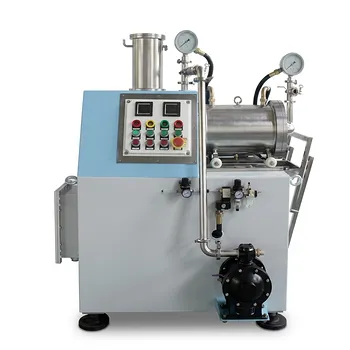
Horizontal Bead Mill for Nanoscale Grinding and Advanced Material Powder Processing
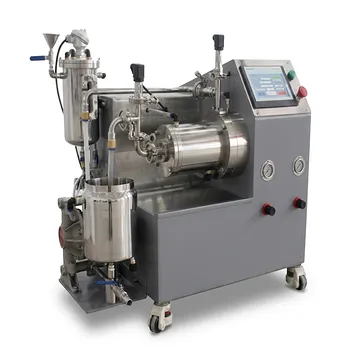
Laboratory Horizontal Bead Mill for Nanomaterial Wet Grinding and Material Science Research
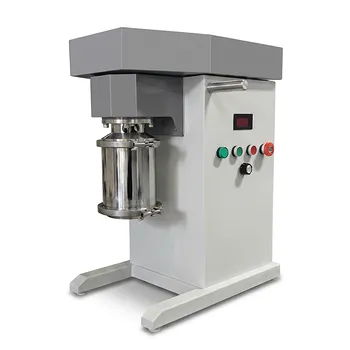
Nano Laboratory Bead Mill Desktop Sub Micron Sand Mill Screenless Seal Less Powder Grinder
Vertical Nano Bead Mill for Ceramic Materials with Permanent Magnet Motor and High Efficiency Grinding
Laboratory Small Horizontal Sand Mill for Nano Materials Wet Grinding
High Efficiency Laboratory Bead Mill Nano Powder Dispersion Sand Mill for Material Science Research