Why is an air-jet sieve shaker required for fine powder fillers? Ensure Precise Analysis for Limestone and Slag
Updated 4 months ago
The necessity of an air-jet sieve shaker for fine powders stems from the physical limitations of traditional mechanical sieving. When analyzing fillers like limestone and slag, particles smaller than 0.063 mm tend to stick together or adhere to the sieve mesh due to surface energy and moisture. An air-jet shaker uses controlled, high-velocity airflow to effectively deagglomerate these particles, ensuring they pass through the mesh individually for an accurate measurement of particle size distribution.
Core Takeaway: Air-jet sieving is required for fine mineral fillers because it overcomes particle agglomeration and electrostatic attraction that would otherwise blind a standard sieve. This process ensures the technical data used to evaluate material reactivity and concrete fluidity is both precise and repeatable.
Overcoming the Physical Challenges of Fine Powders
The Problem of Particle Agglomeration
Fine powders like limestone and blast furnace slag have high surface-to-volume ratios, making them prone to clumping or agglomerating. In traditional vibratory sieving, these clumps stay on top of the mesh, leading to an inaccurate "oversize" reading.
The air-jet shaker introduces a high-pressure air stream that acts as a dispersion force. This energy physically separates the particles, allowing the smallest fractions to be accurately identified and measured.
Neutralizing Electrostatic Charging
Dry, ultra-fine powders often generate electrostatic charges during the sieving process, causing them to cling to the sieve walls or the mesh itself. This phenomenon, known as blinding, prevents the passage of particles that should otherwise fall through.
The constant flow of air helps to mitigate electrostatic buildup. By keeping the particles in a fluid state, the air-jet ensures that the mesh remains clear throughout the duration of the test.
Ensuring Quality and Compliance in Construction Materials
Meeting Standards for Self-Compacting Concrete (SCC)
For materials used in Self-Compacting Concrete, the fraction of particles below 0.063 mm is critical for determining the fluidity and internal density of the mix. Traditional methods lack the precision to verify if the filler meets these strict production standards.
The air-jet sieve shaker provides the standardized samples necessary for quantitative studies. This data allows engineers to optimize the filling effect and the final structural integrity of the concrete.
Precision in Asphalt Filler Grading
In asphalt production, most particles must pass through a 0.063 mm or 0.125 mm sieve to ensure the correct void ratio in the mixture. Compliance with standards such as EN 933-10 requires the higher precision that only air-jet technology can provide.
Accurate grading ensures that the filler properly occupies the spaces between larger aggregates. This directly impacts the durability and load-bearing capacity of the asphalt pavement.
Protecting Material Integrity and Reactivity
Reducing Mechanical Stress on Fragile Particles
Traditional vibrational sieving relies on high-impact mechanical energy, which can cause particle fracture in fragile materials. If the particles break during testing, the resulting data will incorrectly suggest the powder is finer than it actually is.
The aerodynamic principle of the air-jet shaker is significantly gentler. It subjects the material to less mechanical stress, preserving the original particle size and providing a truer reflection of the material's properties.
Evaluating Chemical Reactivity in Slag
For industrial byproducts like blast furnace slag, the particle size distribution is a primary indicator of its chemical reactivity. If agglomeration is not prevented, the test results will underestimate the reactive surface area available.
The air-jet method provides the fundamental data required to predict how the slag will behave as a cementitious material. This allows manufacturers to classify the material correctly into performance tiers like Class S or Class N.
Understanding the Trade-offs
Equipment and Operational Costs
While air-jet shakers offer superior precision for fine powders, they require a dedicated vacuum source and specialized sieves. This makes the initial investment and maintenance costs higher than those of standard vibratory shakers.
Limitations with Coarse Aggregates
Air-jet sieving is specifically designed for the "micro" range and is generally limited to one sieve at a time. It is not an efficient tool for grading coarse aggregates or large samples where a vertical stack of multiple sieves is more productive.
Noise and Dust Management
The use of high-velocity air and a vacuum system can increase ambient noise levels in the laboratory. Furthermore, if the system is not properly sealed or filtered, there is a risk of losing "fines" to the exhaust, which compromises the accuracy of the total mass balance.
How to Apply This to Your Project
Making the Right Choice for Your Goal
To determine if an air-jet sieve shaker is necessary for your laboratory, consider the specific requirements of your final product.
- If your primary focus is analyzing fillers below 63 microns: You must use an air-jet sieve shaker to ensure particles are fully deagglomerated and the mesh does not blind.
- If your primary focus is evaluating slag reactivity or SCC fluidity: The air-jet method is the only reliable way to get the high-precision data required for these technical classifications.
- If your primary focus is general grading of coarse sand or gravel: A traditional vibratory sieve shaker is more cost-effective and efficient for processing larger volumes of material.
- If your primary focus is testing fragile or easily fractured minerals: Opt for the air-jet method to minimize mechanical impact and preserve the original particle size distribution.
By utilizing air-jet technology for fine powder analysis, you ensure the technical accuracy required to meet modern engineering standards and material performance goals.
Summary Table:
| Feature | Advantage for Fine Powders (Limestone/Slag) | Impact on Results |
|---|---|---|
| Air-Jet Dispersion | Breaks down particle agglomerates < 0.063 mm | Accurate particle size distribution |
| Electrostatic Control | Prevents particles from sticking to mesh or walls | Eliminates sieve blinding/clogging |
| Gentle Aerodynamics | Low mechanical stress compared to vibration | Preserves integrity of fragile particles |
| Standard Compliance | Meets EN 933-10 & SCC fluidity requirements | Guaranteed quality for construction |
| Reactivity Data | Maximizes measurable surface area of slag | Better prediction of chemical behavior |
Optimize Your Material Analysis with Expert Solutions
Achieving precision in fine powder analysis requires the right technology. At [Company Name], we provide complete laboratory sample preparation solutions tailored for material science. Whether you are analyzing mineral fillers, slag, or advanced ceramics, our equipment ensures accuracy and repeatability.
Our Specialized Range Includes:
- Sieving & Particle Analysis: Advanced air-jet sieve shakers and vibratory shakers with various test sieves and meshes.
- Milling & Grinding: Planetary ball mills, jet mills, and cryogenic grinders for ultra-fine powder processing.
- Compaction & Pressing: A full spectrum of hydraulic presses, including Cold/Warm Isostatic Presses (CIP/WIP), vacuum hot presses, and XRF pellet presses.
- Mixing: High-efficiency powder and defoaming mixers.
Don't let particle clumping compromise your technical data. Contact our experts today to find the ideal equipment for your laboratory and ensure your materials meet the highest industry standards.
References
- Petra Štefanec, Šime Pulić. IMPACT OF FLUIDIZED BED FLY ASH ON STRENGTH DEVELOPMENT OF SELF-COMPACTING CONCRETE. DOI: 10.3311/ccc2023-016
Mentioned Products
- Laboratory Air Jet Sieving Machine for Fine Powder Particle Size Analysis and Deagglomeration
- Vibratory Sieve Shaker Electromagnetic 3D Motion Powder Particle Size Analyzer for Dry and Wet Sieving
- Stainless Steel Laboratory Vibratory Test Sieve Shaker
- 三维电磁微量振动筛分仪
- Small Laboratory Vibrating Sieve Shaker for Precise Particle Size Analysis
People Also Ask
- What role do laboratory test sieves play in the nanocrystallization process of iron powder? Ensure Uniform Refinement
- What is the function of a laboratory test sieve in the river sediment sample preparation process? Ensure Precise Data
- What is the purpose of using 0.038 mm sieves in magnetite grinding? Quantify Kinetics and Boost Grinding Efficiency
- How do laboratory test sieves contribute to the analysis of soil texture composition? Optimize Particle Grading Accuracy
- Why is a 0.08mm standard sieve required for testing the fineness of cement? Optimize Recycled Pervious Concrete Quality

Tech Team · PowderPreparation
Last updated on Jun 03, 2026
Related Products
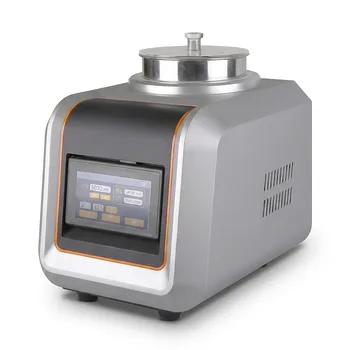
Laboratory Air Jet Sieving Machine for Fine Powder Particle Size Analysis and Deagglomeration
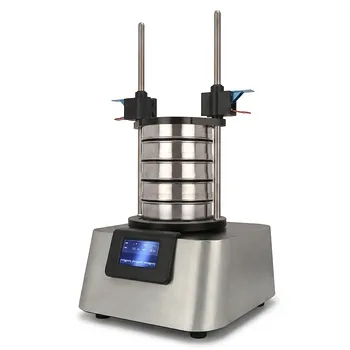
Vibratory Sieve Shaker Electromagnetic 3D Motion Powder Particle Size Analyzer for Dry and Wet Sieving
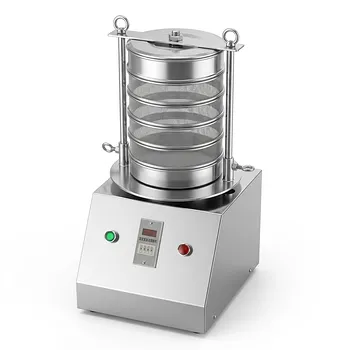
Stainless Steel Laboratory Vibratory Test Sieve Shaker
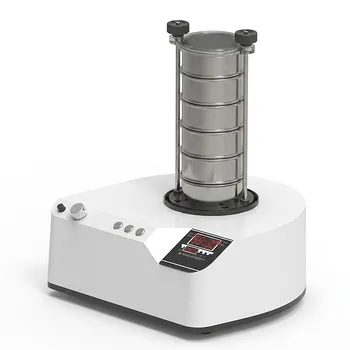
三维电磁微量振动筛分仪
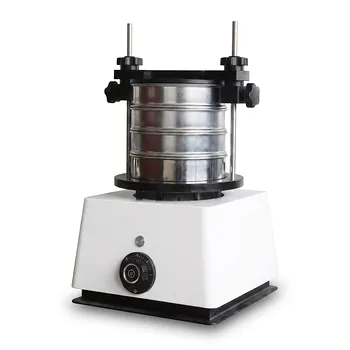
Small Laboratory Vibrating Sieve Shaker for Precise Particle Size Analysis
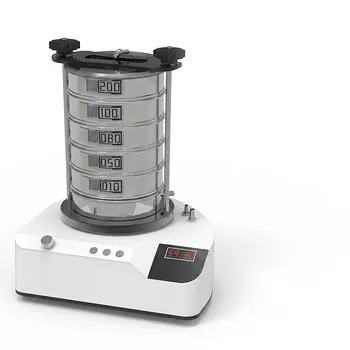
Heavy Duty Dry Three Dimensional Vibratory Sieve Shaker for Particle Separation
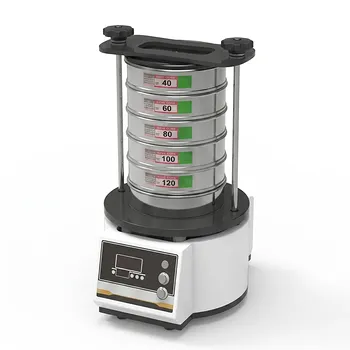
Dry Three Dimensional Vibratory Sieve Shaker
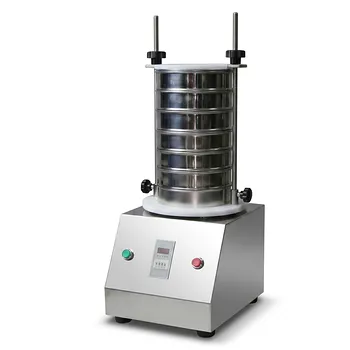
Small Laboratory Vibratory Sieve Shaker for Powder Gradation and Particle Size Analysis
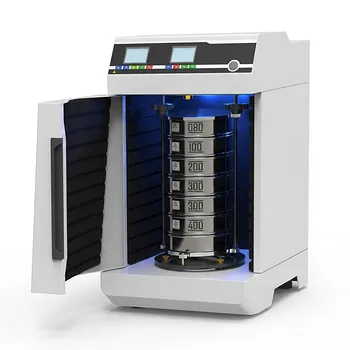
Laboratory Dry and Wet Three Dimensional Vibratory Sieve Shaker for Particle Analysis
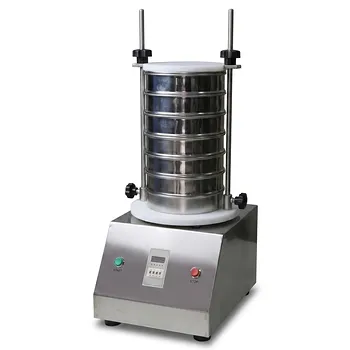
Laboratory Vibratory Test Sieve Shaker for Precision Particle Size Analysis and Powder Grading
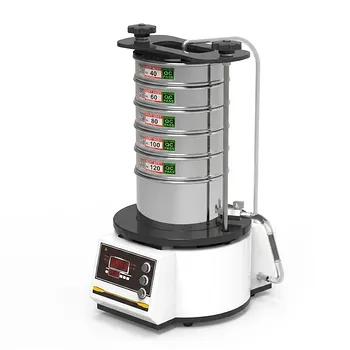
High Frequency Wet Three-Dimensional Vibrating Sieve Shaker for Dry and Wet Particle Size Analysis
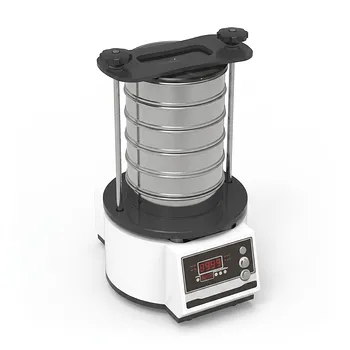
Tapping Oscillating Sieve Shaker for Dry and Wet Particle Size Analysis
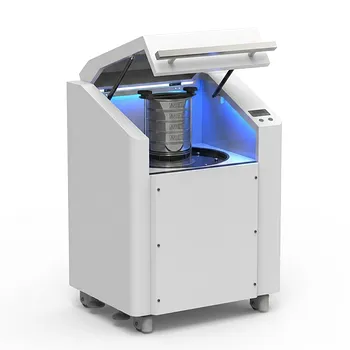
High Frequency Cabinet Type Three-Dimensional Rotary Vibrating Sieve Shaker for Dry Sieving and Particle Classification
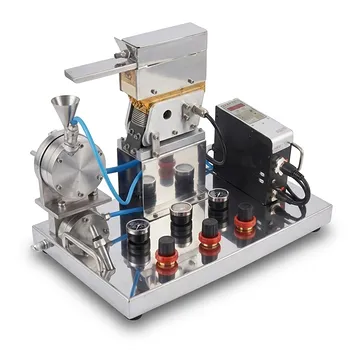
Benchtop Micro Air Jet Mill for Ultrafine Grinding of High Value Powders
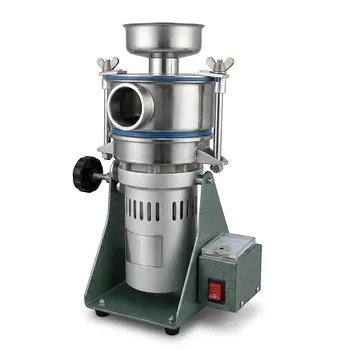
Small Airflow Ultra-Fine Grinder for Laboratory Sample Preparation
Airflow Ultrafine Pulverizer for Laboratory Ultra-fine Grinding
Water Cooled Pulse Jet Ultrafine Grinder