Why is agate grinding media used for the wet ball milling of Li2ZrO3-LBS composite solid electrolyte powders? | Top Purity
Updated 4 months ago
Agate grinding media is selected for the wet ball milling of Li2ZrO3-LBS composite solid electrolytes primarily to prevent the introduction of impurities. Its exceptional chemical stability and high hardness ensure that the final powder maintains the high purity levels required for optimal ionic conductivity and electrochemical performance.
Core Takeaway: Agate media provides a chemically inert and wear-resistant environment that protects the stoichiometry of the Li2ZrO3-LBS mixture from metallic contamination, which is critical for preserving the electrolyte's electrical properties.
Protecting Chemical Purity and Stoichiometry
Prevention of Metallic Ion Contamination
During the wet ball milling process, the friction between the media and the powder can cause the grinding balls to wear down. Using metal media would introduce iron or other metallic ions into the Li2ZrO3-LBS composite, which could create electronic conductive paths or disrupt the crystal lattice.
Agate is a non-metallic material that effectively eliminates the risk of metallic impurity infiltration. This is essential for solid electrolytes, where even trace amounts of foreign ions can significantly degrade ionic conductivity.
Maintaining Stoichiometric Precision
Solid electrolytes like the Li2ZrO3-LBS system rely on precise ratios of multi-component cations to function correctly. Because agate has an extremely low wear rate in mediums like ethanol, it ensures that the weight and composition of the powder remain unchanged during processing.
Any material shed from the grinding media becomes part of the final composite. Agate’s high resistance to secondary contamination ensures that the chemical performance stability of the matrix is preserved over long milling durations.
Mechanical Advantages of Agate Media
High Hardness and Impact Energy
Agate possesses the necessary hardness to effectively reduce the particle size of calcined ceramics and composites. It provides the impact energy required to break down large agglomerates into the fine, uniform particles needed for high-density sintering.
This hardness is critical when dealing with materials like Li2ZrO3, which can form tough, pre-sintered chunks. Agate media facilitates a balance between high-energy crushing and the finer shear forces required for thorough mixing.
Stability in Ethanol Mediums
Wet ball milling for these composites often utilizes ethanol as a dispersing agent to prevent overheating and ensure uniform distribution. Agate is chemically inert in the presence of alcohols, meaning it will not react with the medium or the powder during the process.
This stability prevents side reactions that could alter the surface chemistry of the LBS (Lithium-Boron-Sulfur) components. The result is a powder with higher sintering activity and better interfacial contact in the final solid-state battery.
Understanding the Trade-offs
Mechanical Fragility
While agate is hard and chemically pure, it is more brittle than stainless steel or zirconia media. It can chip or crack if subjected to extreme rotational speeds or if the milling jar is not properly loaded with a sufficient volume of powder and solvent.
Grinding Efficiency Limits
Agate has a lower density than some metallic or ceramic alternatives like tungsten carbide or yttria-stabilized zirconia. Consequently, it may require longer milling times to achieve the same level of particle size reduction, as the kinetic energy per impact is lower.
How to Apply This to Your Project
- If your primary focus is maximizing ionic conductivity: Use agate media to ensure zero metallic contamination, as even minor impurities can create leakage currents in the electrolyte.
- If your primary focus is preventing lattice disruption: Stick to agate for long-duration milling (up to 20 hours) to maintain the precise stoichiometry required for stable phase formation.
- If your primary focus is high-throughput production: Consider high-purity zirconia if the slightly increased risk of zirconium contamination is acceptable for your specific electrochemical application.
Choosing agate grinding media is a strategic decision to prioritize material purity and electrochemical integrity over raw milling speed.
Summary Table:
| Feature | Advantage for Li2ZrO3-LBS | Why it Matters |
|---|---|---|
| Chemical Inertness | Zero metallic ion introduction | Prevents electronic leakage/short circuits |
| Low Wear Rate | Preserves stoichiometric precision | Ensures stable phase formation and performance |
| High Hardness | Efficiently breaks down ceramic agglomerates | Achieves fine, uniform particle size for sintering |
| Solvent Stability | Non-reactive in ethanol mediums | Maintains surface chemistry of LBS components |
| Non-Metallic | Eliminates iron/chrome impurities | Protects maximum ionic conductivity |
Elevate Your Material Research with Precision Processing
Achieving the perfect stoichiometry in solid-state electrolytes requires more than just high-quality chemicals—it demands the right processing environment. At [Your Brand Name], we provide complete laboratory sample preparation solutions tailored for material science professionals.
Whether you are refining Li2ZrO3-LBS composites or developing new ceramic matrices, our specialized equipment ensures zero contamination and optimal particle distribution. Our extensive range includes:
- Powder Processing: Planetary ball mills, jet mills, and high-purity agate/zirconia grinding media.
- Compaction Excellence: A full spectrum of hydraulic presses, including Cold/Warm Isostatic Presses (CIP/WIP), standard lab presses, and vacuum hot presses.
- Sample Prep: Jaw crushers, cryogenic grinders, and precision sieve shakers.
Ready to optimize your powder milling and compaction workflow? Contact our technical experts today to find the ideal solution for your laboratory’s unique requirements.
References
- Anastasia V. Kalashnova, K. V. Druzhinin. Effect of Li2O–В2O3–SiO2 glass on conductivity, microstructure, and stability of Li2ZrO3 solid electrolyte. DOI: 10.15826/elmattech.2025.4.060
Mentioned Products
- Vertical Square Planetary Ball Mill for Laboratory Sample Preparation and Nanoscale Grinding
- Laboratory Small Horizontal Sand Mill for Nano Materials Wet Grinding
- Laboratory Horizontal Bead Mill for Nanomaterial Wet Grinding and Material Science Research
- Single Tank High Energy Vibratory Ball Mill for Laboratory Grinding and Mixing
- Laboratory Basket Sand Mill for Wet Grinding and Dispersion of Viscous Slurries
People Also Ask
- What is the function of a planetary ball mill in wollastonite ceramic prep? Achieve Molecular Homogenization & Reactivity
- How does a planetary ball mill contribute to the homogenization of trace elements? Achieve Sub-Micron Uniformity
- Why grind lime-pozzolan specimens for TG/DTA for 3 mins? Master sample prep for high-precision thermal analysis.
- What role does a planetary ball mill play in the synthesis of Li6PS5Cl (LPSCl)? Unlock High Ionic Conductivity
- What role does a planetary ball mill play in KNTO ceramic refinement? Optimize Homogeneity & Reactivity

Tech Team · PowderPreparation
Last updated on Jun 03, 2026
Related Products
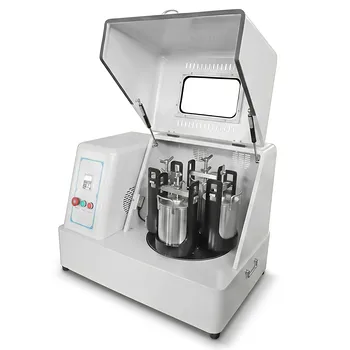
Vertical Square Planetary Ball Mill for Laboratory Sample Preparation and Nanoscale Grinding
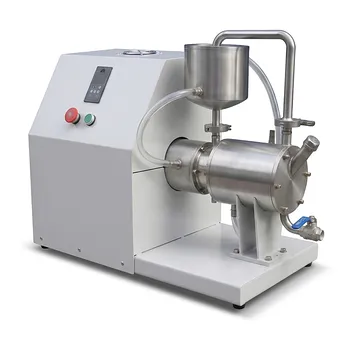
Laboratory Small Horizontal Sand Mill for Nano Materials Wet Grinding
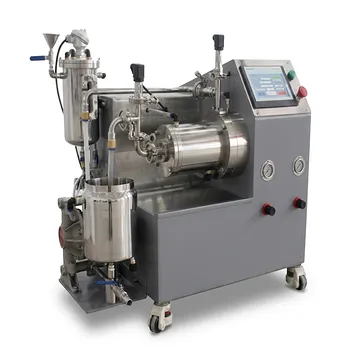
Laboratory Horizontal Bead Mill for Nanomaterial Wet Grinding and Material Science Research
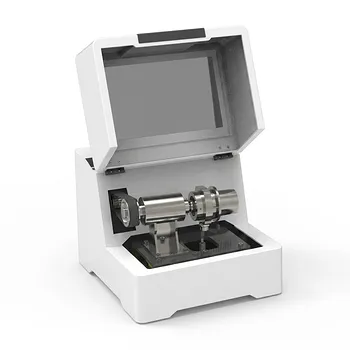
Single Tank High Energy Vibratory Ball Mill for Laboratory Grinding and Mixing
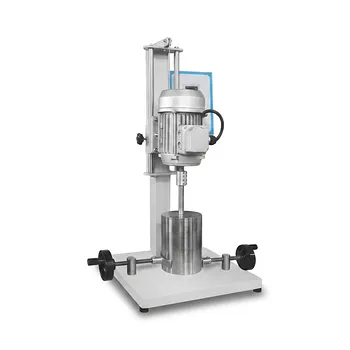
Laboratory Basket Sand Mill for Wet Grinding and Dispersion of Viscous Slurries
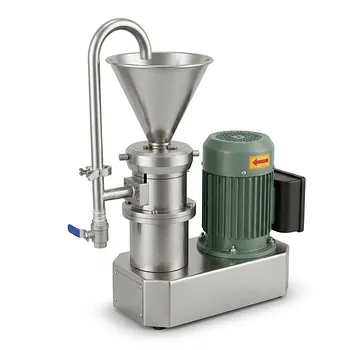
Small Laboratory Colloid Mill for Ultra-Fine Wet Grinding and Emulsification
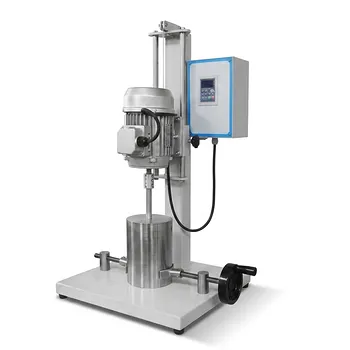
Laboratory Sand Mill Grinding Dispersing Machine for Wet Particle Size Reduction
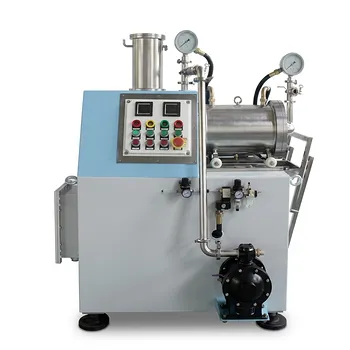
Horizontal Bead Mill for Nanoscale Grinding and Advanced Material Powder Processing
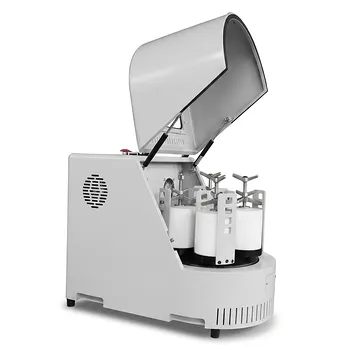
Vertical Semi Circular Planetary Ball Mill for Laboratory Precision Grinding
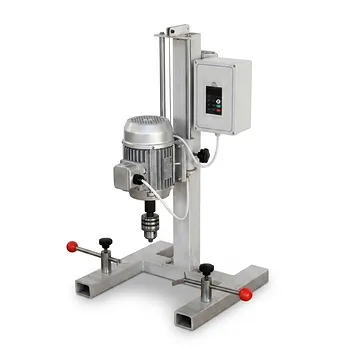
Laboratory Disperser and Sand Mill for Grinding Dispersing Emulsifying
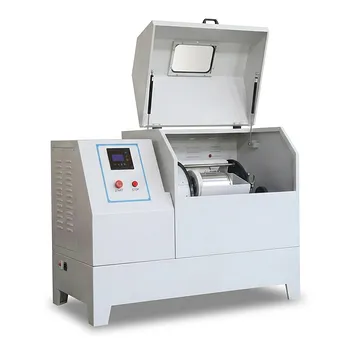
Heavy Duty Horizontal Planetary Ball Mill for Efficient Industrial Grinding and Sample Preparation
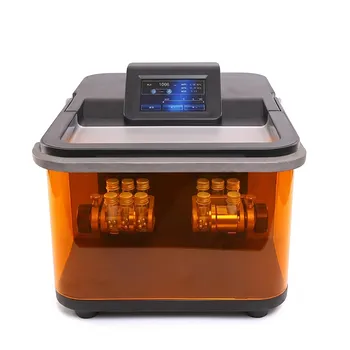
High Throughput Micro Ball Mill for Cryogenic Grinding and Laboratory Cell Disruption
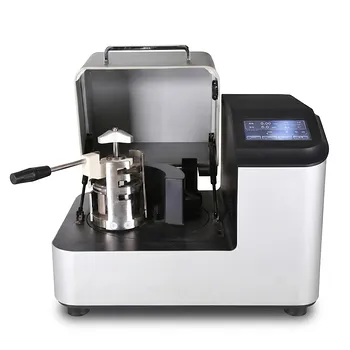
High Energy Laboratory Planetary Ball Mill for Nano Grinding and Material Science Sample Preparation
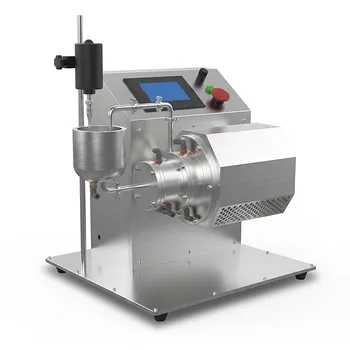
Laboratory Horizontal Pin Nano Sand Mill
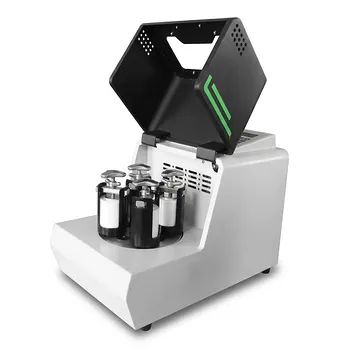
Miniature Planetary Ball Mill with Vacuum Grinding and High Efficiency for Laboratory Sample Preparation
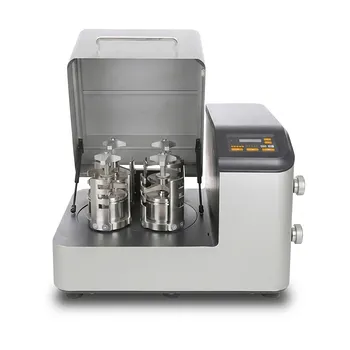
High Energy Planetary Ball Mill for Nano Scale Grinding and Colloidal Mixing in Material Science Research
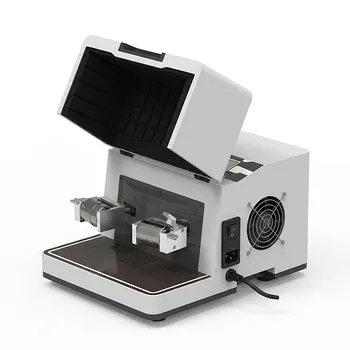
High Energy Hybrid Vibratory Ball Mill for Grinding Mixing and Cell Disruption
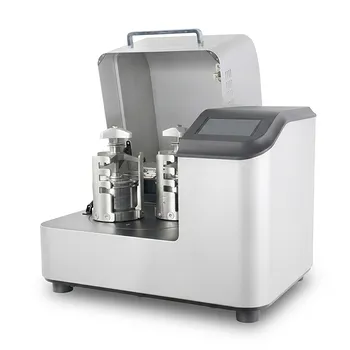
High Energy Planetary Ball Mill for Nano Scale Grinding and Mechanical Alloying