Why is a vibratory sieve shaker with standard test sieves necessary for grading zeolite? Optimize Adsorption Precision
Updated 4 months ago
A vibratory sieve shaker equipped with standard test sieves is necessary for grading zeolite because it provides the precise mechanical separation required to isolate specific particle size ranges. This process is critical because zeolite’s performance—specifically its adsorption kinetics and capacity—is directly dictated by its physical dimensions and the consistency of its particle size distribution.
Core Takeaway: Precise particle size control via vibratory sieving is the fundamental requirement for accurate zeolite research; without it, the diffusion-limited nature of zeolite adsorption makes it impossible to obtain repeatable or scientifically valid data.
The Critical Link Between Particle Size and Performance
Managing Diffusion-Limited Kinetics
Zeolite adsorption kinetics are diffusion-limited, meaning the rate at which ions (such as potassium) move into the material is restricted by the particle's physical structure. Precise grading ensures that researchers can isolate specific size fractions to accurately measure and predict these adsorption rates.
Optimizing Surface Area and Porosity
Particle size uniformity is a critical physical parameter that directly influences the specific surface area and porosity of the adsorbent. By using a vibratory shaker, you ensure that these physical properties are strictly controlled, allowing for a clear understanding of the relationship between material volume and equilibrium capacity.
Ensuring Sample Representativeness
Grading zeolite after initial crushing or milling removes oversized, non-compliant particles that could skew experimental results. This mechanical screening ensures that the samples used in testing meet strict particle size distribution requirements, making the data representative of the entire batch.
The Technical Advantage of Vibratory Shakers
Achieving Mechanical Precision and Repeatability
Unlike manual sieving, a vibratory shaker provides a constant amplitude and uniform processing time. This mechanical consistency eliminates human error and ensures that particles are accurately and repeatably classified according to their exact physical dimensions.
Enhancing Stratification and Flow
The high-frequency vibrations cause particles to jump, tumble, and stratify effectively through a stack of sieves with decreasing aperture sizes. This mechanical action ensures that particles flow efficiently across the mesh, significantly improving sieving efficiency compared to static or manual methods.
Quantifying the Impact of Milling
Using standard test sieves allows researchers to establish quantitative relationships between milling parameters and the resulting physical properties. This data is essential for optimizing the production process to maximize the recovery of the most effective zeolite particle sizes.
Understanding the Trade-offs
Equipment Maintenance and Wear
While highly effective, vibratory shakers and standard sieves are subject to mechanical wear over time. Mesh screens can become blinded (clogged) or stretched, which can lead to inaccuracies if the equipment is not regularly calibrated and cleaned.
Limitations of Physical Screening
Mechanical sieving classifies particles based on their smallest cross-section, which may not account for irregular or elongated particle shapes. In cases where zeolite particles are highly non-spherical, additional analytical methods might be needed to complement the sieve data.
Making the Right Choice for Your Goal
To maximize the effectiveness of your zeolite grading process, align your equipment use with your specific research or production objectives.
- If your primary focus is Adsorption Research: Prioritize high-frequency vibratory shakers to ensure the narrowest possible particle size distribution for accurate kinetic modeling.
- If your primary focus is Production Scalability: Use standard test sieves to establish clear benchmarks between milling intensity and the yield of the desired particle fraction.
- If your primary focus is Quality Control: Implement standardized sieving durations and amplitudes to ensure consistent product performance across different batches.
By utilizing a vibratory sieve shaker, you transform raw, crushed zeolite into a standardized material capable of delivering precise and predictable results.
Summary Table:
| Feature | Benefit for Zeolite Grading | Technical Advantage |
|---|---|---|
| Mechanical Stratification | Ensures accurate size separation | High-frequency vibration promotes particle flow |
| Constant Amplitude | Guarantees repeatable test results | Eliminates human error found in manual sieving |
| Sieve Stack Design | Defines precise size distribution | Allows simultaneous classification of multiple fractions |
| Diffusion Control | Optimizes adsorption kinetics | Isolates specific surface area for predictable performance |
Elevate Your Material Analysis with Precision Equipment
Achieving consistent zeolite performance starts with superior sample preparation. We provide complete laboratory sample preparation solutions tailored for material science, specializing in advanced powder processing and compaction technology.
Whether you need to reduce raw materials using our jaw and roll crushers, achieve ultra-fine results with our planetary ball and jet mills, or ensure perfect grading with our vibratory and air-jet sieve shakers, we have the tools to maximize your research accuracy. Our expertise also extends to high-performance compaction, offering a full spectrum of Hydraulic Presses (CIP/WIP) and Hot Presses for advanced material synthesis.
Ready to optimize your lab's efficiency and data reliability?
Contact our expert team today to find the perfect equipment solution for your specific application requirements.
References
- Andrius Jaskūnas, Rasa Šlinkštienė. Adsorption of potassium ions on natural zeolite: kinetic and equilibrium studies. DOI: 10.6001/chemija.2015.26.2.1
Mentioned Products
- Vibratory Sieve Shaker Electromagnetic 3D Motion Powder Particle Size Analyzer for Dry and Wet Sieving
- Laboratory Dry and Wet Three Dimensional Vibratory Sieve Shaker for Particle Analysis
- Dry Three Dimensional Vibratory Sieve Shaker
- Stainless Steel Laboratory Vibratory Test Sieve Shaker
- Heavy Duty Dry Three Dimensional Vibratory Sieve Shaker for Particle Separation
People Also Ask
- How does a vibratory sieve shaker contribute to optimizing the performance of activated carbon? Enhance Adsorption Precision
- Why is a laboratory vibratory sieve shaker necessary for processing magnesium-based borate precursor powders? Boost Activity
- Why use a vibratory sieve shaker to verify coarse aggregate grading in rubberized concrete? Ensure Structural Integrity
- What function do vibratory sieve shakers and standard test sieves serve in the preparation of adsorbents? Key Guide
- What role does a vibratory sieve shaker play in the particle size analysis of ground corn products? Enhance QC Precision

Tech Team · PowderPreparation
Last updated on Jun 03, 2026
Related Products
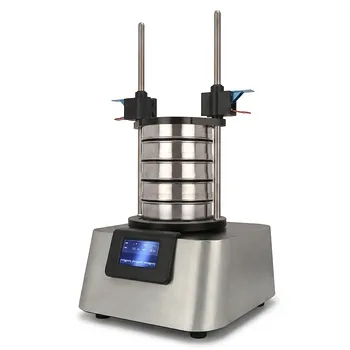
Vibratory Sieve Shaker Electromagnetic 3D Motion Powder Particle Size Analyzer for Dry and Wet Sieving
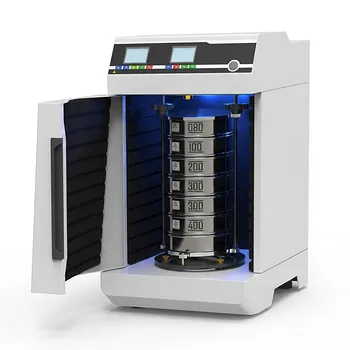
Laboratory Dry and Wet Three Dimensional Vibratory Sieve Shaker for Particle Analysis
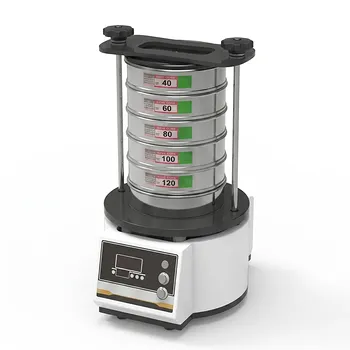
Dry Three Dimensional Vibratory Sieve Shaker
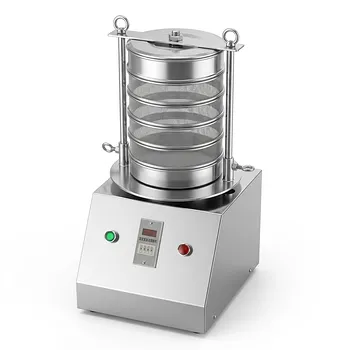
Stainless Steel Laboratory Vibratory Test Sieve Shaker
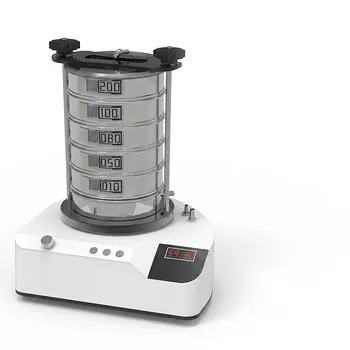
Heavy Duty Dry Three Dimensional Vibratory Sieve Shaker for Particle Separation
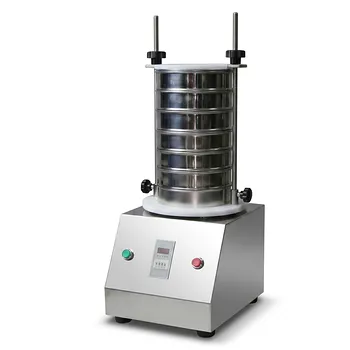
Small Laboratory Vibratory Sieve Shaker for Powder Gradation and Particle Size Analysis
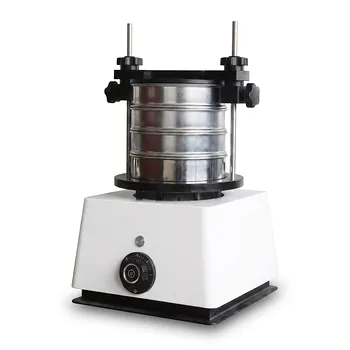
Small Laboratory Vibrating Sieve Shaker for Precise Particle Size Analysis
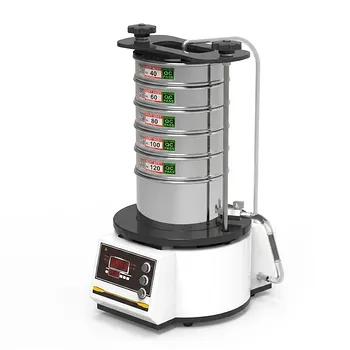
High Frequency Wet Three-Dimensional Vibrating Sieve Shaker for Dry and Wet Particle Size Analysis
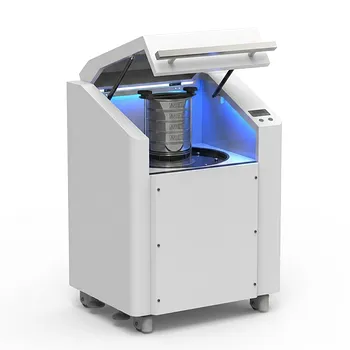
High Frequency Cabinet Type Three-Dimensional Rotary Vibrating Sieve Shaker for Dry Sieving and Particle Classification
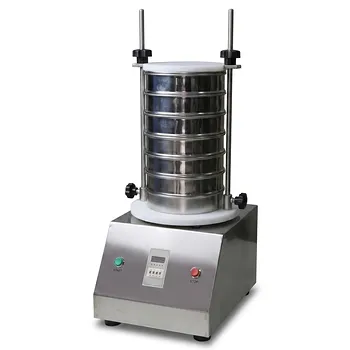
Laboratory Vibratory Test Sieve Shaker for Precision Particle Size Analysis and Powder Grading
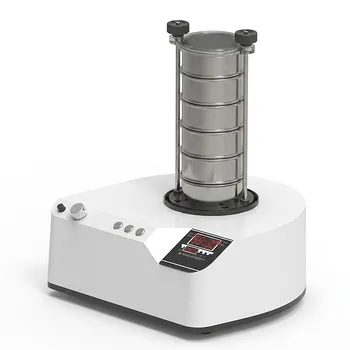
三维电磁微量振动筛分仪
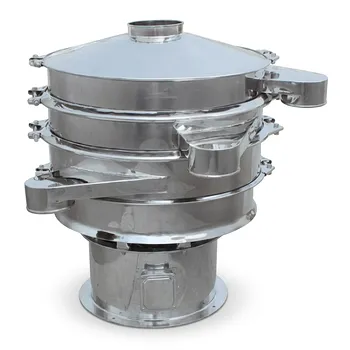
Stainless Steel Rotary Vibrating Sieve High Precision Circular Vibratory Separator Industrial Powder Grading Machine Multi Layer Sifting Equipment
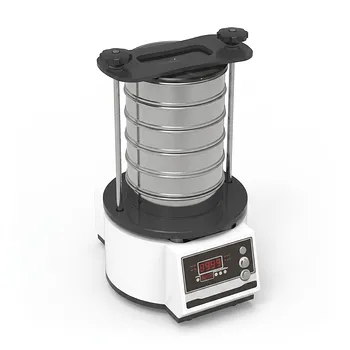
Tapping Oscillating Sieve Shaker for Dry and Wet Particle Size Analysis
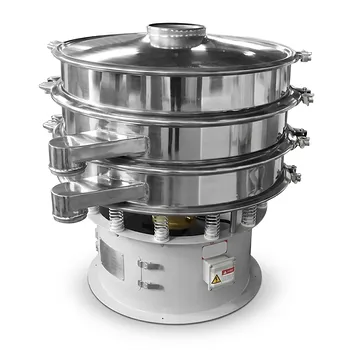
Three Dimensional Rotary Vibrating Sieve
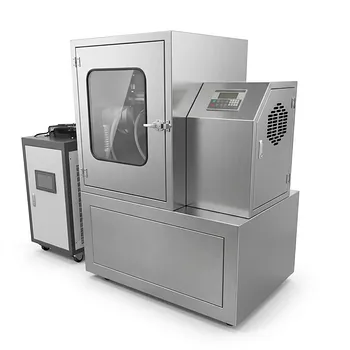
Vibratory Superfine Grinder for Ultra Fine Laboratory Powder Milling
Small Vibrating Ultrafine Grinder for Traditional Chinese Medicine
Automatic Vibrating Powder Feeder for Laboratory Material Processing Precision Vibratory Hopper Feeder for Granular and Powder Material Handling Industrial Grade Vibrating Tray Feeder for Consistent Material Sample Preparation