What role do precision test sieves and vibratory sieve shakers play in the quality control of road marking materials?
Updated 5 months ago
Precision test sieves and vibratory sieve shakers are the critical tools used to verify the particle size distribution (PSD) of glass beads and anti-skid aggregates. By performing rigorous gradation analysis, these instruments ensure that road marking materials meet the specific technical standards required for safety and longevity. This process directly dictates the material's retroreflective efficiency, its ability to bond with the paint matrix, and its overall resistance to wear and tear.
Core Takeaway: Effective road marking quality control depends on the precise sizing of glass beads and aggregates to ensure optimal light reflection and structural bonding. Sieve analysis provides the empirical data needed to guarantee that these materials perform as engineered under real-world traffic conditions.
Optimizing Optical Performance and Safety
The Impact of Glass Bead Gradation
The diameter of glass beads determines how light from vehicle headlights is returned to the driver, a phenomenon known as retroreflection. Precision test sieves allow technicians to verify that the beads fall within the narrow size range required to function as effective optical lenses within the marking.
Controlling Embedding Depth
If beads are too large or too small for the thickness of the paint, they will not sit at the correct embedding depth. Sieve analysis ensures a consistent size distribution, which prevents beads from either sinking too deep (losing reflection) or sitting too high (being easily sheared off by tires).
Enhancing Nighttime Visibility
Uniform gradation, confirmed through vibratory shaking, ensures that the reflective properties are consistent across the entire road surface. This eliminates "dead spots" in the markings, providing a safer environment for night driving and adverse weather conditions.
Strengthening Structural Integrity and Durability
Maximizing Bonding Strength
The physical foundation of a road marking is its ability to adhere to the paint matrix. By ensuring the correct particle size distribution of aggregates, manufacturers can optimize the surface area available for bonding, preventing the material from chipping or delaminating over time.
Improving Skid Resistance
Anti-skid aggregates must be precisely graded to provide the necessary friction without becoming overly abrasive or structurally weak. Vibratory sieve shakers allow for the isolation of specific size fractions that provide the best balance between traction and durability.
Reducing Internal Void Ratios
Borrowing from concrete engineering principles, achieving an optimal grading curve reduces the internal voids within the marking material. A denser material structure improves workability during application and enhances the stability of the marking under heavy mechanical loads.
Understanding the Trade-offs and Pitfalls
Mechanical vs. Manual Sieving
While manual sieving is possible, it lacks the repeatability and consistency of a vibratory sieve shaker. Mechanical shakers provide standardized agitation, which is essential for removing inconsistencies in powders and ensuring that fine particles (such as those at 45 or 75 micrometers) are accurately categorized.
Risk of Material Attrition
Glass beads and certain aggregates can be fragile; excessive shaking intensity or duration can lead to particle degradation. It is critical to calibrate the vibratory shaker to a level that ensures separation without fracturing the material, which would skew the gradation results.
Mesh Wear and Accuracy Drift
Precision sieves are high-tolerance instruments that can degrade with use or improper cleaning. Regular calibration is non-negotiable, as even slight deviations in mesh size can lead to the acceptance of sub-standard materials, compromising the safety of the final road marking.
Applying Gradation Analysis to Your Project
Recommendations for Material Selection
- If your primary focus is Maximum Retroreflectivity: Prioritize high-precision sieves to tightly control the diameter distribution of your glass beads to match your specific paint film thickness.
- If your primary focus is Long-Term Durability: Use vibratory shakers to ensure an optimal interlocking structure of anti-skid aggregates, which minimizes voids and increases bonding strength.
- If your primary focus is Quality Consistency: Implement a standardized mechanical sieving protocol to remove oversized particles and ensure that every batch of material meets the target grading curve.
By integrating precision sieving into the quality control workflow, you ensure that road markings serve as a reliable, high-performance safety feature rather than a temporary surface treatment.
Summary Table:
| Material Component | Key QC Parameter | Impact on Performance |
|---|---|---|
| Glass Beads | Particle Size Distribution | Optimizes retroreflection and proper embedding depth. |
| Anti-Skid Aggregates | Gradation Analysis | Enhances surface friction and bonding with paint matrix. |
| Overall Mixture | Internal Void Ratio | Improves structural durability and resistance to heavy loads. |
| Testing Process | Vibratory Agitation | Ensures repeatable, standardized results compared to manual methods. |
Optimize Your Material Testing with Professional Laboratory Solutions
Ensure your road marking materials meet the highest safety and performance standards with precision equipment designed for material science. We provide complete laboratory sample preparation solutions, specializing in advanced powder processing and compaction equipment.
Our extensive product line includes:
- Sieving & Separation: Vibratory and air-jet sieve shakers with a wide range of precision test sieves and meshes.
- Size Reduction: Jaw and roll crushers, liquid nitrogen cryogenic grinders, and high-energy mills (planetary ball, jet, sand, and rotor mills).
- Mixing: High-efficiency powder mixers and vacuum defoaming mixers.
- Compaction & Pressing: A full spectrum of hydraulic presses, including Cold/Warm Isostatic Presses (CIP/WIP), XRF pellet presses, and vacuum hot presses.
Whether you are refining glass bead gradation or developing high-durability aggregates, our tools offer the precision your research demands. Contact us today to discover how our specialized equipment can enhance your quality control workflow.
References
- Andrés Coves-Campos, Salvador Ivorra. In Situ Study of Road Marking Durability Using Glass Microbeads and Antiskid Aggregates as Drop-On Materials. DOI: 10.3390/coatings8100371
Mentioned Products
- Vibratory Sieve Shaker Electromagnetic 3D Motion Powder Particle Size Analyzer for Dry and Wet Sieving
- Laboratory Dry and Wet Three Dimensional Vibratory Sieve Shaker for Particle Analysis
- Stainless Steel Laboratory Vibratory Test Sieve Shaker
- Heavy Duty Dry Three Dimensional Vibratory Sieve Shaker for Particle Separation
- Dry Three Dimensional Vibratory Sieve Shaker
People Also Ask
- How does a vibratory sieve shaker contribute to optimizing the performance of activated carbon? Enhance Adsorption Precision
- Why is a laboratory vibratory sieve shaker necessary for processing magnesium-based borate precursor powders? Boost Activity
- Why use a vibratory sieve shaker to verify coarse aggregate grading in rubberized concrete? Ensure Structural Integrity
- What function do vibratory sieve shakers and standard test sieves serve in the preparation of adsorbents? Key Guide
- What role does a vibratory sieve shaker play in the particle size analysis of ground corn products? Enhance QC Precision

Tech Team · PowderPreparation
Last updated on May 14, 2026
Related Products
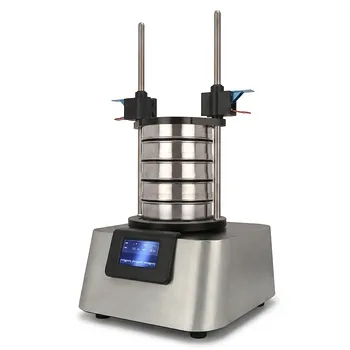
Vibratory Sieve Shaker Electromagnetic 3D Motion Powder Particle Size Analyzer for Dry and Wet Sieving
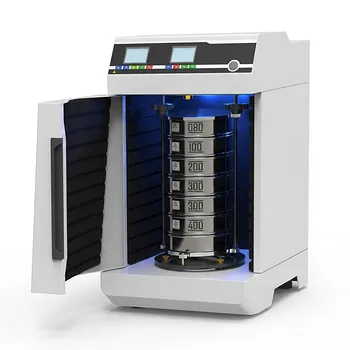
Laboratory Dry and Wet Three Dimensional Vibratory Sieve Shaker for Particle Analysis
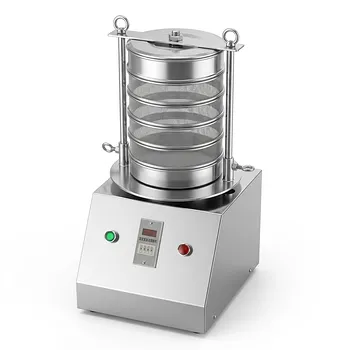
Stainless Steel Laboratory Vibratory Test Sieve Shaker
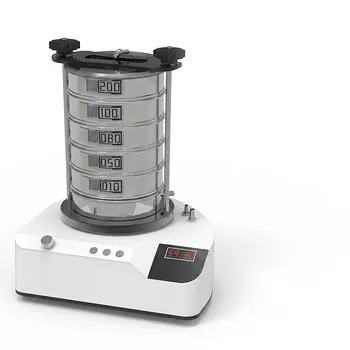
Heavy Duty Dry Three Dimensional Vibratory Sieve Shaker for Particle Separation
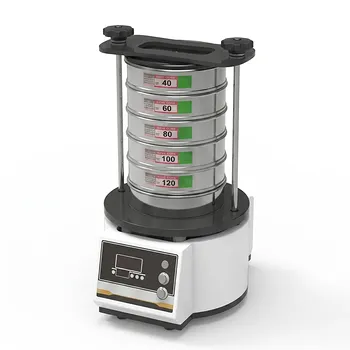
Dry Three Dimensional Vibratory Sieve Shaker
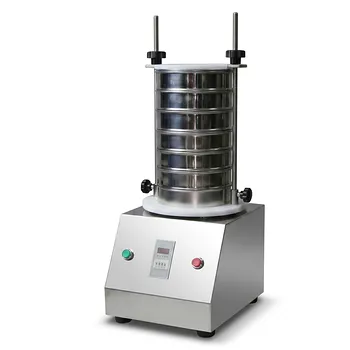
Small Laboratory Vibratory Sieve Shaker for Powder Gradation and Particle Size Analysis
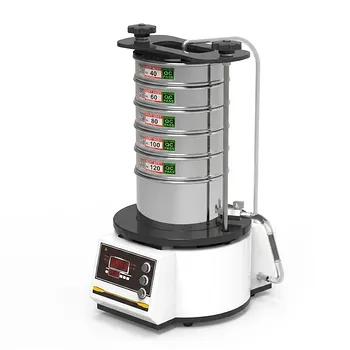
High Frequency Wet Three-Dimensional Vibrating Sieve Shaker for Dry and Wet Particle Size Analysis
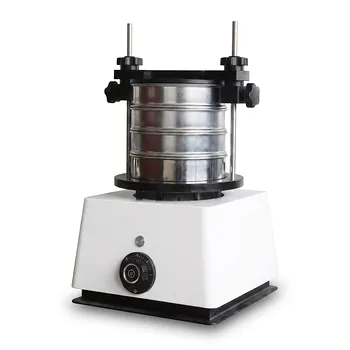
Small Laboratory Vibrating Sieve Shaker for Precise Particle Size Analysis
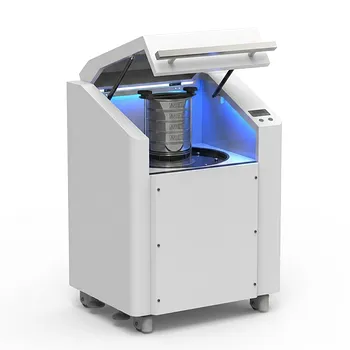
High Frequency Cabinet Type Three-Dimensional Rotary Vibrating Sieve Shaker for Dry Sieving and Particle Classification
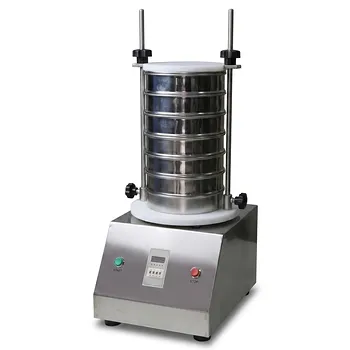
Laboratory Vibratory Test Sieve Shaker for Precision Particle Size Analysis and Powder Grading
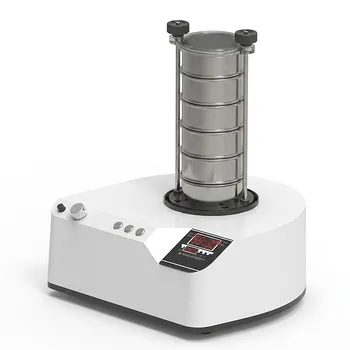
三维电磁微量振动筛分仪
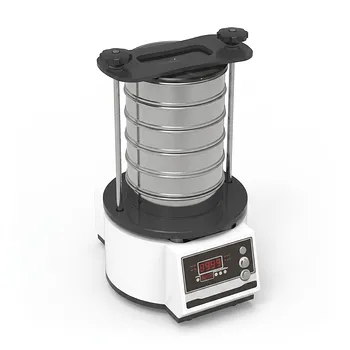
Tapping Oscillating Sieve Shaker for Dry and Wet Particle Size Analysis
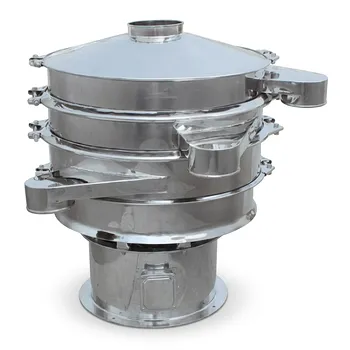
Stainless Steel Rotary Vibrating Sieve High Precision Circular Vibratory Separator Industrial Powder Grading Machine Multi Layer Sifting Equipment
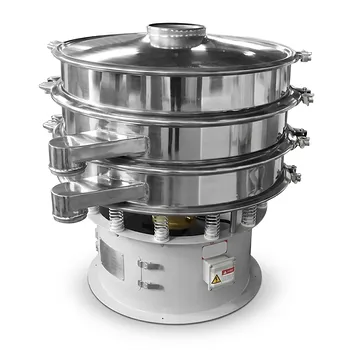
Three Dimensional Rotary Vibrating Sieve
Small Vibrating Ultrafine Grinder for Traditional Chinese Medicine
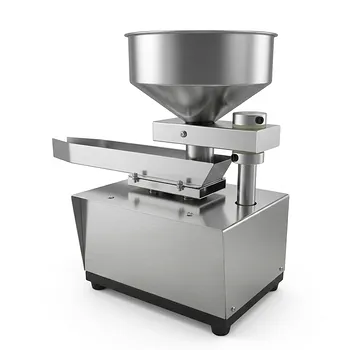
Automatic Vibrating Powder Feeder for Laboratory Material Processing Precision Vibratory Hopper Feeder for Granular and Powder Material Handling Industrial Grade Vibrating Tray Feeder for Consistent Material Sample Preparation
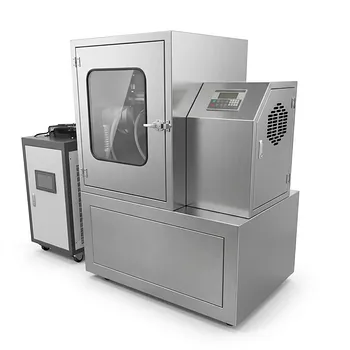
Vibratory Superfine Grinder for Ultra Fine Laboratory Powder Milling
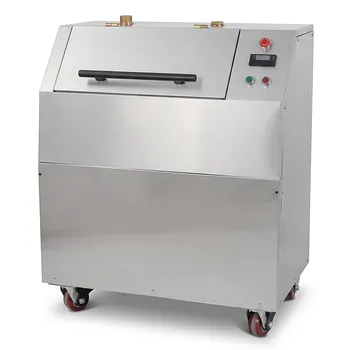
Vibratory Disc Mill for Rapid Fine Grinding and High Throughput Sample Preparation of Hard and Brittle Materials