Why is a vibratory sieve shaker used in the R&D of WPC? Achieve Precision Particle Control for Better Composites
Updated 5 months ago
Precision particle size control is the primary reason a vibratory sieve shaker is utilized in the research and development of wood-plastic composites (WPC). It allows researchers to classify crushed wood particles into specific size ranges, ensuring that filler formulations are optimized for maximum mechanical performance and experimental reproducibility.
A vibratory sieve shaker is an essential diagnostic and preparation tool in WPC R&D, used to normalize wood filler dimensions. By eliminating size variability, researchers can accurately correlate particle characteristics with the composite's final physical and mechanical properties.
Optimizing Mechanical Performance through Grading
Precise Particle Size Classification
A vibratory sieve shaker, equipped with a stack of standard test sieves, performs precise mass distribution analysis of wood flour or recycled particles. This classification allows researchers to evaluate how specific size fractions—ranging from coarse particles to fine powders—impact the tensile strength and flexural modulus of the WPC.
Characterizing the Aspect Ratio (AR)
Sorting wood fibers into specific ranges is critical for determining the aspect ratio (AR) of the fillers. Quantifying the relationship between these dimensions and the material’s performance enables the development of high-performance formulations tailored for specific industrial applications.
Preventing Stress Concentrations
Accurate sieving ensures the removal of oversized particles that could lead to stress concentration within the polymer matrix. By maintaining a uniform particle range, such as 36μm to 54μm, researchers can ensure uniform dispersion, which significantly enhances the structural integrity of the composite.
Ensuring Processability and Consistency
Enhancing Interface Bonding
The consistency of particle size directly influences the interface bonding quality between the organic wood filler and the plastic matrix. A vibratory shaker ensures that the reinforcement meets exact formulation requirements, which improves melt flowability during extrusion or injection molding.
Compatibility with Advanced Manufacturing
In WPC research involving 3D printing, shakers are used to ensure that the maximum wood particle size remains significantly smaller than the nozzle diameter. This strict grading prevents nozzle clogging and facilitates the continuous, stable production of 3D-printed filaments.
Guaranteeing Experimental Reproducibility
Using an analysis-grade shaker eliminates potential interference caused by varying wood sizes, which can skew mechanical test results. This normalization is a technical prerequisite for achieving consistent internal structures and ensuring that experimental findings can be replicated.
Understanding the Trade-offs
Limitations of Sieve Analysis
While vibratory shakers are highly effective for standard classification, they can be time-consuming when processing large volumes of raw material. Furthermore, extremely fine wood powders may experience sieve blinding or agglomeration, where particles stick together and resist passing through the mesh, potentially leading to inaccurate distribution data.
Impact of Vibration Intensity
The intensity and duration of the vibration must be carefully calibrated to avoid particle attrition. Excessive mechanical energy can cause fragile wood fibers to break down during the sieving process, resulting in a classified sample that does not accurately represent the original raw material's dimensions.
How to Apply This to Your Research
Implementing Sieve Analysis in Your Workflow
To achieve the best results in WPC development, align your sieving strategy with your specific material goals.
- If your primary focus is mechanical reinforcement: Use the shaker to isolate specific aspect ratios and remove oversized particles that act as fracture initiation points.
- If your primary focus is manufacturing consistency: Implement a multi-layer sieve stack (e.g., 6.36 mm to 1.18 mm) to normalize the filler density and ensure stable melt flow during processing.
- If your primary focus is additive manufacturing: Use high-precision meshes (such as 237μm) to guarantee that wood powder dimensions are compatible with your 3D printing hardware specifications.
By masterfully controlling particle distribution, you transform raw wood waste into a predictable, high-value engineering component.
Summary Table:
| Key Benefit | Role in WPC R&D | Impact on Material Performance |
|---|---|---|
| Size Classification | Separates wood flour into specific fractions | Optimized tensile strength & flexural modulus |
| Aspect Ratio Control | Quantifies filler dimensions (AR) | Tailored performance for industrial applications |
| Quality Control | Removes oversized particles | Prevents stress concentration & structural failure |
| Process Stability | Ensures particle-to-nozzle compatibility | Prevents clogging in 3D printing & extrusion |
| Reproducibility | Normalizes filler dimensions | Guarantees consistent and replicable test results |
Elevate Your Material Research with Precision Sample Preparation
At [Your Brand Name], we understand that the quality of your wood-plastic composites depends on the precision of your raw material processing. We provide complete laboratory sample preparation solutions for material science, specializing in high-performance powder processing and compaction equipment.
Our extensive product line includes everything you need to optimize WPC formulations:
- Particle Grading: Vibratory and air-jet sieve shakers with a wide range of test sieves and meshes.
- Size Reduction: Jaw/roll crushers, liquid nitrogen cryogenic grinders, and advanced mills (planetary ball, jet, sand, disc, and rotor).
- Mixing & Compaction: Powder and defoaming mixers, plus a full spectrum of hydraulic presses including Cold/Warm Isostatic Presses (CIP/WIP), standard lab presses, and vacuum hot presses.
Don’t let particle inconsistency compromise your mechanical testing or manufacturing process. Contact us today to discuss your specific requirements and discover how our expertise can accelerate your R&D success!
References
- C. Gozdecki, S. Zajchowski. Properties of wood–plastic composites made of milled particleboard and polypropylene. DOI: 10.1007/s00107-014-0852-2
Mentioned Products
- Vibratory Sieve Shaker Electromagnetic 3D Motion Powder Particle Size Analyzer for Dry and Wet Sieving
- Laboratory Dry and Wet Three Dimensional Vibratory Sieve Shaker for Particle Analysis
- Dry Three Dimensional Vibratory Sieve Shaker
- Stainless Steel Laboratory Vibratory Test Sieve Shaker
- Heavy Duty Dry Three Dimensional Vibratory Sieve Shaker for Particle Separation
People Also Ask
- How does a vibratory sieve shaker contribute to optimizing the performance of activated carbon? Enhance Adsorption Precision
- Why is a laboratory vibratory sieve shaker necessary for processing magnesium-based borate precursor powders? Boost Activity
- Why use a vibratory sieve shaker to verify coarse aggregate grading in rubberized concrete? Ensure Structural Integrity
- What function do vibratory sieve shakers and standard test sieves serve in the preparation of adsorbents? Key Guide
- What role does a vibratory sieve shaker play in the particle size analysis of ground corn products? Enhance QC Precision

Tech Team · PowderPreparation
Last updated on May 14, 2026
Related Products
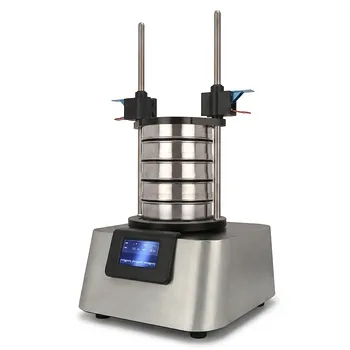
Vibratory Sieve Shaker Electromagnetic 3D Motion Powder Particle Size Analyzer for Dry and Wet Sieving
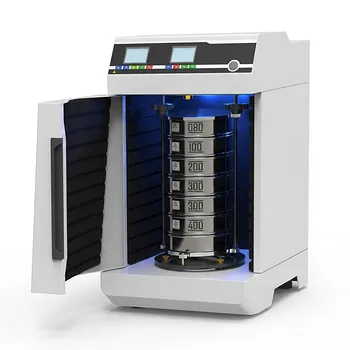
Laboratory Dry and Wet Three Dimensional Vibratory Sieve Shaker for Particle Analysis
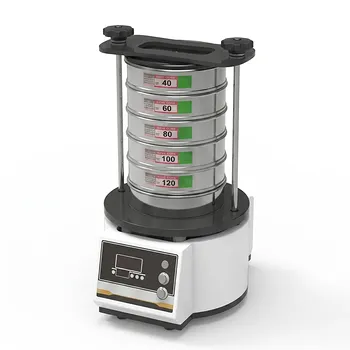
Dry Three Dimensional Vibratory Sieve Shaker
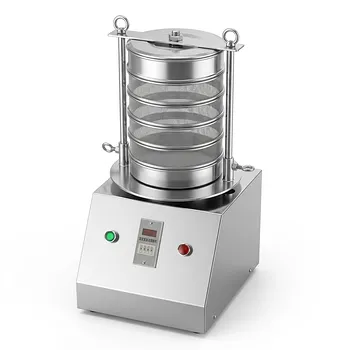
Stainless Steel Laboratory Vibratory Test Sieve Shaker
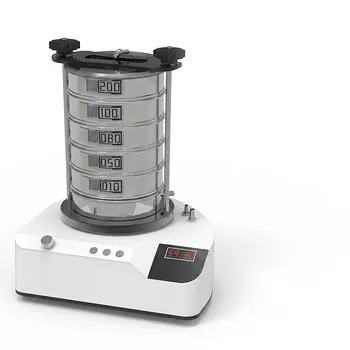
Heavy Duty Dry Three Dimensional Vibratory Sieve Shaker for Particle Separation
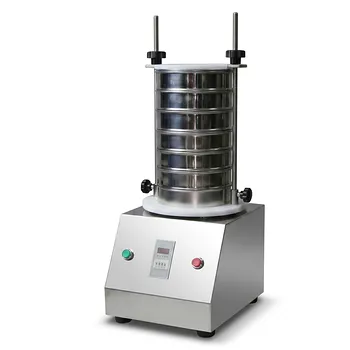
Small Laboratory Vibratory Sieve Shaker for Powder Gradation and Particle Size Analysis

Small Laboratory Vibrating Sieve Shaker for Precise Particle Size Analysis
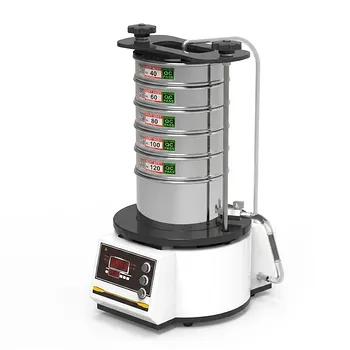
High Frequency Wet Three-Dimensional Vibrating Sieve Shaker for Dry and Wet Particle Size Analysis
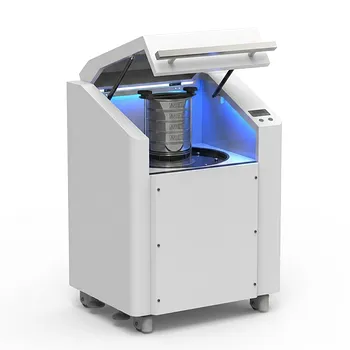
High Frequency Cabinet Type Three-Dimensional Rotary Vibrating Sieve Shaker for Dry Sieving and Particle Classification

Laboratory Vibratory Test Sieve Shaker for Precision Particle Size Analysis and Powder Grading
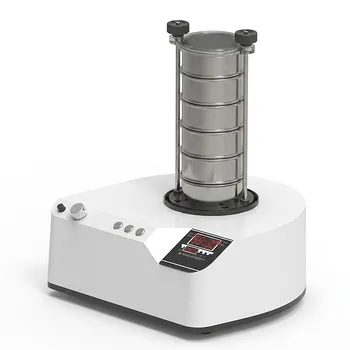
三维电磁微量振动筛分仪

Stainless Steel Rotary Vibrating Sieve High Precision Circular Vibratory Separator Industrial Powder Grading Machine Multi Layer Sifting Equipment
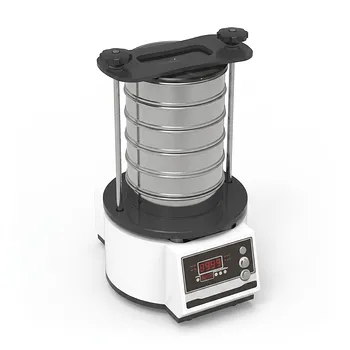
Tapping Oscillating Sieve Shaker for Dry and Wet Particle Size Analysis
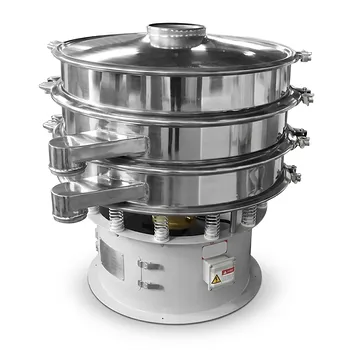
Three Dimensional Rotary Vibrating Sieve
Vibratory Superfine Grinder for Ultra Fine Laboratory Powder Milling
Small Vibrating Ultrafine Grinder for Traditional Chinese Medicine

Automatic Vibrating Powder Feeder for Laboratory Material Processing Precision Vibratory Hopper Feeder for Granular and Powder Material Handling Industrial Grade Vibrating Tray Feeder for Consistent Material Sample Preparation