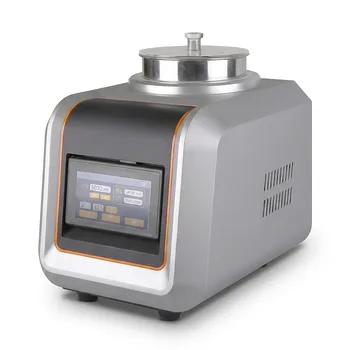
Why is a vibratory sieve shaker used in biochar classification? Ensure Uniformity and Optimize Reaction Kinetics
Updated 5 months ago
A vibratory sieve shaker is the primary tool for achieving precise particle size classification during the preparation of biochar powder. It utilizes controlled mechanical vibration and standardized mesh sieves to ensure that ground biochar meets strict size thresholds. This process is essential for removing oversized particles that would otherwise impede wood impregnation, disrupt chemical reactions, or reduce the mechanical integrity of biomass products.
The core purpose of a vibratory sieve shaker is to guarantee particle uniformity, which stabilizes the impregnation process and optimizes reaction kinetics during thermochemical conversion. By removing outliers and defining particle size distribution, it ensures the biochar performs consistently in industrial and agricultural applications.
Ensuring Seamless Integration in Wood Impregnation
Preventing Clogging of Micro-Structures
Oversized biochar particles can obstruct the delicate vessels and pits within wood during the impregnation phase. The shaker removes these "outliers," ensuring that all filler material is small enough to penetrate the wood structure without causing mechanical blockages.
Achieving Uniform Filler Distribution
Uniformity in particle size allows for an even spread of biochar within the wood matrix. This homogeneous distribution is critical for maintaining the stability of the impregnation process and the physical properties of the treated wood.
Optimizing Reaction Kinetics and Process Efficiency
Improving Heat and Mass Transfer
During processes like hydrothermal carbonization (HTC), uniform powder sizes ensure consistent heat and mass transfer. Oversized particles often result in incomplete reactions, as the core of the particle may not reach the required temperature or chemical state.
Standardizing Pyrolysis and Adsorption
In the production of specialized biochars, such as those derived from Kenaf fiber, a standardized particle size (e.g., 0.5 mm) is vital for optimizing the specific surface area. This uniformity directly improves the kinetics of heavy metal adsorption and ensures consistent results during pyrolysis.
Enabling Stable Nanoparticle Production
When biochar is used in mechanochemical processes to produce silver nanoparticles, precise size control (often between 75–125 µm) is mandatory. This precision leads to a stable and uniform size distribution of the resulting nanoparticles, typically ranging from 15 to 35 nm.
Precision Analysis for Industrial Manufacturing
Calculating Particle Size Distribution (PSD)
Technicians use multi-layered sieves to weigh the residue remaining at different levels. This data allows for an accurate assessment of powder uniformity, which is a core parameter in determining the density and mechanical stability of pellet fuels.
Controlling Pelleting Resistance
Knowing the specific proportion of mesh sizes allows operators to predict extrusion resistance in pelletizers. This prevents excessive wear on the die and ensures the finished pellets have the necessary mechanical strength for transport and use.
Understanding the Trade-offs and Limitations
Mechanical Wear and Sieve Blinding
Continuous mechanical vibration can lead to mesh deformation or wear over time, which compromises screening accuracy. Additionally, fine biochar particles can "blind" or clog the sieve apertures, particularly if the material has any residual moisture, necessitating frequent cleaning.
Batch Processing and Sample Bias
Vibratory sieving is inherently a batch process, which can create a bottleneck in high-volume production lines. Furthermore, if the sieve is overloaded, smaller particles may become trapped on top of larger ones (the "bedding effect"), leading to an inaccurate representation of the particle size distribution.
Strategic Implementation for Your Biochar Goals
To maximize the effectiveness of your classification phase, tailor your sieving strategy to your specific end-use requirements.
- If your primary focus is wood impregnation: Prioritize the removal of all particles above the vessel diameter threshold to prevent equipment downtime and ensure deep penetration.
- If your primary focus is pellet fuel production: Use multi-layered sieves to define the optimal particle size ratio, which maximizes energy density and reduces extrusion resistance.
- If your primary focus is agricultural soil research: Utilize mechanized screening to divide biochar into specific ranges (e.g., <0.5mm, 0.5-2mm) to study how different fractions affect porosity and nutrient retention.
- If your primary focus is chemical adsorption: Ensure a tight particle size range to provide a consistent specific surface area, which stabilizes the kinetics of metal recovery or contaminant removal.
Precise particle size classification is the foundation of high-performance biochar application.
Summary Table:
| Key Benefit | Impact on Biochar Preparation | Target Application |
|---|---|---|
| Size Precision | Removes oversized particles to prevent clogging | Wood Impregnation |
| Process Uniformity | Enhances heat and mass transfer kinetics | Pyrolysis & HTC |
| PSD Analysis | Predicts extrusion resistance and pellet density | Industrial Pellet Fuel |
| Surface Control | Optimizes specific surface area for adsorption | Chemical Research |
| Stability | Ensures uniform nanoparticle distribution | Mechanochemical Synthesis |
Elevate Your Biochar Research with Precision Processing
Achieving the perfect particle size distribution is critical for high-performance biochar applications, from wood impregnation to advanced chemical adsorption. Contact us today to discuss how our specialized equipment can optimize your workflow.
At our core, we provide complete laboratory sample preparation solutions for material science. We specialize in high-efficiency powder processing and compaction equipment, ensuring your samples meet the most rigorous standards.
Our extensive product lines include:
- Classification & Sieving: Vibratory and air-jet sieve shakers with a wide range of test sieves and meshes.
- Size Reduction: Jaw/roll crushers, liquid nitrogen cryogenic grinders, and high-performance mills (planetary ball, jet, sand/bead, disc, rotor).
- Mixing & Homogenization: Powder mixers and vacuum defoaming mixers.
- Advanced Compaction: A full spectrum of hydraulic presses, including Cold/Warm Isostatic Presses (CIP/WIP), standard lab presses, XRF pellet presses, and vacuum hot presses.
Partner with us to gain the consistency and reliability your material research demands. Let's build your high-precision lab together!
References
- Tania Langella, David DeVallance. Modification of wood via biochar particle impregnation. DOI: 10.1007/s00107-023-02032-4
Mentioned Products
- Vibratory Sieve Shaker Electromagnetic 3D Motion Powder Particle Size Analyzer for Dry and Wet Sieving
- Laboratory Dry and Wet Three Dimensional Vibratory Sieve Shaker for Particle Analysis
- Stainless Steel Laboratory Vibratory Test Sieve Shaker
- Heavy Duty Dry Three Dimensional Vibratory Sieve Shaker for Particle Separation
- Dry Three Dimensional Vibratory Sieve Shaker
People Also Ask
- How does a vibratory sieve shaker contribute to optimizing the performance of activated carbon? Enhance Adsorption Precision
- Why is a laboratory vibratory sieve shaker necessary for processing magnesium-based borate precursor powders? Boost Activity
- Why use a vibratory sieve shaker to verify coarse aggregate grading in rubberized concrete? Ensure Structural Integrity
- What function do vibratory sieve shakers and standard test sieves serve in the preparation of adsorbents? Key Guide
- What role does a vibratory sieve shaker play in the particle size analysis of ground corn products? Enhance QC Precision

Tech Team · PowderPreparation
Last updated on May 14, 2026
Related Products
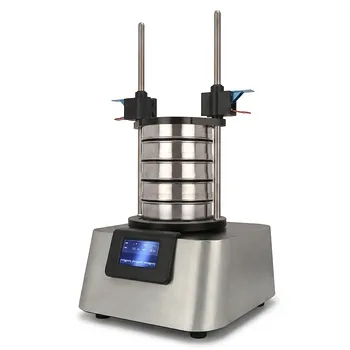
Vibratory Sieve Shaker Electromagnetic 3D Motion Powder Particle Size Analyzer for Dry and Wet Sieving
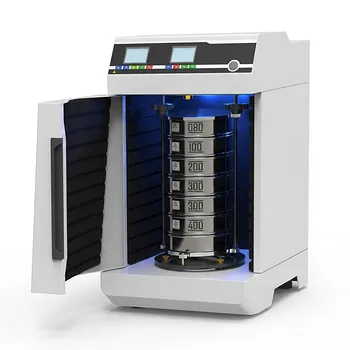
Laboratory Dry and Wet Three Dimensional Vibratory Sieve Shaker for Particle Analysis
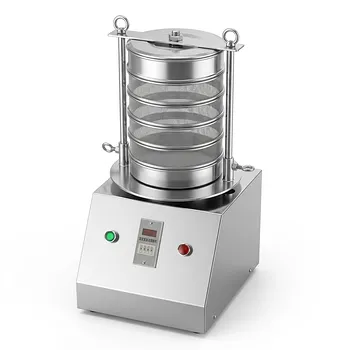
Stainless Steel Laboratory Vibratory Test Sieve Shaker
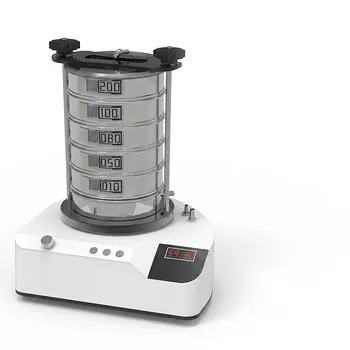
Heavy Duty Dry Three Dimensional Vibratory Sieve Shaker for Particle Separation
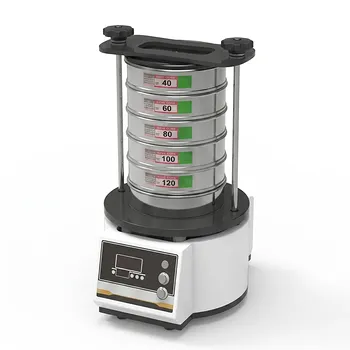
Dry Three Dimensional Vibratory Sieve Shaker
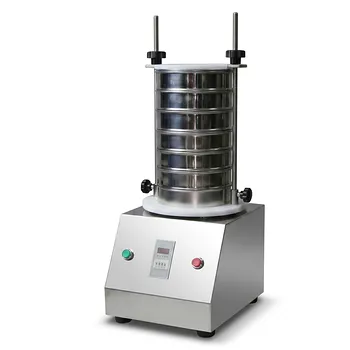
Small Laboratory Vibratory Sieve Shaker for Powder Gradation and Particle Size Analysis
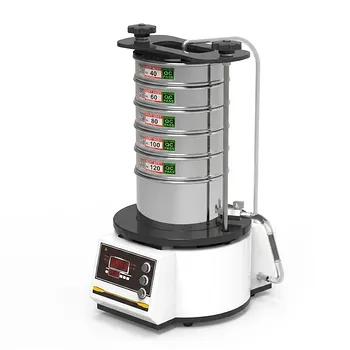
High Frequency Wet Three-Dimensional Vibrating Sieve Shaker for Dry and Wet Particle Size Analysis
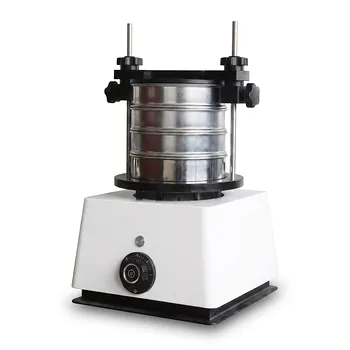
Small Laboratory Vibrating Sieve Shaker for Precise Particle Size Analysis
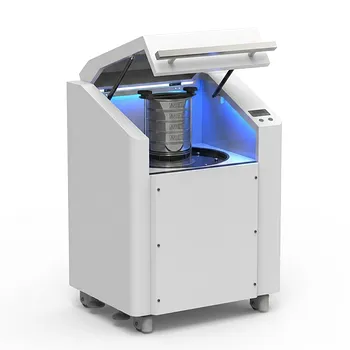
High Frequency Cabinet Type Three-Dimensional Rotary Vibrating Sieve Shaker for Dry Sieving and Particle Classification
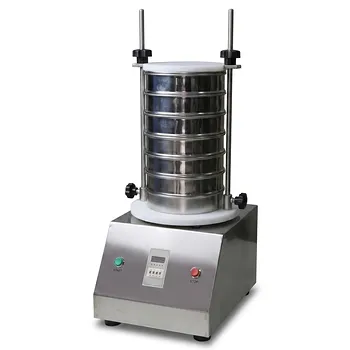
Laboratory Vibratory Test Sieve Shaker for Precision Particle Size Analysis and Powder Grading
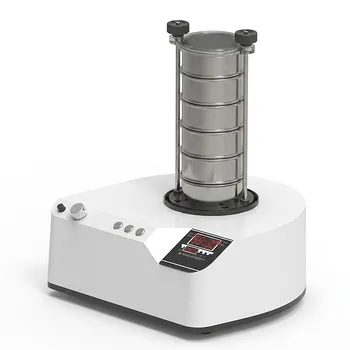
三维电磁微量振动筛分仪
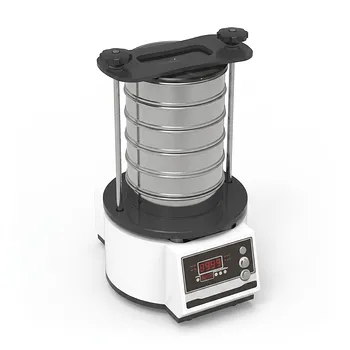
Tapping Oscillating Sieve Shaker for Dry and Wet Particle Size Analysis
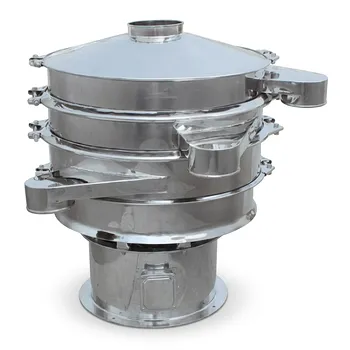
Stainless Steel Rotary Vibrating Sieve High Precision Circular Vibratory Separator Industrial Powder Grading Machine Multi Layer Sifting Equipment
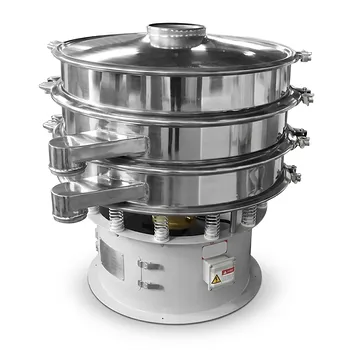
Three Dimensional Rotary Vibrating Sieve
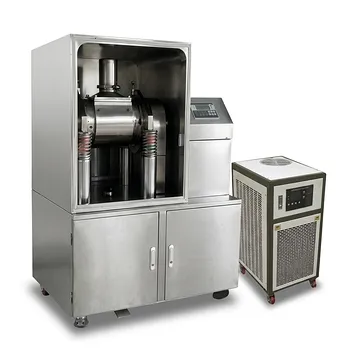
Small Vibrating Ultrafine Grinder for Traditional Chinese Medicine
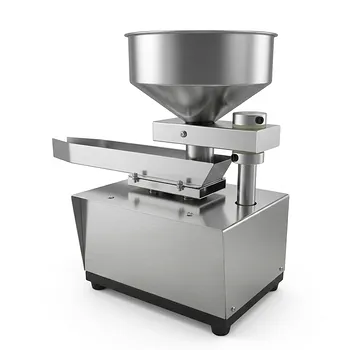
Automatic Vibrating Powder Feeder for Laboratory Material Processing Precision Vibratory Hopper Feeder for Granular and Powder Material Handling Industrial Grade Vibrating Tray Feeder for Consistent Material Sample Preparation
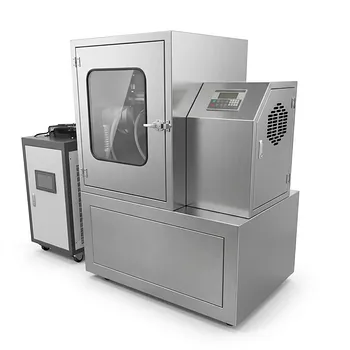
Vibratory Superfine Grinder for Ultra Fine Laboratory Powder Milling
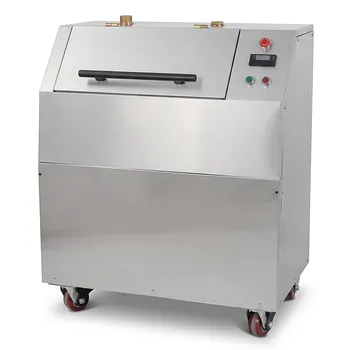
Vibratory Disc Mill for Rapid Fine Grinding and High Throughput Sample Preparation of Hard and Brittle Materials