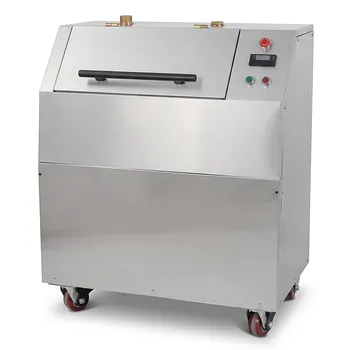
Why is a vibratory sieve shaker required for analyzing the particle distribution of crushed sugarcane bagasse? Expert Guide
Updated 5 months ago
The vibratory sieve shaker is essential for sugarcane bagasse analysis because it provides the standardized mechanical energy required to overcome the interlocking nature of biomass fibers. By applying constant shear and impact forces, the device ensures that particles are classified accurately by width, allowing for a precise determination of the mean geometric diameter. This process eliminates the inconsistency of manual sieving and delivers the repeatable data needed to optimize material packing, combustion efficiency, and structural reinforcement.
Core Takeaway: A vibratory sieve shaker automates the stratification of complex biomass fragments, enabling researchers to control particle size distribution to maximize the density of briquettes, the reactivity of thermochemical processes, and the strength of composite materials.
Optimizing Material Density and Strength
Enhancing Packing Dynamics
Accurate control of particle size distribution is critical for optimizing the packing dynamics of sugarcane bagasse during molding. Smaller particles act as fillers, migrating into the gaps between larger fibers to eliminate voids.
Improving Briquette Integrity
This efficient packing significantly increases the final strength and density of densified biomass briquettes. By achieving the correct ratio of small to large particles, manufacturers can produce more durable and energy-dense fuel sources.
Balancing Fiber and Powder Ratios
In material science, precise grading allows researchers to study how different fiber-to-powder ratios influence mechanical properties. This ensures that the bagasse components serve their intended roles as either reinforcing fibers or space-filling matrices.
Predictability in Energy and Chemical Processes
Fluidized Bed Combustion and Gasification
The particle size of bagasse—including rind, fiber, and pith—directly informs the prediction of hydrodynamic behavior. Accurate distribution data is required to model how particles will circulate and react within fluidized bed reactors.
Improving Reaction Rates
Standardized sieving ensures that biomass powders have the specific surface area necessary for uniform heating. This uniformity is vital for maintaining consistent reaction rates and preventing "cold spots" during thermochemical conversion.
Refining Industrial Ash Standards
Vibratory shakers are used to evaluate if Sugarcane Bagasse Ash (SCBA) meets industrial material standards. By removing particles larger than 500 μm and retaining fine powders below 250 μm, the shaker ensures the ash can be used effectively in concrete or polymer matrices.
Overcoming the Challenges of Biomass Morphology
Neutralizing Manual Inconsistency
Manual sieving is inherently inconsistent and prone to human error, which can skew data regarding particle distribution. A vibratory shaker provides a repeatable, automated environment that ensures fine powders pass through meshes as small as 200 mesh.
Managing Complex Plant Fragments
Sugarcane bagasse is a complex mixture of fibers and pith that tends to clump or bridge over sieve openings. The mechanical vibration induces relative motion between the plant fragments and the sieve surface, forcing smaller particles to settle into lower decks.
Promoting Uniform Matrix Dispersion
In specialized applications like polyurethane foam production, fine bagasse particles serve as nucleation points. A vibratory shaker ensures the particles are small enough to disperse uniformly, which refines the foam cell structure and improves thermal conductivity.
Understanding the Trade-offs
Limitations of Sieve Aperture Shape
While vibratory shakers are highly effective, they primarily classify particles based on their smallest cross-sectional dimension (width). For elongated sugarcane fibers, the sieve may not accurately reflect the total fiber length, which can be a critical factor in some reinforcement applications.
The Risk of Sieve Blinding
Fine biomass powders can often "blind" or clog the mesh of the screens, especially if the material has residual moisture. This requires the use of sieving aids, such as bouncing balls or specialized coatings, to maintain accuracy during long testing cycles.
Impact of Vibration Intensity
Excessive vibration can cause particle attrition, where fragile bagasse pith is broken down into smaller fragments during the test itself. This can lead to a "false" reading that suggests a higher percentage of fines than actually exists in the original sample.
How to Apply This to Your Project
Recommendations for Technical Implementation
To achieve the most accurate results when analyzing crushed sugarcane bagasse, consider your primary objective:
- If your primary focus is Biomass Briquetting: Prioritize a distribution that includes a wide range of sizes to ensure smaller particles can fill the interstitial gaps between larger fibers for maximum density.
- If your primary focus is Thermochemical Conversion: Focus on achieving a narrow, fine particle size distribution (e.g., 20 to 70 mesh) to ensure high flowability and rapid, uniform heating within the reactor.
- If your primary focus is Composite Reinforcement: Use the vibratory shaker to strictly separate long reinforcing fibers from the fine pith "dust" to maintain the structural integrity of the final material.
Precision in particle size analysis is the foundational step in transforming raw sugarcane waste into a high-value, predictable industrial resource.
Summary Table:
| Key Application | Main Benefit | Role of Vibratory Sieve Shaker |
|---|---|---|
| Biomass Briquetting | Higher density & structural integrity | Optimizes packing by balancing fine fillers and large fibers. |
| Energy & Combustion | Consistent reaction rates | Ensures specific surface area for uniform heating in reactors. |
| Composite Materials | Enhanced mechanical properties | Strictly separates reinforcing fibers from fine pith "dust." |
| Industrial Standards | Compliance & quality control | Filters Sugarcane Bagasse Ash (SCBA) to meet fine powder standards. |
Elevate Your Material Analysis with Precision Solutions
Achieving repeatable results in biomass processing requires the right tools. We provide complete laboratory sample preparation solutions for material science, specializing in high-performance powder processing and compaction equipment.
Our extensive product line includes:
- Sieve Shakers: Vibratory and air-jet models for precise particle classification.
- Milling & Grinding: Planetary ball mills, jet mills, and cryogenic grinders for fine powder production.
- Compaction Equipment: A full spectrum of hydraulic presses, including Cold/Warm Isostatic Presses (CIP/WIP), vacuum hot presses, and XRF pellet presses.
- Crushing & Mixing: Jaw/roll crushers and advanced powder/defoaming mixers.
Whether you are refining sugarcane bagasse for renewable energy or developing advanced composites, our equipment ensures the accuracy and durability your research demands.
Contact our technical experts today to optimize your lab workflow!
References
- Ian Dominic F. Tabañag, Luis K. Cabatingan. Utilization of Lignin from Waste Degumming Liquor as Fuel Additive and Binder in Sugarcane Bagasse Briquettes. DOI: 10.4028/p-4ksdat
Mentioned Products
- Vibratory Sieve Shaker Electromagnetic 3D Motion Powder Particle Size Analyzer for Dry and Wet Sieving
- Laboratory Dry and Wet Three Dimensional Vibratory Sieve Shaker for Particle Analysis
- Dry Three Dimensional Vibratory Sieve Shaker
- Stainless Steel Laboratory Vibratory Test Sieve Shaker
- Heavy Duty Dry Three Dimensional Vibratory Sieve Shaker for Particle Separation
People Also Ask
- How does a vibratory sieve shaker contribute to optimizing the performance of activated carbon? Enhance Adsorption Precision
- Why is a laboratory vibratory sieve shaker necessary for processing magnesium-based borate precursor powders? Boost Activity
- Why use a vibratory sieve shaker to verify coarse aggregate grading in rubberized concrete? Ensure Structural Integrity
- What function do vibratory sieve shakers and standard test sieves serve in the preparation of adsorbents? Key Guide
- What role does a vibratory sieve shaker play in the particle size analysis of ground corn products? Enhance QC Precision

Tech Team · PowderPreparation
Last updated on May 14, 2026
Related Products
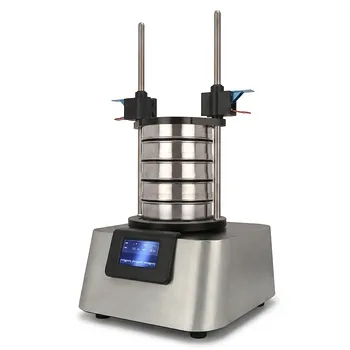
Vibratory Sieve Shaker Electromagnetic 3D Motion Powder Particle Size Analyzer for Dry and Wet Sieving
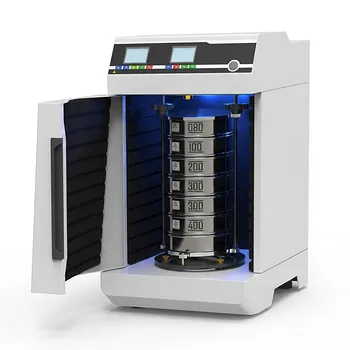
Laboratory Dry and Wet Three Dimensional Vibratory Sieve Shaker for Particle Analysis

Dry Three Dimensional Vibratory Sieve Shaker
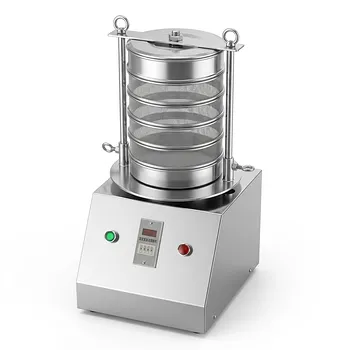
Stainless Steel Laboratory Vibratory Test Sieve Shaker
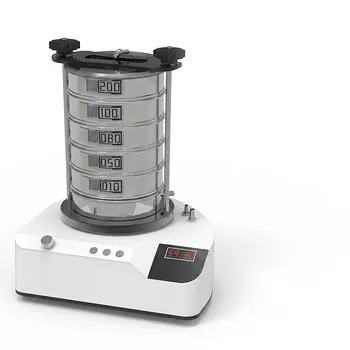
Heavy Duty Dry Three Dimensional Vibratory Sieve Shaker for Particle Separation

Small Laboratory Vibratory Sieve Shaker for Powder Gradation and Particle Size Analysis

Small Laboratory Vibrating Sieve Shaker for Precise Particle Size Analysis
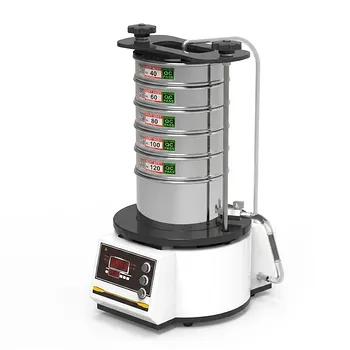
High Frequency Wet Three-Dimensional Vibrating Sieve Shaker for Dry and Wet Particle Size Analysis
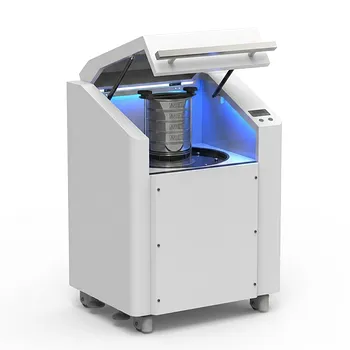
High Frequency Cabinet Type Three-Dimensional Rotary Vibrating Sieve Shaker for Dry Sieving and Particle Classification

Laboratory Vibratory Test Sieve Shaker for Precision Particle Size Analysis and Powder Grading
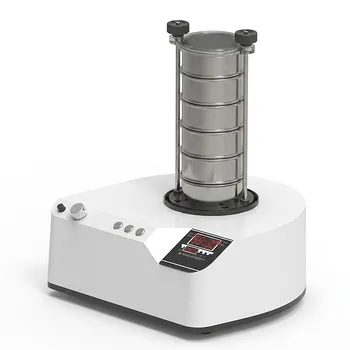
三维电磁微量振动筛分仪
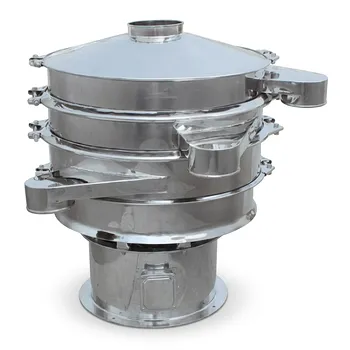
Stainless Steel Rotary Vibrating Sieve High Precision Circular Vibratory Separator Industrial Powder Grading Machine Multi Layer Sifting Equipment
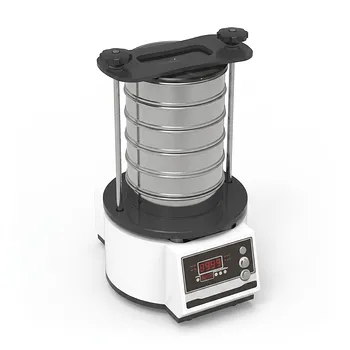
Tapping Oscillating Sieve Shaker for Dry and Wet Particle Size Analysis
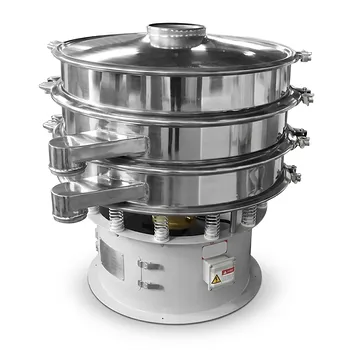
Three Dimensional Rotary Vibrating Sieve
Vibratory Superfine Grinder for Ultra Fine Laboratory Powder Milling
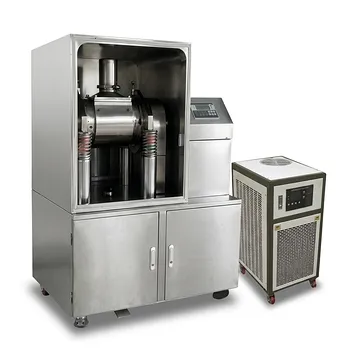
Small Vibrating Ultrafine Grinder for Traditional Chinese Medicine
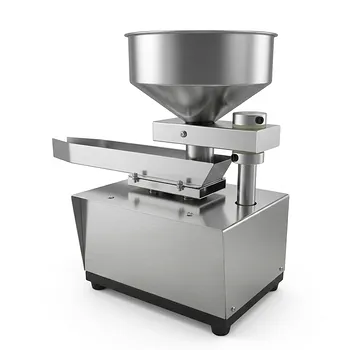
Automatic Vibrating Powder Feeder for Laboratory Material Processing Precision Vibratory Hopper Feeder for Granular and Powder Material Handling Industrial Grade Vibrating Tray Feeder for Consistent Material Sample Preparation