Why is a vibratory sieve shaker necessary when processing wood fiber fillers? Optimize Viscosity & Bonding Strength.
Updated 4 months ago
Precise particle size classification is the primary reason a vibratory sieve shaker is required for processing wood fiber fillers. This equipment ensures that crushed oak bark achieves a specific, uniform size range, which is critical for maintaining the viscosity and rheological properties of the adhesive. Without this control, uneven particles lead to clumping and inconsistent glue application, directly compromising the bonding quality and thickness of the plywood layer.
A vibratory sieve shaker acts as a critical quality control gate that transforms raw crushed bark into a functional industrial filler. By standardizing particle dimensions, it ensures the adhesive remains a manageable fluid rather than an unpredictable, clumping mass.
Managing Fluid Dynamics and Adhesive Quality
The Impact on Viscosity and Rheology
In adhesive formulation, wood fiber fillers must be distributed evenly to provide structural body without disrupting flow. Vibratory screening ensures that no oversized particles enter the mix, which would otherwise cause radical shifts in viscosity. If the particle size is inconsistent, the adhesive’s rheological properties become unpredictable, making it difficult to apply using standard industrial spreaders.
Preventing Clumping and Application Failure
Unevenly sized particles frequently lead to agglomeration, or clumping, within the glue mix. These clumps create "dead zones" in the adhesive layer where the bond is weak or nonexistent. By using a precision sieve shaker, manufacturers ensure a smooth, homogeneous paste that maintains thickness consistency across the entire surface of the plywood.
Enhancing Structural Integrity through Dispersion
Minimizing Stress Concentration
When wood fibers are used as fillers in polymer or adhesive matrices, they must be dispersed uniformly to be effective. A vibratory sieve shaker isolates specific fractions, such as those below 270 mesh, to prevent fiber agglomeration. This uniform dispersion is vital to reduce stress concentration, which occurs when large clusters of fibers create weak points in the composite structure.
Optimizing the Reinforcement Effect
The goal of adding oak bark or wood fiber is often to enhance the mechanical properties of the final product. Achieving a highly consistent particle size allows the filler to integrate seamlessly with the resin. This optimization ensures that the reinforcement effect is localized and consistent, rather than sporadic and unreliable.
Ensuring Process Efficiency and Yield
Kinetic Uniformity in Extraction
Beyond adhesives, vibratory shakers are used to screen bark for extraction and depolymerization processes. By isolating a narrow range, such as 1 to 3.15 mm, the equipment ensures that chemical reactions occur at a steady, predictable rate. This prevents local over-reaction or incomplete reactions that occur when particle sizes vary too widely.
Protecting Downstream Equipment
In large-scale processing, extremely fine "dust" or oversized "chunks" can be equally problematic. A vibratory sieve shaker removes these outliers, preventing fine powders from clogging filtration equipment. This protection maintains the flow of the production line and ensures the yield and quality of the final bio-additives.
Understanding the Trade-offs
Equipment Accuracy vs. Processing Speed
While high-frequency vibration provides superior accuracy, it can become a bottleneck if the feed rate is not managed correctly. Choosing the wrong aperture size or overloading the sieve can lead to "blinding," where particles stick to the mesh and block further screening.
Maintenance of Standard Test Sieves
The precision of the process is entirely dependent on the integrity of the standard test sieves. Because wood fibers can be abrasive or oily (especially in the case of oak bark), sieves must be cleaned and calibrated regularly. Failure to maintain the mesh leads to gradual drift in particle size, which can slowly degrade adhesive performance over time.
How to Apply This to Your Project
Making the Right Choice for Your Goal
To achieve the best results with wood fiber fillers, you must align your screening process with your end-use requirements.
- If your primary focus is adhesive bonding strength: Use a vibratory shaker to isolate particles in the 100 to 200 micrometer range to ensure maximum surface area contact without clumping.
- If your primary focus is chemical extraction from bark: Utilize a shaker with 1-3mm apertures to ensure consistent kinetic reactions and prevent downstream filter clogging.
- If your primary focus is composite reinforcement: Focus on obtaining the finest fractions (smaller than 270 mesh) to eliminate stress concentration and ensure uniform dispersion in the matrix.
The necessity of a vibratory sieve shaker lies in its ability to turn an inconsistent raw material into a standardized technical component.
Summary Table:
| Key Benefit | Role of Sieve Shaker | Impact on Final Product |
|---|---|---|
| Viscosity Control | Ensures precise particle size classification | Maintains predictable rheology for smooth application. |
| Clumping Prevention | Eliminates oversized particles and agglomerates | Prevents "dead zones" and ensures uniform bonding. |
| Structural Integrity | Isolates fine fractions (e.g., <270 mesh) | Minimizes stress concentration and enhances reinforcement. |
| Equipment Protection | Removes dust and large contaminants | Prevents clogging in downstream filtration and spreaders. |
Elevate Your Material Preparation with Precision Equipment
Consistency is the foundation of quality in material science. At KINTEK, we provide complete laboratory sample preparation solutions designed to turn raw materials into standardized technical components. Whether you are processing wood fiber fillers or advanced polymers, our equipment ensures maximum precision and reliability.
Our extensive product range includes:
- Powder Processing: Crushers (jaw/roll), liquid nitrogen cryogenic grinders, and high-performance mills (planetary ball, jet, sand/bead, disc, rotor).
- Particle Analysis: Vibratory and air-jet sieve shakers equipped with a variety of standard test sieves and meshes.
- Compaction & Mixing: Powder and defoaming mixers, plus a full spectrum of hydraulic presses, including Cold/Warm Isostatic Presses (CIP/WIP), standard lab presses, and vacuum hot presses.
Ready to optimize your adhesive formulation or powder processing workflow? Contact our experts today to find the perfect solution for your laboratory needs.
References
- Radosław Mirski, Marek Wieruszewski. The Application of Oak Bark Powder as a Filler for Melamine-Urea-Formaldehyde Adhesive in Plywood Manufacturing. DOI: 10.3390/f11121249
Mentioned Products
- Vibratory Sieve Shaker Electromagnetic 3D Motion Powder Particle Size Analyzer for Dry and Wet Sieving
- Laboratory Dry and Wet Three Dimensional Vibratory Sieve Shaker for Particle Analysis
- Dry Three Dimensional Vibratory Sieve Shaker
- Stainless Steel Laboratory Vibratory Test Sieve Shaker
- Heavy Duty Dry Three Dimensional Vibratory Sieve Shaker for Particle Separation
People Also Ask
- How does a vibratory sieve shaker contribute to optimizing the performance of activated carbon? Enhance Adsorption Precision
- Why is a laboratory vibratory sieve shaker necessary for processing magnesium-based borate precursor powders? Boost Activity
- Why use a vibratory sieve shaker to verify coarse aggregate grading in rubberized concrete? Ensure Structural Integrity
- What function do vibratory sieve shakers and standard test sieves serve in the preparation of adsorbents? Key Guide
- What role does a vibratory sieve shaker play in the particle size analysis of ground corn products? Enhance QC Precision

Tech Team · PowderPreparation
Last updated on Jun 03, 2026
Related Products
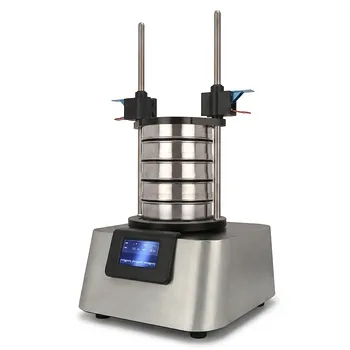
Vibratory Sieve Shaker Electromagnetic 3D Motion Powder Particle Size Analyzer for Dry and Wet Sieving
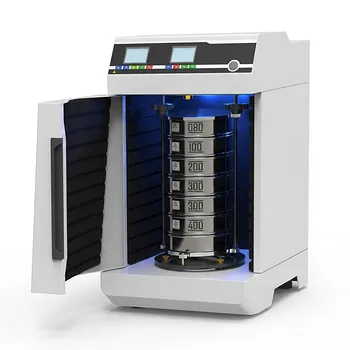
Laboratory Dry and Wet Three Dimensional Vibratory Sieve Shaker for Particle Analysis

Dry Three Dimensional Vibratory Sieve Shaker
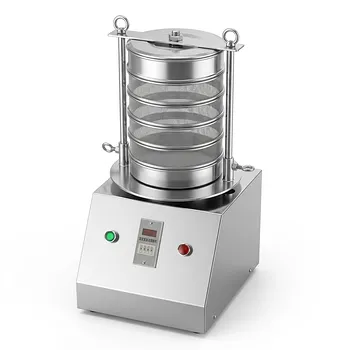
Stainless Steel Laboratory Vibratory Test Sieve Shaker

Heavy Duty Dry Three Dimensional Vibratory Sieve Shaker for Particle Separation
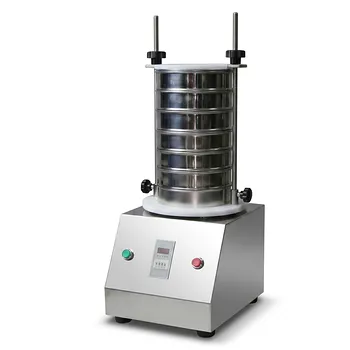
Small Laboratory Vibratory Sieve Shaker for Powder Gradation and Particle Size Analysis
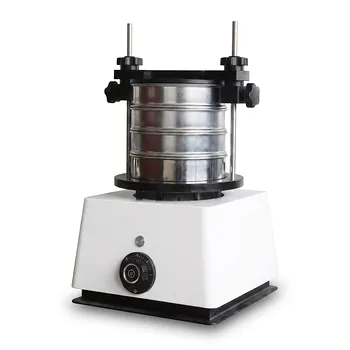
Small Laboratory Vibrating Sieve Shaker for Precise Particle Size Analysis
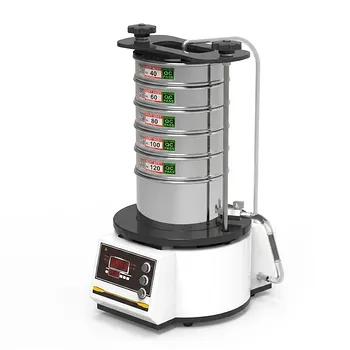
High Frequency Wet Three-Dimensional Vibrating Sieve Shaker for Dry and Wet Particle Size Analysis
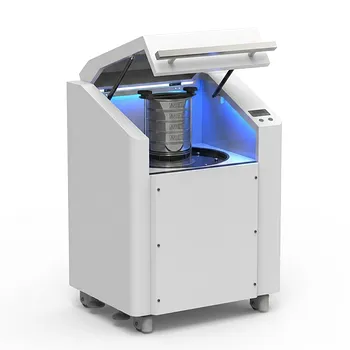
High Frequency Cabinet Type Three-Dimensional Rotary Vibrating Sieve Shaker for Dry Sieving and Particle Classification

Laboratory Vibratory Test Sieve Shaker for Precision Particle Size Analysis and Powder Grading
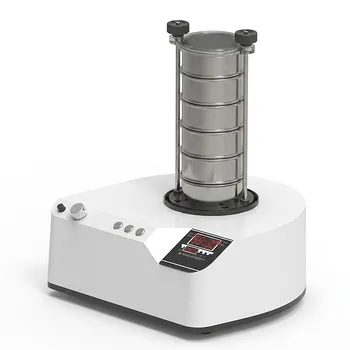
三维电磁微量振动筛分仪

Stainless Steel Rotary Vibrating Sieve High Precision Circular Vibratory Separator Industrial Powder Grading Machine Multi Layer Sifting Equipment
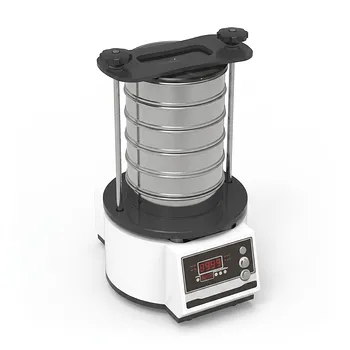
Tapping Oscillating Sieve Shaker for Dry and Wet Particle Size Analysis
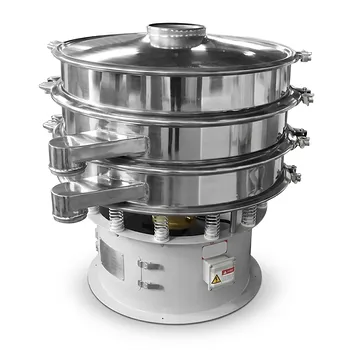
Three Dimensional Rotary Vibrating Sieve
Vibratory Superfine Grinder for Ultra Fine Laboratory Powder Milling
Small Vibrating Ultrafine Grinder for Traditional Chinese Medicine
Automatic Vibrating Powder Feeder for Laboratory Material Processing Precision Vibratory Hopper Feeder for Granular and Powder Material Handling Industrial Grade Vibrating Tray Feeder for Consistent Material Sample Preparation