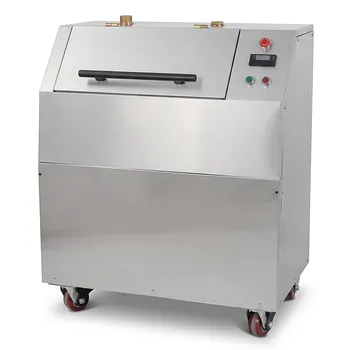
Why is a vibratory sieve shaker necessary for ball-milled silicate ceramics? Ensure Uniform Density & Precision
Updated 4 months ago
The necessity of a vibratory sieve shaker lies in its ability to enforce strict particle size uniformity and eliminate oversized agglomerates. It acts as a critical quality control gate that ensures the ball-milled powder possesses a consistent particle size distribution (PSD). This precision is foundational for achieving high green body density and predictable densification during the sintering of silicate ceramics.
By precisely controlling the particle size distribution, a vibratory sieve shaker ensures that the final ceramic component achieves its intended density, structural reliability, and surface finish. It transforms raw, uneven ball-milled output into a standardized material ready for high-performance engineering.
Optimizing the "Green Body" Formation
The term "green body" refers to the ceramic object in its unfired state. The quality of this intermediate stage dictates the success of the entire manufacturing process.
Improving Compaction and Filling Density
A vibratory sieve shaker ensures that powders fill molds or dies with maximum efficiency. When particle sizes are uniform, they pack together more tightly, significantly reducing internal voids and structural irregularities.
Enhancing Powder Flowability
Ball-milled powders, especially those mixed with binders, can form irregular clusters that hinder movement. Sieving provides granulated particles with uniform size, which improves the "flow" of the powder into complex molds or extrusion equipment.
Preventing Processing Blockages
In modern manufacturing like 3D printing or extrusion, oversized particles are catastrophic. A sieve shaker removes these outliers, preventing equipment blockages and ensuring the surface smoothness of filaments or printed layers.
Controlling the Sintering and Densification Process
Sintering is the heat-treatment process where powder particles fuse together. This stage is highly sensitive to the physical characteristics of the starting powder.
Managing Linear Shrinkage Rates
Silicate ceramics shrink as they densify in the kiln. If the powder size varies wildly, different areas of the component will shrink at different rates, leading to warping or cracking. Consistency in particle size ensures a predictable and uniform shrinkage rate.
Achieving Final Densification
High uniformity in powder size is the primary driver for achieving a high degree of densification. When particles are of a similar scale, they sinter at a synchronized rate, eliminating the large pores that often remain when using un-sieved, heterogeneous powders.
Maximizing Material Reliability and Strength
For technical ceramics, the ability to predict when a material will fail is just as important as its absolute strength.
Refining the Microstructure
The final microstructure of a sintered ceramic—its grain size and boundary distribution—is a direct reflection of the initial powder. Uniform sieving leads to a homogeneous microstructure, which minimizes local stress concentrations.
Improving Weibull Distribution Accuracy
In materials science, the Weibull distribution model is used to describe the reliability of brittle ceramics. By reducing the dispersion of material strength through particle size control, engineers can more accurately predict the inherent reliability of the component.
Understanding the Trade-offs
While a vibratory sieve shaker is essential, it is not a "set-and-forget" solution. Processors must remain aware of specific limitations to maintain powder integrity.
- Sieve Blinding: Very fine or moist silicate powders can clog the mesh apertures, a phenomenon known as "blinding," which reduces efficiency and accuracy.
- Static Accumulation: High-frequency vibration can induce static charges in ceramic powders, causing particles to re-agglomerate immediately after passing through the mesh.
- Material Loss: Over-processing or using the wrong mesh size can lead to the loss of "fines"—the smallest particles—which are sometimes necessary to trigger the early stages of sintering.
Applying Sieving to Your Production Goals
The way you utilize a vibratory sieve shaker should align with the specific performance requirements of your ceramic project.
- If your primary focus is structural reliability: Use multi-layered, high-precision meshes to narrow the particle size distribution as much as possible, ensuring a predictable Weibull modulus.
- If your primary focus is surface finish and aesthetics: Prioritize the removal of oversized agglomerates and "coarse" particles to ensure a smooth, defect-free surface after firing.
- If your primary focus is manufacturing throughput: Utilize a high-capacity industrial vibratory shaker focused on removing only the largest debris to prevent equipment blockages while maintaining high flow rates.
By mastering the particle size distribution through vibratory sieving, you transition from unpredictable experimental results to a standardized, high-performance ceramic manufacturing process.
Summary Table:
| Key Aspect | Benefit for Silicate Ceramics | Impact on Final Product |
|---|---|---|
| Particle Uniformity | Eliminates oversized agglomerates | High green body density & consistency |
| Sintering Control | Manages linear shrinkage rates | Prevents warping, cracking, and pores |
| Flowability | Uniform granulated particles | Faster mold filling & prevents blockages |
| Microstructure | Homogeneous grain distribution | Enhanced mechanical reliability & strength |
Elevate Your Ceramic Processing with Precision Equipment
Achieving superior structural reliability in silicate ceramics starts with meticulous powder preparation. At our facility, we provide complete laboratory sample preparation solutions tailored for advanced material science. Whether you are refining powders or forming complex components, our specialized equipment ensures your materials meet the highest standards.
Our extensive product lines include:
- Powder Processing: High-performance crushers (jaw/roll), liquid nitrogen cryogenic grinders, and advanced mills (planetary ball, jet, sand, and rotor).
- Particle Size Control: Precision vibratory and air-jet sieve shakers with a full range of test sieves and meshes.
- Mixing & Defoaming: High-efficiency powder and vacuum defoaming mixers.
- Advanced Compaction: A full spectrum of hydraulic presses, including Cold/Warm Isostatic Presses (CIP/WIP), XRF pellet presses, and vacuum hot presses.
Ready to optimize your powder workflow? Contact our experts today to discover how our high-precision milling and compaction solutions can transform your material research and production efficiency.
References
- Liao Shu. ULTRASOUND-ASSISTED CONVENTIONAL SINTERING OF SILICATE CERAMICS. DOI: 10.13168/cs.2022.0053
Mentioned Products
- Vibratory Sieve Shaker Electromagnetic 3D Motion Powder Particle Size Analyzer for Dry and Wet Sieving
- Laboratory Dry and Wet Three Dimensional Vibratory Sieve Shaker for Particle Analysis
- Dry Three Dimensional Vibratory Sieve Shaker
- Stainless Steel Laboratory Vibratory Test Sieve Shaker
- Heavy Duty Dry Three Dimensional Vibratory Sieve Shaker for Particle Separation
People Also Ask
- How does a vibratory sieve shaker contribute to optimizing the performance of activated carbon? Enhance Adsorption Precision
- Why is a laboratory vibratory sieve shaker necessary for processing magnesium-based borate precursor powders? Boost Activity
- Why use a vibratory sieve shaker to verify coarse aggregate grading in rubberized concrete? Ensure Structural Integrity
- What function do vibratory sieve shakers and standard test sieves serve in the preparation of adsorbents? Key Guide
- What role does a vibratory sieve shaker play in the particle size analysis of ground corn products? Enhance QC Precision

Tech Team · PowderPreparation
Last updated on Jun 03, 2026
Related Products

Vibratory Sieve Shaker Electromagnetic 3D Motion Powder Particle Size Analyzer for Dry and Wet Sieving
Laboratory Dry and Wet Three Dimensional Vibratory Sieve Shaker for Particle Analysis
Dry Three Dimensional Vibratory Sieve Shaker

Stainless Steel Laboratory Vibratory Test Sieve Shaker

Heavy Duty Dry Three Dimensional Vibratory Sieve Shaker for Particle Separation

Small Laboratory Vibratory Sieve Shaker for Powder Gradation and Particle Size Analysis

Small Laboratory Vibrating Sieve Shaker for Precise Particle Size Analysis

High Frequency Wet Three-Dimensional Vibrating Sieve Shaker for Dry and Wet Particle Size Analysis
High Frequency Cabinet Type Three-Dimensional Rotary Vibrating Sieve Shaker for Dry Sieving and Particle Classification

Laboratory Vibratory Test Sieve Shaker for Precision Particle Size Analysis and Powder Grading

三维电磁微量振动筛分仪

Stainless Steel Rotary Vibrating Sieve High Precision Circular Vibratory Separator Industrial Powder Grading Machine Multi Layer Sifting Equipment
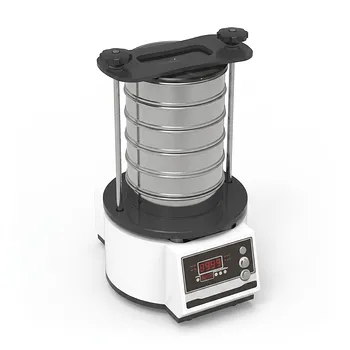
Tapping Oscillating Sieve Shaker for Dry and Wet Particle Size Analysis

Three Dimensional Rotary Vibrating Sieve
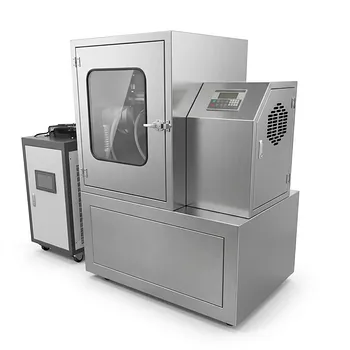
Vibratory Superfine Grinder for Ultra Fine Laboratory Powder Milling
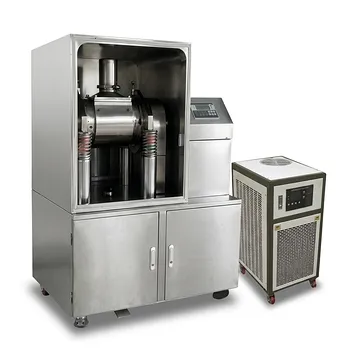
Small Vibrating Ultrafine Grinder for Traditional Chinese Medicine
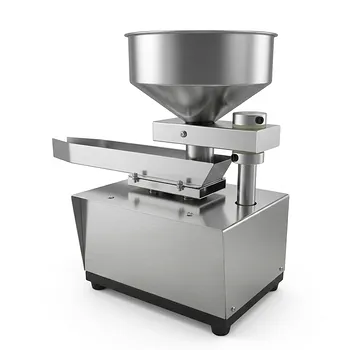
Automatic Vibrating Powder Feeder for Laboratory Material Processing Precision Vibratory Hopper Feeder for Granular and Powder Material Handling Industrial Grade Vibrating Tray Feeder for Consistent Material Sample Preparation