Why is a vibratory sieve shaker necessary in the production of Al-Ni-Fe catalyst powders? Ensure Precise Classification
Updated 5 months ago
A vibratory sieve shaker is an essential requirement for the precise classification and isolation of Al-Ni-Fe catalyst powders. By systematically removing oversized particles and ensuring the powder strictly meets specific size requirements—such as those smaller than 32 micrometers—the shaker guarantees a uniform distribution. This uniformity is the foundation for achieving consistent exposure of active sites during catalytic testing and ensuring the reproducibility of experimental data.
Core Takeaway: The vibratory sieve shaker transforms raw, ground alloys into a high-precision technical material by eliminating particle size variations. This process is the critical link between bulk chemical composition and the predictable, high-performance kinetic behavior required for catalytic applications.
Precision Control of Particle Morphology
Isolation of Fine-Grained Fractions
Ground Al-Ni-Fe alloys often contain a wide range of particle sizes that can skew performance data. A vibratory sieve shaker allows for the isolation of specific fractions, such as particles smaller than 32 micrometers, which are often the preferred size for high-activity catalysts.
Removal of Agglomerates and Oversized Contaminants
During the grinding or milling process, particles may clump together or fail to reach the desired fineness. The mechanical action of the sieve shaker effectively filters out these agglomerates, ensuring that only particles meeting the strict fineness requirements enter the next stage of production.
Uniform Active Site Exposure
Catalytic performance depends heavily on the surface area available for chemical reactions. By ensuring a uniform particle size distribution, the sieve shaker guarantees that active sites are exposed consistently across the entire batch, preventing localized reaction imbalances.
The Relationship Between Size and Alloy Evolution
Influence on Phase Transformation
In Al-Ni-Fe systems, particles of different sizes experience varying cooling rates during their initial formation or atomization. Precise sieving is a prerequisite for studying how these cooling rates influence alloy phase evolution, such as the transition from cellular to dendritic crystal structures.
Impact on Kinetic Data Accuracy
Variations in particle size can introduce "noise" into catalytic kinetic data, making it difficult to determine the true efficiency of the catalyst. Using a sieve shaker to standardize the sample eliminates these variables, allowing for a more accurate reflection of the inherent material properties.
Pretreatment for Advanced Processing
Sieving ensures that materials entering subsequent stages, such as high-energy ball milling or sintering, have consistent physical specifications. This consistency is vital for controlling the final microstructure and reducing the dispersion of material strength in the finished product.
Understanding the Trade-offs
The Risk of Sieve Blinding
High-frequency vibration is necessary for fine powders, but it can lead to sieve blinding, where particles become lodged in the mesh. This restricts the open area of the sieve and can result in inaccurate grading or reduced throughput if not monitored carefully.
Mechanical Degradation of Powders
Prolonged exposure to intense vibration can sometimes cause attrition, where particles rub against each other and further break down into undesired "fines." Balancing the duration of the sieving process is essential to maintain the integrity of the original particle size distribution.
Material Loss and Yield Considerations
Strict sieving protocols naturally result in the rejection of oversized material, which may impact total production yield. While this ensures higher quality, it requires a robust re-processing strategy for the rejected fractions to maintain cost-efficiency.
How to Apply This to Your Process
Recommendations for Implementation
- If your primary focus is maximize catalytic activity: Prioritize the isolation of the finest fractions (e.g., <32 μm) to maximize the specific surface area and active site density.
- If your primary focus is experimental reproducibility: Use high-precision, multi-layered test sieves to ensure identical particle size distribution across every batch of test samples.
- If your primary focus is understanding alloy phases: Segment atomized powders into narrow size ranges (e.g., <20 μm, 20–50 μm, >50 μm) to isolate the effects of cooling rates on crystal structure.
Precision sieving is not a secondary cleanup step, but the fundamental process that ensures your Al-Ni-Fe catalyst performs with technical consistency and scientific accuracy.
Summary Table:
| Feature | Impact on Al-Ni-Fe Catalysts | Key Benefit |
|---|---|---|
| Precise Fractionation | Isolates particles <32 μm for maximum surface area | Enhanced catalytic activity & reproducibility |
| Agglomerate Removal | Filters out clumps and oversized contaminants | Uniform active site exposure across batches |
| Kinetic Standardization | Eliminates particle size 'noise' in data | Accurate measurement of inherent material properties |
| Phase Control | Links particle size to alloy cooling rates | Precise study of cellular vs. dendritic structures |
| Processing Prep | Standardizes input for ball milling or sintering | Consistent microstructure in final products |
Elevate Your Material Research with Precision Sample Preparation
Achieving consistent catalytic performance starts with uncompromising particle size control. At [Company Name], we provide complete laboratory sample preparation solutions for material science, specializing in high-performance powder processing and compaction equipment.
Whether you need to isolate fine-grained Al-Ni-Fe fractions or require robust equipment for large-scale alloying, our extensive line has you covered:
- Sieving & Milling: Vibratory and air-jet sieve shakers, planetary ball mills, jet mills, and cryogenic grinders for ultra-fine powders.
- Compaction & Pressing: A full spectrum of hydraulic presses, including Cold/Warm Isostatic Presses (CIP/WIP), vacuum hot presses, and XRF pellet presses.
- Processing: Crushers, powder mixers, and defoaming mixers designed for technical material consistency.
Ready to optimize your powder quality and experimental accuracy? Contact our technical experts today to find the perfect equipment configuration for your laboratory's needs.
References
- Amelia Zięba, Lidia Lityńska‐Dobrzyńska. Microstructure and Catalytic Properties of Al-Ni-Fe Alloys in the Form of Melt-Spun Ribbons. DOI: 10.24425/amm.2025.153474
Mentioned Products
- Vibratory Sieve Shaker Electromagnetic 3D Motion Powder Particle Size Analyzer for Dry and Wet Sieving
- Laboratory Dry and Wet Three Dimensional Vibratory Sieve Shaker for Particle Analysis
- Dry Three Dimensional Vibratory Sieve Shaker
- Stainless Steel Laboratory Vibratory Test Sieve Shaker
- Heavy Duty Dry Three Dimensional Vibratory Sieve Shaker for Particle Separation
People Also Ask
- How does a vibratory sieve shaker contribute to optimizing the performance of activated carbon? Enhance Adsorption Precision
- Why is a laboratory vibratory sieve shaker necessary for processing magnesium-based borate precursor powders? Boost Activity
- Why use a vibratory sieve shaker to verify coarse aggregate grading in rubberized concrete? Ensure Structural Integrity
- What function do vibratory sieve shakers and standard test sieves serve in the preparation of adsorbents? Key Guide
- What role does a vibratory sieve shaker play in the particle size analysis of ground corn products? Enhance QC Precision

Tech Team · PowderPreparation
Last updated on May 14, 2026
Related Products
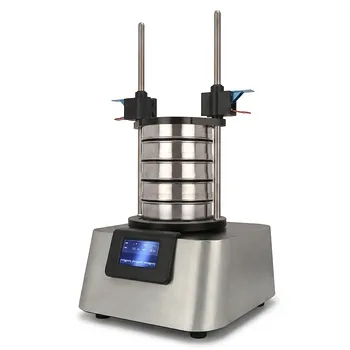
Vibratory Sieve Shaker Electromagnetic 3D Motion Powder Particle Size Analyzer for Dry and Wet Sieving
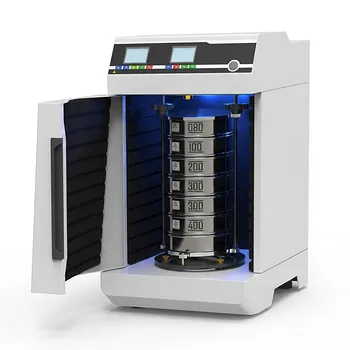
Laboratory Dry and Wet Three Dimensional Vibratory Sieve Shaker for Particle Analysis
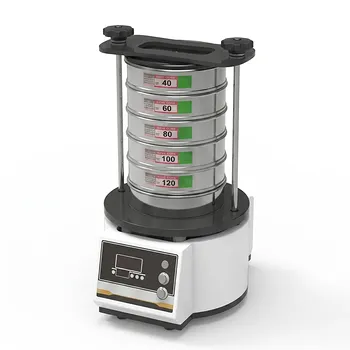
Dry Three Dimensional Vibratory Sieve Shaker
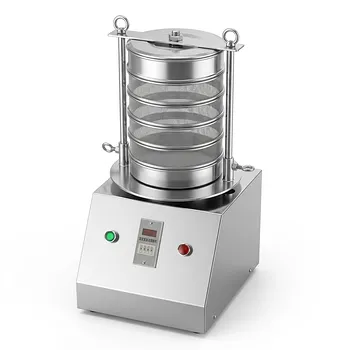
Stainless Steel Laboratory Vibratory Test Sieve Shaker
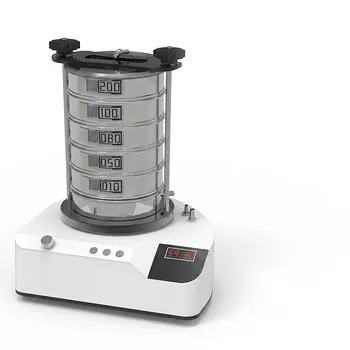
Heavy Duty Dry Three Dimensional Vibratory Sieve Shaker for Particle Separation
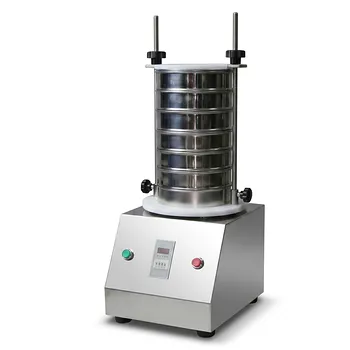
Small Laboratory Vibratory Sieve Shaker for Powder Gradation and Particle Size Analysis
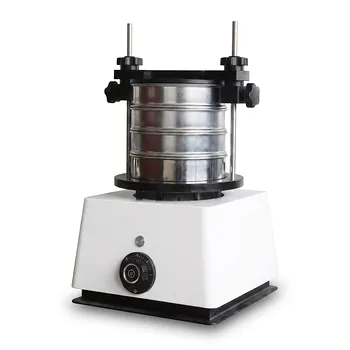
Small Laboratory Vibrating Sieve Shaker for Precise Particle Size Analysis
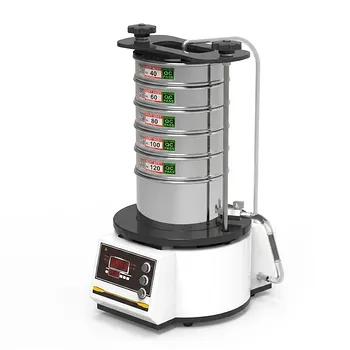
High Frequency Wet Three-Dimensional Vibrating Sieve Shaker for Dry and Wet Particle Size Analysis
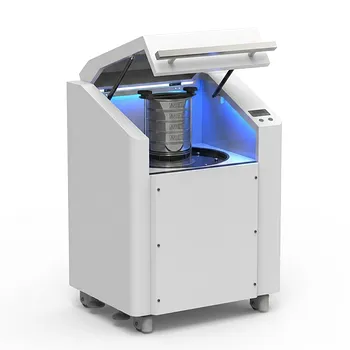
High Frequency Cabinet Type Three-Dimensional Rotary Vibrating Sieve Shaker for Dry Sieving and Particle Classification
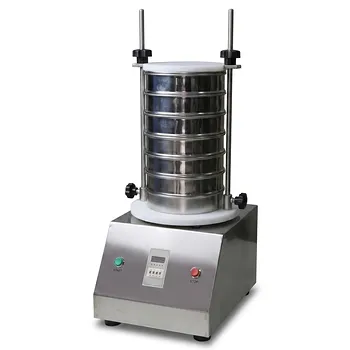
Laboratory Vibratory Test Sieve Shaker for Precision Particle Size Analysis and Powder Grading
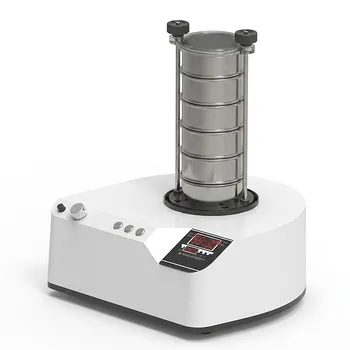
三维电磁微量振动筛分仪
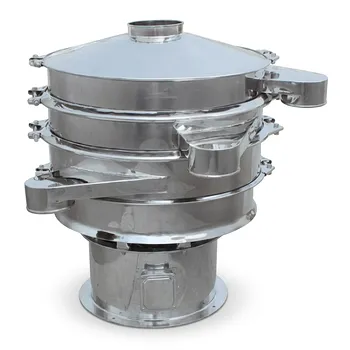
Stainless Steel Rotary Vibrating Sieve High Precision Circular Vibratory Separator Industrial Powder Grading Machine Multi Layer Sifting Equipment
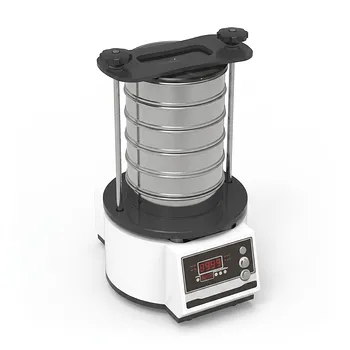
Tapping Oscillating Sieve Shaker for Dry and Wet Particle Size Analysis
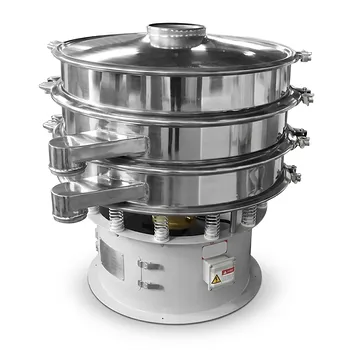
Three Dimensional Rotary Vibrating Sieve
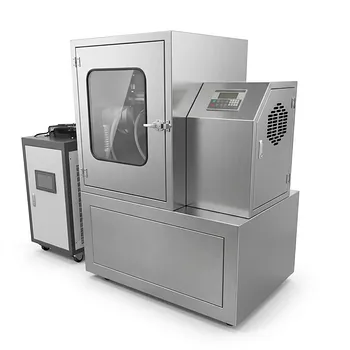
Vibratory Superfine Grinder for Ultra Fine Laboratory Powder Milling
Small Vibrating Ultrafine Grinder for Traditional Chinese Medicine
Automatic Vibrating Powder Feeder for Laboratory Material Processing Precision Vibratory Hopper Feeder for Granular and Powder Material Handling Industrial Grade Vibrating Tray Feeder for Consistent Material Sample Preparation