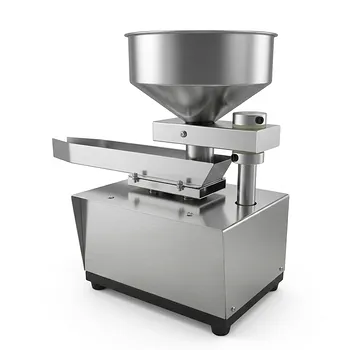
Why is a vibratory sieve shaker necessary for processing Steatite-Based Ceramic slurry after the drying stage?
Updated 5 months ago
The necessity of a vibratory sieve shaker in processing Steatite-Based Ceramics lies in its ability to transform crushed, dried bulk material into a uniform powder. By effectively removing non-uniform agglomerates and grading the particles, the equipment ensures a consistent particle size distribution. This uniformity is the critical foundation for high-quality dry pressing molding, directly influencing the final density and structural integrity of the ceramic component.
Core Takeaway: A vibratory sieve shaker acts as a critical quality gate that eliminates particle size variance and agglomerates. This process ensures optimal mold filling and uniform density in the green body, which is essential for minimizing microscopic defects during the sintering process.
Eliminating Agglomerates and Ensuring Uniformity
Removing Non-Uniform Clusters
After the drying stage, Steatite-Based Ceramic material often exists as large, irregular bulk masses. Even after initial crushing, non-uniform agglomerates persist, which can create voids or irregularities if they enter the molding stage. The vibratory sieve shaker uses controlled mechanical energy to break apart or isolate these clusters, ensuring only compliant material proceeds.
Controlling Particle Size Distribution
A precise particle size distribution (PSD) is mandatory for high-performance ceramics. The shaker utilizes precision meshes to define the upper and lower limits of the powder, ensuring that the material achieves a consistent physical profile. This consistency is vital for maintaining repeatable results across different production batches.
Impact on Forming and Pressing
Optimizing Mold Filling
For dry pressing to be effective, the powder must possess excellent flowability to fill the mold cavities completely and evenly. Uniform granules produced by vibratory sieving act like a fluid, filling complex geometries without leaving air pockets. This results in a "green body" with a highly consistent filling effect, which is the first step in avoiding structural failure.
Reducing Density Gradients
If particle sizes vary significantly, the pressure applied during molding will be distributed unevenly. This creates density gradients within the green body, where some areas are more compacted than others. By ensuring a uniform powder, the vibratory sieve shaker minimizes these gradients, preventing warping or cracking during the subsequent firing stage.
Structural Integrity and Reliability
Minimizing Microscopic Defects
Large, unintended particles or clusters act as stress concentrators within the ceramic matrix. These microscopic pores and inclusions can significantly reduce the fracture strength of the final product. Using high-mesh screens allows manufacturers to filter out these "large-scale defects," thereby increasing the mechanical reliability of the sintered body.
Enhancing Sintered Strength
The uniformity of the starting powder directly determines the final microstructure of the sintered ceramic. A controlled particle size leads to a more predictable grain structure, which narrows the dispersion of material strength. This allow engineers to use the Weibull distribution model more effectively to predict the lifespan and failure rates of the ceramic components.
Understanding the Trade-offs
The Risk of Mesh Blinding
One primary challenge with vibratory sieving is mesh blinding, where fine particles become lodged in the screen apertures. If the vibration frequency or amplitude is not correctly calibrated, the effective screening area decreases, leading to throughput bottlenecks. Regular maintenance and the use of anti-blinding devices (such as balls or ultrasonic transducers) are often required to maintain efficiency.
Material Degradation from Over-Processing
Excessive vibration or prolonged sieving times can lead to particle attrition, where the ceramic granules are ground down into sub-optimal fines. These fines can negatively impact the flowability and dust levels in the facility. Balancing the vibration intensity with the material's fragility is essential to maintain the desired granule integrity.
Making the Right Choice for Your Goal
To achieve the best results with Steatite-Based Ceramics, your sieving strategy should align with your specific production objectives:
- If your primary focus is mechanical reliability: Use high-precision, fine-mesh screens to eliminate even the smallest coarse agglomerates that could act as fracture points.
- If your primary focus is high-speed production: Optimize the vibration frequency to maximize throughput and prevent mesh blinding while maintaining a standardized particle size.
- If your primary focus is surface finish and precision: Ensure the sieve shaker is used immediately before the tape casting or pressing stage to remove any secondary agglomerates formed during storage.
Implementing a rigorous vibratory sieving protocol is the most effective way to bridge the gap between raw dried material and a high-performance, defect-free ceramic component.
Summary Table:
| Key Function | Impact on Ceramic Quality | Technical Challenge |
|---|---|---|
| Agglomerate Removal | Eliminates voids; ensures uniform density | Risk of mesh blinding |
| PSD Control | Guarantees consistent mold flowability | Potential particle attrition |
| Defect Reduction | Increases mechanical & sintered strength | Requires precise vibration calibration |
| Microstructure Prep | Leads to predictable grain structures | Regular maintenance of precision meshes |
Master Your Powder Processing with Expert Solutions
Achieving the perfect particle size distribution is critical for high-performance Steatite ceramics. At our facility, we provide complete laboratory sample preparation solutions designed specifically for material science.
Our specialized equipment range includes:
- Sieving & Grading: High-precision vibratory sieve shakers and air-jet sieves to eliminate agglomerates.
- Milling & Grinding: Planetary ball mills, jet mills, and cryogenic grinders for superior powder refinement.
- Advanced Compaction: A full spectrum of hydraulic presses, including Cold/Warm Isostatic Presses (CIP/WIP) and vacuum hot presses to ensure optimal green body density.
Don't let particle variance compromise your structural integrity. Contact our technical experts today to find the ideal equipment for your laboratory or production line!
References
- H. Kelvin, W.D. Teng. Phase Analysis and Densification of Steatite-based Ceramics. DOI: 10.15282/ijame.1.2010.1.0004
Mentioned Products
- Vibratory Sieve Shaker Electromagnetic 3D Motion Powder Particle Size Analyzer for Dry and Wet Sieving
- Stainless Steel Laboratory Vibratory Test Sieve Shaker
- Small Laboratory Vibratory Sieve Shaker for Powder Gradation and Particle Size Analysis
- Dry Three Dimensional Vibratory Sieve Shaker
- Small Laboratory Vibrating Sieve Shaker for Precise Particle Size Analysis
People Also Ask
- How does a vibratory sieve shaker contribute to optimizing the performance of activated carbon? Enhance Adsorption Precision
- Why is a laboratory vibratory sieve shaker necessary for processing magnesium-based borate precursor powders? Boost Activity
- Why use a vibratory sieve shaker to verify coarse aggregate grading in rubberized concrete? Ensure Structural Integrity
- What function do vibratory sieve shakers and standard test sieves serve in the preparation of adsorbents? Key Guide
- What role does a vibratory sieve shaker play in the particle size analysis of ground corn products? Enhance QC Precision

Tech Team · PowderPreparation
Last updated on May 14, 2026
Related Products
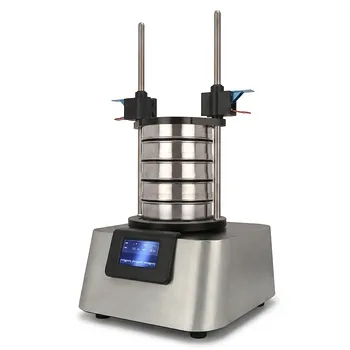
Vibratory Sieve Shaker Electromagnetic 3D Motion Powder Particle Size Analyzer for Dry and Wet Sieving
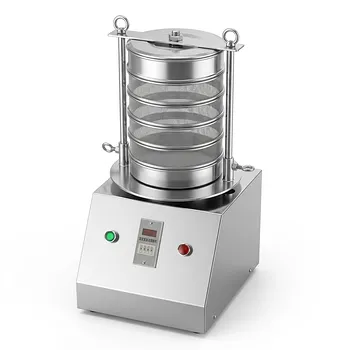
Stainless Steel Laboratory Vibratory Test Sieve Shaker
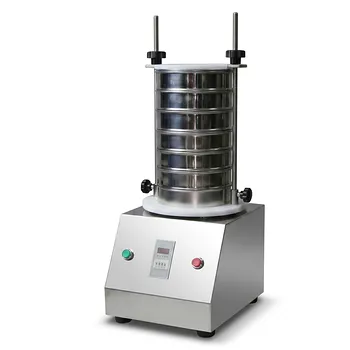
Small Laboratory Vibratory Sieve Shaker for Powder Gradation and Particle Size Analysis
Dry Three Dimensional Vibratory Sieve Shaker

Small Laboratory Vibrating Sieve Shaker for Precise Particle Size Analysis

Heavy Duty Dry Three Dimensional Vibratory Sieve Shaker for Particle Separation
Laboratory Dry and Wet Three Dimensional Vibratory Sieve Shaker for Particle Analysis

Laboratory Vibratory Test Sieve Shaker for Precision Particle Size Analysis and Powder Grading
High Frequency Cabinet Type Three-Dimensional Rotary Vibrating Sieve Shaker for Dry Sieving and Particle Classification
High Frequency Wet Three-Dimensional Vibrating Sieve Shaker for Dry and Wet Particle Size Analysis
三维电磁微量振动筛分仪
Tapping Oscillating Sieve Shaker for Dry and Wet Particle Size Analysis

Stainless Steel Rotary Vibrating Sieve High Precision Circular Vibratory Separator Industrial Powder Grading Machine Multi Layer Sifting Equipment

Three Dimensional Rotary Vibrating Sieve