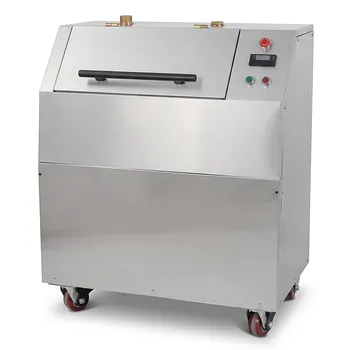
Why is a vibratory sieve shaker necessary for determining the particle size distribution of Tarwad seed powder?
Updated 4 months ago
Standardizing particle size analysis for Tarwad seed powder requires precise, repeatable mechanical control. A vibratory sieve shaker is necessary because it automates the physical separation of ground powder into distinct size fractions using high-frequency vibration and a stack of precision sieves. This process is the only reliable way to calculate the fineness modulus and mean diameter, which are critical metrics for predicting the powder’s flowability and industrial processing efficiency.
Core Takeaway: The vibratory sieve shaker eliminates the inconsistencies of manual sieving by using standardized mechanical motion to stratify particles. This allows for the creation of accurate particle size distribution curves, which are essential for controlling reaction rates, packaging precision, and the final texture of Tarwad seed products.
Enhancing Accuracy through Standardized Vibration
Achieving Consistent Particle Stratification
A vibratory sieve shaker provides the necessary mechanical vibration to induce relative motion between the seed fragments and the sieve surface. This motion ensures that particles smaller than the mesh aperture—ranging from 30 to 150 mesh—successfully pass through the upper decks and settle into the correct lower levels.
Eliminating Operator Inconsistency
Manual sieving is prone to human error and lack of repeatability, which can skew data regarding particle size distribution. An automated shaker ensures that every sample is subjected to the same frequency and duration of vibration, providing the standardized data required for mathematical modeling and process evaluation.
Impact on Material Processing and Quality
Optimizing Flowability and Packaging
The distribution of particle sizes directly influences how Tarwad seed powder behaves during industrial packaging. By using a shaker to ensure a specific fineness modulus, manufacturers can prevent "bridging" or clogging in hoppers, which improves filling precision and packaging efficiency.
Controlling Effective Surface Area
For applications involving mechanochemical reactions, the shaker isolates specific fractions, such as those between 100 and 250 μm. This precision is critical because it controls the effective reaction surface area, significantly reducing fluctuations in reaction rates that occur when particle sizes vary.
Ensuring Texture and Uniformity
The final texture of the product is a direct result of the mean diameter of the powder particles. Utilizing a vibratory shaker allows for the isolation of components smaller than 250 micrometers, ensuring a uniform consistency that is vital for pharmaceutical diluents or high-quality food-grade powders.
Understanding the Trade-offs
Risk of Particle Degradation
While high-frequency vibration is necessary for separation, excessive force can cause particle attrition, where fragile Tarwad seed fragments break down into smaller pieces during the test. This can lead to an inaccurate "fine-heavy" reading that does not reflect the actual state of the bulk material.
Challenges with High-Oil Content
Tarwad seeds, like many biomass materials, may contain oils that lead to sieve blinding (clogging of the mesh). If the vibration parameters are not correctly tuned, fine particles can stick to the wires or clump together, requiring the use of additional sieving aids like brushes or ceramic balls to maintain accuracy.
How to Apply This to Your Project
When integrating vibratory sieve analysis into your quality control or research workflow, consider your primary objective to select the correct parameters.
- If your primary focus is Production Efficiency: Prioritize the analysis of flowability and bulk density to ensure the powder moves through automated machinery without causing downtime.
- If your primary focus is Chemical Reactivity: Use the shaker to strictly isolate the specific surface area required for consistent reaction rates in thermochemical or mechanochemical processes.
- If your primary focus is Product Consistency: Focus on the fineness modulus and d80 particle size to ensure every batch meets the texture and dissolution standards required for the end consumer.
Accurate particle size distribution data transforms Tarwad seed powder from a raw agricultural byproduct into a predictable, high-performance industrial ingredient.
Summary Table:
| Feature | Role in Tarwad Seed Analysis | Benefit for Material Processing |
|---|---|---|
| Mechanical Vibration | Induces relative motion between fragments & mesh | Ensures accurate stratification (30-150 mesh) |
| Automation | Eliminates manual sieving and operator bias | Provides standardized, repeatable data sets |
| Fineness Control | Calculates fineness modulus & mean diameter | Prevents bridging/clogging in packaging |
| Fraction Isolation | Targets specific ranges (e.g., 100-250 μm) | Controls reaction rates via surface area |
| Adjustable Tuning | Mitigates sieve blinding from seed oils | Maintains high accuracy for biomass materials |
Optimize Your Material Analysis with Precision Equipment
Achieving consistent particle size distribution for materials like Tarwad seed powder requires more than just standard tools—it demands precision and reliability. At [Your Brand Name], we provide complete laboratory sample preparation solutions tailored for material science professionals.
Whether you are processing biomass, pharmaceuticals, or advanced ceramics, our extensive range of equipment ensures your samples are prepared to the highest standards:
- Particle Size Analysis: Advanced vibratory and air-jet sieve shakers with high-precision test sieves.
- Milling & Grinding: Planetary ball mills, jet mills, and cryogenic grinders for ultra-fine powder processing.
- Compaction & Pressing: A full spectrum of hydraulic presses, including Cold/Warm Isostatic Presses (CIP/WIP) and vacuum hot presses.
- Mixing: High-efficiency powder and defoaming mixers for uniform material blending.
Ready to enhance your lab's efficiency and data accuracy? Contact our technical experts today to find the perfect configuration for your specific application needs!
References
- Deshmukh Vm, Mankar MS. Study the engineering and chemical properties of tarwad (Cassia tora L.) seed powder. DOI: 10.22271/chemi.2021.v9.i1af.11572
Mentioned Products
- Vibratory Sieve Shaker Electromagnetic 3D Motion Powder Particle Size Analyzer for Dry and Wet Sieving
- Laboratory Dry and Wet Three Dimensional Vibratory Sieve Shaker for Particle Analysis
- Dry Three Dimensional Vibratory Sieve Shaker
- Stainless Steel Laboratory Vibratory Test Sieve Shaker
- Heavy Duty Dry Three Dimensional Vibratory Sieve Shaker for Particle Separation
People Also Ask
- How does a vibratory sieve shaker contribute to optimizing the performance of activated carbon? Enhance Adsorption Precision
- Why is a laboratory vibratory sieve shaker necessary for processing magnesium-based borate precursor powders? Boost Activity
- Why use a vibratory sieve shaker to verify coarse aggregate grading in rubberized concrete? Ensure Structural Integrity
- What function do vibratory sieve shakers and standard test sieves serve in the preparation of adsorbents? Key Guide
- What role does a vibratory sieve shaker play in the particle size analysis of ground corn products? Enhance QC Precision

Tech Team · PowderPreparation
Last updated on Jun 03, 2026
Related Products
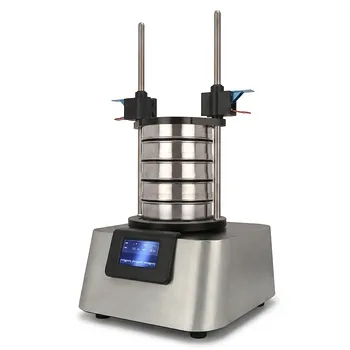
Vibratory Sieve Shaker Electromagnetic 3D Motion Powder Particle Size Analyzer for Dry and Wet Sieving
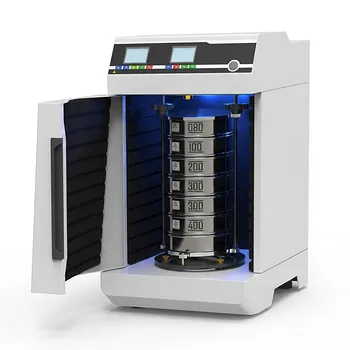
Laboratory Dry and Wet Three Dimensional Vibratory Sieve Shaker for Particle Analysis
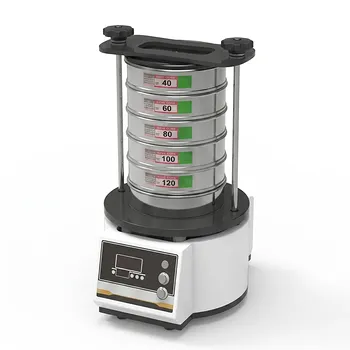
Dry Three Dimensional Vibratory Sieve Shaker
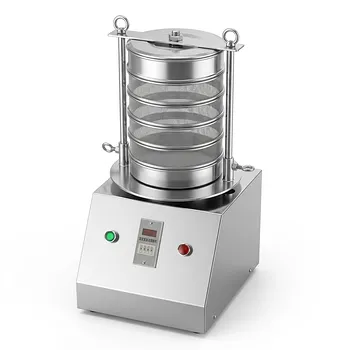
Stainless Steel Laboratory Vibratory Test Sieve Shaker
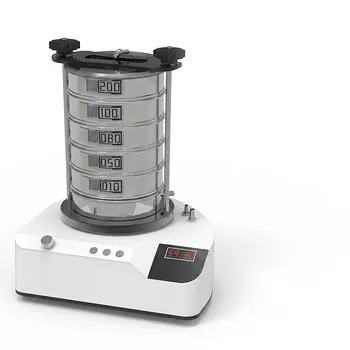
Heavy Duty Dry Three Dimensional Vibratory Sieve Shaker for Particle Separation
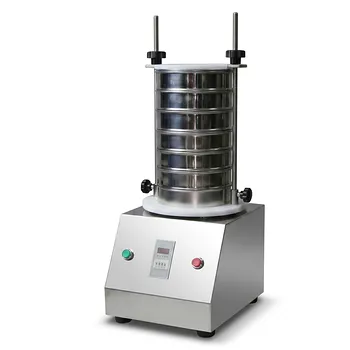
Small Laboratory Vibratory Sieve Shaker for Powder Gradation and Particle Size Analysis
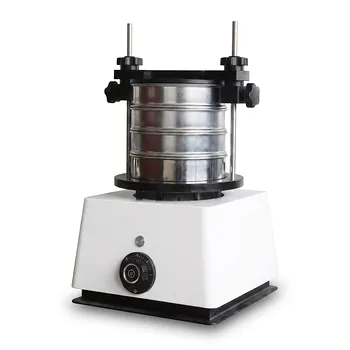
Small Laboratory Vibrating Sieve Shaker for Precise Particle Size Analysis
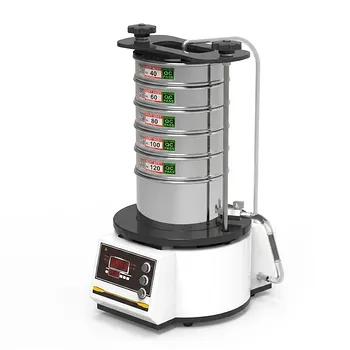
High Frequency Wet Three-Dimensional Vibrating Sieve Shaker for Dry and Wet Particle Size Analysis
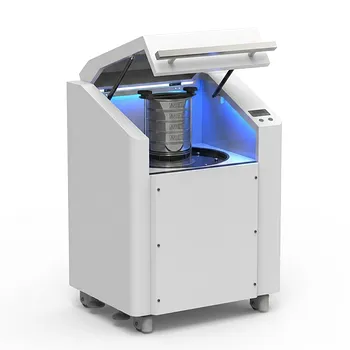
High Frequency Cabinet Type Three-Dimensional Rotary Vibrating Sieve Shaker for Dry Sieving and Particle Classification
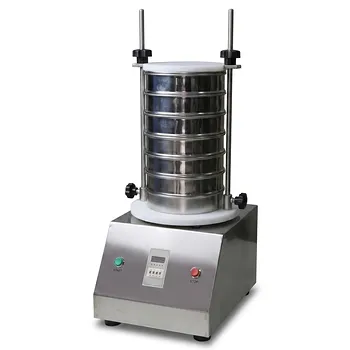
Laboratory Vibratory Test Sieve Shaker for Precision Particle Size Analysis and Powder Grading
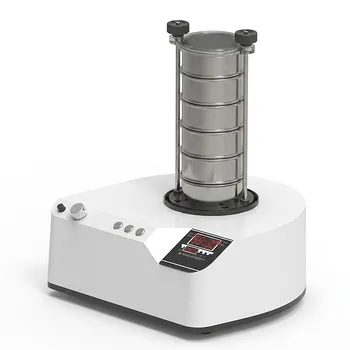
三维电磁微量振动筛分仪

Stainless Steel Rotary Vibrating Sieve High Precision Circular Vibratory Separator Industrial Powder Grading Machine Multi Layer Sifting Equipment
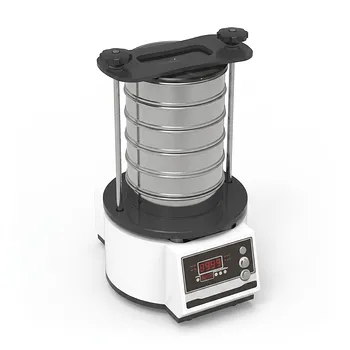
Tapping Oscillating Sieve Shaker for Dry and Wet Particle Size Analysis
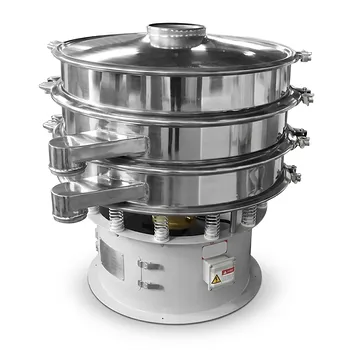
Three Dimensional Rotary Vibrating Sieve
Vibratory Superfine Grinder for Ultra Fine Laboratory Powder Milling
Small Vibrating Ultrafine Grinder for Traditional Chinese Medicine
Automatic Vibrating Powder Feeder for Laboratory Material Processing Precision Vibratory Hopper Feeder for Granular and Powder Material Handling Industrial Grade Vibrating Tray Feeder for Consistent Material Sample Preparation