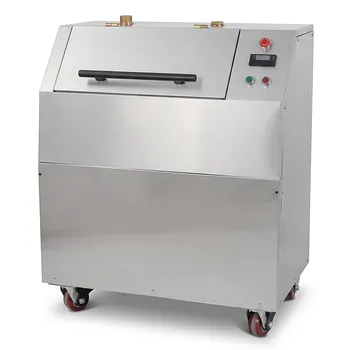
Why is a vibratory sieve shaker necessary for AAC-SEMRW? Ensure Precise Grading and Material Integrity
Updated 5 months ago
The necessity of a vibratory sieve shaker in AAC-SEMRW production lies in its ability to standardize non-traditional aggregates. By filtering ground semiconductor resin waste into a precise particle size range—typically 0.6 ± 0.05mm—the shaker ensures the consistency required for high-performance aerated concrete. This mechanical precision is the only way to guarantee that recycled materials behave predictably within the concrete matrix, directly impacting the material's final structural integrity.
Core Takeaway: A vibratory sieve shaker is the critical quality control link that converts volatile resin waste into a standardized aggregate. It ensures a uniform internal pore structure, which is essential for achieving the necessary compressive strength and minimizing defects in Autoclaved Aerated Concrete.
The Role of Precise Grading in AAC-SEMRW
Standardizing Recycled Resin Waste
Semiconductor Electronic Packaging Resin Waste (SEMRW) is inherently irregular after initial grinding. A vibratory sieve shaker uses controlled mechanical energy to drive these particles through a series of standard test sieves, isolating the specific particle size distribution (PSD) required for the mix.
Ensuring Chemical and Physical Consistency
In AAC production, the interaction between the foaming agent and the aggregates must be uniform. By narrowing the resin waste to a range like 0.6 ± 0.05mm, the manufacturer ensures that the recycled aggregate does not interfere with the aeration process, leading to a stable and predictable chemical reaction.
Achieving a Uniform Internal Pore Structure
The "aerated" part of AAC depends on the formation of consistent hydrogen gas bubbles. If resin particles are too large or too fine, they create irregularities in the internal pore structure, which can lead to structural weak points or "macroscopic defects" that compromise the block's durability.
Enhancing Structural Integrity and Performance
Maximizing Packing Density
Properly graded aggregates, verified by sieve analysis, allow particles to pack more closely together. This optimization of packing density reduces the void space between aggregates, which in turn minimizes the amount of expensive cement paste required to bind the mixture.
Improving Compressive Strength
The ultimate goal of using a sieve shaker in this context is to guarantee compressive strength. Consistent grading ensures that the skeletal structure of the concrete is robust, allowing the AAC-SEMRW to meet the same technical standards as traditional concrete made with river sand or crushed stone.
Supporting Numerical Modeling and Simulations
For advanced manufacturing, the data derived from the sieve shaker—such as the fineness modulus (FM)—is used as a precise input for Discrete Element Method (DEM) simulations. This allows engineers to create numerical models that accurately reflect how the actual material will perform under stress.
Understanding the Trade-offs and Limitations
Potential for Material Blinding
A common pitfall in vibratory sieving is "blinding," where resin particles become lodged in the sieve mesh. This is especially prevalent with the fine apertures required for SEMRW (0.6mm), requiring frequent cleaning and maintenance of the sieves to ensure continued accuracy.
Risks of Mechanical Degradation
While vibration is necessary for separation, excessive or overly aggressive vibration can cause secondary grinding. If the resin waste is brittle, the shaker itself may unintentionally reduce the particle size further during the test, leading to inaccurate grading data and a weakened concrete matrix.
Sampling Bias and Volume Constraints
Laboratory-scale sieve shakers typically handle samples between 1kg and 5kg. For large-scale AAC production, ensuring that these small samples are truly representative of tons of resin waste requires rigorous sampling protocols to avoid inconsistent batches.
How to Apply These Findings to Your Project
Recommendations for Quality Control
- If your primary focus is structural reliability: Prioritize a narrow grading range for your resin waste (e.g., 0.6 ± 0.05mm) to ensure a uniform pore structure and maximum compressive strength.
- If your primary focus is cost reduction: Use the sieve shaker to optimize aggregate grading curves, which maximizes packing density and reduces the volume of cement paste required.
- If your primary focus is research and development: Utilize the sieve analysis data to calculate the fineness modulus for use in DEM simulations, ensuring your digital models match your physical prototypes.
Precise mechanical sieving is the fundamental bridge between raw industrial waste and high-performance building materials.
Summary Table:
| Key Function | Impact on AAC-SEMRW Quality | Target Specification |
|---|---|---|
| Standardization | Ensures consistent resin waste particle size | 0.6 ± 0.05mm |
| Pore Control | Creates uniform internal hydrogen gas bubbles | Minimal macroscopic defects |
| Packing Density | Optimizes aggregate skeletal structure | Higher strength / Lower cement cost |
| Data Modeling | Provides input for precise DEM simulations | Accurate Fineness Modulus (FM) |
Elevate Your Material Research with Precision Engineering
Turning industrial waste like SEMRW into high-performance Autoclaved Aerated Concrete requires absolute control over particle size. Our brand provides complete laboratory sample preparation solutions tailored for material science, ensuring your recycled aggregates meet rigorous standards.
Our Specialized Equipment Includes:
- Powder Processing: High-efficiency crushers (jaw/roll), liquid nitrogen cryogenic grinders, and advanced mills (planetary ball, jet, sand/bead, rotor).
- Particle Analysis: Precision vibratory and air-jet sieve shakers with a full range of test sieves and meshes.
- Mixing & Compaction: High-performance powder mixers, defoaming mixers, and a full spectrum of hydraulic presses, including Cold/Warm Isostatic Presses (CIP/WIP), vacuum hot presses, and XRF pellet presses.
Whether you are optimizing packing density or conducting DEM simulations, our equipment delivers the accuracy you need. Contact our technical experts today to discuss your specific application and find the perfect solution for your lab.
References
- Nur Farisyah Hidayah Zambri, Akhtar Ali. The Effects of Direct Fire and Strength on Autoclaved Aerated Concrete Containing Semiconductor Electronic Molding Resin Waste (AAC-SEMRW) on Partition Panel Application. DOI: 10.37934/sijmr.2.1.2537a
Mentioned Products
- Vibratory Sieve Shaker Electromagnetic 3D Motion Powder Particle Size Analyzer for Dry and Wet Sieving
- Laboratory Dry and Wet Three Dimensional Vibratory Sieve Shaker for Particle Analysis
- Dry Three Dimensional Vibratory Sieve Shaker
- Stainless Steel Laboratory Vibratory Test Sieve Shaker
- Heavy Duty Dry Three Dimensional Vibratory Sieve Shaker for Particle Separation
People Also Ask
- How does a vibratory sieve shaker contribute to optimizing the performance of activated carbon? Enhance Adsorption Precision
- Why is a laboratory vibratory sieve shaker necessary for processing magnesium-based borate precursor powders? Boost Activity
- Why use a vibratory sieve shaker to verify coarse aggregate grading in rubberized concrete? Ensure Structural Integrity
- What function do vibratory sieve shakers and standard test sieves serve in the preparation of adsorbents? Key Guide
- What role does a vibratory sieve shaker play in the particle size analysis of ground corn products? Enhance QC Precision

Tech Team · PowderPreparation
Last updated on May 14, 2026
Related Products

Vibratory Sieve Shaker Electromagnetic 3D Motion Powder Particle Size Analyzer for Dry and Wet Sieving
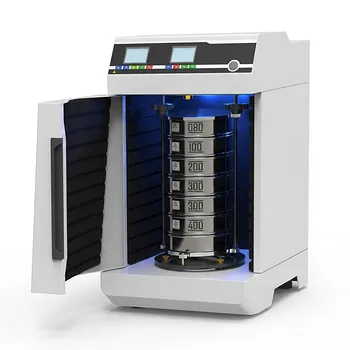
Laboratory Dry and Wet Three Dimensional Vibratory Sieve Shaker for Particle Analysis

Dry Three Dimensional Vibratory Sieve Shaker
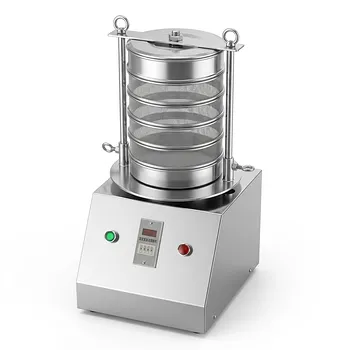
Stainless Steel Laboratory Vibratory Test Sieve Shaker

Heavy Duty Dry Three Dimensional Vibratory Sieve Shaker for Particle Separation

Small Laboratory Vibratory Sieve Shaker for Powder Gradation and Particle Size Analysis

Small Laboratory Vibrating Sieve Shaker for Precise Particle Size Analysis
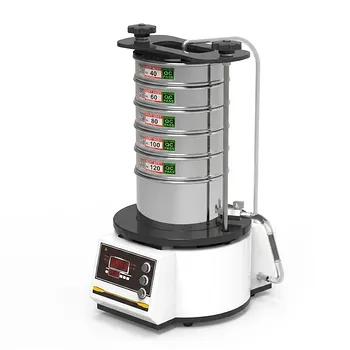
High Frequency Wet Three-Dimensional Vibrating Sieve Shaker for Dry and Wet Particle Size Analysis
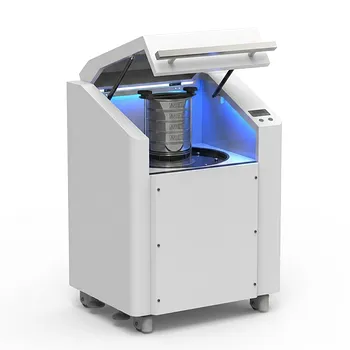
High Frequency Cabinet Type Three-Dimensional Rotary Vibrating Sieve Shaker for Dry Sieving and Particle Classification

Laboratory Vibratory Test Sieve Shaker for Precision Particle Size Analysis and Powder Grading

三维电磁微量振动筛分仪

Stainless Steel Rotary Vibrating Sieve High Precision Circular Vibratory Separator Industrial Powder Grading Machine Multi Layer Sifting Equipment

Tapping Oscillating Sieve Shaker for Dry and Wet Particle Size Analysis

Three Dimensional Rotary Vibrating Sieve
Vibratory Superfine Grinder for Ultra Fine Laboratory Powder Milling
Small Vibrating Ultrafine Grinder for Traditional Chinese Medicine
Automatic Vibrating Powder Feeder for Laboratory Material Processing Precision Vibratory Hopper Feeder for Granular and Powder Material Handling Industrial Grade Vibrating Tray Feeder for Consistent Material Sample Preparation