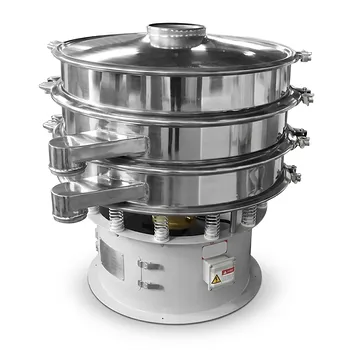
Why is a vibratory sieve shaker necessary after crushing E-waste? Optimize Metal Recovery and Leaching Yield
Updated 4 months ago
In metal recovery workflows, a vibratory sieve shaker is the critical link between mechanical crushing and chemical extraction. It provides precise particle size grading to ensure that crushed E-waste meets specific uniformity standards required for stable leaching. By removing oversized particles and defining the size distribution, the shaker stabilizes chemical reaction kinetics and maximizes the leaching rate of metals like copper.
Core Takeaway: The vibratory sieve shaker is necessary because it transforms heterogeneous crushed waste into a predictable, graded feedstock. This precision is essential for stabilizing downstream chemical reactions and maximizing the efficiency of physical separation equipment.
Optimizing Chemical Reaction Kinetics
Achieving Uniform Leaching Rates
Particle size uniformity directly influences the chemical reaction kinetics during the leaching stage. When E-waste particles are uniform, the solvent can interact with the metal surfaces at a consistent rate, preventing the "under-leaching" of large pieces.
Stabilizing Slurry Concentrations
The shaker ensures the material entering the leaching tank has a compliant particle size distribution. This consistency is vital for maintaining a stable slurry concentration, which prevents equipment clogging and ensures the reaction reaches its desired equilibrium state.
Minimizing Unreacted Residues
By utilizing mechanical vibration to force all particles below a target threshold (such as 90 micrometers), the process ensures higher reaction contact areas. This exhaustive classification minimizes unreacted residues, particularly in high-value processes like nitric acid leaching.
Enhancing Downstream Physical Separation
Meeting Equipment Feed Specifications
Downstream technologies, such as gravity and electrostatic separators, are highly sensitive to specific feed size ranges. Fine grading via a vibratory shaker minimizes errors caused by uneven distribution, significantly enhancing the purity of the final metal-enriched products.
Identifying Metal Distribution Hotspots
Mechanical classification helps technical personnel identify where metals are concentrated. For example, fine powders smaller than 0.09 mm often exhibit the highest bulk density and metal content, allowing for targeted recovery of high-value components.
Improving Separation Efficiency
Precision sieving with standard test sieves (ranging from 1.18mm to 0.3mm) allows for the fine classification of complex shredded PCB components. This reduces the burden on sorting equipment and ensures that each separation stage operates within its peak efficiency window.
Ensuring Data Integrity and Process Control
Homogenization for Analytical Accuracy
A vibratory sieve shaker ensures the high homogeneity and representativeness of samples used for chemical analysis. Without this step, experimental results and leaching tests may suffer from poor repeatability due to material variance.
Quantitative Workflow Optimization
By performing mechanical classification, operators can accurately determine the mass percentage of various size ranges. This data is critical for evaluating material fluidity and optimizing the overall sorting workflow to reduce waste.
Meeting Material Production Standards
In specialized applications, such as using E-waste plastic for lightweight concrete, sieving ensures the fineness modulus meets strict production standards. This precision directly influences the ultimate density and structural strength of the resulting material.
Understanding the Trade-offs
The Risk of Screen Blinding
Fine particles, especially those with high moisture or static charge, can clog the sieve mesh—a phenomenon known as blinding. While vibration helps, extremely fine grading may require additional de-blinding accessories or wet-sieving methods to maintain throughput.
Energy Consumption vs. Precision
Achieving a hyper-fine particle distribution requires longer vibration times and higher energy input. Processors must balance the incremental gain in leaching efficiency against the operational costs of extended sieving cycles.
Equipment Wear and Maintenance
The abrasive nature of crushed E-waste, which contains glass fibers and metals, can lead to rapid wear of the sieve mesh. Regular calibration and screen replacement are necessary to ensure that the grading remains accurate over time.
Making the Right Choice for Your Goal
How to Apply This to Your Project
- If your primary focus is maximizing chemical leaching yield: Use a vibratory shaker to eliminate all particles above 90 micrometers to ensure total surface area exposure.
- If your primary focus is increasing the purity of separated metals: Implement a multi-layer sieve stack to create narrow size fractions that match the optimal feed requirements of your electrostatic separators.
- If your primary focus is process auditing and optimization: Utilize the shaker to generate particle size distribution curves to identify which size fractions hold the highest concentrations of precious metals.
Precise particle size control is the foundation of a predictable, high-yield metal recovery operation.
Summary Table:
| Feature | Role in E-Waste Workflow | Impact on Recovery |
|---|---|---|
| Sizing Uniformity | Stabilizes chemical reaction kinetics | Maximizes leaching rates & reduces residues |
| Feed Specification | Matches gravity/electrostatic separator inputs | Increases purity of final metal products |
| Data Integrity | Homogenizes samples for chemical analysis | Ensures repeatable and accurate assay results |
| Fraction Analysis | Identifies metal concentration hotspots | Enables targeted recovery of high-value metals |
Elevate Your Material Recovery with Professional Sample Prep Solutions
Precise particle size control is the foundation of high-yield metal recovery and predictable research outcomes. [Brand Name] provides complete laboratory sample preparation solutions for material science, specializing in heavy-duty powder processing and high-precision compaction equipment.
Our extensive product lines are designed to handle the toughest E-waste materials:
- Crushing & Grinding: Jaw/roll crushers, liquid nitrogen cryogenic grinders, and advanced mills (planetary ball, jet, sand/bead, disc, rotor).
- Sieving & Mixing: Vibratory and air-jet sieve shakers for precise grading, plus industrial-grade powder and defoaming mixers.
- Pressing & Compaction: A full spectrum of hydraulic presses, including Cold/Warm Isostatic Presses (CIP/WIP), XRF pellet presses, and vacuum hot presses.
Whether you are scaling a leaching process or optimizing physical separation purity, our equipment ensures your materials meet the strictest standards. Contact our experts today to find the ideal solution for your laboratory or pilot plant!
References
- Anjan Kumari, Vinay Kumar. Extraction of copper from small electronic devices populated on discarded PCBs. DOI: 10.5281/zenodo.6821994
Mentioned Products
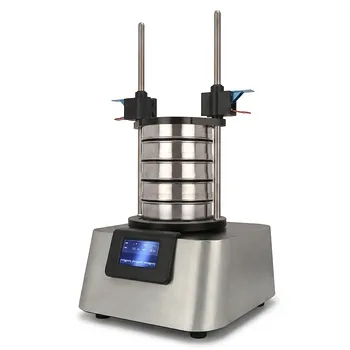
- Vibratory Sieve Shaker Electromagnetic 3D Motion Powder Particle Size Analyzer for Dry and Wet Sieving
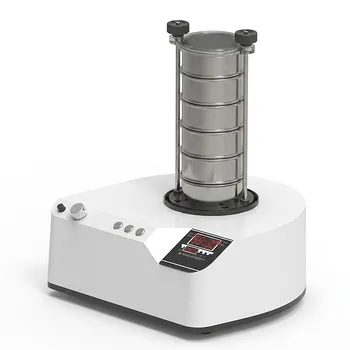
- 三维电磁微量振动筛分仪
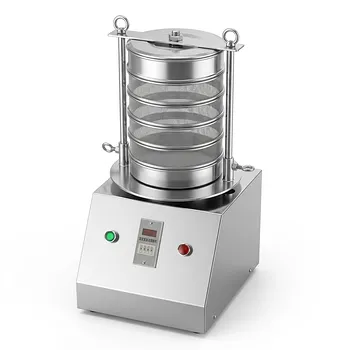
- Stainless Steel Laboratory Vibratory Test Sieve Shaker
- Heavy Duty Dry Three Dimensional Vibratory Sieve Shaker for Particle Separation
- Dry Three Dimensional Vibratory Sieve Shaker
People Also Ask
- How does a vibratory sieve shaker contribute to optimizing the performance of activated carbon? Enhance Adsorption Precision
- Why is a laboratory vibratory sieve shaker necessary for processing magnesium-based borate precursor powders? Boost Activity
- Why use a vibratory sieve shaker to verify coarse aggregate grading in rubberized concrete? Ensure Structural Integrity
- What function do vibratory sieve shakers and standard test sieves serve in the preparation of adsorbents? Key Guide
- What role does a vibratory sieve shaker play in the particle size analysis of ground corn products? Enhance QC Precision

Tech Team · PowderPreparation
Last updated on Jun 03, 2026
Related Products
Vibratory Sieve Shaker Electromagnetic 3D Motion Powder Particle Size Analyzer for Dry and Wet Sieving
三维电磁微量振动筛分仪
Stainless Steel Laboratory Vibratory Test Sieve Shaker
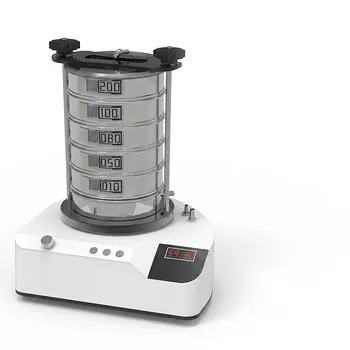
Heavy Duty Dry Three Dimensional Vibratory Sieve Shaker for Particle Separation
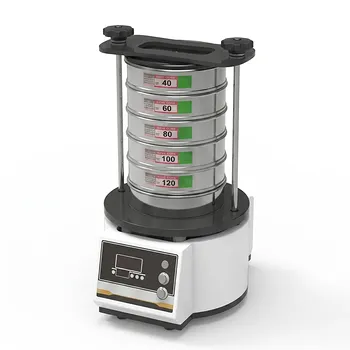
Dry Three Dimensional Vibratory Sieve Shaker
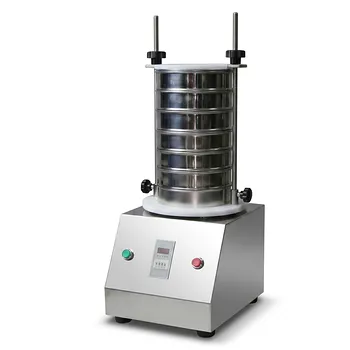
Small Laboratory Vibratory Sieve Shaker for Powder Gradation and Particle Size Analysis
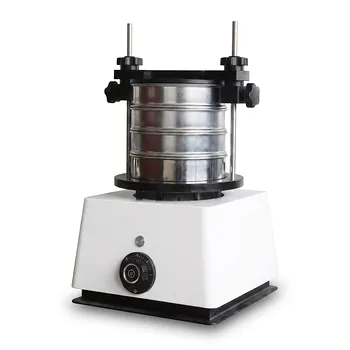
Small Laboratory Vibrating Sieve Shaker for Precise Particle Size Analysis
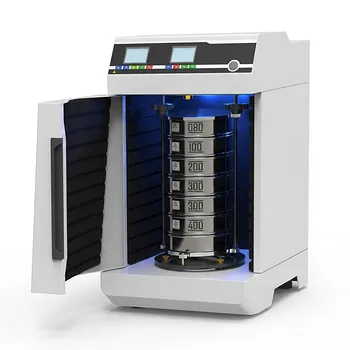
Laboratory Dry and Wet Three Dimensional Vibratory Sieve Shaker for Particle Analysis
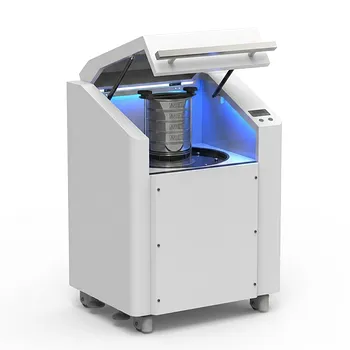
High Frequency Cabinet Type Three-Dimensional Rotary Vibrating Sieve Shaker for Dry Sieving and Particle Classification
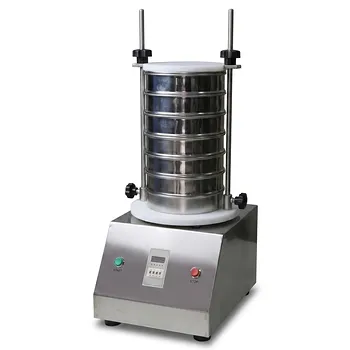
Laboratory Vibratory Test Sieve Shaker for Precision Particle Size Analysis and Powder Grading
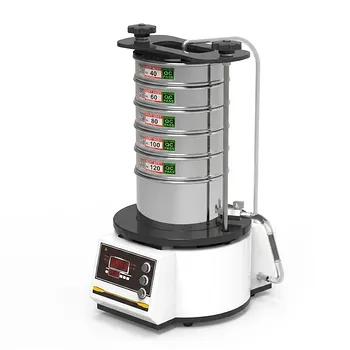
High Frequency Wet Three-Dimensional Vibrating Sieve Shaker for Dry and Wet Particle Size Analysis
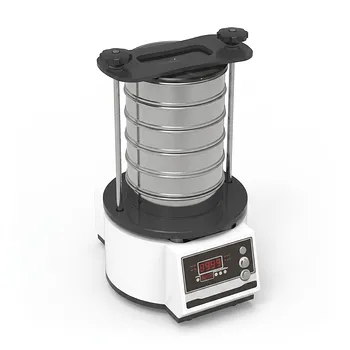
Tapping Oscillating Sieve Shaker for Dry and Wet Particle Size Analysis
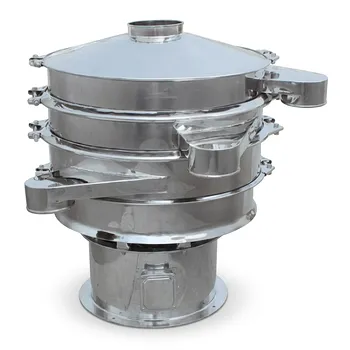
Stainless Steel Rotary Vibrating Sieve High Precision Circular Vibratory Separator Industrial Powder Grading Machine Multi Layer Sifting Equipment