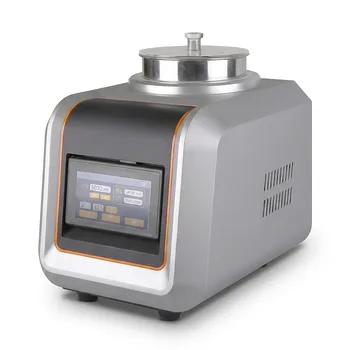
Why is a vibratory sieve shaker essential for the preparation of battery black mass? Optimize Your Recycling Yield
Updated 4 months ago
The vibratory sieve shaker is the primary mechanical gatekeeper in battery recycling. It ensures black mass—the valuable mixture of cathode and anode materials—is separated from coarse impurities like aluminum frames and casing fragments. By establishing a uniform particle size, typically ranging from 125 µm to 250 µm, it optimizes the surface area-to-volume ratio required for efficient downstream chemical extraction.
A vibratory sieve shaker is critical for battery black mass preparation because it standardizes particle size distribution, which directly dictates the efficiency of hydrometallurgical and pyrometallurgical recovery processes. Without this precise classification, inconsistent mass transfer and unreacted large particles significantly reduce the purity and yield of recovered battery-grade materials.
Achieving Precision in Material Classification
The Separation of Active Materials
A vibratory sieve shaker uses mechanical vibration across multi-layered sieves to isolate high-value components. It effectively separates the active cathode and anode powders from larger current collector residues, such as copper and aluminum foils.
Removing Large-Scale Contaminants
During the crushing stage, materials like aluminum frames and battery casings remain as coarse fragments. The shaker uses specific apertures (e.g., 250 µm) to filter out these metallic residues, ensuring they do not contaminate the chemical leaching tanks.
Enhancing Material Homogeneity
Mechanical classification yields a product with high material homogeneity. This standardization is a prerequisite for subsequent stages like high-energy ball milling, where consistent physical specifications are required to control the final size of nano-reinforcements.
The Impact on Downstream Recovery Kinetics
Reducing Mass Transfer Resistance
In processes like sulfation roasting, large particles can develop "product layers" that block the core of the material from reacting. Fine screening reduces this mass transfer resistance, allowing chemicals to penetrate the entire volume of the particle quickly.
Optimizing Specific Surface Area
Finer particles (often targetted at less than 125 µm) provide a much higher specific surface area. This increased surface area drives higher reaction activity during hydrothermal or solvothermal reactions, leading to more complete recovery of lithium, nickel, and cobalt.
Standardizing Heat and Mass Transfer
Consistency in particle size eliminates fluctuations in heat transfer during thermal processing. By ensuring that all particles are below a specific mesh size, such as 200 mesh (74 µm), operators can ensure that experimental or industrial results reflect the chemical properties of the material rather than physical contact variables.
Understanding the Trade-offs
The Risk of Mesh Blinding
High-frequency vibration is necessary to move material, but fine battery powders—especially those containing carbon black—can be "sticky." This leads to mesh blinding, where the sieve apertures become clogged, reducing throughput and requiring frequent maintenance or the addition of ultrasonic cleaning modules.
Precision vs. Throughput
There is a constant trade-off between the speed of the separation and the accuracy of the cut. Increasing the vibration amplitude may speed up processing, but it can also force oversized, elongated fragments through the mesh, compromising the purity of the black mass.
Mechanical Wear and Tear
The abrasive nature of crushed battery components can lead to rapid wear on standard test sieves. Over time, apertures can expand, allowing larger impurities into the black mass and necessitating strict calibration and replacement schedules to maintain quality standards.
How to Apply This to Your Recovery Process
Implementation Guidelines
If you are designing a recycling flow, your sieving strategy should be dictated by your primary recovery method.
- If your primary focus is Hydrometallurgical Leaching: Utilize a 250 µm sieve to prioritize the removal of large metal frames and maximize the efficiency of chemical reaction kinetics.
- If your primary focus is Sulfation Roasting: Aim for a finer classification of less than 125 µm to minimize mass transfer resistance and ensure the core of each particle is fully reacted.
- If your primary focus is Experimental Research: Use precise 200 mesh (74 µm) sieving to eliminate physical contact area variables, ensuring your data reflects the chemical influence of the battery components.
By integrating a vibratory sieve shaker correctly, you transform raw crushed waste into a standardized technical feedstock ready for high-yield chemical recovery.
Summary Table:
| Process Stage | Target Particle Size | Key Function & Benefit |
|---|---|---|
| Active Material Separation | 125 µm - 250 µm | Isolates high-value cathode/anode powders from copper/aluminum foils. |
| Contaminant Removal | > 250 µm | Filters out coarse metallic fragments and casing residues to protect leaching tanks. |
| Kinetics Optimization | < 125 µm | Maximizes specific surface area to accelerate chemical recovery of Li, Ni, and Co. |
| Research Standardization | 200 Mesh (74 µm) | Eliminates physical variables to ensure experimental data reflects chemical properties. |
Elevate Your Battery Recycling Efficiency with Our Expert Solutions
Standardizing black mass preparation is the critical first step toward high-yield material recovery. We provide complete laboratory sample preparation solutions for material science, specializing in the precision powder processing and compaction equipment required for advanced recycling workflows.
Our extensive product lines include:
- Size Reduction: Jaw and roll crushers, liquid nitrogen cryogenic grinders, and high-energy mills (planetary ball, jet, sand, and rotor).
- Classification & Mixing: Vibratory and air-jet sieve shakers with precise test sieves, plus powder and defoaming mixers.
- Material Compaction: A full spectrum of hydraulic presses, including Cold/Warm Isostatic Presses (CIP/WIP), XRF pellet presses, and vacuum hot presses.
Whether you are refining industrial hydrometallurgical processes or conducting cutting-edge experimental research, our equipment ensures the homogeneity and precision your materials demand. Contact us today to optimize your lab's performance!
References
- Dominic Dittmer, Bernd Friedrich. Evaluation of Filter Cake Washing Processes in Hydrometallurgical Battery Recycling of Lithium-Ion Batteries to Optimize Recoveries. DOI: 10.3390/met15111262
Mentioned Products
- Vibratory Sieve Shaker Electromagnetic 3D Motion Powder Particle Size Analyzer for Dry and Wet Sieving
- Laboratory Dry and Wet Three Dimensional Vibratory Sieve Shaker for Particle Analysis
- Stainless Steel Laboratory Vibratory Test Sieve Shaker
- Heavy Duty Dry Three Dimensional Vibratory Sieve Shaker for Particle Separation
- Dry Three Dimensional Vibratory Sieve Shaker
People Also Ask
- How does a vibratory sieve shaker contribute to optimizing the performance of activated carbon? Enhance Adsorption Precision
- Why is a laboratory vibratory sieve shaker necessary for processing magnesium-based borate precursor powders? Boost Activity
- Why use a vibratory sieve shaker to verify coarse aggregate grading in rubberized concrete? Ensure Structural Integrity
- What function do vibratory sieve shakers and standard test sieves serve in the preparation of adsorbents? Key Guide
- What role does a vibratory sieve shaker play in the particle size analysis of ground corn products? Enhance QC Precision

Tech Team · PowderPreparation
Last updated on May 14, 2026
Related Products
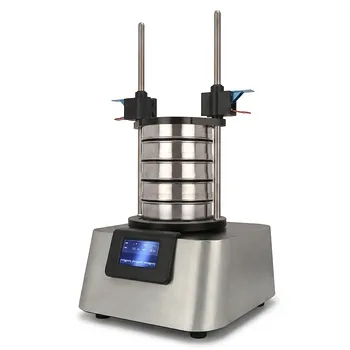
Vibratory Sieve Shaker Electromagnetic 3D Motion Powder Particle Size Analyzer for Dry and Wet Sieving
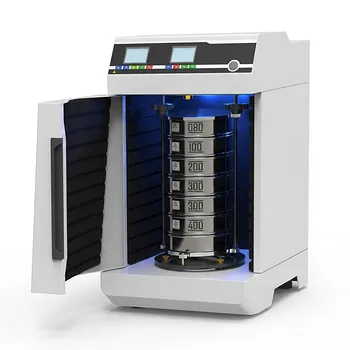
Laboratory Dry and Wet Three Dimensional Vibratory Sieve Shaker for Particle Analysis
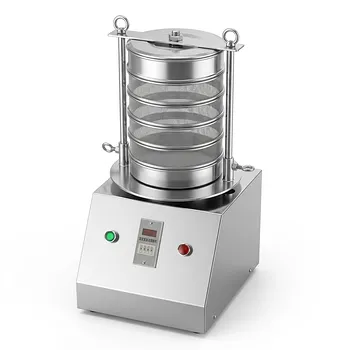
Stainless Steel Laboratory Vibratory Test Sieve Shaker
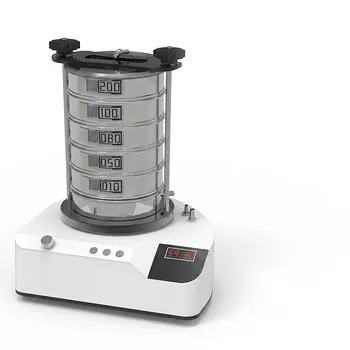
Heavy Duty Dry Three Dimensional Vibratory Sieve Shaker for Particle Separation
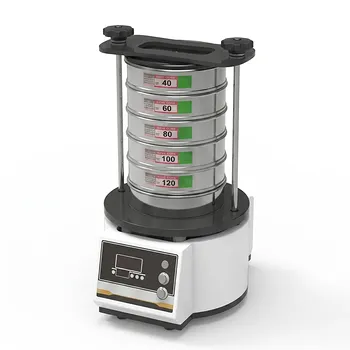
Dry Three Dimensional Vibratory Sieve Shaker
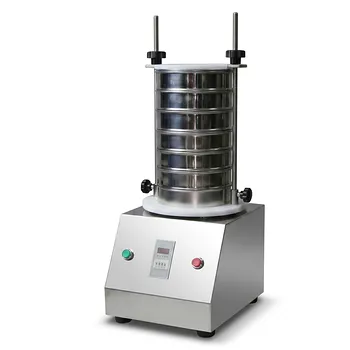
Small Laboratory Vibratory Sieve Shaker for Powder Gradation and Particle Size Analysis
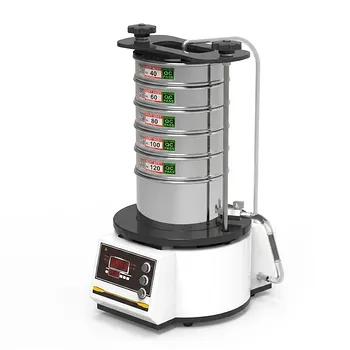
High Frequency Wet Three-Dimensional Vibrating Sieve Shaker for Dry and Wet Particle Size Analysis
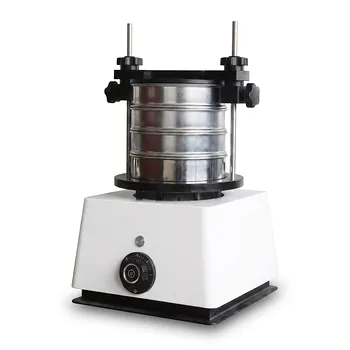
Small Laboratory Vibrating Sieve Shaker for Precise Particle Size Analysis
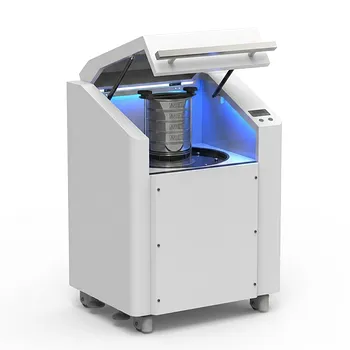
High Frequency Cabinet Type Three-Dimensional Rotary Vibrating Sieve Shaker for Dry Sieving and Particle Classification
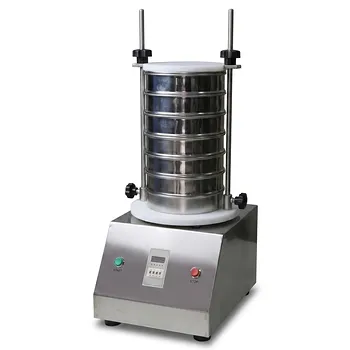
Laboratory Vibratory Test Sieve Shaker for Precision Particle Size Analysis and Powder Grading
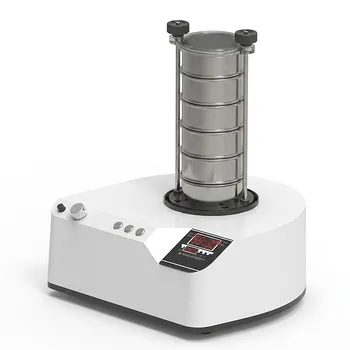
三维电磁微量振动筛分仪
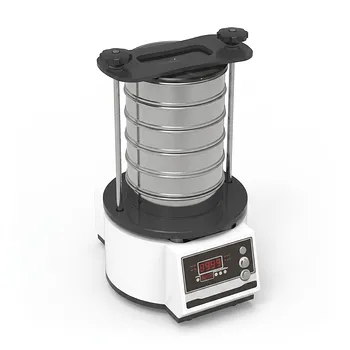
Tapping Oscillating Sieve Shaker for Dry and Wet Particle Size Analysis
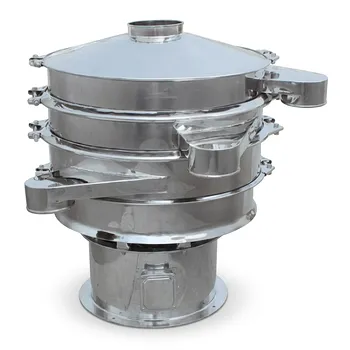
Stainless Steel Rotary Vibrating Sieve High Precision Circular Vibratory Separator Industrial Powder Grading Machine Multi Layer Sifting Equipment
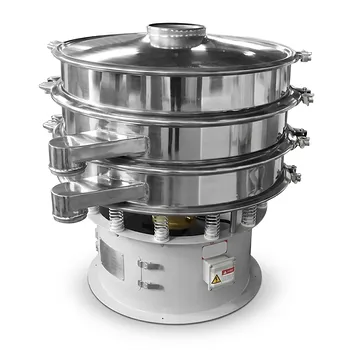
Three Dimensional Rotary Vibrating Sieve
Small Vibrating Ultrafine Grinder for Traditional Chinese Medicine
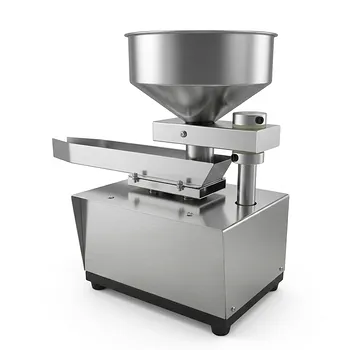
Automatic Vibrating Powder Feeder for Laboratory Material Processing Precision Vibratory Hopper Feeder for Granular and Powder Material Handling Industrial Grade Vibrating Tray Feeder for Consistent Material Sample Preparation
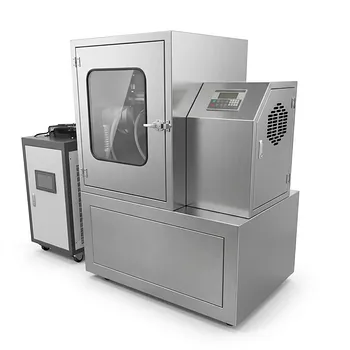
Vibratory Superfine Grinder for Ultra Fine Laboratory Powder Milling
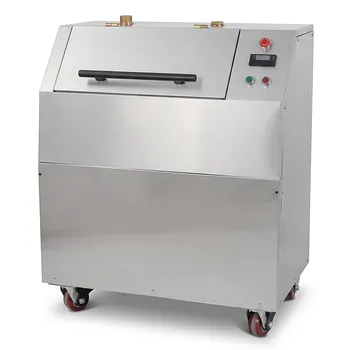
Vibratory Disc Mill for Rapid Fine Grinding and High Throughput Sample Preparation of Hard and Brittle Materials