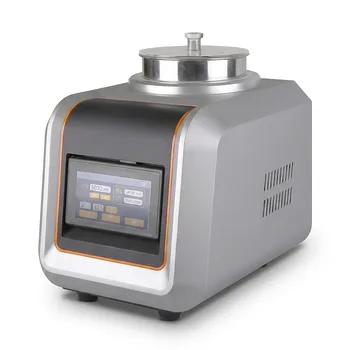
Why is a vibratory sieve shaker essential for the granulometric analysis of white sand? Ensure Accurate Particle Grading
Updated 4 months ago
A vibratory sieve shaker is the cornerstone of granulometric analysis because it provides the standardized mechanical energy required to accurately segregate particles by size. It ensures that white sand is classified into precise mass percentages across a range of 2.0mm to 0.063mm, identifying critical grain intervals while removing oversized impurities or excessive fines that compromise industrial quality.
The vibratory sieve shaker replaces the inconsistency of manual sieving with high-frequency, three-dimensional motion. This standardization is essential for generating the repeatable, quantitative data needed to optimize manufacturing processes and ensure the structural integrity of sand-based products.
The Mechanics of Precision Classification
Three-Dimensional High-Frequency Vibration
The equipment generates continuous and uniform mechanical power, causing sand particles to bounce and reorient across the sieve surface. This high-frequency, three-dimensional motion ensures that every particle has multiple opportunities to pass through the corresponding apertures.
Without this mechanical energy, clastic particles at the micrometer scale would likely bridge over openings, leading to inaccurate grading. The vibration ensures a thorough distribution across the entire mesh area, which is critical for identifying the true particle size distribution (PSD).
Overcoming the Limitations of Manual Sieving
Manual sieving is inherently subjective and prone to operator fatigue, leading to significant measurement errors. A vibratory shaker utilizes standardized frequencies and durations to ensure experimental repeatability.
By removing human variables, labs can produce a reliable data foundation for determining gradation curves. This consistency is vital when comparing sand samples over time or across different production batches.
Impact on Material Performance and Quality
Optimizing Glass Manufacturing Intervals
In glass production, white sand must adhere to strict grain size intervals, typically between -0.5mm and +0.125mm. The vibratory shaker allows technicians to isolate these optimal ranges with high precision.
Identifying and removing oversized impurities or excessively fine powders is a functional necessity. Failure to do so can result in defects in the glass melt, affecting both the clarity and structural strength of the final product.
Enhancing Mortar Fluidity and Stability
For sealing mortars, the fineness modulus of the sand directly influences the product's shrinkage and fluidity. A sieve shaker ensures that coarse, medium, and fine sand are blended in the correct proportions to maximize packing density.
Optimized grading reduces the volume of cement paste required to fill voids between sand grains. This not only lowers costs but also improves the overall volume stability and durability of the mortar.
Data-Driven Process Optimization
Calculating the Fine Powder Rate
Vibratory shakers provide quantitative data on how process parameters—such as screw speed or agitation intensity—impact the output. This allows engineers to measure the fine powder rate and the yield of acceptable granules.
By analyzing this data, facilities can fine-tune their equipment to minimize waste. This level of insight is impossible without the physical separation of samples into specific grade components like sand, silt, and clay.
Monitoring Sand Degradation in Recycling
In industrial applications where sand is recycled, the particle size distribution changes over multiple cycles due to agglomeration. High-precision shakers quantify the increase in coarse components and the decrease in fines.
This analysis is essential for evaluating sand performance evolution. It helps determine exactly when the sand has degraded to a point where it will negatively impact the quality of the cores or molds being produced.
Understanding the Trade-offs
The Risk of Sieve Blinding
While vibratory shakers are efficient, they are susceptible to sieve blinding, where near-sized particles become wedged in the mesh. This can lead to false readings of "oversized" material and requires regular maintenance or the use of de-blinding aids like sliding rings or balls.
Sample Overloading and Stratification
Adding too much sand to the top sieve can impede the vibratory action, causing particles to sit in layers rather than hitting the mesh. This stratification prevents smaller particles from reaching the lower sieves, resulting in an inaccurate underestimation of the fine powder content.
How to Apply This to Your Project
Proper granulometric analysis depends on aligning your sieving strategy with your specific industrial requirements.
- If your primary focus is Glass Manufacturing: Prioritize the isolation of the -0.5/+0.125 mm fraction to ensure melt consistency and chemical purity.
- If your primary focus is Construction or Mortar: Use the shaker to calculate the fineness modulus and maximize packing density to reduce cement consumption.
- If your primary focus is Environmental Research: Focus on separating sand from silt and clay to understand the adsorption characteristics of heavy metals or radionuclides.
- If your primary focus is Process Engineering: Use the yield data of acceptable granules to adjust machine speeds and minimize the generation of unwanted fines.
By leveraging the standardized mechanical power of a vibratory sieve shaker, you transform raw sand into a predictable, high-performance industrial resource.
Summary Table:
| Feature | Manual Sieving | Vibratory Sieve Shaker |
|---|---|---|
| Consistency | Subjective; prone to operator fatigue | Standardized frequencies & repeatable data |
| Motion Type | Two-dimensional/limited movement | High-frequency, three-dimensional motion |
| Sieving Range | Poor performance on fine particles | Precise segregation from 2.0mm to 0.063mm |
| Process Impact | Inconsistent grain intervals | Optimizes glass melt and mortar fluidity |
| Data Utility | Limited quantitative value | Enables fine powder rate & degradation tracking |
Elevate Your Material Analysis with Precision Equipment
Accurate granulometric analysis is the foundation of high-quality material science. At our facility, we provide complete laboratory sample preparation solutions designed to eliminate inconsistency and maximize industrial performance. Whether you are refining white sand for glass manufacturing or optimizing mortar density, our specialized equipment ensures your data is repeatable and precise.
Our comprehensive product line includes:
- Sieve Shakers: Vibratory and air-jet models equipped with high-precision test sieves and meshes.
- Milling & Grinding: Planetary ball mills, jet mills, and liquid nitrogen cryogenic grinders for ultrafine processing.
- Crushing: Durable jaw and roll crushers for primary sample reduction.
- Powder Mixing: Advanced powder and defoaming mixers for uniform blending.
- Compaction Solutions: A full spectrum of hydraulic presses, including Cold/Warm Isostatic Presses (CIP/WIP), vacuum hot presses, and XRF pellet presses.
Ready to transform your powder processing workflow? Contact our experts today to find the ideal equipment for your specific application needs.
References
- Mona M. Fawzy, Tarek F. Mohammaden. New approach for the ores add-value. Case study: the physical beneficiation of white sand in El-Harra area, Bahariya Oasis, Western Desert, Egypt. DOI: 10.37190/msc233013
Mentioned Products
- Vibratory Sieve Shaker Electromagnetic 3D Motion Powder Particle Size Analyzer for Dry and Wet Sieving
- Laboratory Dry and Wet Three Dimensional Vibratory Sieve Shaker for Particle Analysis
- Stainless Steel Laboratory Vibratory Test Sieve Shaker
- Heavy Duty Dry Three Dimensional Vibratory Sieve Shaker for Particle Separation
- Dry Three Dimensional Vibratory Sieve Shaker
People Also Ask
- How does a vibratory sieve shaker contribute to optimizing the performance of activated carbon? Enhance Adsorption Precision
- Why is a laboratory vibratory sieve shaker necessary for processing magnesium-based borate precursor powders? Boost Activity
- Why use a vibratory sieve shaker to verify coarse aggregate grading in rubberized concrete? Ensure Structural Integrity
- What function do vibratory sieve shakers and standard test sieves serve in the preparation of adsorbents? Key Guide
- What role does a vibratory sieve shaker play in the particle size analysis of ground corn products? Enhance QC Precision

Tech Team · PowderPreparation
Last updated on May 14, 2026
Related Products
Vibratory Sieve Shaker Electromagnetic 3D Motion Powder Particle Size Analyzer for Dry and Wet Sieving
Laboratory Dry and Wet Three Dimensional Vibratory Sieve Shaker for Particle Analysis
Stainless Steel Laboratory Vibratory Test Sieve Shaker
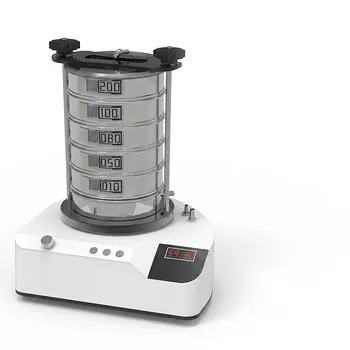
Heavy Duty Dry Three Dimensional Vibratory Sieve Shaker for Particle Separation
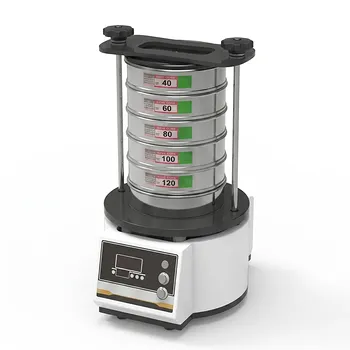
Dry Three Dimensional Vibratory Sieve Shaker
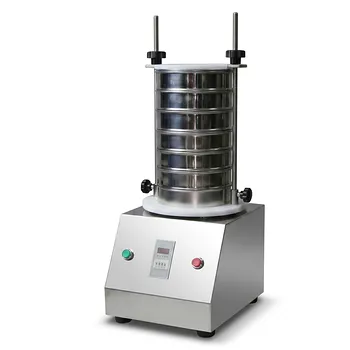
Small Laboratory Vibratory Sieve Shaker for Powder Gradation and Particle Size Analysis
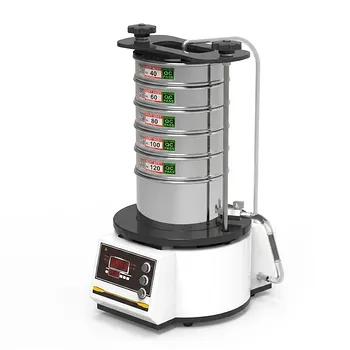
High Frequency Wet Three-Dimensional Vibrating Sieve Shaker for Dry and Wet Particle Size Analysis
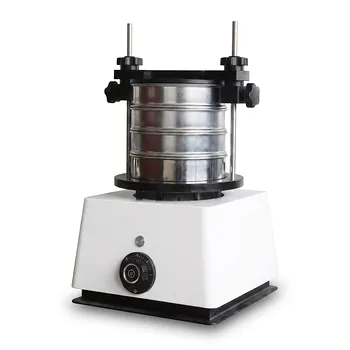
Small Laboratory Vibrating Sieve Shaker for Precise Particle Size Analysis
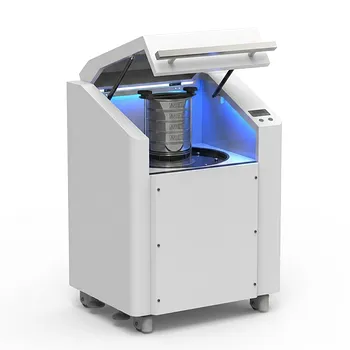
High Frequency Cabinet Type Three-Dimensional Rotary Vibrating Sieve Shaker for Dry Sieving and Particle Classification
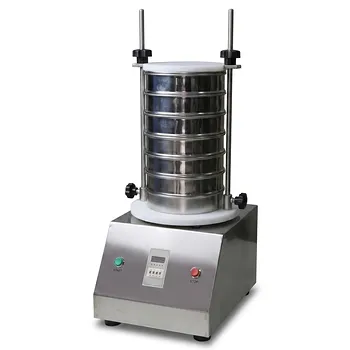
Laboratory Vibratory Test Sieve Shaker for Precision Particle Size Analysis and Powder Grading
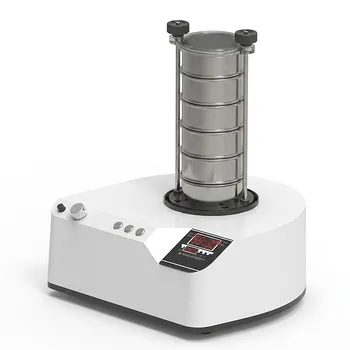
三维电磁微量振动筛分仪
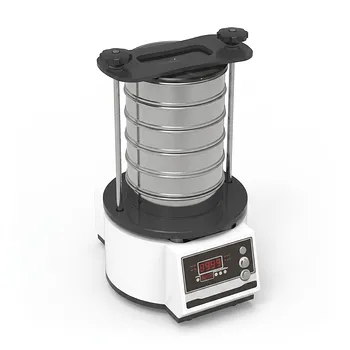
Tapping Oscillating Sieve Shaker for Dry and Wet Particle Size Analysis

Stainless Steel Rotary Vibrating Sieve High Precision Circular Vibratory Separator Industrial Powder Grading Machine Multi Layer Sifting Equipment
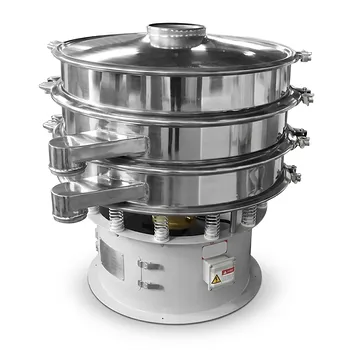
Three Dimensional Rotary Vibrating Sieve
Small Vibrating Ultrafine Grinder for Traditional Chinese Medicine
Automatic Vibrating Powder Feeder for Laboratory Material Processing Precision Vibratory Hopper Feeder for Granular and Powder Material Handling Industrial Grade Vibrating Tray Feeder for Consistent Material Sample Preparation
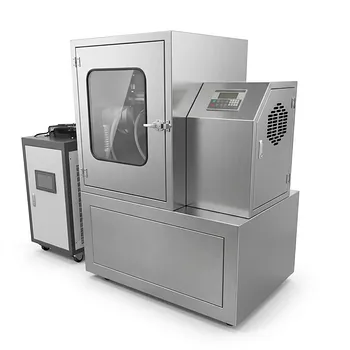
Vibratory Superfine Grinder for Ultra Fine Laboratory Powder Milling
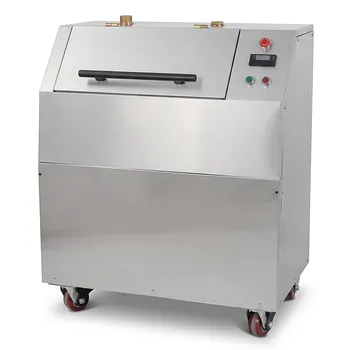
Vibratory Disc Mill for Rapid Fine Grinding and High Throughput Sample Preparation of Hard and Brittle Materials