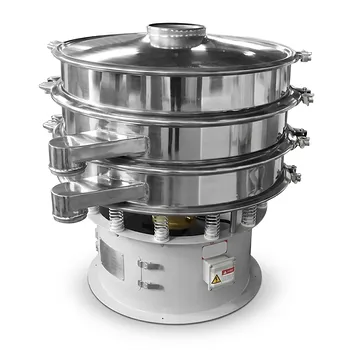
Why is a vibratory sieve shaker essential during the preparation of volcanic ash powders for geopolymer production? Strength
Updated 4 months ago
Precision particle sizing is the cornerstone of geopolymer performance. A vibratory sieve shaker is essential because it enforces a strict particle size threshold—typically below 63μm for volcanic ash—to ensure uniform reaction kinetics during alkali-activation. By removing oversized particles, the equipment prevents incomplete chemical reactions and eliminates internal stress concentrations that would otherwise compromise the structural integrity of the geopolymer matrix.
A vibratory sieve shaker acts as a critical quality control gate, transforming raw volcanic ash into a standardized precursor. This precision ensures that the resulting geopolymer achieves maximum chemical reactivity, a dense microstructure, and consistent mechanical properties.
Standardizing Reaction Kinetics through Particle Control
Eliminating Incomplete Chemical Reactions
Volcanic ash particles that exceed specific size thresholds (such as 63μm or 75μm) often fail to react fully during the geopolymerization process. The vibratory shaker ensures that only particles with a high surface-area-to-volume ratio proceed to the mixing stage. This guarantees that the alkali-activator can penetrate and transform the entire particle, preventing "dead zones" of unreacted material.
Maximizing Surface Area for Alkali-Activation
The high-frequency vibration used in these shakers allows for the effective use of micron-level meshes, such as 45μm or 53μm. Narrowing the particle size distribution ensures that the chemical activity is predictable and uniform across the entire batch. This level of control is a prerequisite for achieving the high-energy states required for superior geopolymer formation.
Enhancing the Micro-Density of the Matrix
Preventing Internal Stress Concentrations
Large, poorly graded particles within a geopolymer matrix act as "inclusion" sites that can harbor internal stress. When the material cures, these oversized particles create discontinuities that lead to micro-cracking and reduced compressive strength. Consistent sieving ensures a homogenous distribution, allowing the matrix to distribute loads evenly.
Optimizing Packing Density and Porosity
A vibratory sieve shaker allows for the precise classification of aggregates and precursors to achieve maximum packing density. By removing oversized impurities and ensuring a consistent fineness modulus, the final product exhibits significantly lower porosity. This dense microstructure is vital for applications requiring heavy metal immobilization and long-term durability.
Improving Mass Transfer Efficiency
During the preparation phase, consistent particle size is critical for maintaining efficient heat and mass transfer. Whether the ash is undergoing hydrothermal carbonization or being prepared for high-energy ball milling, uniformity ensures that every particle experiences the same environmental conditions. This prevents localized imbalances in the chemical or thermal profile of the material.
Understanding the Trade-offs and Limitations
While a vibratory sieve shaker is indispensable, it is not without operational challenges that must be managed. Sieve blinding, where fine particles clog the mesh openings, can occur if the vibration frequency is not properly calibrated or if the material has high moisture content. This leads to inaccurate grading and reduced throughput.
Furthermore, mechanical sieving has a lower limit of effectiveness; once particles reach the sub-10-micron range, they often require wet sieving or air classification to prevent agglomeration. Relying solely on dry vibratory sieving for ultra-fine nano-reinforcements can result in incomplete separation. Finally, the mechanical wear on precision meshes requires frequent calibration to ensure that a "45μm" sieve is still performing to its original specification.
Applying Precise Sieving to Your Production Workflow
To achieve the best results in geopolymer production, the use of a vibratory shaker must be aligned with your specific performance targets.
- If your primary focus is Maximum Compressive Strength: Utilize a strict 45μm to 63μm cutoff to ensure a high-density matrix and eliminate stress-inducing inclusions.
- If your primary focus is Chemical Immobilization: Prioritize a narrow particle size distribution to ensure the most uniform alkali-activation and the tightest possible micro-structure.
- If your primary focus is Surface Finish (Coatings): Use high-frequency vibration with 45μm meshes to remove all oversized impurities that could cause visual defects or localized delamination.
By mastering the particle size of volcanic ash through standardized vibratory sieving, you ensure that your geopolymer transition from a raw earth material to a high-performance engineered stone.
Summary Table:
| Key Benefit | Impact on Geopolymer Performance | Recommended Control |
|---|---|---|
| Particle Sizing | Ensures uniform alkali-activation & kinetics | <63μm threshold |
| Surface Area | Maximizes chemical reactivity of the ash | 45μm - 53μm mesh |
| Matrix Density | Eliminates stress points & micro-cracking | High-frequency vibration |
| Mass Transfer | Prevents localized chemical imbalances | Consistent fineness modulus |
Elevate Your Geopolymer Research with Precision Equipment
Achieving superior structural integrity in material science starts with uncompromising powder quality. At [Brand Name], we provide complete laboratory sample preparation solutions tailored for advanced material research and geopolymer production.
Our specialized equipment ensures your precursors meet the exact specifications required for high-performance matrices:
- Powder Processing: High-frequency vibratory and air-jet sieve shakers for precise particle classification.
- Size Reduction: Jaw/roll crushers and a full range of mills (planetary ball, jet, and cryogenic grinders) for ultra-fine volcanic ash preparation.
- Mixing & Compaction: Advanced powder mixers and a full spectrum of hydraulic presses, including Cold/Warm Isostatic Presses (CIP/WIP), XRF pellet presses, and vacuum hot presses for dense material fabrication.
Whether you are a researcher optimizing reaction kinetics or a manufacturer seeking consistent quality control, our technical experts are ready to assist.
Contact us today to find the perfect solution for your laboratory!
References
- Khadija Felaous, Abdellah Benzaouak. Optimizing Alkaline Activation of Natural Volcanic Pozzolan for Eco-Friendly Materials Production: An Investigation of NaOH Molarity and Na2SiO3-to-NaOH Ratio. DOI: 10.3390/su15054453
Mentioned Products
- Vibratory Sieve Shaker Electromagnetic 3D Motion Powder Particle Size Analyzer for Dry and Wet Sieving
- Small Laboratory Vibratory Sieve Shaker for Powder Gradation and Particle Size Analysis
- Dry Three Dimensional Vibratory Sieve Shaker
- Stainless Steel Laboratory Vibratory Test Sieve Shaker
- Heavy Duty Dry Three Dimensional Vibratory Sieve Shaker for Particle Separation
People Also Ask
- How does a vibratory sieve shaker contribute to optimizing the performance of activated carbon? Enhance Adsorption Precision
- Why is a laboratory vibratory sieve shaker necessary for processing magnesium-based borate precursor powders? Boost Activity
- Why use a vibratory sieve shaker to verify coarse aggregate grading in rubberized concrete? Ensure Structural Integrity
- What function do vibratory sieve shakers and standard test sieves serve in the preparation of adsorbents? Key Guide
- What role does a vibratory sieve shaker play in the particle size analysis of ground corn products? Enhance QC Precision

Tech Team · PowderPreparation
Last updated on Jun 03, 2026
Related Products
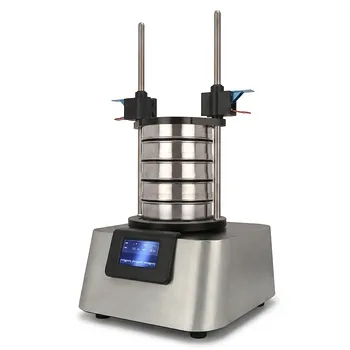
Vibratory Sieve Shaker Electromagnetic 3D Motion Powder Particle Size Analyzer for Dry and Wet Sieving
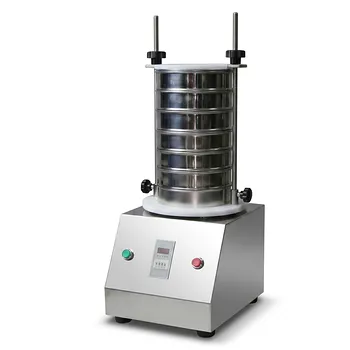
Small Laboratory Vibratory Sieve Shaker for Powder Gradation and Particle Size Analysis
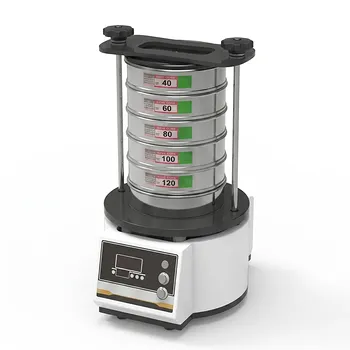
Dry Three Dimensional Vibratory Sieve Shaker
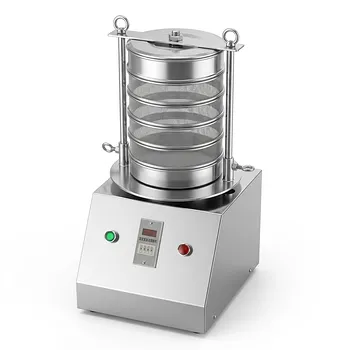
Stainless Steel Laboratory Vibratory Test Sieve Shaker
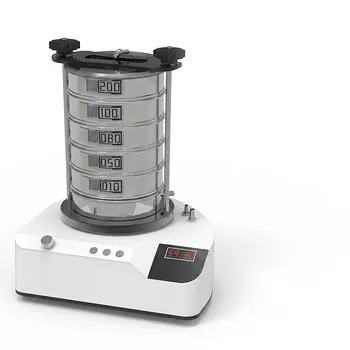
Heavy Duty Dry Three Dimensional Vibratory Sieve Shaker for Particle Separation
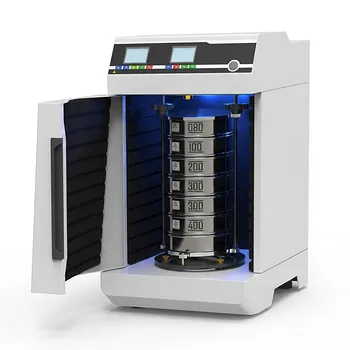
Laboratory Dry and Wet Three Dimensional Vibratory Sieve Shaker for Particle Analysis
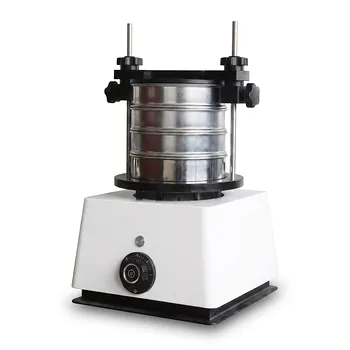
Small Laboratory Vibrating Sieve Shaker for Precise Particle Size Analysis
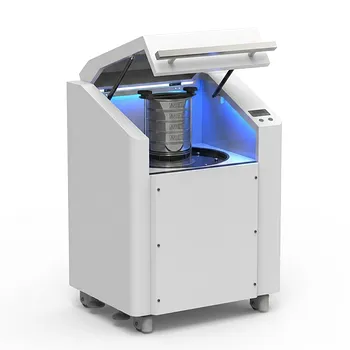
High Frequency Cabinet Type Three-Dimensional Rotary Vibrating Sieve Shaker for Dry Sieving and Particle Classification
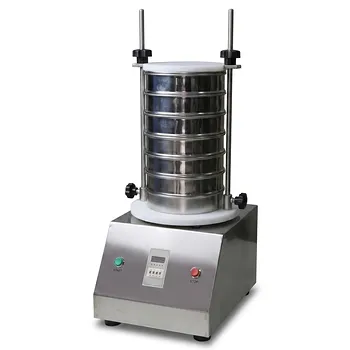
Laboratory Vibratory Test Sieve Shaker for Precision Particle Size Analysis and Powder Grading
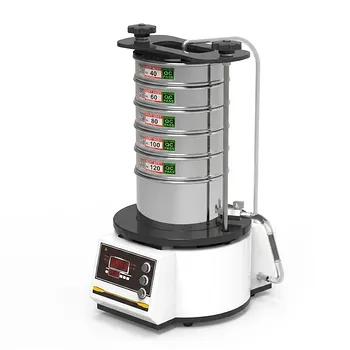
High Frequency Wet Three-Dimensional Vibrating Sieve Shaker for Dry and Wet Particle Size Analysis
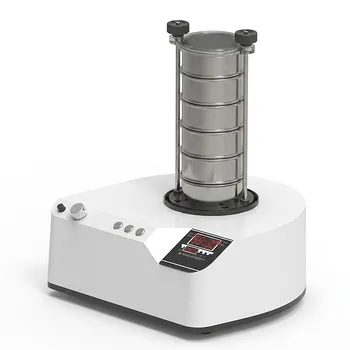
三维电磁微量振动筛分仪
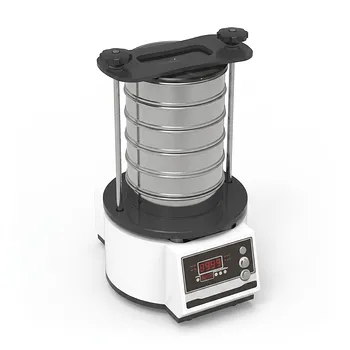
Tapping Oscillating Sieve Shaker for Dry and Wet Particle Size Analysis
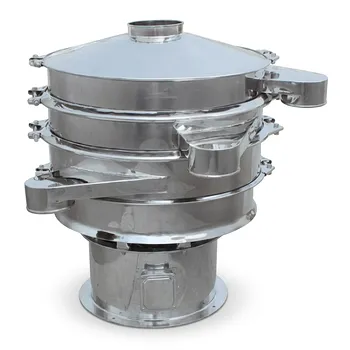
Stainless Steel Rotary Vibrating Sieve High Precision Circular Vibratory Separator Industrial Powder Grading Machine Multi Layer Sifting Equipment