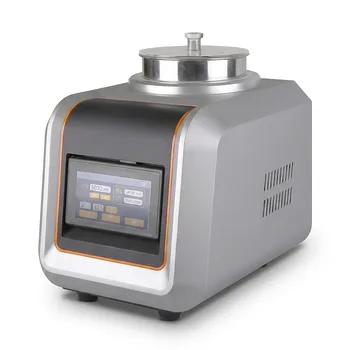
Why Use Multi-Layer Sieve Shakers for Orange Peel Powder? Achieve Precise Particle Size Control
Updated 3 months ago
A vibratory sieve shaker equipped with multi-layer test sieves is essential for producing orange peel powder because it provides precise control over particle size distribution. By isolating specific fractions—typically ranging from 1 µm to 212 µm—this equipment ensures material uniformity, which is a decisive factor in maintaining consistent mechanical properties and predictable behavior in composite materials.
A vibratory sieve shaker transforms raw ground orange peel into a standardized technical material. By utilizing high-frequency mechanical vibration and multiple sieve layers, it eliminates size variability to optimize the powder's surface area, reactivity, and structural integrity in industrial applications.
Achieving Precision in Particle Size Distribution
Multi-Layer Configuration for Simultaneous Fractionation
The use of multi-layer test sieves allows a single operation to separate ground orange peel into multiple distinct size grades. This is critical for identifying the "optimal" fraction for a specific use case, such as separating fine dust from larger fibrous particles.
Without this layered approach, achieving a narrow particle size distribution would require multiple, inefficient passes. This systematic separation ensures that the final powder meets the exact micrometer specifications required for technical consistency.
High-Frequency Vibration for Material Fluidization
Vibratory shakers use mechanical energy to keep the orange peel particles in constant motion, preventing them from "blinding" or clogging the mesh. This fluidization ensures that every particle has multiple opportunities to pass through the sieve openings.
This automated process is significantly more accurate and repeatable than manual sieving. It allows for the generation of distribution curves, which are vital for understanding how the powder will flow or react in a production environment.
The Impact on Material Performance
Enhancing Mechanical Integrity in Composites
When orange peel powder is used as a filler in composite materials, particle uniformity is mandatory. Uniform particles distribute stresses more evenly throughout the material matrix.
Inconsistent sizes can lead to weak points or "stress concentrators." Precise sieving ensures that the impact of filler dimensions on erosive wear behavior and structural strength can be accurately measured and controlled.
Maximizing Chemical Reactivity and Adsorption
For applications where orange peel acts as a bio-adsorbent, the surface-area-to-volume ratio is the primary driver of efficiency. Finer, uniform particles provide a larger effective reaction surface area for capturing heavy metal ions.
Consistent sizing also reduces the occurrence of macroscopic cracks in bio-adsorptive films. By ensuring a uniform physical structure, the powder facilitates better contact efficiency and faster reaction rates.
Optimizing Extraction and Thermal Processes
In laboratory settings, such as Accelerated Solvent Extraction (ASE), particle size consistency eliminates differences in the diffusion path. This ensures that solvents can penetrate the powder uniformly, leading to repeatable results.
Similarly, in thermochemical reactors, uniform size ensures heating uniformity. This prevents localized overheating or incomplete reactions, which are common when processing biomass with high size variability.
Understanding the Trade-offs
Equipment Maintenance and Sieve Wear
While highly precise, the fine meshes used in vibratory shakers (especially those below 100 mesh) are delicate. Over-vibration or processing abrasive materials can lead to mesh deformation, which compromises the accuracy of the size fractions.
Regular calibration and cleaning are required to maintain the integrity of the results. Failing to inspect the sieves can lead to "oversize" particles leaking into "fine" batches, ruining the material's technical grading.
Throughput vs. Precision
Vibratory sieve shakers are designed for precision and analysis, not necessarily high-volume industrial throughput. Attempting to process too much material at once can lead to "bedding," where the weight of the powder prevents smaller particles from reaching the mesh.
To maintain accuracy, users must often process material in smaller, controlled batches. This creates a trade-off between the speed of production and the strictness of the particle size distribution.
How to Apply This to Your Project
Making the Right Choice for Your Goal
To get the best results from your vibratory sieve shaker, you must align your sieve selection with your final application's requirements.
- If your primary focus is mechanical reinforcement in composites: Use a range of sieves between 1 µm and 212 µm to isolate the specific fraction that minimizes erosive wear in your specific polymer matrix.
- If your primary focus is bio-adsorption or chemical reactivity: Prioritize finer meshes, such as 125 microns or 60/100 mesh, to maximize the total surface area available for ion exchange or reaction.
- If your primary focus is granulation or fertilizer production: Use the shaker to determine the mass fraction composition, ensuring the ratio of dust to large particles is optimized for pellet surface quality.
- If your primary focus is laboratory extraction (ASE/MAE): Focus on achieving a tight, mid-range fraction (e.g., 100 to 250 μm) to ensure consistent solvent diffusion and repeatable yield data.
Precise particle size control is the fundamental requirement for turning raw orange peel waste into a high-performance industrial feedstock.
Summary Table:
| Feature | Benefit for Orange Peel Powder | Industrial Impact |
|---|---|---|
| Multi-Layer Sieves | Simultaneous separation of multiple size fractions | Efficiency in identifying optimal particle grades |
| High-Frequency Vibration | Prevents mesh blinding and ensures material fluidization | Consistent, repeatable distribution curves |
| Precise Size Control | Isolates particles from 1 µm to 212 µm | Enhanced mechanical integrity in composites |
| Increased Surface Area | Maximizes effective reaction surface for adsorption | Faster chemical reactivity and ion exchange |
| Uniform Sizing | Ensures consistent solvent diffusion and heating | Repeatable results in extraction and thermal processing |
Elevate Your Material Research with Precision Engineering
Achieving the perfect particle size distribution is the first step toward high-performance material innovation. At [Brand Name], we provide complete laboratory sample preparation solutions tailored for material science professionals. Whether you are processing biomass like orange peel or advanced ceramics, our equipment is designed for accuracy and durability.
Our extensive product range includes:
- Crushing & Grinding: Jaw/roll crushers, liquid nitrogen cryogenic grinders, and high-energy mills (planetary ball, jet, sand/bead, disc, rotor).
- Sieving & Mixing: Vibratory and air-jet sieve shakers with precision test sieves, plus powder and defoaming mixers.
- Pressing & Compaction: A full spectrum of hydraulic presses, including Cold/Warm Isostatic Presses (CIP/WIP), standard lab presses, XRF pellet presses, and vacuum hot presses.
Ready to optimize your powder processing workflow? Contact our experts today to find the ideal solution for your specific application requirements!
References
- Erosive Wear Behavior of Carbon Black/Bio-char Bio-waste (Orange Peel) Reinforced Composites. DOI: 10.33263/briac136.512
Mentioned Products
- Vibratory Sieve Shaker Electromagnetic 3D Motion Powder Particle Size Analyzer for Dry and Wet Sieving
- Laboratory Dry and Wet Three Dimensional Vibratory Sieve Shaker for Particle Analysis
- Stainless Steel Laboratory Vibratory Test Sieve Shaker
- Heavy Duty Dry Three Dimensional Vibratory Sieve Shaker for Particle Separation
- Dry Three Dimensional Vibratory Sieve Shaker
People Also Ask
- How does a vibratory sieve shaker contribute to optimizing the performance of activated carbon? Enhance Adsorption Precision
- Why is a laboratory vibratory sieve shaker necessary for processing magnesium-based borate precursor powders? Boost Activity
- Why use a vibratory sieve shaker to verify coarse aggregate grading in rubberized concrete? Ensure Structural Integrity
- What function do vibratory sieve shakers and standard test sieves serve in the preparation of adsorbents? Key Guide
- What role does a vibratory sieve shaker play in the particle size analysis of ground corn products? Enhance QC Precision

Tech Team · PowderPreparation
Last updated on Jun 03, 2026
Related Products
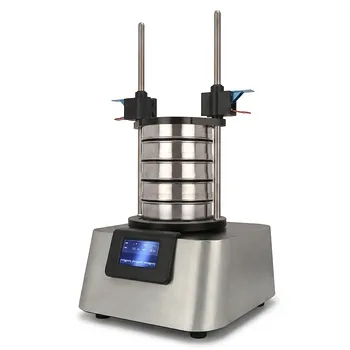
Vibratory Sieve Shaker Electromagnetic 3D Motion Powder Particle Size Analyzer for Dry and Wet Sieving
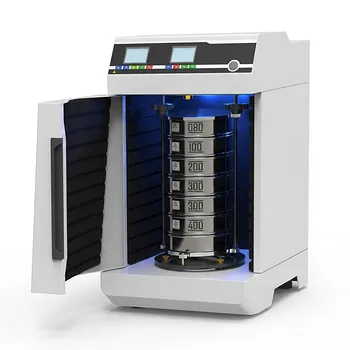
Laboratory Dry and Wet Three Dimensional Vibratory Sieve Shaker for Particle Analysis
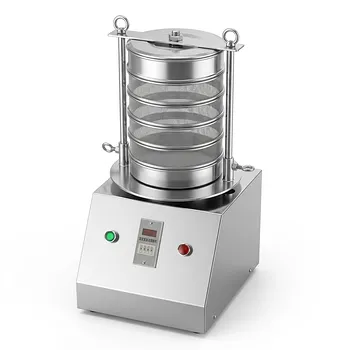
Stainless Steel Laboratory Vibratory Test Sieve Shaker

Heavy Duty Dry Three Dimensional Vibratory Sieve Shaker for Particle Separation

Dry Three Dimensional Vibratory Sieve Shaker
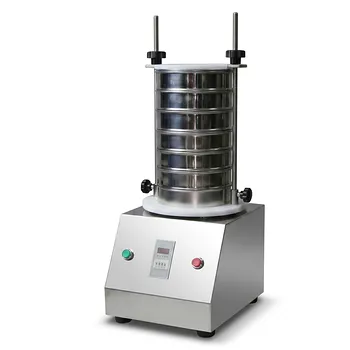
Small Laboratory Vibratory Sieve Shaker for Powder Gradation and Particle Size Analysis
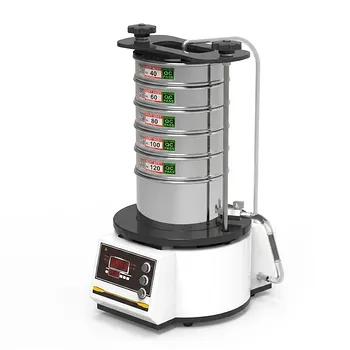
High Frequency Wet Three-Dimensional Vibrating Sieve Shaker for Dry and Wet Particle Size Analysis
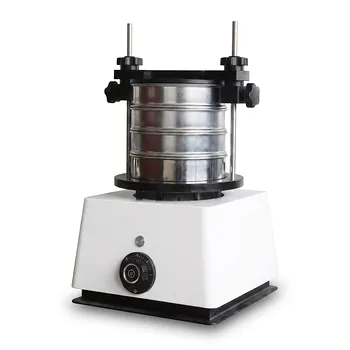
Small Laboratory Vibrating Sieve Shaker for Precise Particle Size Analysis
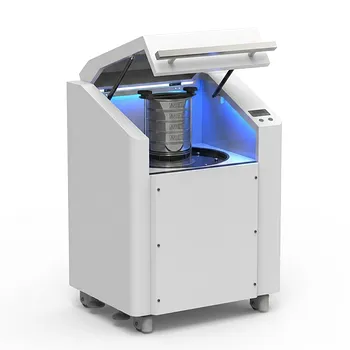
High Frequency Cabinet Type Three-Dimensional Rotary Vibrating Sieve Shaker for Dry Sieving and Particle Classification

Laboratory Vibratory Test Sieve Shaker for Precision Particle Size Analysis and Powder Grading
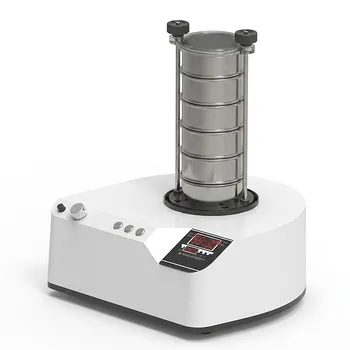
三维电磁微量振动筛分仪
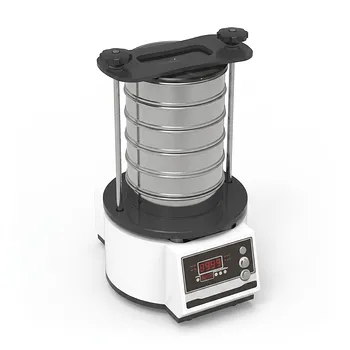
Tapping Oscillating Sieve Shaker for Dry and Wet Particle Size Analysis

Stainless Steel Rotary Vibrating Sieve High Precision Circular Vibratory Separator Industrial Powder Grading Machine Multi Layer Sifting Equipment
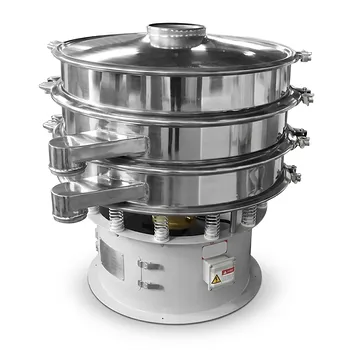
Three Dimensional Rotary Vibrating Sieve
Small Vibrating Ultrafine Grinder for Traditional Chinese Medicine
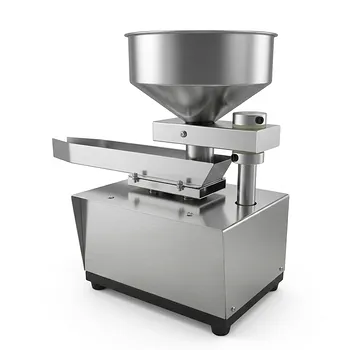
Automatic Vibrating Powder Feeder for Laboratory Material Processing Precision Vibratory Hopper Feeder for Granular and Powder Material Handling Industrial Grade Vibrating Tray Feeder for Consistent Material Sample Preparation
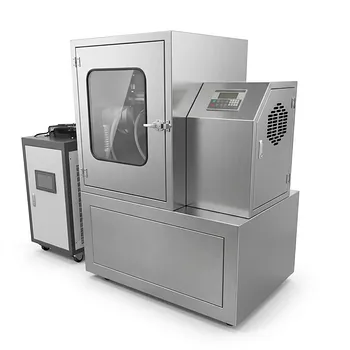
Vibratory Superfine Grinder for Ultra Fine Laboratory Powder Milling
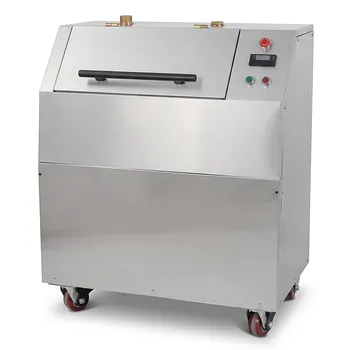
Vibratory Disc Mill for Rapid Fine Grinding and High Throughput Sample Preparation of Hard and Brittle Materials