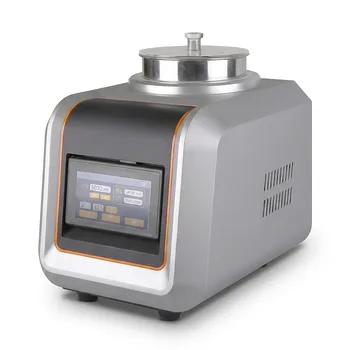
Why is a vibratory sieve shaker equipped with a 300-mesh test sieve used? Optimize Boerhavia diffusa Particle Uniformity
Updated 5 months ago
The use of a vibratory sieve shaker with a 300-mesh test sieve is essential for ensuring the uniformity and scientific validity of Boerhavia diffusa powder. This configuration provides precise control over the particle size range, which is a critical variable in adsorption kinetic experiments. By standardizing the particle size, researchers can eliminate experimental interference caused by size variations, ensuring that the resulting data is both accurate and repeatable.
Core Takeaway: Precisely controlling the particle size of Boerhavia diffusa powder through 300-mesh vibratory sieving is a prerequisite for reliable experimental results. It standardizes the surface area and mass transfer rates, transforming a raw biological material into a scientifically consistent adsorbent.
The Role of Uniformity in Experimental Integrity
Eliminating Kinetic Interference
In adsorption studies, the rate at which a substance adheres to a surface is heavily influenced by the surface area of the particles. If the Boerhavia diffusa powder contains a wide range of particle sizes, the kinetic data will reflect a chaotic mix of reaction speeds rather than a clear trend. Using a 300-mesh sieve creates a homogeneous sample that removes these unwanted variables.
Ensuring Scientific Repeatability
Scientific validity relies on the ability of other researchers to replicate a study's findings. By specifying a 300-mesh vibratory process, the methodology establishes a standardized physical profile for the raw material. This allows for consistent data across different trials, ensuring that the observed effects are due to the material's properties rather than accidental physical differences.
The Impact on Physical and Chemical Processes
Regulating Mass Transfer Rates
Consistent grain size is vital because it eliminates variations in the mass transfer rate. When particles are uniform, the speed at which solvents or solutes move through the powder remains constant. This is particularly important for high-accuracy extraction results and ensuring the efficiency of bioactive compound recovery.
Optimizing Microscopic Pore Structure
The use of fine-mesh sieving allows for the precise regulation of the microscopic pore structure within the powder. In applications ranging from ceramic scaffolds to composite reinforcements, this level of control ensures that the material achieves an ideal packing density. Proper density prevents structural flaws, such as internal stress concentrations or macro-cracks, during further processing or sintering.
Improving Powder Flowability and Adhesion
In industrial contexts, the 300-mesh classification ensures that the powder behaves predictably during mold filling or coating. Uniform particles optimize powder flowability, preventing the "clumping" or agglomeration that often plagues unrefined plant powders. This leads to better adhesion and more consistent surface textures in the final product.
Understanding the Trade-offs and Pitfalls
The Risk of Sieve Blinding
Using a mesh as fine as 300 (approximately 48–50 microns) increases the likelihood of sieve blinding, where particles become lodged in the mesh openings. To combat this, a vibratory shaker is mandatory rather than optional; the mechanical energy helps dislodge these particles to maintain throughput. Without high-frequency vibration, the sieving process would become inefficient and inaccurate.
Balancing Surface Area and Flowability
While a finer powder (like that produced by a 300-mesh sieve) provides a larger surface area for reactions, it can also lead to reduced flowability. Very fine powders are more susceptible to moisture and static electricity, which can cause them to bridge or stick to equipment. Users must balance the need for high surface area with the practical challenges of handling micron-level powders.
How to Apply This to Your Project
Making the Right Choice for Your Goal
- If your primary focus is experimental kinetic research: Always use a 300-mesh vibratory sieve to ensure that particle size is a "controlled constant," thereby isolating the chemical variables you are testing.
- If your primary focus is industrial extraction efficiency: Prioritize the vibratory shaker's frequency settings to maintain a high mass transfer rate, ensuring that the powder remains uniform and free of agglomerates.
- If your primary focus is material structural integrity: Use the 300-mesh sieve to target a specific median diameter, which will allow you to control the shrinkage rates and packing density of the resulting green body.
By treating particle size as a critical technical parameter rather than a secondary detail, you ensure that Boerhavia diffusa raw materials perform with the highest degree of technical reliability.
Summary Table:
| Key Feature | Functional Role | Scientific Benefit |
|---|---|---|
| 300-Mesh Sieve | Precise particle size control (~48-50μm) | Eliminates kinetic interference in adsorption studies |
| Vibratory Action | Prevents sieve blinding and clogging | Maintains high throughput and experimental accuracy |
| Powder Uniformity | Standardizes surface area & mass transfer | Ensures scientific repeatability and data reliability |
| Pore Regulation | Optimizes microscopic packing density | Prevents structural flaws and internal cracks in materials |
Elevate Your Material Research with Precision Powder Solutions
Achieving scientific validity in research like Boerhavia diffusa kinetics requires equipment that delivers absolute consistency. We provide complete laboratory sample preparation solutions tailored for material science, specializing in high-performance powder processing and compaction equipment.
Our extensive range includes:
- Sieving & Milling: Vibratory and air-jet sieve shakers, planetary ball mills, jet mills, and liquid nitrogen cryogenic grinders.
- Sample Compaction: Cold/Warm Isostatic Presses (CIP/WIP), vacuum hot presses, and standard XRF pellet presses.
- Mixing: High-efficiency powder mixers and vacuum defoaming mixers.
Whether you are standardizing botanical powders or developing advanced ceramics, our expertise ensures your samples meet the highest technical standards. Contact our technical team today to find the perfect configuration for your laboratory needs!
References
- Deva Nand Sharma, Anil Yadav. Batch Adsorption Study: Sequestration of Cr(VI) ions fromAqueous Solution Utilizing Boerhavia diffusa. DOI: 10.14233/ajchem.2023.27804
Mentioned Products
- Vibratory Sieve Shaker Electromagnetic 3D Motion Powder Particle Size Analyzer for Dry and Wet Sieving
- Laboratory Dry and Wet Three Dimensional Vibratory Sieve Shaker for Particle Analysis
- Stainless Steel Laboratory Vibratory Test Sieve Shaker
- Heavy Duty Dry Three Dimensional Vibratory Sieve Shaker for Particle Separation
- Dry Three Dimensional Vibratory Sieve Shaker
People Also Ask
- How does a vibratory sieve shaker contribute to optimizing the performance of activated carbon? Enhance Adsorption Precision
- Why is a laboratory vibratory sieve shaker necessary for processing magnesium-based borate precursor powders? Boost Activity
- Why use a vibratory sieve shaker to verify coarse aggregate grading in rubberized concrete? Ensure Structural Integrity
- What function do vibratory sieve shakers and standard test sieves serve in the preparation of adsorbents? Key Guide
- What role does a vibratory sieve shaker play in the particle size analysis of ground corn products? Enhance QC Precision

Tech Team · PowderPreparation
Last updated on May 14, 2026
Related Products
Vibratory Sieve Shaker Electromagnetic 3D Motion Powder Particle Size Analyzer for Dry and Wet Sieving
Laboratory Dry and Wet Three Dimensional Vibratory Sieve Shaker for Particle Analysis
Stainless Steel Laboratory Vibratory Test Sieve Shaker
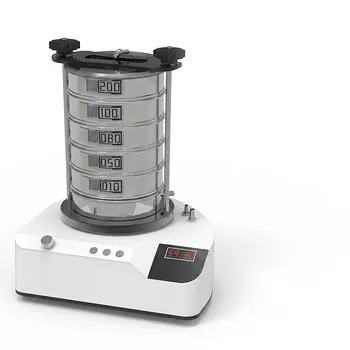
Heavy Duty Dry Three Dimensional Vibratory Sieve Shaker for Particle Separation

Dry Three Dimensional Vibratory Sieve Shaker

Small Laboratory Vibratory Sieve Shaker for Powder Gradation and Particle Size Analysis
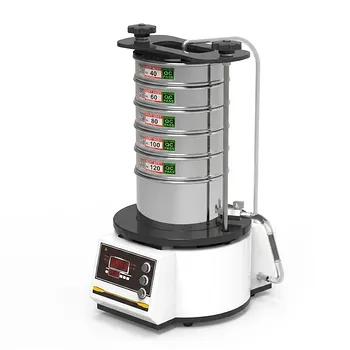
High Frequency Wet Three-Dimensional Vibrating Sieve Shaker for Dry and Wet Particle Size Analysis

Small Laboratory Vibrating Sieve Shaker for Precise Particle Size Analysis
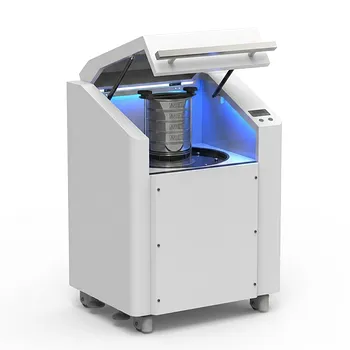
High Frequency Cabinet Type Three-Dimensional Rotary Vibrating Sieve Shaker for Dry Sieving and Particle Classification

Laboratory Vibratory Test Sieve Shaker for Precision Particle Size Analysis and Powder Grading
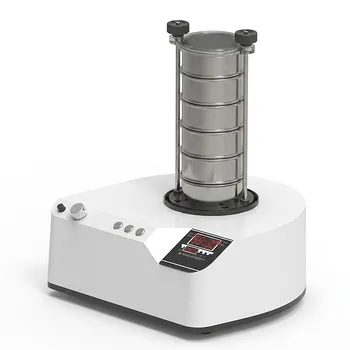
三维电磁微量振动筛分仪
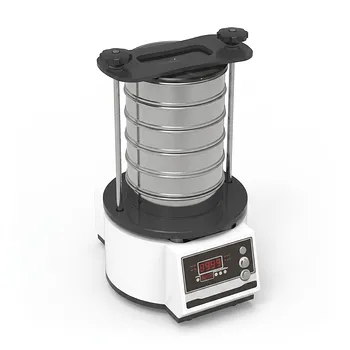
Tapping Oscillating Sieve Shaker for Dry and Wet Particle Size Analysis
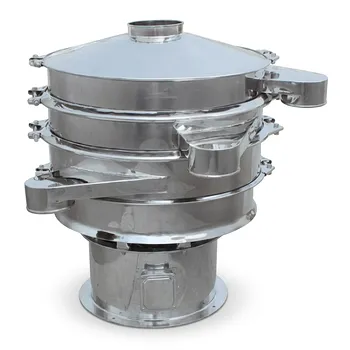
Stainless Steel Rotary Vibrating Sieve High Precision Circular Vibratory Separator Industrial Powder Grading Machine Multi Layer Sifting Equipment
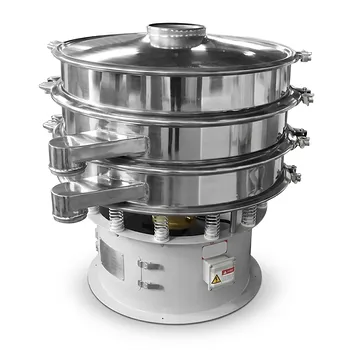
Three Dimensional Rotary Vibrating Sieve
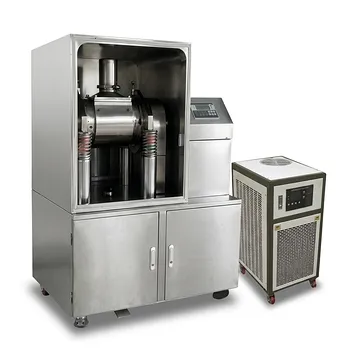
Small Vibrating Ultrafine Grinder for Traditional Chinese Medicine
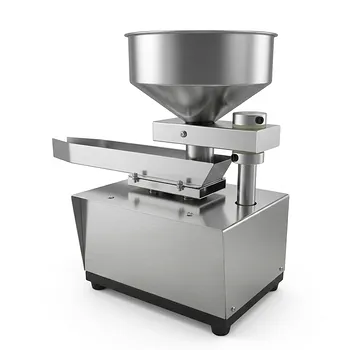
Automatic Vibrating Powder Feeder for Laboratory Material Processing Precision Vibratory Hopper Feeder for Granular and Powder Material Handling Industrial Grade Vibrating Tray Feeder for Consistent Material Sample Preparation
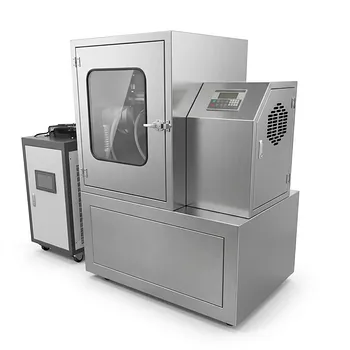
Vibratory Superfine Grinder for Ultra Fine Laboratory Powder Milling
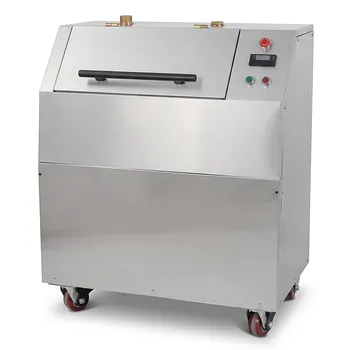
Vibratory Disc Mill for Rapid Fine Grinding and High Throughput Sample Preparation of Hard and Brittle Materials