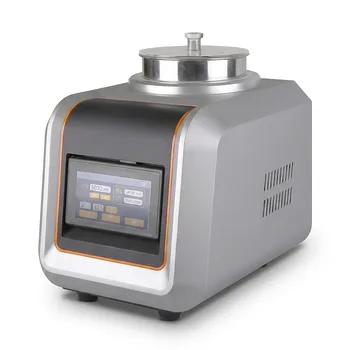
Why is a vibratory sieve shaker critical for screening sunflower seed shells? Ensure Precision and Material Uniformity
Updated 5 months ago
A vibratory sieve shaker is the definitive tool for ensuring material uniformity and experimental repeatability in particle analysis. By utilizing high-frequency mechanical vibration in conjunction with standard test sieves, this equipment precisely grades crushed sunflower seed shells into specific size fractions. This precision is critical for maintaining physical consistency during chemical modifications and ensuring that the material exhibits stable kinetic characteristics during adsorption experiments.
The core value of a vibratory sieve shaker lies in its ability to provide standardized, automated particle separation that eliminates the inconsistencies of manual sieving. This ensures that modified sunflower seed shell particles possess the optimal surface area and structural properties required for predictable chemical reactions and mechanical performance.
Enhancing Chemical and Kinetic Performance
Maintaining Stable Adsorption Kinetics
For researchers working with sunflower seed shells as adsorbents, particle size is a primary variable. By isolating specific fractions—typically between 200 and 315 micrometers—a vibratory sieve shaker ensures the material maintains high physical consistency. This consistency is the foundation for stable kinetic characteristics, allowing for accurate modeling of how the shells interact with chemical pollutants.
Optimizing Reactive Surface Area
The efficiency of chemical treatments and protein extractions depends heavily on the contact area between the shell particles and the liquid phase. A vibratory sieve shaker allows for the isolation of particles below 500 μm, ensuring a uniform surface-to-volume ratio. This level of control directly leads to higher extraction efficiency and the reproducibility of complex experimental results.
Precision in Particle Size Distribution (PSD)
Standardizing Data for Process Optimization
A vibratory sieve shaker provides the empirical data needed to calculate the Geometric Mean Diameter (GMD) and Geometric Standard Deviation (GSD) of ground biomass. These metrics are essential for evaluating the performance of grinding equipment like hammer mills. By analyzing the PSD, operators can optimize mill gaps and sieve configurations to maximize the separation of protein and fiber.
Eliminating Human Error through Automation
Unlike manual sieving, which is prone to variation in force and technique, a vibratory shaker provides constant amplitude and uniform processing time. This automated approach ensures that the particles are accurately and repeatably classified according to their physical dimensions. Standardization is vital for generating accurate particle size distribution curves used in thermochemical reactor design.
Structural and Mechanical Integrity
Improving Mechanical Strength in Composites
In applications like fiberboard manufacturing, the size of sunflower seed shell particles determines the final product's strength. Coarser fibers provide a reinforcing structural skeleton, while finer particles fill internal voids. A vibratory sieve shaker enables the precise continuous grading required to balance these components, enhancing the mechanical strength of the resulting composite.
Ensuring Uniformity in Casting and Mixing
When sunflower particles are used as fillers in composites, maintaining a strict size range—often as narrow as 100 to 120 micrometers—is essential. This uniformity prevents particle agglomeration during processes like stir casting. Consistent dimensions help achieve a stable suspension within a melt, leading to superior microstructural consistency in the final material.
Understanding the Trade-offs
The Risk of Particle Attrition
While high-frequency vibration is necessary for efficient separation, it can occasionally cause particle attrition. This occurs when the mechanical energy causes fragile sunflower shell particles to break down into smaller fragments during the sieving process itself. Professionals must calibrate the vibration intensity and duration to minimize this effect and prevent skewed data.
Sieve Blinding and Maintenance
Fine biomass particles, particularly those with high moisture or oil content, can lead to sieve blinding, where the mesh openings become clogged. This requires the use of anti-blinding aids like rubber balls or ultrasonic cleaners. Failure to address blinding will result in incomplete separation and an inaccurate representation of the particle size distribution.
How to Apply This to Your Project
Successful screening requires matching the shaker settings to your specific material goals. Consider these recommendations based on your primary objective:
- If your primary focus is Adsorption Kinetics: Use the shaker to isolate a narrow, middle-range fraction (e.g., 200–315 μm) to ensure consistent reaction rates and surface chemistry.
- If your primary focus is Grinding Efficiency: Use a full stack of sieves to calculate the GMD and GSD, allowing you to fine-tune your hammer mill or roll mill settings.
- If your primary focus is Composite Manufacturing: Prioritize a "gap-graded" distribution where you specifically select both coarse fibers for structure and fine powders for void filling.
- If your primary focus is Toxicological Testing: Utilize high-precision mesh (down to 25 μm) to ensure exact exposure concentrations and control for particle-size-dependent biological impacts.
By mastering the precise control offered by a vibratory sieve shaker, you transform raw biomass into a standardized technical material capable of delivering predictable, high-performance results.
Summary Table:
| Application Objective | Target Particle Size | Key Benefit of Vibratory Sieving |
|---|---|---|
| Adsorption Kinetics | 200 – 315 μm | Ensures stable reaction rates and physical consistency. |
| Protein Extraction | < 500 μm | Optimizes reactive surface area and extraction efficiency. |
| Grinding Efficiency | Variable | Provides GMD/GSD data to optimize hammer mill settings. |
| Composite Strength | 100 – 120 μm | Prevents particle agglomeration and improves microstructure. |
| Toxicological Testing | Down to 25 μm | Controls for particle-size-dependent biological impacts. |
Elevate Your Material Research with Precision Engineering
At [Brand Name], we provide complete laboratory sample preparation solutions tailored for material science professionals. Whether you are refining biomass like sunflower shells or developing advanced polymers, our equipment ensures the repeatability your data demands.
Our specialized product lines include:
- Particle Size Analysis: Vibratory and air-jet sieve shakers with a full range of high-precision test sieves.
- Milling & Grinding: Planetary ball mills, jet mills, disc mills, and liquid nitrogen cryogenic grinders.
- Crushing & Mixing: Jaw/roll crushers and high-efficiency powder/defoaming mixers.
- Compaction Excellence: A full spectrum of hydraulic presses, including Cold/Warm Isostatic Presses (CIP/WIP), XRF pellet presses, and vacuum hot presses.
Ready to optimize your powder processing workflow? Contact our technical experts today to find the perfect solution for your lab!
References
- Antonija Kristek Janković, Mario Šiljeg. Utilization of Modified Sunflower Seed as Novel Adsorbent for Nitrates Removal from Wastewater. DOI: 10.3390/w16010073
Mentioned Products
- Vibratory Sieve Shaker Electromagnetic 3D Motion Powder Particle Size Analyzer for Dry and Wet Sieving
- Laboratory Dry and Wet Three Dimensional Vibratory Sieve Shaker for Particle Analysis
- Stainless Steel Laboratory Vibratory Test Sieve Shaker
- Heavy Duty Dry Three Dimensional Vibratory Sieve Shaker for Particle Separation
- Dry Three Dimensional Vibratory Sieve Shaker
People Also Ask
- How does a vibratory sieve shaker contribute to optimizing the performance of activated carbon? Enhance Adsorption Precision
- Why is a laboratory vibratory sieve shaker necessary for processing magnesium-based borate precursor powders? Boost Activity
- Why use a vibratory sieve shaker to verify coarse aggregate grading in rubberized concrete? Ensure Structural Integrity
- What function do vibratory sieve shakers and standard test sieves serve in the preparation of adsorbents? Key Guide
- What role does a vibratory sieve shaker play in the particle size analysis of ground corn products? Enhance QC Precision

Tech Team · PowderPreparation
Last updated on May 14, 2026
Related Products
Vibratory Sieve Shaker Electromagnetic 3D Motion Powder Particle Size Analyzer for Dry and Wet Sieving
Laboratory Dry and Wet Three Dimensional Vibratory Sieve Shaker for Particle Analysis
Stainless Steel Laboratory Vibratory Test Sieve Shaker
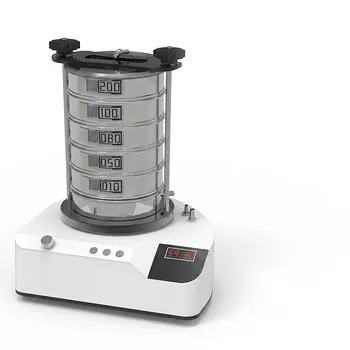
Heavy Duty Dry Three Dimensional Vibratory Sieve Shaker for Particle Separation

Dry Three Dimensional Vibratory Sieve Shaker

Small Laboratory Vibratory Sieve Shaker for Powder Gradation and Particle Size Analysis
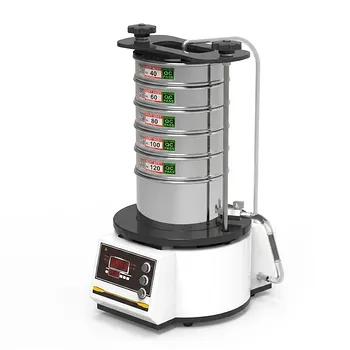
High Frequency Wet Three-Dimensional Vibrating Sieve Shaker for Dry and Wet Particle Size Analysis

Small Laboratory Vibrating Sieve Shaker for Precise Particle Size Analysis
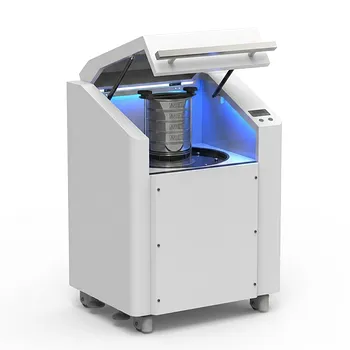
High Frequency Cabinet Type Three-Dimensional Rotary Vibrating Sieve Shaker for Dry Sieving and Particle Classification

Laboratory Vibratory Test Sieve Shaker for Precision Particle Size Analysis and Powder Grading
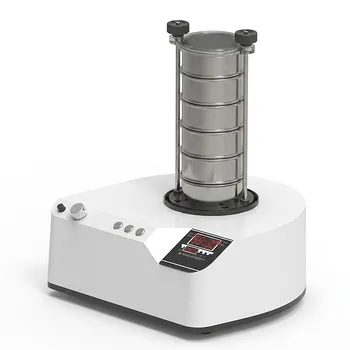
三维电磁微量振动筛分仪
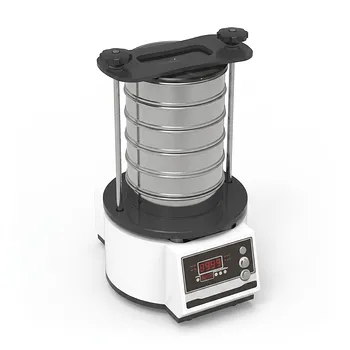
Tapping Oscillating Sieve Shaker for Dry and Wet Particle Size Analysis
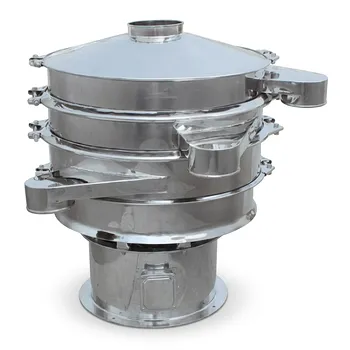
Stainless Steel Rotary Vibrating Sieve High Precision Circular Vibratory Separator Industrial Powder Grading Machine Multi Layer Sifting Equipment
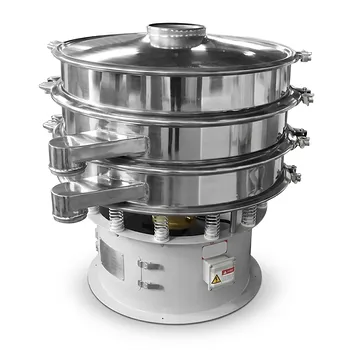
Three Dimensional Rotary Vibrating Sieve
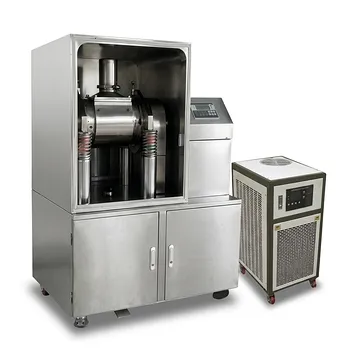
Small Vibrating Ultrafine Grinder for Traditional Chinese Medicine
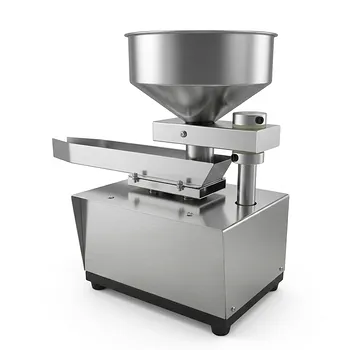
Automatic Vibrating Powder Feeder for Laboratory Material Processing Precision Vibratory Hopper Feeder for Granular and Powder Material Handling Industrial Grade Vibrating Tray Feeder for Consistent Material Sample Preparation
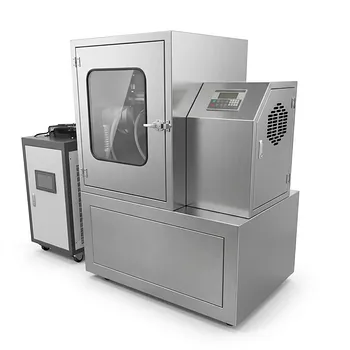
Vibratory Superfine Grinder for Ultra Fine Laboratory Powder Milling
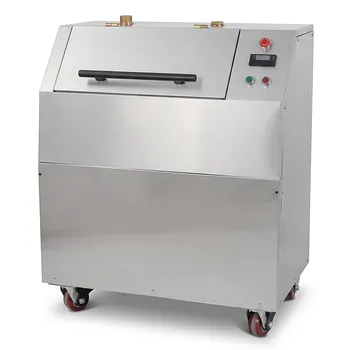
Vibratory Disc Mill for Rapid Fine Grinding and High Throughput Sample Preparation of Hard and Brittle Materials