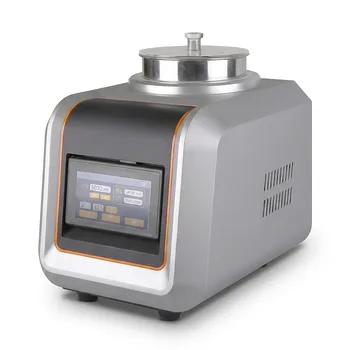
Why is a vibratory sieve shaker combined with standard test sieves necessary? Optimize Biomass Classification & Yield
Updated 5 months ago
Analyzing banana pseudo-stem particle distribution requires mechanical precision. A vibratory sieve shaker paired with standard test sieves provides the controlled oscillation necessary to classify crushed biomass into distinct size grades, ranging from fine-grade ($\le$ 180 µm) to coarse-grade ($\ge$ 2000 µm). This standardized classification is critical for generating accurate particle size distribution curves, which allow researchers to study how specific surface area conditions influence the yield and purity of extracted cellulose.
By providing a repeatable, automated method for physical separation, this equipment ensures that biomass fibers are accurately categorized by mass percentage. It eliminates the inconsistencies of manual sieving and provides the foundational data needed to optimize both chemical extraction and mechanical manufacturing processes.
Achieving Precision in Biomass Classification
The Mechanics of Controlled Oscillation
A vibratory shaker applies a constant frequency and mechanical amplitude to the material stack. This action induces a rhythmic motion that ensures every plant fragment makes thorough contact with the sieve openings.
Unlike manual methods, the mechanical vibration ensures that particles smaller than the mesh aperture successfully pass through to lower decks. This creates a repeatable physical separation that is essential for mathematical modeling and process evaluation.
Overcoming Fiber Entanglement
Banana pseudo-stem materials are inherently fibrous and prone to clumping. The combined mechanical vibration and tapping actions of a shaker are necessary to break fiber bonds and prevent "false" readings.
Without this mechanical energy, entangled fibers can "blind" or clog the mesh, leading to inaccurate data. The shaker ensures that particles move independently, allowing for a precise statistical calculation of mass percentages across different size ranges.
Quantifying Material Quality for Downstream Processing
Defining Particle Size Distribution (PSD) Curves
By using a multi-layered stack of standard sieves—often ranging from 20 to 70 mesh—operators can generate comprehensive PSD curves. These curves are the core basis for understanding how the biomass will behave in a thermochemical reactor.
Accurate distribution data informs the flowability and heating uniformity of the material. If the distribution is too wide or inconsistent, the reaction rates within the reactor may fluctuate, compromising the quality of the final output.
Impact on Cellulose Yield and Purity
The particle size directly dictates the available surface area for chemical reactions. Precise classification allows researchers to isolate specific grades to determine the optimal size for maximizing cellulose extraction.
Fine-grade particles offer higher surface areas, which can improve reaction efficiency but may also introduce different levels of impurity. The sieve shaker provides the physical evidence required to balance these factors during industrial scaling.
Understanding the Trade-offs
Balancing Efficiency and Material Attrition
While mechanical sieving is highly efficient, excessive vibration intensity or prolonged duration can cause secondary attrition. This occurs when fragile plant fragments break down further during the test itself.
If the shaker is set too high, the resulting data may skew toward a finer distribution than the original sample. Finding the "sweet spot" for vibration time is essential to maintain the integrity of the original sample.
Limitations of Two-Dimensional Mesh
Standard sieves classify particles based on their smallest cross-sectional dimension. Because banana fibers are often elongated or needle-like, they may pass through a mesh that does not accurately reflect their actual length.
This means that while the sieve shaker is excellent for mass-based classification, it may need to be supplemented with microscopic analysis if the aspect ratio of the fibers is critical to your specific application.
How to Apply This to Your Analysis
To ensure your particle size analysis provides the most value for your specific project, consider these recommendations:
- If your primary focus is cellulose extraction purity: Prioritize using fine-mesh sieves (such as 200-mesh) to isolate the smallest fractions, which offer the highest surface area for chemical processing.
- If your primary focus is briquetting or fuel production: Focus on determining the d80 and d50 values to optimize packing density and ensure the mechanical strength of the final molded product.
- If your primary focus is industrial boiler combustion: Use the shaker to verify the fineness required for consistent burn rates and to evaluate the overall grinding efficiency of your processing equipment.
Standardizing your sieving protocol transforms raw banana waste into a predictable, high-value feedstock for advanced material science.
Summary Table:
| Key Feature | Benefit for Banana Pseudo-Stem | Impact on Downstream Processing |
|---|---|---|
| Controlled Oscillation | Ensures thorough contact & mesh pass-through | Repeatable data for mathematical modeling |
| Mechanical Tapping | Breaks fiber bonds & prevents clumping | Eliminates 'false' readings & mesh blinding |
| Multi-layer Stacking | Generates comprehensive PSD curves | Optimizes flowability & heating uniformity |
| Standardized Mesh | Precise classification by mass percentage | Maximizes cellulose yield & purity levels |
Elevate Your Material Analysis with Professional Sample Prep
Precision in particle size distribution is the foundation of high-yield biomass processing and material innovation. We provide complete laboratory sample preparation solutions for material science, specializing in high-performance powder processing and compaction equipment designed to meet rigorous research standards.
Our extensive product lines include:
- Size Reduction: Jaw/roll crushers, liquid nitrogen cryogenic grinders, and mills (planetary ball, jet, sand, disc, rotor).
- Classification: Vibratory and air-jet sieve shakers with a wide range of standard test sieves.
- Mixing & Compaction: Powder mixers, defoaming mixers, and a full spectrum of hydraulic presses, including Cold/Warm Isostatic Presses (CIP/WIP), XRF pellet presses, and vacuum hot presses.
Ready to optimize your lab's efficiency and ensure data accuracy? Contact our experts today to find the perfect equipment solution for your specific material processing needs.
References
- Rosa E. A. Nascimento, Luísa A. Neves. Extraction and Characterization of Cellulose Obtained from Banana Plant Pseudostem. DOI: 10.3390/cleantechnol5030052
Mentioned Products
- Vibratory Sieve Shaker Electromagnetic 3D Motion Powder Particle Size Analyzer for Dry and Wet Sieving
- Laboratory Dry and Wet Three Dimensional Vibratory Sieve Shaker for Particle Analysis
- Stainless Steel Laboratory Vibratory Test Sieve Shaker
- Heavy Duty Dry Three Dimensional Vibratory Sieve Shaker for Particle Separation
- Dry Three Dimensional Vibratory Sieve Shaker
People Also Ask
- How does a vibratory sieve shaker contribute to optimizing the performance of activated carbon? Enhance Adsorption Precision
- Why is a laboratory vibratory sieve shaker necessary for processing magnesium-based borate precursor powders? Boost Activity
- Why use a vibratory sieve shaker to verify coarse aggregate grading in rubberized concrete? Ensure Structural Integrity
- What function do vibratory sieve shakers and standard test sieves serve in the preparation of adsorbents? Key Guide
- What role does a vibratory sieve shaker play in the particle size analysis of ground corn products? Enhance QC Precision

Tech Team · PowderPreparation
Last updated on May 14, 2026
Related Products
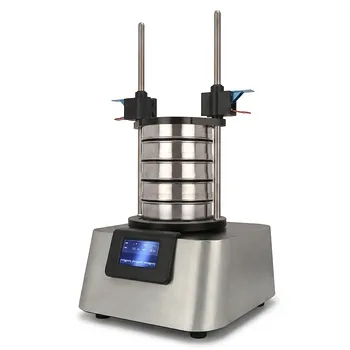
Vibratory Sieve Shaker Electromagnetic 3D Motion Powder Particle Size Analyzer for Dry and Wet Sieving
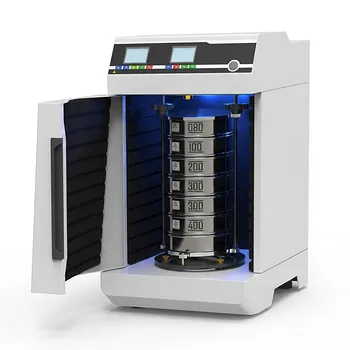
Laboratory Dry and Wet Three Dimensional Vibratory Sieve Shaker for Particle Analysis
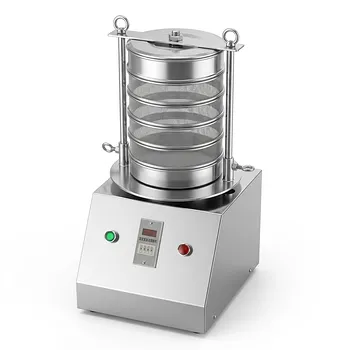
Stainless Steel Laboratory Vibratory Test Sieve Shaker
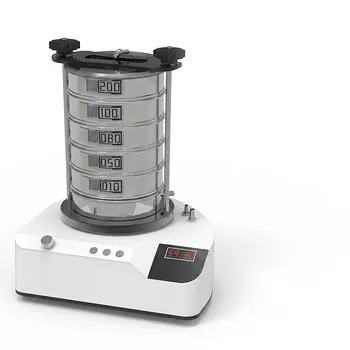
Heavy Duty Dry Three Dimensional Vibratory Sieve Shaker for Particle Separation
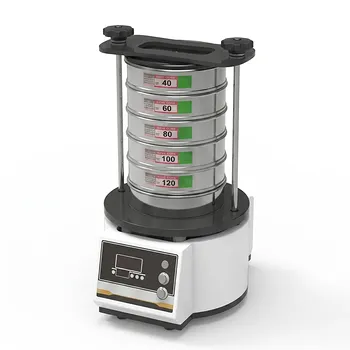
Dry Three Dimensional Vibratory Sieve Shaker
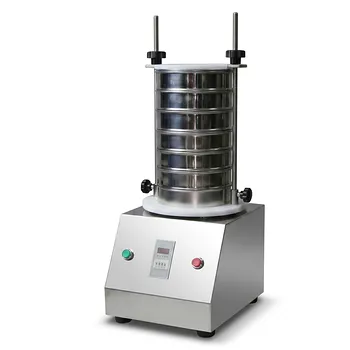
Small Laboratory Vibratory Sieve Shaker for Powder Gradation and Particle Size Analysis
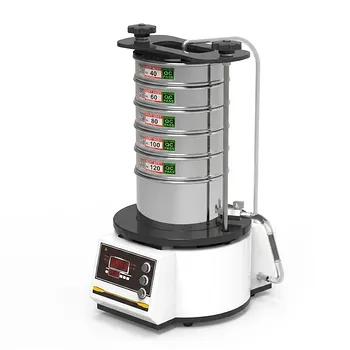
High Frequency Wet Three-Dimensional Vibrating Sieve Shaker for Dry and Wet Particle Size Analysis
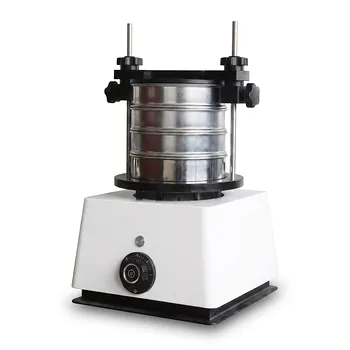
Small Laboratory Vibrating Sieve Shaker for Precise Particle Size Analysis
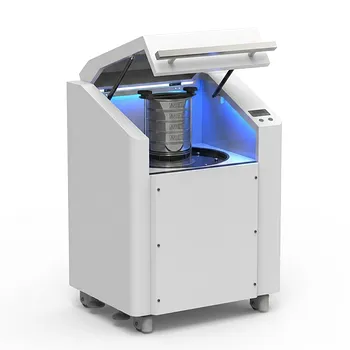
High Frequency Cabinet Type Three-Dimensional Rotary Vibrating Sieve Shaker for Dry Sieving and Particle Classification
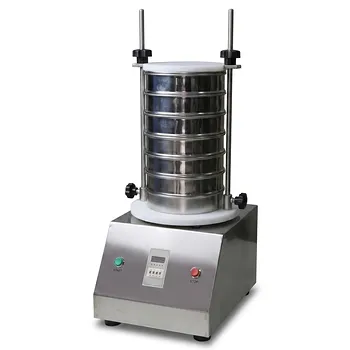
Laboratory Vibratory Test Sieve Shaker for Precision Particle Size Analysis and Powder Grading
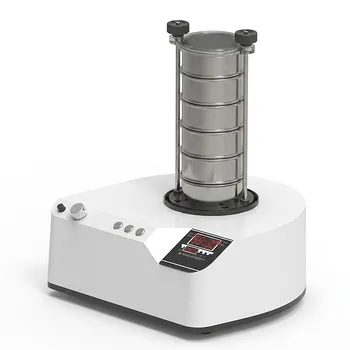
三维电磁微量振动筛分仪
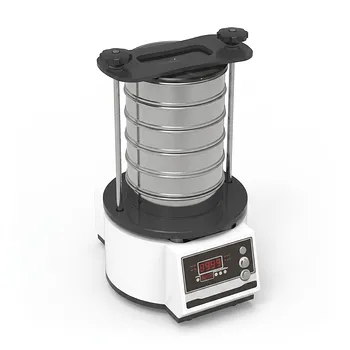
Tapping Oscillating Sieve Shaker for Dry and Wet Particle Size Analysis
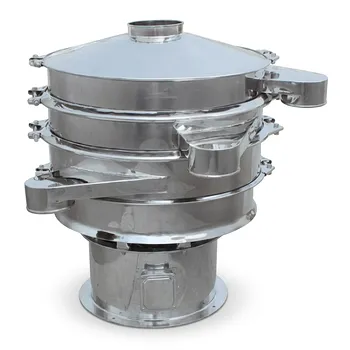
Stainless Steel Rotary Vibrating Sieve High Precision Circular Vibratory Separator Industrial Powder Grading Machine Multi Layer Sifting Equipment
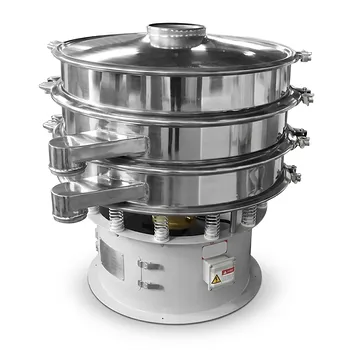
Three Dimensional Rotary Vibrating Sieve
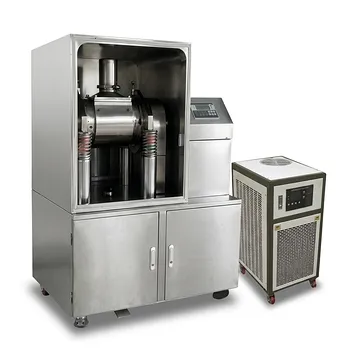
Small Vibrating Ultrafine Grinder for Traditional Chinese Medicine
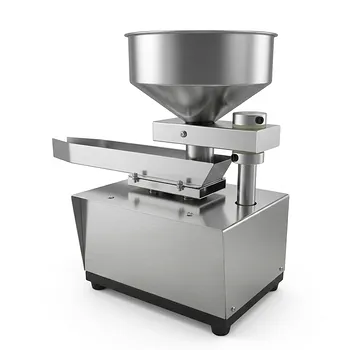
Automatic Vibrating Powder Feeder for Laboratory Material Processing Precision Vibratory Hopper Feeder for Granular and Powder Material Handling Industrial Grade Vibrating Tray Feeder for Consistent Material Sample Preparation
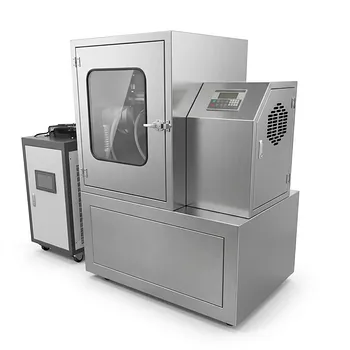
Vibratory Superfine Grinder for Ultra Fine Laboratory Powder Milling
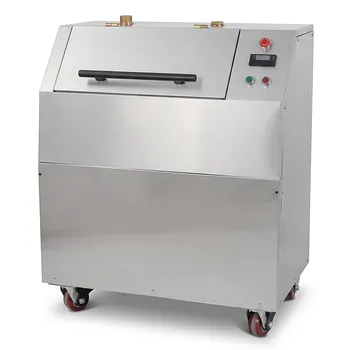
Vibratory Disc Mill for Rapid Fine Grinding and High Throughput Sample Preparation of Hard and Brittle Materials