Why is a vacuum hot press sintering furnace necessary for producing silicon-based advanced materials? Achieve High-Purity
Updated 5 months ago
Vacuum hot press sintering furnaces are indispensable for producing silicon-based advanced materials like Polymer Derived Ceramics (PDCs) because they provide the precise environment required for the pyrolysis process while simultaneously applying mechanical pressure to achieve full densification. This equipment ensures that the transition from organic polymers to inorganic ceramics occurs without oxidation or internal defects. By integrating high vacuum with axial force, these furnaces allow manufacturers to overcome the inherent chemical and mechanical challenges of silicon-based material synthesis.
Core Takeaway: The necessity of a vacuum hot press lies in its ability to simultaneously manage volatile outgassing during pyrolysis and apply mechanical force to drive densification, resulting in high-purity, armor-grade ceramics with near-theoretical density.
Managing the Polymer-to-Ceramic Transition
Control of Atmospheric Purity during Pyrolysis
The transformation of organic polymers into inorganic ceramics, known as pyrolysis, is highly sensitive to the surrounding atmosphere. A high-vacuum environment is essential to effectively remove volatile by-products released during this chemical conversion. Without a vacuum, these volatiles can remain trapped, leading to internal pressure and structural failure.
Prevention of Oxidation and Deterioration
Silicon-based materials and non-oxide ceramics like silicon carbide (SiC) are prone to oxidation when exposed to oxygen at elevated temperatures. The vacuum environment prevents the oxidation of carbon fibers and sensitive elements, preserving the material's mechanical strength and thermal conductivity. This is particularly critical for high-entropy composites where chemical stability determines performance.
Achieving Structural Integrity and High Density
Overcoming Strong Covalent Bonding
Silicon-based materials often possess strong covalent bonds and low self-diffusion coefficients, making them notoriously difficult to densify using traditional methods. The application of simultaneous axial pressure provides the mechanical energy necessary to promote particle rearrangement. This allows the material to reach full densification at significantly lower temperatures than pressureless sintering.
Elimination of Porosity and Air Bubbles
A vacuum hot press effectively eliminates closed porosity and residual pores within the ceramic matrix. By removing gases from the mold cavity and applying constant pressure, the furnace prevents the formation of internal air bubbles. This results in a "tight" physical bond and a dense structure that can approach 99.5% theoretical density.
Facilitating Plastic Flow and Diffusion
In extreme environments, such as those involving nitride-based ceramics, the equipment induces plastic flow and grain boundary diffusion. This synergistic effect of heat and pressure allows the material to deform and interlock at the microscopic level. This is vital for producing radio-transparent ceramics that must maintain dielectric stability in hypersonic conditions.
Understanding the Trade-offs
Geometry and Uniaxial Limitations
The primary trade-off of hot pressing is its uniaxial nature, which typically limits production to relatively simple shapes like plates, disks, or cylinders. Complex, near-net-shape geometries are difficult to achieve because the pressure is applied in a single direction. Manufacturers must often rely on post-sintering machining for intricate parts.
Operational Costs and Cycle Times
Vacuum hot press furnaces represent a significant capital investment and higher operational costs compared to atmospheric furnaces. The need to maintain both high vacuum and high mechanical loads increases energy consumption and maintenance requirements. Furthermore, the heating and cooling cycles can be lengthy to ensure thermal equilibrium and prevent cracking.
Strategic Selection for Advanced Manufacturing
How to Apply This to Your Project
Determining whether to utilize a vacuum hot press depends on your specific material requirements and performance goals.
- If your primary focus is Maximum Densification: Use vacuum hot pressing to achieve near-theoretical density and eliminate residual pores that act as crack initiation sites.
- If your primary focus is Atmospheric Sensitivity: Prioritize the high-vacuum capabilities of the furnace to ensure volatile by-products are removed and oxidation of non-oxides is prevented.
- If your primary focus is Complex Composite Interfacing: Leverage the simultaneous pressure to ensure tight interfacial contact between different phases, which is necessary for efficient charge transfer in photocatalytic materials.
By mastering the synergy of vacuum and pressure, engineers can produce silicon-based materials that meet the most demanding industrial and aerospace standards.
Summary Table:
| Key Feature | Benefit for Silicon-Based Materials (PDCs) | Resulting Quality |
|---|---|---|
| High Vacuum | Removes volatile by-products and prevents oxidation | High chemical purity & structural stability |
| Uniaxial Pressure | Overcomes strong covalent bonds and promotes particle rearrangement | Near-theoretical density (up to 99.5%) |
| Simultaneous Heat/Load | Induces plastic flow and grain boundary diffusion | Superior mechanical strength & low porosity |
| Controlled Environment | Protects carbon fibers and non-oxide ceramics (e.g., SiC) | Enhanced thermal/dielectric performance |
Elevate Your Advanced Material Synthesis with Kintek
Achieving full densification and chemical purity in silicon-based ceramics requires more than just heat—it requires precision control. Kintek provides complete laboratory sample preparation solutions for material science, specializing in high-performance powder processing and compaction equipment.
Our extensive range is designed to support every stage of your workflow:
- Sintering & Pressing: We manufacture a full spectrum of hydraulic presses, including Vacuum Hot Presses, Cold/Warm Isostatic Presses (CIP/WIP), and XRF pellet presses.
- Sample Preparation: High-efficiency crushers, liquid nitrogen cryogenic grinders, and various mills (planetary ball, jet, and disc).
- Powder Handling: Precision sieve shakers, powder mixers, and defoaming mixers.
Whether you are developing armor-grade ceramics or hypersonic radio-transparent materials, our equipment ensures your results are repeatable and meet the highest industrial standards.
Ready to optimize your PDC production? Contact our experts today to find the perfect solution for your laboratory.
References
- Antonio Adrián Arciénaga Morales, Britta Thomsen. Some insights into nanotechnology innovation processes and patterns for advanced materials. DOI: 10.22201/fca.24488410e.2019.1805
Mentioned Products
- Industrial Vacuum Kneader for High-Viscosity Silicone, Rubber, and Compound Mixing
- Heating Temperature Controlled High Energy Vibratory Ball Mill
- Industrial Planetary Centrifugal Vacuum Defoaming Mixer for High Viscosity Paste and Powder Homogenization
- Dual Cup Vacuum Centrifugal Mixer Planetary Paste Defoaming Machine Industrial Material Processor
- High Speed Vacuum Planetary Centrifugal Mixer and Defoamer for Industrial Paste Processing
People Also Ask
- What is the role of a vacuum hot press sintering furnace in CBST target prep? Achieve high-density & pure alloy targets.
- What are the core processing advantages of vacuum hot pressing for magnesium alloy composites? Maximize Material Purity.
- What are the advantages of using a vacuum hot press furnace? Superior Density and Strength for SiCp/Al Composites
- What is the primary function of a vacuum hot press furnace in B4C-SiC-TiC-TiB2 synthesis? Maximize Density & Purity
- What are the technical advantages of using a vacuum hot press furnace for Si3N4/BN ceramics? Achieve 99%+ Density

Tech Team · PowderPreparation
Last updated on May 14, 2026
Related Products
Industrial Vacuum Kneader for High-Viscosity Silicone, Rubber, and Compound Mixing
Heating Temperature Controlled High Energy Vibratory Ball Mill
Industrial Planetary Centrifugal Vacuum Defoaming Mixer for High Viscosity Paste and Powder Homogenization
Dual Cup Vacuum Centrifugal Mixer Planetary Paste Defoaming Machine Industrial Material Processor
High Speed Vacuum Planetary Centrifugal Mixer and Defoamer for Industrial Paste Processing
Water Cooled Pulse Jet Ultrafine Grinder
Water Cooled Airflow Ultra Fine Grinder for Low Temperature Material Processing
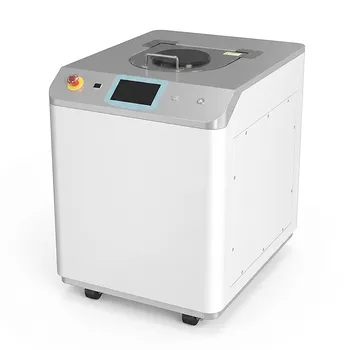
Industrial Planetary Centrifugal Vacuum Defoaming Mixer for High Viscosity Paste and Advanced Material Science
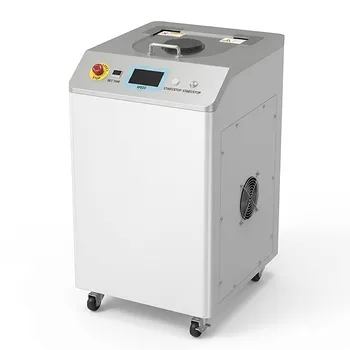
High Viscosity Planetary Centrifugal Vacuum Mixer for Material Defoaming and Uniform Mixing
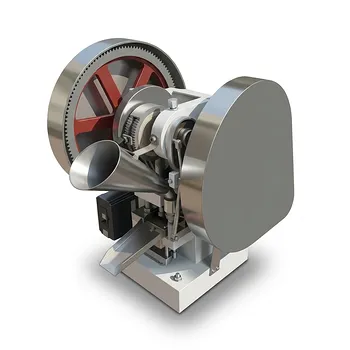
6 Ton Variable Frequency Single Punch Tablet Press
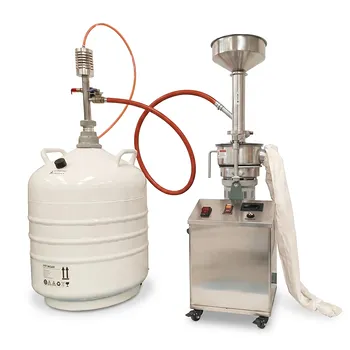
Laboratory Liquid Nitrogen Cryogenic Grinder Polymer Sample Preparation Pulverizer
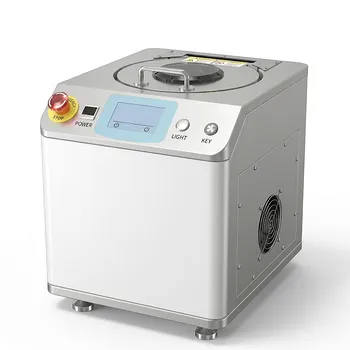
High Efficiency Vacuum Planetary Centrifugal Mixer and Defoaming Machine for Industrial Material Research and Precise Laboratory Powder Dispersion
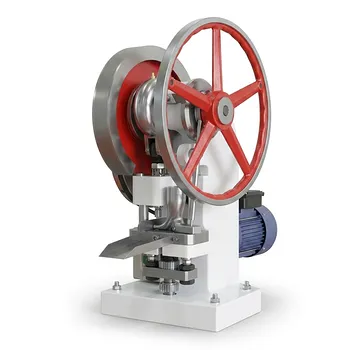
5 Ton Single Punch Tablet Press Laboratory Small Batch Production
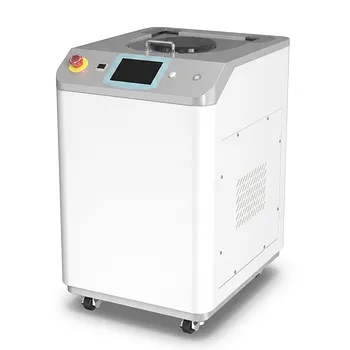
High Viscosity Planetary Centrifugal Mixing and Vacuum Defoaming Machine for Laboratory Material Preparation
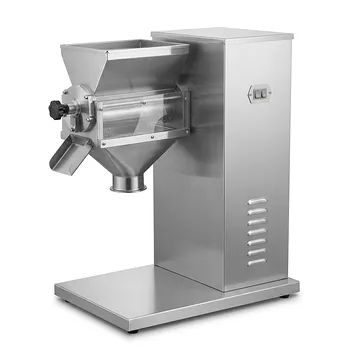
Small Swing Granulator Efficient Powder Granulation for Pharmaceutical Chemical Food Industries
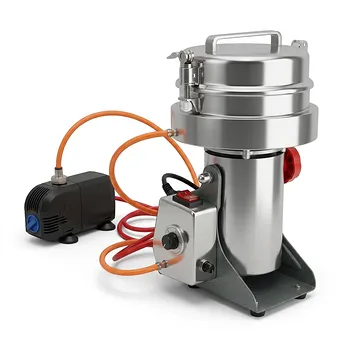
Water Cooled High Speed Grinder with Cryogenic Option for Laboratory Sample Preparation
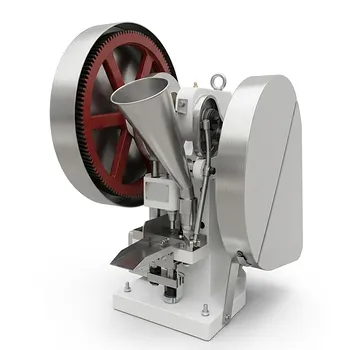
6-Ton Small Single-Punch Tablet Press — Laboratory Powder & Granule Tableting Equipment / Tablet Forming Machine
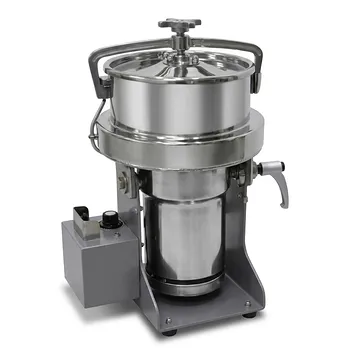
500g Capacity Water Cooled Low Temperature Grinder with Variable Speed and Safety Cover
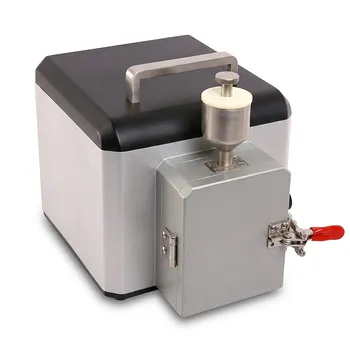
Portable Cutting Mill for Laboratory Sample Preparation and RoHS WEEE Compliance Testing