What is the role of a vacuum hot press sintering furnace in CBST target prep? Achieve high-density & pure alloy targets.
Updated 5 months ago
The vacuum hot press sintering furnace is the critical instrument for transforming bismuth telluride-based (CBST) powders into high-performance sputtering targets. It achieves this by simultaneously applying high vacuum and axial pressure to induce rapid densification at temperatures below the material's melting point. This synergy ensures the resulting bulk targets possess the density, purity, and structural uniformity required for stable and consistent magnetron sputtering.
The primary role of the vacuum hot press furnace is to provide a controlled thermo-mechanical environment that forces powder consolidation through plastic flow and atomic diffusion. By integrating vacuum protection with mechanical force, the equipment produces high-density targets with refined microstructures that cannot be achieved through conventional sintering alone.
Achieving Near-Theoretical Density
Axial Pressure and Plastic Flow
The furnace applies constant axial pressure, typically around 50 MPa, directly to the powder within a mold. This mechanical force induces plastic flow and particle rearrangement, which fills internal voids far more effectively than temperature alone.
Eliminating Porosity
By combining heat with pressure, the furnace facilitates viscous flow densification and the elimination of micropores. This process allows CBST targets to reach relative densities exceeding 95%, which is essential for preventing target cracking during the high-thermal-stress environment of sputtering.
Atomic Diffusion and Bonding
High-temperature conditions under pressure promote solid-state reactions and atomic diffusion across particle boundaries. This ensures a strong physical bond between grains, resulting in a cohesive bulk material with high mechanical strength.
Preservation of Chemical and Structural Integrity
Vacuum Protection Against Oxidation
Bismuth telluride-based alloys are highly sensitive to oxygen at elevated temperatures. The furnace maintains a high vacuum environment (often less than 10 Pa), which prevents the oxidation of the alloy and eliminates the introduction of impurities that would degrade the electrical conductivity of the target.
Suppressing Component Volatilization
Certain elements in ternary alloys can volatilize or "boil off" when heated. The pressure-assisted nature of hot pressing allows for lower sintering temperatures and shorter dwell times, which effectively suppresses the volatilization of volatile components and maintains the intended stoichiometry.
Forced Degassing
The combination of vacuum and mechanical compression facilitates forced degassing of the powder bed. This removes trapped gases that could otherwise cause "spitting" or micro-explosions during the magnetron sputtering process.
Optimizing the Microstructure for Sputtering
Grain Size Control and Refinement
The simultaneous application of heat and pressure inhibits abnormal grain growth. This results in a fine-grained microstructure, which provides the target with superior mechanical integrity and ensures a more uniform erosion rate during thin-film deposition.
Uniform Compositional Distribution
The furnace ensures that the ternary alloy components remain uniformly distributed throughout the bulk target. This chemical homogeneity is vital for producing thin films with consistent properties across the entire substrate surface.
Directional Grain Alignment
For anisotropic materials like bismuth telluride, the hot-pressing process can facilitate the directional alignment of layered grains. This alignment optimizes electrical transport properties and improves the overall efficiency of the resulting thermoelectric films.
Understanding the Trade-offs
Thermal Gradients and Stress
One challenge of vacuum hot pressing is the potential for thermal gradients within large-diameter targets. If the cooling rate is not precisely controlled, internal residual stresses can lead to micro-cracking or warping of the CBST material.
Mold Material Limitations
The process relies on high-strength molds, typically made of high-density graphite, which can wear over time. Interaction between the CBST powder and the mold surface at high temperatures may occasionally require the use of diffusion barriers to prevent carbon contamination.
Cycle Time and Throughput
Compared to continuous sintering methods, vacuum hot pressing is a batch process with longer cycle times due to the necessary heating, pressurized soaking, and controlled cooling phases. This increases the per-unit cost of the resulting alloy targets.
How to Apply This to Your Manufacturing Goal
Making the Right Choice for Your Goal
- If your primary focus is maximum sputter stability: Prioritize a furnace setup that offers high axial pressure to ensure the elimination of all micropores and internal voids.
- If your primary focus is precise stoichiometry: Utilize the vacuum hot press at the lowest viable sintering temperature to minimize the volatilization of tellurium or other volatile alloy components.
- If your primary focus is thin-film performance: Ensure the furnace controls allow for specific temperature-pressure profiles that promote fine grain refinement and uniform phase distribution.
The vacuum hot press sintering furnace remains the definitive technology for producing the high-integrity CBST targets necessary for advanced thermoelectric and electronic applications.
Summary Table:
| Key Function | Mechanism | Benefit for CBST Targets |
|---|---|---|
| Densification | Axial pressure (50 MPa) & plastic flow | Achieves >95% relative density; prevents cracking |
| Purity Control | High vacuum environment (< 10 Pa) | Prevents oxidation and eliminates chemical impurities |
| Stoichiometry | Lower temp & pressure-assisted bonding | Suppresses volatilization of Te and other components |
| Microstructure | Controlled thermo-mechanical environment | Inhibits grain growth; ensures uniform composition |
| Sputter Quality | Forced degassing under compression | Removes trapped gases to prevent "spitting" during use |
Elevate Your Material Research with Precision Engineering
Producing high-performance CBST targets requires more than just heat—it requires a complete, integrated approach to sample preparation. At KINTEK, we provide complete laboratory sample preparation solutions tailored for material science professionals specializing in powder processing and advanced compaction.
Our extensive product line supports every stage of your workflow:
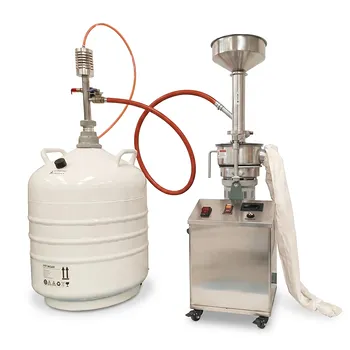
- Powder Processing: High-efficiency crushers (jaw/roll), liquid nitrogen cryogenic grinders, and advanced mills (planetary ball, jet, and disc).
- Mixing & Sifting: Precision powder mixers, defoaming mixers, and vibratory/air-jet sieve shakers.
- Compaction & Sintering: A full spectrum of hydraulic presses, including Cold/Warm Isostatic Presses (CIP/WIP), standard lab presses, and specialized Vacuum Hot Presses for high-density target fabrication.
Whether you are refining thermoelectric materials or developing new thin-film applications, our equipment ensures the density, purity, and structural integrity your research demands.
Ready to optimize your lab's efficiency? Contact our experts today to find the perfect solution for your material manufacturing goals!
References
- Zesheng GE, Peng’an ZONG. Flexible Cu <sub>0.005</sub> Bi <sub>0.5</sub> Sb <sub>1.495</sub> Te <sub>3</sub> Thin Films: Magnetron Sputtering Preparation and Thermoelectric Properties. DOI: 10.15541/jim20250134
Mentioned Products
- Industrial Vacuum Kneader for High-Viscosity Silicone, Rubber, and Compound Mixing
- Heating Temperature Controlled High Energy Vibratory Ball Mill
- Industrial Planetary Centrifugal Vacuum Defoaming Mixer for High Viscosity Paste and Powder Homogenization
- Water Cooled Pulse Jet Ultrafine Grinder
- Dual Cup Vacuum Centrifugal Mixer Planetary Paste Defoaming Machine Industrial Material Processor
People Also Ask
- Why is a vacuum hot press sintering furnace necessary for producing silicon-based advanced materials? Achieve High-Purity
- What are the core processing advantages of vacuum hot pressing for magnesium alloy composites? Maximize Material Purity.
- What are the advantages of using a vacuum hot press furnace? Superior Density and Strength for SiCp/Al Composites
- What is the primary function of a vacuum hot press furnace in B4C-SiC-TiC-TiB2 synthesis? Maximize Density & Purity
- What are the technical advantages of using a vacuum hot press furnace for Si3N4/BN ceramics? Achieve 99%+ Density

Tech Team · PowderPreparation
Last updated on May 14, 2026
Related Products
Industrial Vacuum Kneader for High-Viscosity Silicone, Rubber, and Compound Mixing

Heating Temperature Controlled High Energy Vibratory Ball Mill
Industrial Planetary Centrifugal Vacuum Defoaming Mixer for High Viscosity Paste and Powder Homogenization
Water Cooled Pulse Jet Ultrafine Grinder

Dual Cup Vacuum Centrifugal Mixer Planetary Paste Defoaming Machine Industrial Material Processor
Water Cooled Airflow Ultra Fine Grinder for Low Temperature Material Processing

High Speed Vacuum Planetary Centrifugal Mixer and Defoamer for Industrial Paste Processing
Laboratory Liquid Nitrogen Cryogenic Grinder Polymer Sample Preparation Pulverizer

6 Ton Variable Frequency Single Punch Tablet Press
5 Ton Single Punch Tablet Press Laboratory Small Batch Production

Water Cooled High Speed Grinder with Cryogenic Option for Laboratory Sample Preparation
6-Ton Small Single-Punch Tablet Press — Laboratory Powder & Granule Tableting Equipment / Tablet Forming Machine

Industrial Planetary Centrifugal Vacuum Defoaming Mixer for High Viscosity Paste and Advanced Material Science
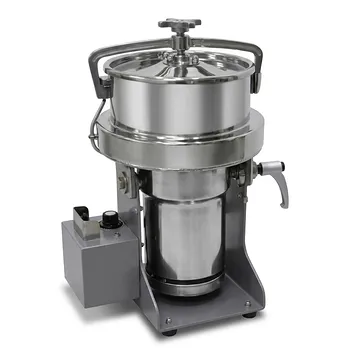
500g Capacity Water Cooled Low Temperature Grinder with Variable Speed and Safety Cover
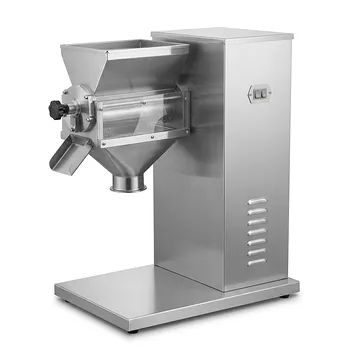
Small Swing Granulator Efficient Powder Granulation for Pharmaceutical Chemical Food Industries
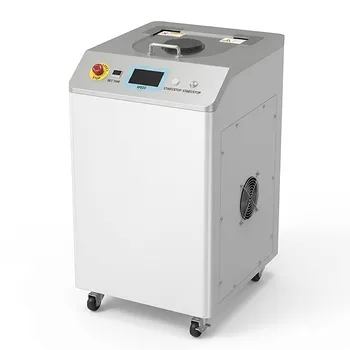
High Viscosity Planetary Centrifugal Vacuum Mixer for Material Defoaming and Uniform Mixing
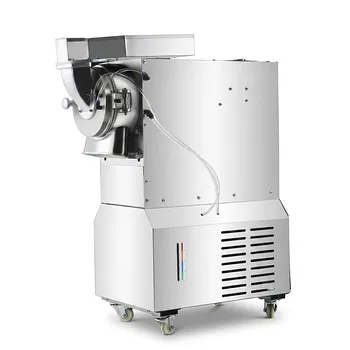
Water Cooled Continuous Feed Pulverizer Laboratory Grade Herb and Material Grinding System

High Efficiency Vacuum Planetary Centrifugal Mixer and Defoaming Machine for Industrial Material Research and Precise Laboratory Powder Dispersion

Low Temperature Laboratory Knife Mill Cryogenic Sample Grinder Material Science Powder Processing