What are the core processing advantages of vacuum hot pressing for magnesium alloy composites? Maximize Material Purity.
Updated 4 months ago
Vacuum hot pressing sintering furnaces offer a unique triple-advantage of oxidation prevention, accelerated densification, and precise interfacial engineering. This technology enables the production of magnesium alloy composites with near-theoretical density by simultaneously applying high temperatures and axial pressure in a high-vacuum environment. By facilitating directional atomic diffusion and eliminating interface defects, it creates high-performance materials that maintain the integrity of the magnesium matrix while maximizing the effectiveness of reinforcements.
The core processing advantage of vacuum hot pressing lies in its ability to utilize thermo-mechanical-chemical coupling to drive material densification and interfacial bonding at temperatures below the melting point, effectively bypassing the oxidation and porosity issues inherent in traditional magnesium processing.
Preventing Atmospheric Degradation and Contamination
Absolute Control of Oxidation
Magnesium is highly reactive and oxidizes rapidly at the elevated temperatures required for sintering. A vacuum hot pressing furnace maintains high vacuum levels, often as low as 1×10⁻⁵ Pa, which creates an inert environment that effectively prevents the formation of oxide layers.
Removal of Adsorbed Surface Gases
The vacuum environment does more than just prevent new oxidation; it also assists in removing adsorbed gases from the surface of the powder particles. Eliminating these gases is a critical step in ensuring that the reinforcement phase and the magnesium matrix can achieve intimate contact during the pressing phase.
Preservation of Matrix Purity
By operating in a controlled vacuum, the furnace ensures that no atmospheric impurities are introduced into the composite. This preservation of purity is essential for maintaining the corrosion resistance and mechanical predictability of the final magnesium alloy product.
Driving Densification Through Simultaneous Force and Heat
Accelerated Pore Closure
The simultaneous application of thermal and mechanical energy, such as 20 to 35 MPa of axial pressure, significantly reduces the deformation resistance of the metal matrix. This pressure accelerates plastic flow and creep, forcing the matrix to fill internal voids and close pores much faster than temperature alone could achieve.
Sintering Below the Melting Point
Vacuum hot pressing allows materials to reach near-theoretical density (often exceeding 99%) at temperatures well below the melting point of the magnesium matrix. This lower temperature processing prevents the grain growth that typically weakens alloys and avoids the loss of alloying elements through evaporation.
Overcoming Reinforcement Resistance
Many reinforcements, such as ceramics or carbon-based materials, naturally resist bonding or create "house-of-cards" structures that hinder densification. The uniaxial mechanical pressure disrupts these structures, forcing a tight bond between the matrix and the secondary phases.
Optimizing Interfacial Chemistry and Microstructure
Thermo-Mechanical-Chemical Coupling
The environment within the furnace drives directional diffusion reactions, such as the movement of aluminum atoms into reinforcement particles. This coupling is the primary mechanism for constructing nano-scale multi-gradient ordered architectures that enhance the strength of the composite.
Elimination of Interface Defects
The combination of vacuum and pressure ensures that the interface between the matrix and reinforcements is free of brittle phases and micro-porosity. By inhibiting the formation of undesirable compounds like aluminum carbide (Al₄C₃), the process ensures a strong, ductile bond.
Improved Wettability
Magnesium alloys often suffer from poor wettability with ceramic reinforcements like silicon carbide. The simultaneous application of a temperature field and an axial pressure field overcomes these surface tension issues, ensuring the matrix flows evenly around every reinforcement particle.
Understanding the Trade-offs and Limitations
Geometric Constraints
Because the process relies on uniaxial pressure, it is generally limited to producing relatively simple shapes, such as disks, plates, or cylinders. Complex, "near-net-shape" geometries are difficult to achieve and often require secondary machining, which adds to the total production cost.
High Operational Costs
The equipment required to maintain high vacuum levels while simultaneously applying high pressure and temperature is technologically complex. This results in higher capital expenditures and longer cycle times compared to atmospheric sintering or casting methods.
Scale and Throughput
Vacuum hot pressing is often a batch process, which can limit its suitability for high-volume mass production. While it is the gold standard for high-performance aerospace or medical components, the throughput may be too low for low-margin consumer goods.
How to Apply This to Your Project
Making the Right Choice for Your Goal
- If your primary focus is maximizing mechanical strength: Prioritize a furnace that offers precise PLC control over axial pressure compensation to ensure consistent density across the entire part.
- If your primary focus is preventing brittle interface phases: Focus on maintaining the highest possible vacuum level (1×10⁻⁵ Pa) and utilizing lower sintering temperatures enabled by increased mechanical pressure.
- If your primary focus is large-scale bulk materials: Ensure your furnace capacity and heating elements are designed for industrial-grade throughput to maintain thermal uniformity across larger composite volumes.
By integrating vacuum control with mechanical force, you can transform a volatile metal like magnesium into a stable, high-performance composite that pushes the boundaries of material science.
Summary Table:
| Feature | Benefit | Technical Impact |
|---|---|---|
| High Vacuum (10⁻⁵ Pa) | Oxidation Prevention | Maintains matrix purity and improves corrosion resistance |
| Axial Pressure (20-35 MPa) | Faster Densification | Reaches >99% density below the matrix melting point |
| Thermo-Mechanical Coupling | Interfacial Bonding | Eliminates defects and inhibits brittle phases (e.g., Al₄C₃) |
| Controlled Temperature | Grain Refinement | Prevents grain growth, preserving superior mechanical strength |
Elevate Your Material Research with Precision Engineering
Unlock the full potential of your magnesium alloy composites with our advanced vacuum hot pressing solutions. Contact our experts today to discuss your specific application and technical requirements!
As specialists in providing complete laboratory sample preparation solutions for material science, we offer a comprehensive range of equipment designed for excellence:
- Powder Processing: Advanced crushers (jaw/roll), liquid nitrogen cryogenic grinders, and high-precision mills (planetary ball, jet, sand/bead, disc, rotor).
- Sieving & Mixing: Sieve shakers (vibratory/air-jet) with various meshes, plus high-efficiency powder and defoaming mixers.
- Advanced Compaction: A full spectrum of hydraulic presses, including Cold/Warm Isostatic Presses (CIP/WIP), standard lab presses, XRF pellet presses, and high-performance Vacuum Hot Presses.
Partner with us to achieve near-theoretical density and superior interfacial bonding in your high-performance materials.
References
- Yuhang Hai, Bin Jiang. Nanoscale multi-gradient ordered architectures driven exceptional strength and ductility in low thermal expansion magnesium alloy. DOI: 10.1038/s41467-025-67684-7
Mentioned Products
- Heating Temperature Controlled High Energy Vibratory Ball Mill
- Industrial Vacuum Kneader for High-Viscosity Silicone, Rubber, and Compound Mixing
- Industrial Planetary Centrifugal Vacuum Defoaming Mixer for High Viscosity Paste and Powder Homogenization
- Water Cooled Pulse Jet Ultrafine Grinder
- Water Cooled Airflow Ultra Fine Grinder for Low Temperature Material Processing
People Also Ask
- How does a high-energy vibratory ball mill improve the performance of MgH2? Optimize Hydrogen Storage Kinetics
- What is the primary purpose of using a vibratory ball mill in the preparation of respirable carbon fiber fragments?
- What is the purpose of using a vibratory ball mill for Al-Ni-Fe alloy ribbons? Achieve High Catalytic Activity
- Why is a vibratory ball mill preferred over a planetary ball mill for rapid powder particle refinement? High-Speed Impact
- What is the purpose of adding alcohol as a PCA during titanium ball milling? Prevent Cold Welding & Enhance Refinement

Tech Team · PowderPreparation
Last updated on May 14, 2026
Related Products
Heating Temperature Controlled High Energy Vibratory Ball Mill
Industrial Vacuum Kneader for High-Viscosity Silicone, Rubber, and Compound Mixing
Industrial Planetary Centrifugal Vacuum Defoaming Mixer for High Viscosity Paste and Powder Homogenization
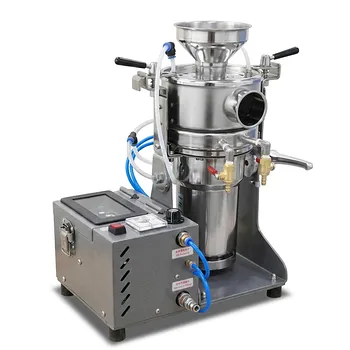
Water Cooled Pulse Jet Ultrafine Grinder
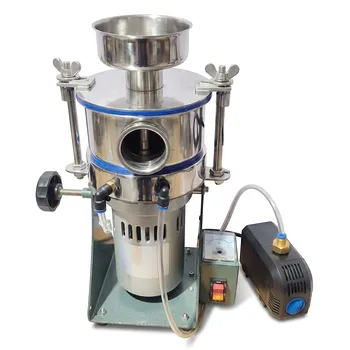
Water Cooled Airflow Ultra Fine Grinder for Low Temperature Material Processing
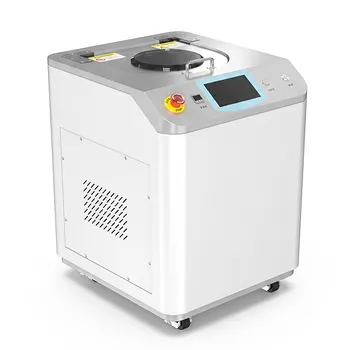
High Speed Vacuum Planetary Centrifugal Mixer and Defoamer for Industrial Paste Processing
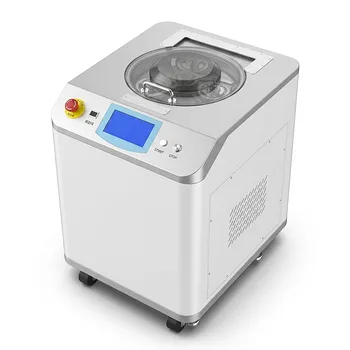
Dual Cup Vacuum Centrifugal Mixer Planetary Paste Defoaming Machine Industrial Material Processor
Laboratory Liquid Nitrogen Cryogenic Grinder Polymer Sample Preparation Pulverizer
Water Cooled High Speed Grinder with Cryogenic Option for Laboratory Sample Preparation
500g Capacity Water Cooled Low Temperature Grinder with Variable Speed and Safety Cover
Small Swing Granulator Efficient Powder Granulation for Pharmaceutical Chemical Food Industries
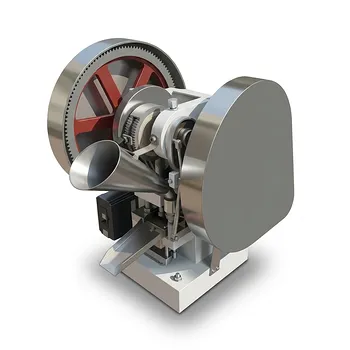
6 Ton Variable Frequency Single Punch Tablet Press
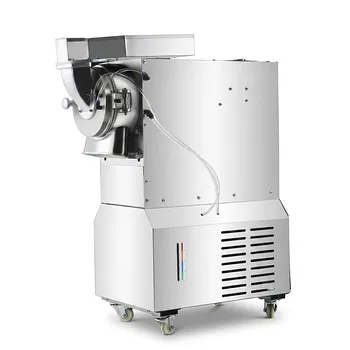
Water Cooled Continuous Feed Pulverizer Laboratory Grade Herb and Material Grinding System
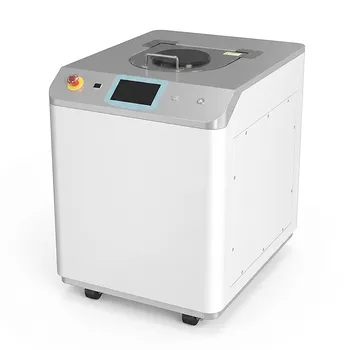
Industrial Planetary Centrifugal Vacuum Defoaming Mixer for High Viscosity Paste and Advanced Material Science
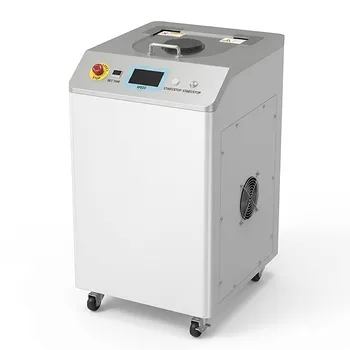
High Viscosity Planetary Centrifugal Vacuum Mixer for Material Defoaming and Uniform Mixing

Low Temperature Laboratory Knife Mill Cryogenic Sample Grinder Material Science Powder Processing
High Efficiency Vacuum Planetary Centrifugal Mixer and Defoaming Machine for Industrial Material Research and Precise Laboratory Powder Dispersion

Nano High Energy Vibratory Ball Mill with Heating and Temperature Control
Vibratory Ultra-Low Temperature Ultrafine Grinder for Cryogenic Powder Processing