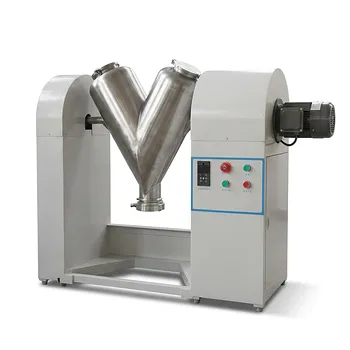
What are the advantages of using a vacuum hot press furnace? Superior Density and Strength for SiCp/Al Composites
Updated 4 months ago
A vacuum hot press furnace provides a superior alternative to traditional cold press sintering by simultaneously applying heat and axial pressure within a controlled environment. This dual-action approach overcomes the poor wettability between the aluminum matrix and silicon carbide particles, achieving near-theoretical densities (up to 99.7%) at lower temperatures. By processing materials in a vacuum, the system eliminates surface oxides and prevents the formation of brittle phases that often weaken high-volume fraction composites.
Core Takeaway: Vacuum hot pressing integrates mechanical pressure and thermal energy to force the aluminum matrix into dense contact with SiC particles, resulting in a composite with minimal porosity and superior interfacial strength that traditional cold pressing cannot achieve.
Overcoming Interfacial and Density Barriers
Enhanced Wettability and Interfacial Bonding
The primary challenge in SiCp/Al composites is the poor wettability between the ceramic particles and the metallic matrix. Traditional cold pressing relies on mechanical interlocking, but vacuum hot pressing uses simultaneous pressure to force the aluminum matrix to "wet" the silicon carbide surfaces. This ensures a tight, high-strength bond that is essential for high-volume fraction composites.
Accelerated Densification via Plastic Flow
Applying axial pressure (typically 30 MPa or higher) during the heating phase accelerates the plastic flow and creep of the aluminum. This thermo-mechanical coupling allows the aluminum to flow into the microscopic gaps between SiC particles, effectively eliminating residual pores. The result is a material that approaches 99.7% relative density, far exceeding the limits of pressureless or cold-pressed sintering.
Particle Rearrangement and Mass Transfer
The mechanical load applied during the hot pressing process facilitates the rearrangement of powder particles. This movement, combined with enhanced diffusion mechanisms, ensures that the reinforcement particles are distributed more uniformly. This is particularly critical for high volume fraction composites, where particle-to-particle contact otherwise hinders full densification.
Atmospheric and Thermal Advantages
Vacuum Protection and Degassing
The vacuum environment plays a critical role by removing adsorbed gases from the powder surfaces before consolidation begins. It also inhibits the formation of oxide layers on the aluminum powder, which would otherwise act as a barrier to diffusion and bonding. This clean environment ensures that the interface between the Al matrix and SiC reinforcement is chemically pure and strong.
Lower Temperature Requirements
Traditional sintering often requires extremely high temperatures to achieve density, which can trigger unwanted chemical reactions. Vacuum hot pressing allows for full densification at a lower temperature of approximately 600 ℃. This lower thermal threshold is vital for maintaining the integrity of the material's microstructure.
Inhibition of Brittle Phase Formation
By processing at lower temperatures, vacuum hot pressing avoids the formation of Al4C3 (aluminum carbide). This brittle phase typically forms when aluminum and silicon carbide react at high temperatures, severely degrading the composite's mechanical properties. The ability to achieve high density while avoiding brittle phases is a definitive advantage of the hot press method.
Understanding the Trade-offs
Equipment Complexity and Cost
Vacuum hot press furnaces are significantly more complex and expensive to operate than cold press systems. The need for precise control over simultaneous pressure, temperature, and vacuum levels requires sophisticated instrumentation and high-maintenance hydraulic systems.
Throughput and Scalability
Unlike cold pressing, which can be performed as a high-speed, multi-part automated process, hot pressing is often a batch process. The heating and cooling cycles within a vacuum environment are time-consuming. This makes the technology better suited for high-performance components rather than mass-market, low-cost parts.
Applying This Technology to Your Project
Making the Right Choice for Your Goal
Choosing between vacuum hot pressing and traditional methods depends on your specific material requirements and production scale.
- If your primary focus is maximum mechanical strength: Vacuum hot pressing is the preferred choice because it eliminates the brittle $Al_4C_3$ phase and ensures near-theoretical density.
- If your primary focus is high-volume fraction SiC (over 30%): You should utilize a vacuum hot press to overcome the grain boundary resistance and poor packing density inherent in high-ceramic systems.
- If your primary focus is cost-sensitive mass production: Traditional cold pressing followed by atmospheric sintering may be more viable, provided the resulting porosity and lower interface strength are acceptable for the application.
Vacuum hot pressing remains the gold standard for producing high-integrity SiCp/Al composites where density and interfacial purity are the most critical factors.
Summary Table:
| Feature | Vacuum Hot Pressing (VHP) | Traditional Cold Pressing |
|---|---|---|
| Relative Density | Near-theoretical (up to 99.7%) | Significantly lower; residual porosity |
| Interfacial Bonding | High (Simultaneous heat + pressure) | Low (Mechanical interlocking only) |
| Operating Temp | Lower (~600℃); preserves microstructure | Higher; risks unwanted reactions |
| Brittle Phases | Inhibits $Al_4C_3$ formation | High risk of formation at peak temps |
| Atmosphere | Vacuum (removes oxides/gases) | Atmospheric (oxidation risk) |
| Application | High-performance, high-volume SiC | Cost-sensitive, mass-market parts |
Elevate Your Material Science Research with Precision Equipment
Are you looking to achieve near-theoretical density and superior interfacial strength in your composite materials? At [Brand Name], we provide complete laboratory sample preparation solutions tailored for advanced material science.
From our specialized vacuum hot presses and Cold/Warm Isostatic Presses (CIP/WIP) to our extensive range of planetary ball mills, jet mills, and powder mixers, we offer the high-performance tools necessary for precise powder processing and compaction. Whether you are working on high-volume fraction SiCp/Al composites or specialized ceramic powders, our equipment ensures consistent, high-quality results.
Ready to optimize your lab's performance? Contact us today to discuss your specific requirements and let our experts help you find the perfect solution for your material processing needs.
References
- Renyu Feng, Zijuan Huang. Effects of SiC Particle Size on SiCp/Al Composite During Vacuum Hot Pressing. DOI: 10.3390/ma19010084
Mentioned Products
- Industrial Vacuum Kneader for High-Viscosity Silicone, Rubber, and Compound Mixing
- Dual Cup Vacuum Centrifugal Mixer Planetary Paste Defoaming Machine Industrial Material Processor
- Industrial Planetary Centrifugal Vacuum Defoaming Mixer for High Viscosity Paste and Powder Homogenization
- High Speed Vacuum Planetary Centrifugal Mixer and Defoamer for Industrial Paste Processing
- Heating Temperature Controlled High Energy Vibratory Ball Mill
People Also Ask
- Why is a vacuum hot press sintering furnace necessary for producing silicon-based advanced materials? Achieve High-Purity
- What is the role of a vacuum hot press sintering furnace in CBST target prep? Achieve high-density & pure alloy targets.
- What are the core processing advantages of vacuum hot pressing for magnesium alloy composites? Maximize Material Purity.
- What is the primary function of a vacuum hot press furnace in B4C-SiC-TiC-TiB2 synthesis? Maximize Density & Purity
- What are the technical advantages of using a vacuum hot press furnace for Si3N4/BN ceramics? Achieve 99%+ Density

Tech Team · PowderPreparation
Last updated on Jun 03, 2026
Related Products
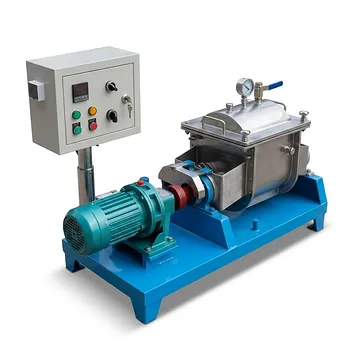
Industrial Vacuum Kneader for High-Viscosity Silicone, Rubber, and Compound Mixing
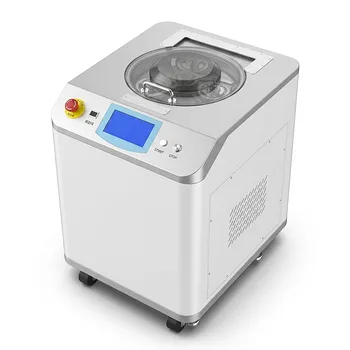
Dual Cup Vacuum Centrifugal Mixer Planetary Paste Defoaming Machine Industrial Material Processor
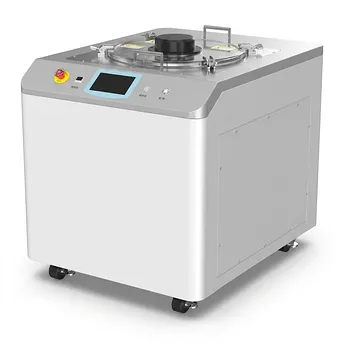
Industrial Planetary Centrifugal Vacuum Defoaming Mixer for High Viscosity Paste and Powder Homogenization
High Speed Vacuum Planetary Centrifugal Mixer and Defoamer for Industrial Paste Processing
Heating Temperature Controlled High Energy Vibratory Ball Mill
Industrial Planetary Centrifugal Vacuum Defoaming Mixer for High Viscosity Paste and Advanced Material Science
Water Cooled Pulse Jet Ultrafine Grinder
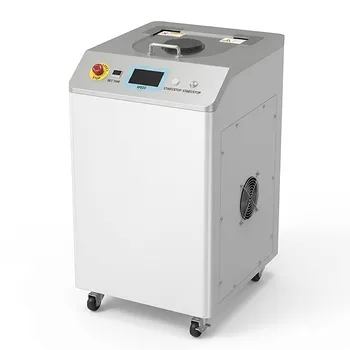
High Viscosity Planetary Centrifugal Vacuum Mixer for Material Defoaming and Uniform Mixing
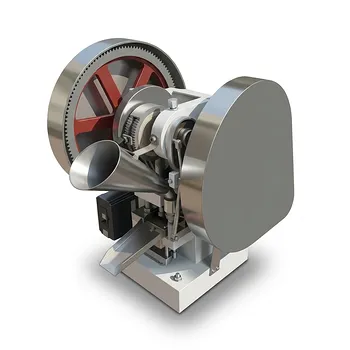
6 Ton Variable Frequency Single Punch Tablet Press
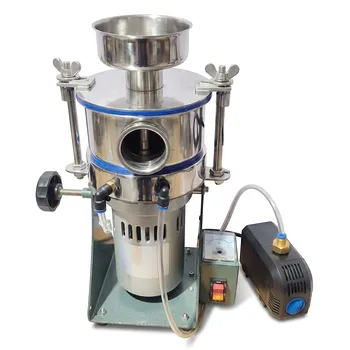
Water Cooled Airflow Ultra Fine Grinder for Low Temperature Material Processing
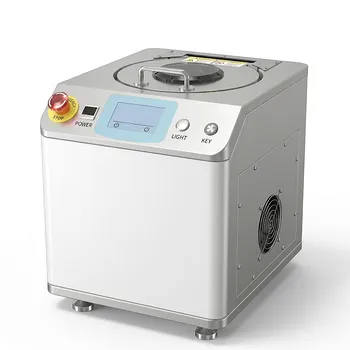
High Efficiency Vacuum Planetary Centrifugal Mixer and Defoaming Machine for Industrial Material Research and Precise Laboratory Powder Dispersion
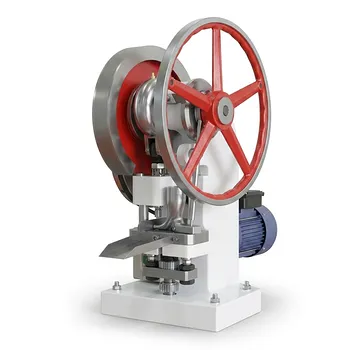
5 Ton Single Punch Tablet Press Laboratory Small Batch Production
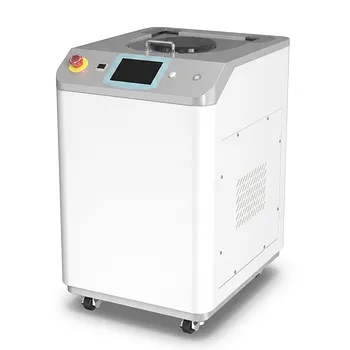
High Viscosity Planetary Centrifugal Mixing and Vacuum Defoaming Machine for Laboratory Material Preparation
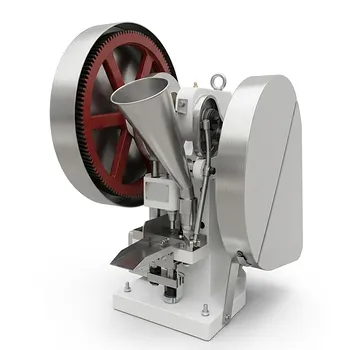
6-Ton Small Single-Punch Tablet Press — Laboratory Powder & Granule Tableting Equipment / Tablet Forming Machine
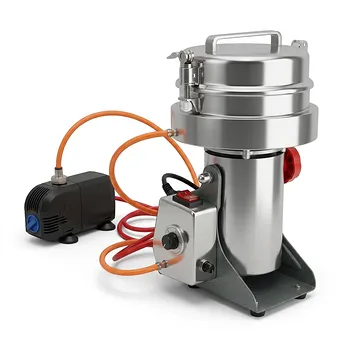
Water Cooled High Speed Grinder with Cryogenic Option for Laboratory Sample Preparation
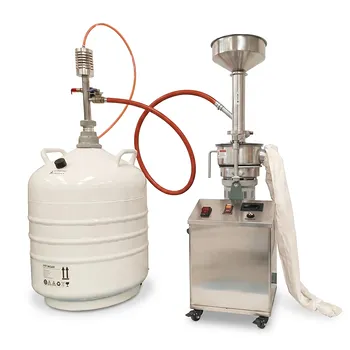
Laboratory Liquid Nitrogen Cryogenic Grinder Polymer Sample Preparation Pulverizer
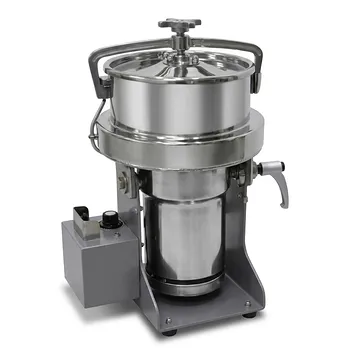
500g Capacity Water Cooled Low Temperature Grinder with Variable Speed and Safety Cover
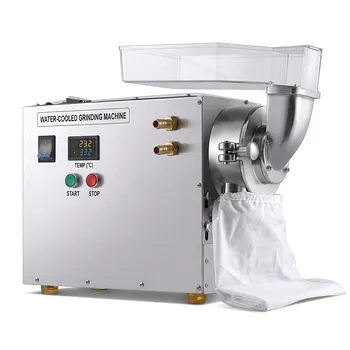
Water Cooled Graduated Continuous Feed Pulverizer for Industrial Powder Processing and Laboratory Material Preparation
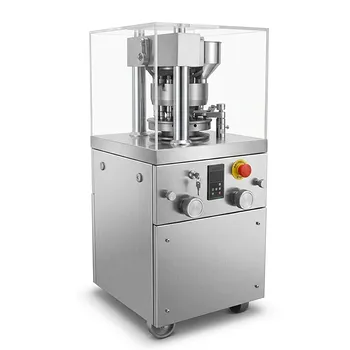
Ordinary Type Rotary Tablet Press for Pharmaceutical Chemical Food Electronic Industries