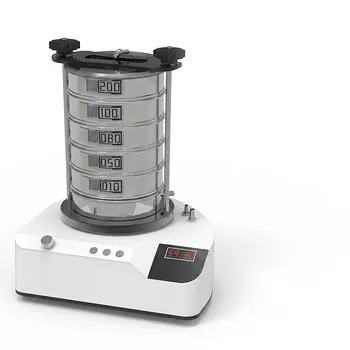
Why is a standard test sieve used to screen modified Iron Mill Scale (IMS) particles before alloy preparation? Quality Control
Updated 5 months ago
The use of a standard test sieve is a critical quality control step designed to ensure a narrow and consistent particle size distribution. This process removes oversized particles from ball-milled Iron Mill Scale (IMS) to guarantee the structural homogeneity of the final aluminum-nickel alloy. By maintaining a uniform size—typically around 106μm—manufacturers can prevent localized mechanical failures and optimize the material's conductive properties.
Particle size control serves as the physical foundation for material integrity. By screening IMS particles, engineers eliminate the structural "weak links" that lead to stress concentrations, ensuring the final alloy meets strict thermal and electrical performance standards.
Achieving Structural Homogeneity in Alloys
Eliminating Internal Stress Concentrations
The primary role of sieving is to exclude oversized particles that can disrupt the alloy's matrix. These large particles act as focal points for stress concentration, which can lead to premature structural failure or cracking under mechanical load.
Optimizing Electrical and Thermal Performance
A consistent particle size distribution ensures that the IMS integrates uniformly with other alloying elements. This structural uniformity is essential for maintaining predictable paths for heat and electron flow, directly impacting the thermal conductivity and electrical resistivity of the finished product.
The Principles of Precise Particle Grading
Establishing a Quantitative Benchmark
Standard test sieves provide a measurable baseline to evaluate the efficiency of the ball-milling process. By utilizing precise mesh apertures, technicians can calculate cumulative distribution data to determine if the crushing equipment is performing within the required technical specifications.
Enhancing Surface Area and Reactivity
Controlling particle size maximizes the specific surface area available for metallurgical reactions. Smaller, uniform particles ensure more thorough contact between the IMS and other precursors, which is vital for achieving a stable chemical bond during the alloy preparation phase.
Improving Compaction and Density
In powder metallurgy, uniform particles fill voids more efficiently than unscreened materials. This improved filling performance leads to higher green body density, which significantly enhances the mechanical durability and finish of the molded parts.
Understanding the Trade-offs
Precision vs. Throughput
While high-precision sieving ensures superior material quality, it can become a bottleneck in high-volume production. Achieving an extremely narrow size distribution often requires multiple stages of screening, which increases processing time and equipment wear.
Material Loss and Oversize Waste
Strict sieving protocols inevitably lead to material rejection. If the ball-milling process is not finely tuned, a significant percentage of the IMS may be excluded as "oversize," increasing raw material costs and requiring re-processing to maintain sustainability.
Applying Sieving Standards to Your Workflow
Recommendations for Material Processing
- If your primary focus is mechanical durability: Use a 106μm sieve to strictly eliminate oversized particles that cause internal stress and structural voids.
- If your primary focus is process repeatability: Implement a series of standard sieves to generate distribution curves, ensuring every batch of IMS maintains identical physical properties.
- If your primary focus is maximizing conductivity: Prioritize a narrow size distribution to ensure the internal homogeneity required for consistent electron transport.
Proper particle size classification is not merely a filtration step, but a definitive requirement for engineering high-performance, predictable materials.
Summary Table:
| Key Function | Benefit for IMS Processing | Final Material Impact |
|---|---|---|
| Particle Grading | Removes oversized particles (>106μm) | Prevents stress concentration & cracking |
| Size Uniformity | Ensures consistent matrix distribution | Optimizes thermal & electrical conductivity |
| Enhanced Surface Area | Maximizes chemical reactivity | Strengthens metallurgical bonds |
| Improved Compaction | Increases green body density | Enhances mechanical durability & finish |
Optimize Your Material Homogeneity with Professional Lab Solutions
Achieving the precise 106μm particle distribution required for high-performance alloys demands reliable equipment. We provide complete laboratory sample preparation solutions tailored for material science and powder processing.
Whether you need to refine your raw materials using our planetary ball mills and jet mills, or ensure perfect grading with our vibratory and air-jet sieve shakers, we have the tools to eliminate structural 'weak links.' Our expertise extends to the final stages of production with a full spectrum of hydraulic presses, including Cold/Warm Isostatic Presses (CIP/WIP) and vacuum hot presses, ensuring your components achieve maximum density and durability.
Ready to elevate your alloy preparation process? Contact our technical team today for a customized equipment consultation!
References
- O. I. Sekunowo, D.V. Obasa. Effects of Iron-Millscale Addition on the Electrical and Thermal Properties of Aluminum-Nickel Alloy. DOI: 10.5281/zenodo.5805154
Mentioned Products
- Stainless Steel Laboratory Vibratory Test Sieve Shaker
- Laboratory Vibratory Test Sieve Shaker for Precision Particle Size Analysis and Powder Grading
- Small Laboratory Vibrating Sieve Shaker for Precise Particle Size Analysis
- 三维电磁微量振动筛分仪
- Small Laboratory Vibratory Sieve Shaker for Powder Gradation and Particle Size Analysis
People Also Ask
- What function does a laboratory vibratory sieve shaker serve in the production process of metakaolin? Optimize Reactivity
- Why is a precision laboratory vibratory sieve shaker necessary for particle size control? Optimize Biomass Carbonization
- What is the function of a laboratory vibratory sieve shaker? Enhance Coal Particle Size Distribution (PSD) Analysis
- What role do laboratory vibratory sieve shakers and test sieves play before the molding of Nb-Cu composite powders?
- What is the primary function of a laboratory vibratory sieve shaker in the evaluation of sand liquefaction potential?

Tech Team · PowderPreparation
Last updated on May 14, 2026
Related Products
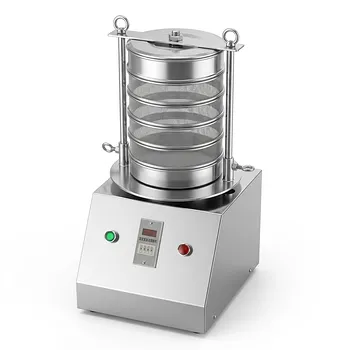
Stainless Steel Laboratory Vibratory Test Sieve Shaker
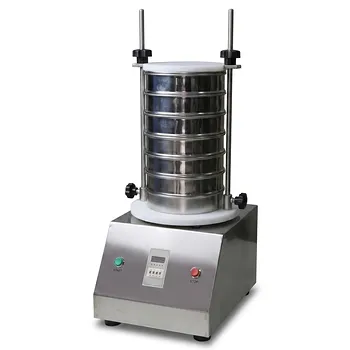
Laboratory Vibratory Test Sieve Shaker for Precision Particle Size Analysis and Powder Grading
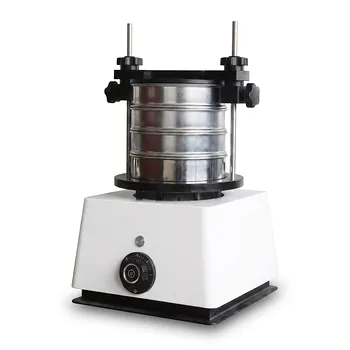
Small Laboratory Vibrating Sieve Shaker for Precise Particle Size Analysis
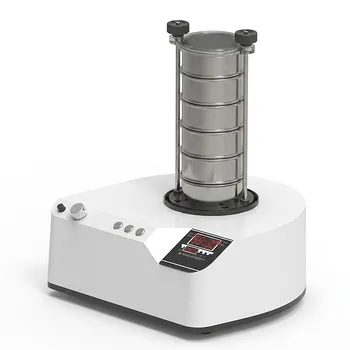
三维电磁微量振动筛分仪
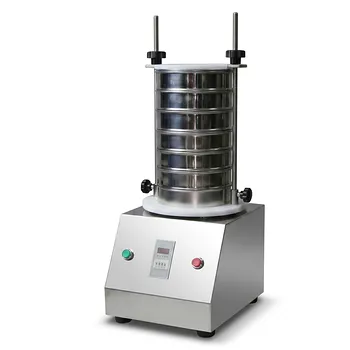
Small Laboratory Vibratory Sieve Shaker for Powder Gradation and Particle Size Analysis
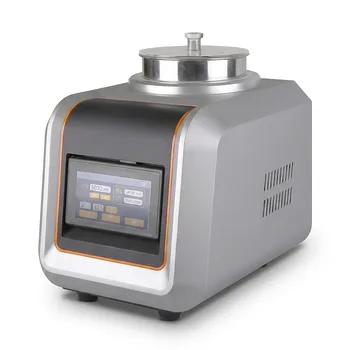
Laboratory Air Jet Sieving Machine for Fine Powder Particle Size Analysis and Deagglomeration
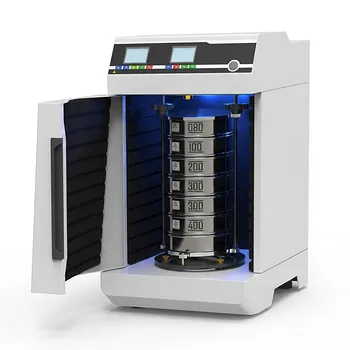
Laboratory Dry and Wet Three Dimensional Vibratory Sieve Shaker for Particle Analysis
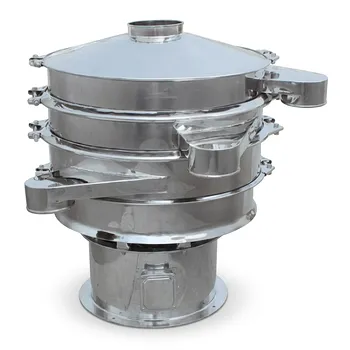
Stainless Steel Rotary Vibrating Sieve High Precision Circular Vibratory Separator Industrial Powder Grading Machine Multi Layer Sifting Equipment
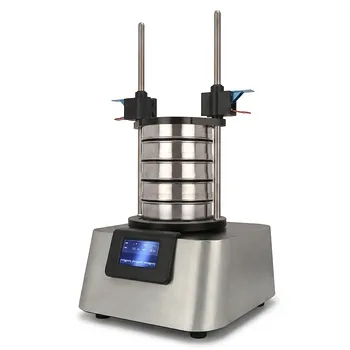
Vibratory Sieve Shaker Electromagnetic 3D Motion Powder Particle Size Analyzer for Dry and Wet Sieving
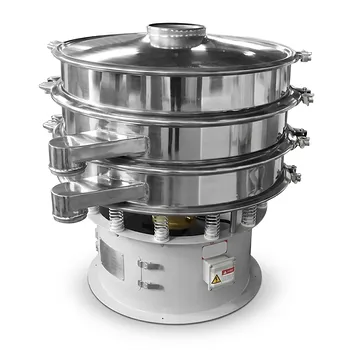
Three Dimensional Rotary Vibrating Sieve

High Frequency Wet Three-Dimensional Vibrating Sieve Shaker for Dry and Wet Particle Size Analysis

Tapping Oscillating Sieve Shaker for Dry and Wet Particle Size Analysis
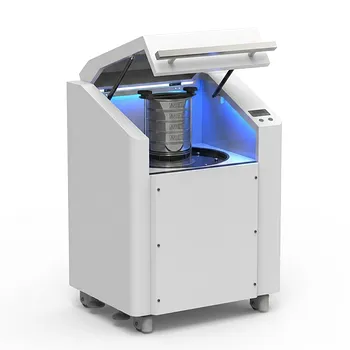
High Frequency Cabinet Type Three-Dimensional Rotary Vibrating Sieve Shaker for Dry Sieving and Particle Classification

Dry Three Dimensional Vibratory Sieve Shaker