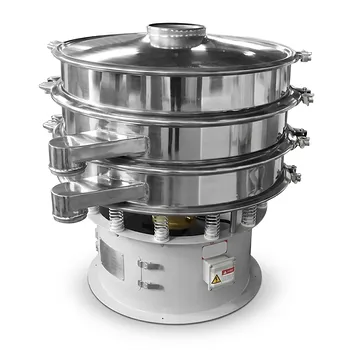
Why is a standard sieve shaker essential for CBA powders in geopolymers? Enhance Reactivity & Material Strength
Updated 5 months ago
A standard sieve shaker is the foundational tool for optimizing the reactivity and consistency of Coal Bottom Ash (CBA). By utilizing mechanical vibration and specific mesh sizes, such as a 200-mesh sieve, it ensures that CBA powder achieves a precise average particle diameter—often targeted at 38.82 μm—to maximize its performance as a geopolymer precursor.
The core function of a sieve shaker in CBA preparation is to transform raw, non-uniform ash into a standardized powder with a high specific surface area. This physical refinement is critical for ensuring uniform chemical kinetics and high packing density in the final geopolymer matrix.
Enhancing Chemical Reactivity and Kinetics
Maximizing Specific Surface Area
Geopolymerization is a surface-dependent chemical reaction that occurs when CBA contacts an alkaline activator. A standard sieve shaker allows for the isolation of fine particles, which significantly increases the specific surface area available for reaction.
Higher surface area leads to faster and more complete dissolution of the aluminosilicate phases within the CBA. This ensures that the binder develops strength efficiently during the curing process.
Ensuring Uniform Reaction Kinetics
Consistency in particle size prevents localized areas of incomplete reaction or internal stress concentrations. When particles are uniform, the alkaline solution penetrates the powder evenly across the entire batch.
Without this mechanical classification, larger particles may remain unreacted at their core. This creates weak points in the geopolymer matrix that can lead to micro-cracking and reduced durability over time.
Optimization of Physical and Mechanical Properties
Achieving Maximum Packing Density
A well-defined particle size distribution (PSD) is essential for achieving a high packing density in the final material. Controlled sieving allows engineers to grade the CBA to fill voids between larger aggregate particles.
By reducing the overall porosity of the mix, the geopolymer becomes more impermeable and resistant to environmental degradation. This directly translates to higher compressive strength and a more stable finished product.
Removal of Coarse Agglomerates
Raw CBA often contains large, fused particles or agglomerates formed during the combustion process. A sieve shaker effectively removes these coarse fractions that would otherwise disrupt the uniformity of the geopolymer paste.
Eliminating these oversized particles ensures a smooth, workable consistency. This is particularly important for applications like geopolymer paving bricks or refractory materials where surface finish and density distribution are paramount.
Understanding the Trade-offs and Limitations
The Risk of Mesh Blinding
Mechanical sieving is highly effective, but very fine CBA particles (particularly those below 45 μm) can cause mesh blinding. This occurs when particles become lodged in the sieve openings, reducing efficiency and accuracy.
Energy and Time Intensity
Achieving a specific PSD through mechanical shaking requires a significant amount of time and energy compared to raw material use. Over-processing can also lead to particle attrition, where the particles become smaller than intended due to prolonged friction.
Comparison to Air Classification
While sieve shakers are the standard for laboratory precision and batch consistency, they may be less efficient than air classification for large-scale industrial production. However, for repeatability and experimental control, the shaker remains the superior choice for establishing baseline material standards.
How to Apply This to Your Project
Recommendations for Material Preparation
Success in geopolymer synthesis depends on aligning your sieving strategy with your mechanical requirements.
- If your primary focus is Maximum Compressive Strength: Use a 200-mesh (74 μm) or finer sieve to ensure the highest possible reactivity and density.
- If your primary focus is Batch Repeatability: Standardize your shaking duration and sieve load to eliminate physical contact area as a variable in your experiments.
- If your primary focus is Porosity Reduction: Use the shaker to create a specific grading of fine ash that can fill the interstitial spaces between recycled aggregates.
Precise particle size control through standardized sieving is the single most important factor in transforming waste ash into a high-performance engineering material.
Summary Table:
| Key Function | Impact on Geopolymer | Primary Benefit |
|---|---|---|
| Particle Size Control | Increases specific surface area | Faster chemical dissolution & reaction |
| Classification | Ensures uniform reaction kinetics | Eliminates internal stress & micro-cracking |
| Grading Optimization | Maximizes packing density | Higher compressive strength & low porosity |
| Coarse Removal | Removes fused agglomerates | Improved paste workability & surface finish |
| Standardization | Consistent particle distribution | Reliable batch-to-batch repeatability |
Elevate Your Material Research with Precise Powder Processing
Achieving the perfect particle size distribution is the first step toward high-performance geopolymer synthesis. We provide complete laboratory sample preparation solutions for material science, specializing in the equipment you need to transform raw materials like Coal Bottom Ash into engineering-grade precursors.
Our extensive product line is designed to support every stage of your workflow:
- Classification & Analysis: High-precision vibratory and air-jet sieve shakers with a full range of test sieves and meshes.
- Size Reduction: Advanced crushers (jaw/roll) and a variety of mills (planetary ball, jet, sand/bead, disc, and rotor) for achieving sub-micron fineness.
- Mixing & De-aeration: Specialized powder mixers and defoaming mixers for uniform geopolymer pastes.
- Compaction & Forming: A full spectrum of hydraulic presses, including Cold/Warm Isostatic Presses (CIP/WIP), vacuum hot presses, and XRF pellet presses.
Whether you are a researcher optimizing chemical kinetics or a manufacturer seeking consistent batch quality, our expert team is ready to help you select the right tools for your specific application.
Ready to optimize your CBA preparation? Contact us today to discuss your project requirements!
References
- Sungil Hong, Hyo Kim. Effects of Microwave Energy on Fast Compressive Strength Development of Coal Bottom Ash-Based Geopolymers. DOI: 10.1038/s41598-019-52160-2
Mentioned Products
- Vibratory Sieve Shaker Electromagnetic 3D Motion Powder Particle Size Analyzer for Dry and Wet Sieving
- 三维电磁微量振动筛分仪
- Stainless Steel Laboratory Vibratory Test Sieve Shaker
- Small Laboratory Vibrating Sieve Shaker for Precise Particle Size Analysis
- Heavy Duty Dry Three Dimensional Vibratory Sieve Shaker for Particle Separation
People Also Ask
- How does a vibratory sieve shaker contribute to optimizing the performance of activated carbon? Enhance Adsorption Precision
- Why is a laboratory vibratory sieve shaker necessary for processing magnesium-based borate precursor powders? Boost Activity
- Why use a vibratory sieve shaker to verify coarse aggregate grading in rubberized concrete? Ensure Structural Integrity
- What function do vibratory sieve shakers and standard test sieves serve in the preparation of adsorbents? Key Guide
- What role does a vibratory sieve shaker play in the particle size analysis of ground corn products? Enhance QC Precision

Tech Team · PowderPreparation
Last updated on May 14, 2026
Related Products
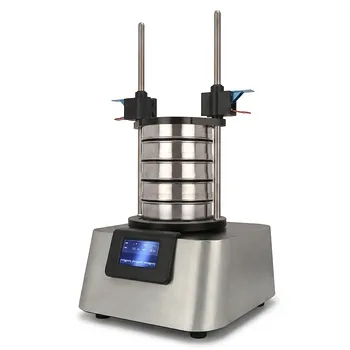
Vibratory Sieve Shaker Electromagnetic 3D Motion Powder Particle Size Analyzer for Dry and Wet Sieving
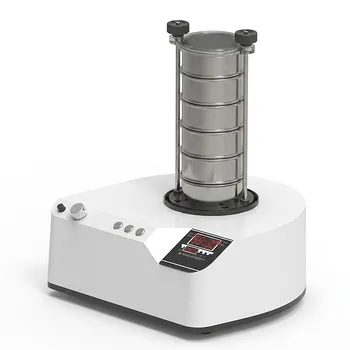
三维电磁微量振动筛分仪
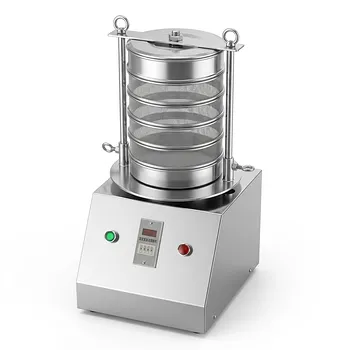
Stainless Steel Laboratory Vibratory Test Sieve Shaker
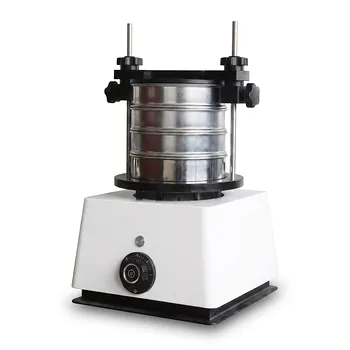
Small Laboratory Vibrating Sieve Shaker for Precise Particle Size Analysis
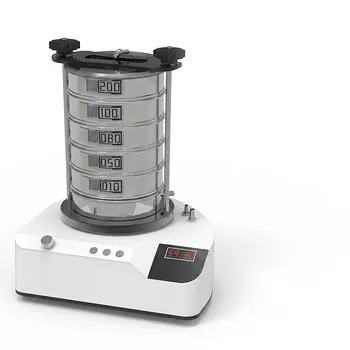
Heavy Duty Dry Three Dimensional Vibratory Sieve Shaker for Particle Separation
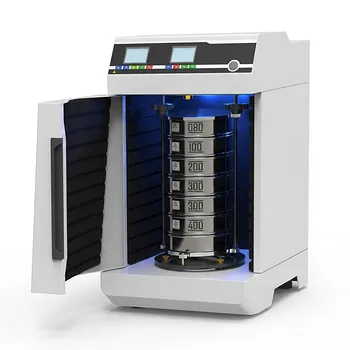
Laboratory Dry and Wet Three Dimensional Vibratory Sieve Shaker for Particle Analysis
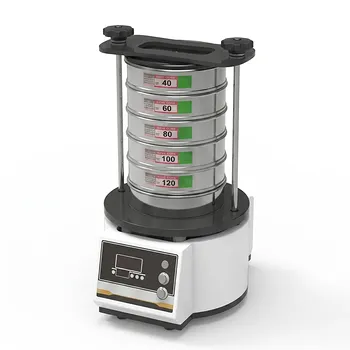
Dry Three Dimensional Vibratory Sieve Shaker
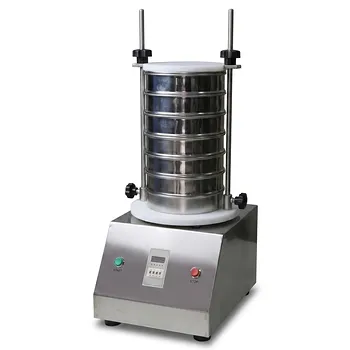
Laboratory Vibratory Test Sieve Shaker for Precision Particle Size Analysis and Powder Grading
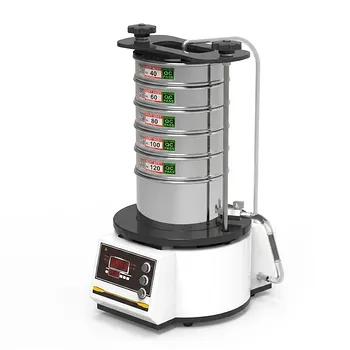
High Frequency Wet Three-Dimensional Vibrating Sieve Shaker for Dry and Wet Particle Size Analysis
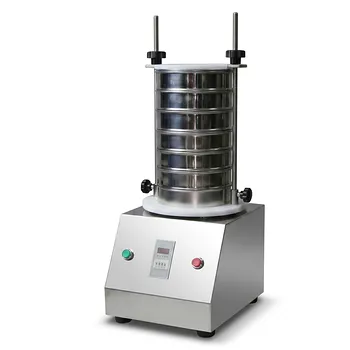
Small Laboratory Vibratory Sieve Shaker for Powder Gradation and Particle Size Analysis
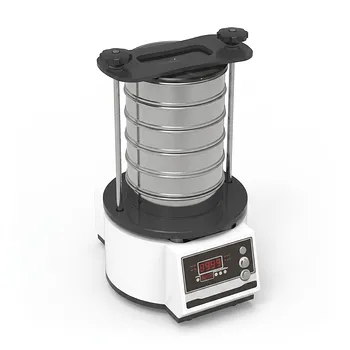
Tapping Oscillating Sieve Shaker for Dry and Wet Particle Size Analysis
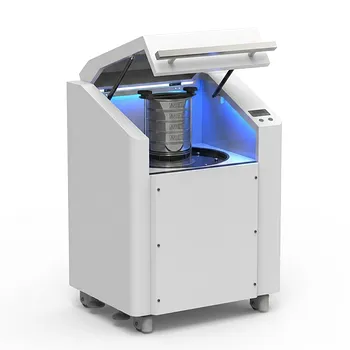
High Frequency Cabinet Type Three-Dimensional Rotary Vibrating Sieve Shaker for Dry Sieving and Particle Classification
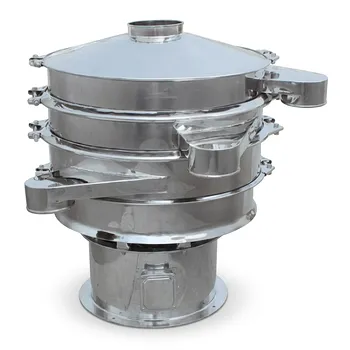
Stainless Steel Rotary Vibrating Sieve High Precision Circular Vibratory Separator Industrial Powder Grading Machine Multi Layer Sifting Equipment
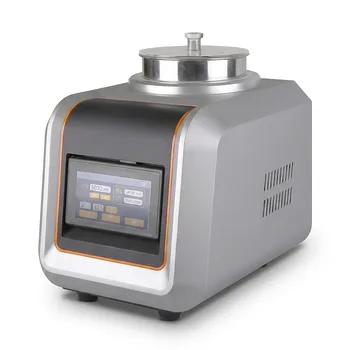
Laboratory Air Jet Sieving Machine for Fine Powder Particle Size Analysis and Deagglomeration