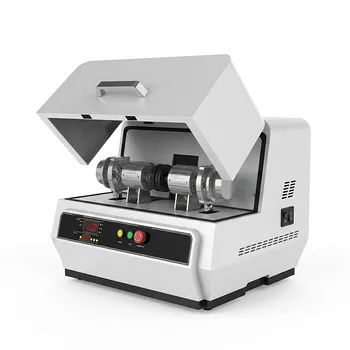
Why Use a Standard Ball Mill for Oyster Shell BBMWI? Essential Guide to Accurate Energy and Grinding Calculations
Updated 5 months ago
The standard ball mill is the essential instrument for determining the Bond Ball Mill Work Index (BBMWI) of oyster shells because it provides a strictly controlled environment to simulate industrial-scale closed-circuit dry grinding.
This standardized simulation allows engineers to measure the grinding rate at equilibrium, which is necessary to calculate the specific energy required to reduce shells to a target particle size. Without this calibrated approach, predicting the energy costs and equipment requirements for processing oyster shells into industrial neutralizing agents would be speculative rather than scientific.
The standard ball mill bridges the gap between laboratory testing and industrial production by quantifying the grindability of oyster shells. It establishes a repeatable "Work Index" that serves as the definitive metric for calculating energy consumption and selecting appropriately sized grinding machinery.
Simulating Industrial Scale at a Benchtop Level
Replicating Mechanical Forces
The mill uses a specific distribution of steel ball media to apply consistent mechanical impact and attrition. These forces accurately mirror the crushing and grinding actions found in full-scale industrial mills, ensuring the lab results are scalable.
Establishing the Circulating Load
Industrial processes often operate in a closed-circuit, where oversized material is returned for further grinding. The standard laboratory mill replicates this cycle by running multiple passes until the system reaches a steady state.
Predicting Energy Consumption
By measuring the output ratio and grinding rate, the mill provides the data needed to calculate the Bond Work Index (Wi). This value represents the energy (in kWh/t) required to reduce the material from an infinite size to a specific product size.
The Role of Multi-Cycle Equilibrium
Reaching Steady-State Grinding
Tests are performed in successive cycles until a constant circulating load is established. This equilibrium is critical because it ensures the measured "grams per revolution" are representative of a continuous, stable production environment.
Quantifying Material Resistance
Oyster shells possess unique structural resistance compared to mineral ores. The standard mill identifies this resistance to crushing, allowing researchers to evaluate how the shells will behave under prolonged mechanical stress in a factory setting.
Enabling Comparative Analysis
Using a standard mill allows for direct comparison between different materials or treatments. For example, it can verify if thermal treatment of shells reduces grinding resistance, potentially leading to documented energy savings of over 13%.
Understanding the Trade-offs
Dry vs. Wet Grinding Limitations
While the BBMWI test typically uses dry grinding to simulate industrial neutralizing agent production, it may not perfectly represent wet-process systems. Environmental factors, such as ambient humidity or the moisture content within the shells, can influence the accuracy of the dry-grinding index.
Material Heterogeneity
Oyster shells are biological structures and can vary in density and organic content. While the 300 mm x 300 mm standard mill is highly reliable, these natural variations mean that a single test may not capture the full range of energy requirements for every shell batch.
Applying BBMWI Data to Your Project
Recommendations for Implementation
- If your primary focus is cost estimation: Use the BBMWI to calculate the precise kilowatt-hours per ton (kWh/t) required to reach your target particle size, allowing for accurate utility budgeting.
- If your primary focus is equipment procurement: Leverage the index to ensure the industrial mill you purchase is neither undersized (causing bottlenecks) nor oversized (wasting capital expenditure).
- If your primary focus is process optimization: Perform comparative tests on raw versus pre-treated shells to quantify exactly how much electricity consumption can be reduced through process changes.
Understanding the Bond Work Index through standard ball milling transforms oyster shell processing from a trial-and-error exercise into a precise, data-driven engineering discipline.
Summary Table:
| Feature | Purpose in BBMWI Testing | Benefit for Oyster Shell Processing |
|---|---|---|
| Mechanical Forces | Replicates impact and attrition | Mimics industrial-scale crushing actions |
| Closed-Circuit Simulation | Establishes circulating load | Reflects steady-state factory production |
| Multi-Cycle Equilibrium | Reaches constant grinding rate | Provides repeatable data for material resistance |
| Bond Work Index (Wi) | Calculates energy consumption | Precise utility budgeting and equipment sizing |
Optimize Your Material Processing with Expert Solutions
At [Brand Name], we provide complete laboratory sample preparation solutions tailored for material science and industrial scaling. Whether you are quantifying the grindability of biological materials like oyster shells or processing advanced ceramics, our specialized equipment ensures precision at every step.
Our extensive product line includes:
- Crushing & Grinding: Jaw/roll crushers and high-efficiency mills (planetary ball, jet, and disc mills).
- Sizing & Mixing: Vibratory sieve shakers and advanced powder/defoaming mixers.
- Compaction: A full spectrum of hydraulic presses, including Cold/Warm Isostatic Presses (CIP/WIP), vacuum hot presses, and XRF pellet presses.
Ready to transform your laboratory data into a data-driven engineering discipline? Contact us today to discuss your project requirements and let our experts help you select the ideal equipment for your powder processing and material testing needs.
References
- J. J. K. Gordon, E. K. Asiam. Characterisation of Oyster Shell for Neutralisation of Bio-leached Effluent. DOI: 10.4314/gm.v16i2.6
Mentioned Products
- Heavy Duty Horizontal Planetary Ball Mill for Efficient Industrial Grinding and Sample Preparation
- Vertical Semi Circular Planetary Ball Mill for Laboratory Precision Grinding
- Vertical Square Planetary Ball Mill for Laboratory Sample Preparation and Nanoscale Grinding
- High Energy Planetary Ball Mill for Nano Scale Grinding and Mechanical Alloying
- Vertical Production Planetary Ball Mill for High Throughput Powder Processing
People Also Ask
- Why grind lime-pozzolan specimens for TG/DTA for 3 mins? Master sample prep for high-precision thermal analysis.
- What is the role of a planetary ball mill in the mechanical activation of ZTA powder? Boost Sintering Performance
- What is the function of a planetary ball mill in wollastonite ceramic prep? Achieve Molecular Homogenization & Reactivity
- How does a planetary ball mill contribute to the homogenization of trace elements? Achieve Sub-Micron Uniformity
- What is the function of a high-performance planetary ball mill in AMZ laminates? Master Ceramic Homogenization.

Tech Team · PowderPreparation
Last updated on May 14, 2026
Related Products
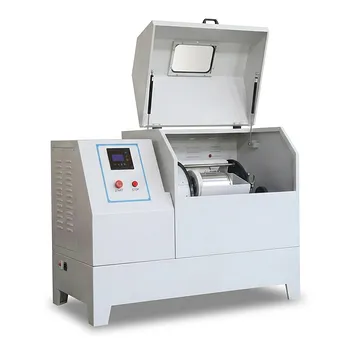
Heavy Duty Horizontal Planetary Ball Mill for Efficient Industrial Grinding and Sample Preparation
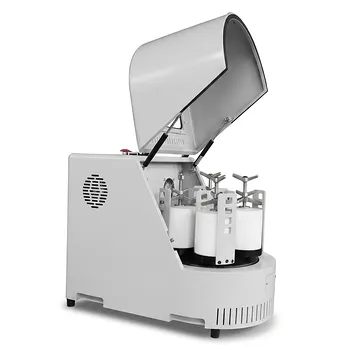
Vertical Semi Circular Planetary Ball Mill for Laboratory Precision Grinding
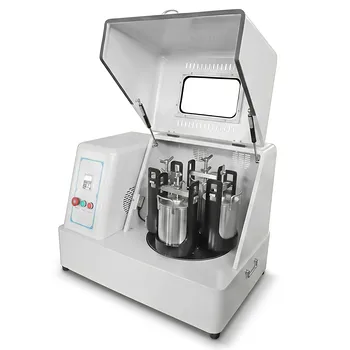
Vertical Square Planetary Ball Mill for Laboratory Sample Preparation and Nanoscale Grinding
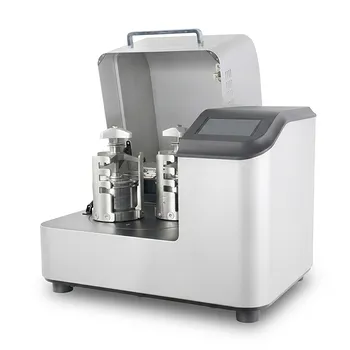
High Energy Planetary Ball Mill for Nano Scale Grinding and Mechanical Alloying
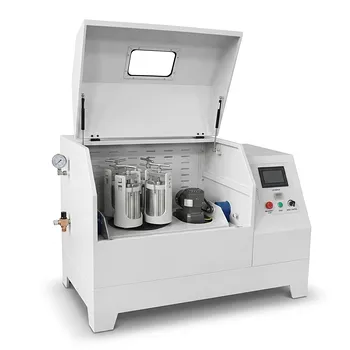
Vertical Production Planetary Ball Mill for High Throughput Powder Processing
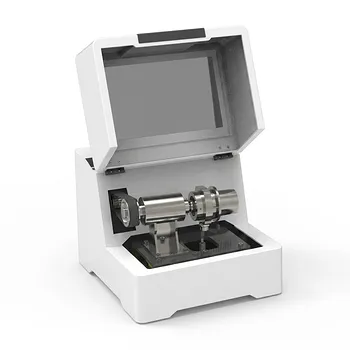
Single Tank High Energy Vibratory Ball Mill for Laboratory Grinding and Mixing
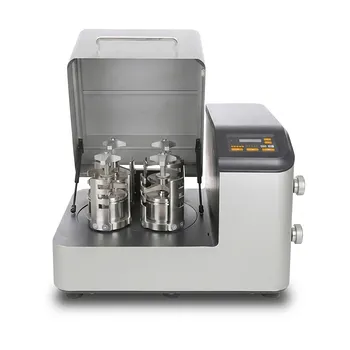
High Energy Planetary Ball Mill for Nano Scale Grinding and Colloidal Mixing in Material Science Research
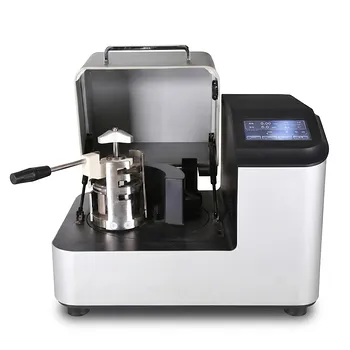
High Energy Laboratory Planetary Ball Mill for Nano Grinding and Material Science Sample Preparation
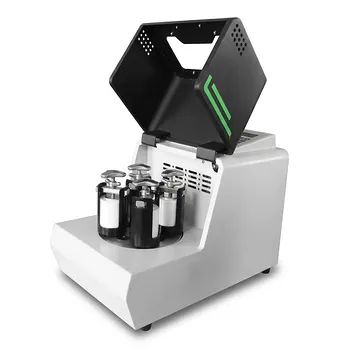
Miniature Planetary Ball Mill with Vacuum Grinding and High Efficiency for Laboratory Sample Preparation
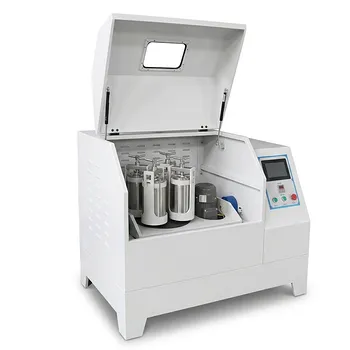
360° Rotating Omnidirectional Laboratory Planetary Ball Mill for Homogeneous Ultra-Fine Grinding and Mixing
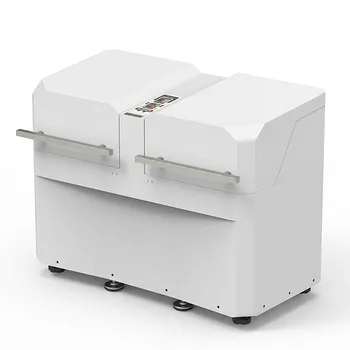
Dual Station Planetary Ball Mill 24L

High Energy Hybrid Vibratory Ball Mill for Grinding Mixing and Cell Disruption
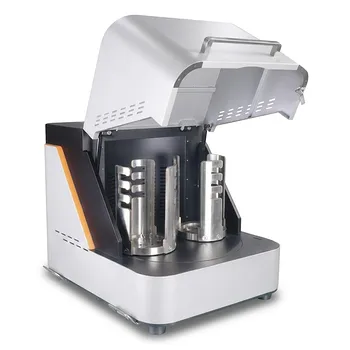
High Energy Laboratory Planetary Ball Mill for Nano Grinding and Colloidal Mixing of Hard and Brittle Materials
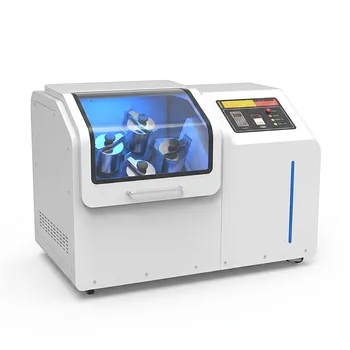
High Energy Omnidirectional Planetary Ball Mill 16L
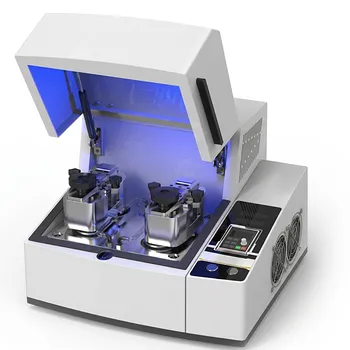
Laboratory Nano High Energy Ball Mill Ultrafine Grinding Mechanical Alloying
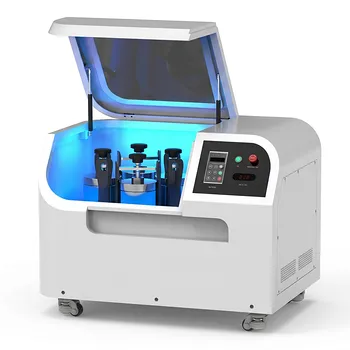
Planetary Ball Mill 12L

High Throughput Micro Ball Mill for Cryogenic Grinding and Laboratory Cell Disruption

8L Planetary Ball Mill for Laboratory Grinding and Sample Preparation
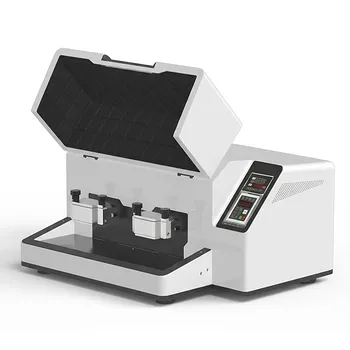
Nanoscale High-Energy Vibratory Ball Mill for Laboratory Sample Preparation, Mechanochemistry, and Mechanical Alloying