Why is a standard 35 mesh sieve required for Adobe Brick production? Key to Structural Integrity & Crack Prevention
Updated 4 months ago
The standard 35 mesh sieve is the primary tool for ensuring microscopic uniformity in the soil used for Adobe Brick production. By filtering the raw material through a 0.417 mm aperture, producers can eliminate coarse sand, gravel, and organic impurities that would otherwise compromise the brick's internal structure. This precise calibration ensures that moisture is absorbed evenly, preventing the internal stresses that lead to structural cracking during the drying phase.
Core Takeaway: Particle size control via a 35 mesh sieve is essential for creating a dense, homogeneous soil matrix. This uniformity allows for predictable moisture penetration and even drying, which are the two most critical factors in preventing structural failure in Adobe bricks.
Achieving Microstructural Density
Eliminating Coarse Inclusions
The 35 mesh sieve acts as a quality gate, removing coarse sand and small pebbles that are larger than 0.417 mm. These larger particles create "weak spots" in the soil matrix where the binding material cannot bond effectively.
Enhancing Particle Interlocking
When the soil particles are filtered to a uniform, fine size, they can pack together more tightly. This creates a dense microstructure that significantly improves the compressive strength of the finished Adobe brick.
Managing Moisture and Stress
Uniform Water Distribution
Consistency in particle size ensures that water moves through the dry mix at a predictable rate. Without this uniformity, pockets of dry powder or over-saturated clay can form, leading to an inconsistent bond throughout the brick.
Prevention of Drying Cracks
Cracks in Adobe often occur due to uneven stress as water evaporates. By using a 35 mesh sieve, you ensure that the brick shrinks at a uniform rate, neutralizing the localized tensions that cause surface and structural fissures.
The Role of Multi-Stage Filtration
The 10mm Pre-Treatment Phase
Before the fine 35 mesh is used, soil must pass through a 10mm standard sieve. This initial step removes large-scale debris such as large stones, leaves, and plant roots that would disrupt the mixing machinery or cause major voids.
Protecting Structural Integrity
Large impurities left in the soil act as stress concentration points. During the drying and curing process, the soil pulls away from these large objects, creating internal gaps that can lead to sudden structural failure under load.
Understanding the Trade-offs
Processing Time vs. Material Quality
Manual sieving with a 35 mesh screen is labor-intensive and can slow down production compared to using raw, unsifted earth. However, skipping this step often results in a high rejection rate due to bricks cracking or breaking during the curing stage.
Balancing Clay and Silt Ratios
While the sieve controls particle size, it does not change the chemical makeup of the soil. You must still ensure the filtered material has the correct clay-to-sand ratio, as even perfectly sieved soil will fail if it contains too much expansive clay.
Making the Right Choice for Your Project
Ensuring your soil passes the 35 mesh standard is the difference between a professional-grade building material and a simple mud block.
- If your primary focus is Maximum Structural Load: You must use the 35 mesh sieve to ensure a dense, void-free matrix that can support the weight of multiple stories or heavy roofing.
- If your primary focus is Surface Aesthetics: Finely sieved soil produces a smoother, more refined finish that requires less plastering and resists surface scaling over time.
- If your primary focus is Production Speed: Utilize mechanical vibratory screens for the 35 mesh stage to maintain high output without sacrificing the material uniformity required for durability.
Precision in particle size is the fundamental requirement for transforming raw earth into a reliable, long-lasting structural component.
Summary Table:
| Processing Stage | Mesh Size | Aperture (mm) | Primary Purpose |
|---|---|---|---|
| Pre-Treatment | 10mm | 10.0 mm | Remove large stones, roots, and debris |
| Micro-Refining | 35 Mesh | 0.417 mm | Ensure uniform density and moisture control |
| Finishing | Fine Mesh | < 0.417 mm | Achieve smooth surface and resist scaling |
Elevate Your Material Quality with Professional Sieving Solutions
Ensure the structural integrity of your Adobe bricks with precision-engineered equipment. We provide complete laboratory sample preparation solutions for material science, specializing in the high-performance powder processing and compaction equipment you need to succeed.
Our extensive product lines are designed to meet rigorous standards, featuring:
- Sieve Shakers & Meshes: Vibratory and air-jet sieve shakers with a full range of test sieves for precise particle size control.
- Crushing & Milling: High-efficiency jaw/roll crushers, planetary ball mills, and jet mills for material refinement.
- Compaction & Pressing: A full spectrum of hydraulic presses, including Cold/Warm Isostatic Presses (CIP/WIP), hot presses, and XRF pellet presses.
- Mixing Solutions: Advanced powder mixers and defoaming mixers for a perfectly homogeneous matrix.
Whether you are aiming for maximum structural load or superior surface aesthetics, our team is ready to help you optimize your workflow. Contact our experts today to find the perfect solution for your lab!
References
- Win Ei Ei Tun, Khin Mya Thwin. PREPARATION OF ADOBE BRICK BY MIXING WITH RICE HUSH ASH. DOI: 10.30780/ijtrs.v3.i6.2018.004
Mentioned Products
- Laboratory Air Jet Sieving Machine for Fine Powder Particle Size Analysis and Deagglomeration
- 三维电磁微量振动筛分仪
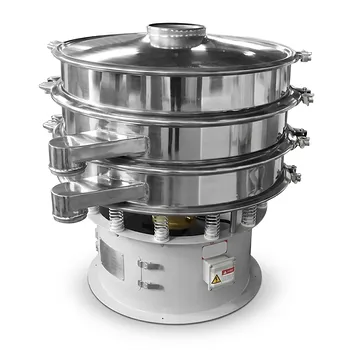
- Three Dimensional Rotary Vibrating Sieve
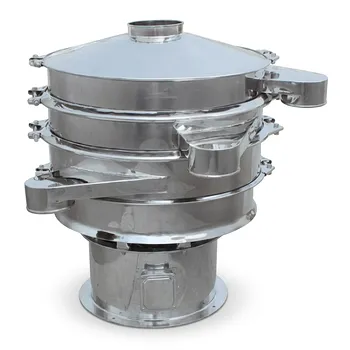
- Stainless Steel Rotary Vibrating Sieve High Precision Circular Vibratory Separator Industrial Powder Grading Machine Multi Layer Sifting Equipment
- High Frequency Cabinet Type Three-Dimensional Rotary Vibrating Sieve Shaker for Dry Sieving and Particle Classification
People Also Ask
- What role do laboratory test sieves play in the nanocrystallization process of iron powder? Ensure Uniform Refinement
- What is the function of a laboratory test sieve in the river sediment sample preparation process? Ensure Precise Data
- What is the purpose of using 0.038 mm sieves in magnetite grinding? Quantify Kinetics and Boost Grinding Efficiency
- How do laboratory test sieves contribute to the analysis of soil texture composition? Optimize Particle Grading Accuracy
- Why is a 0.08mm standard sieve required for testing the fineness of cement? Optimize Recycled Pervious Concrete Quality

Tech Team · PowderPreparation
Last updated on Jun 03, 2026
Related Products

Laboratory Air Jet Sieving Machine for Fine Powder Particle Size Analysis and Deagglomeration

三维电磁微量振动筛分仪
Three Dimensional Rotary Vibrating Sieve
Stainless Steel Rotary Vibrating Sieve High Precision Circular Vibratory Separator Industrial Powder Grading Machine Multi Layer Sifting Equipment

High Frequency Cabinet Type Three-Dimensional Rotary Vibrating Sieve Shaker for Dry Sieving and Particle Classification

Dry Three Dimensional Vibratory Sieve Shaker