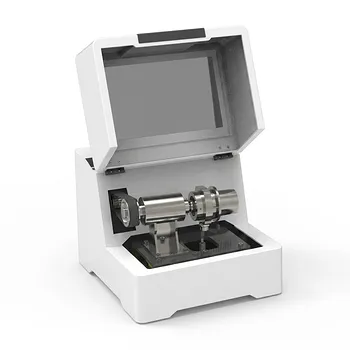
Why 10:1 Ball-to-Powder Ratio is Critical for ZnFeS Nanocrystal Prep: Master Milling Energy & Purity
Updated 3 months ago
The ball-to-powder weight ratio (BPR) is the primary determinant of grinding energy distribution and collision efficiency. In the synthesis of Zinc Iron Sulfide (ZnFeS) nanocrystals, a 10:1 ratio ensures that each particle receives sufficient mechanical energy to achieve uniform size refinement. This specific balance is necessary to facilitate the chemical transformation into a nanocrystalline structure within a predictable timeframe.
The ball-to-powder ratio acts as a regulator for energy density and collision probability within the milling jar. By maintaining a 10:1 ratio, researchers optimize the transfer of mechanical force to the material, preventing energy loss while ensuring the repeatability of the nanocrystal synthesis.
The Mechanics of Energy Transfer
Maximizing Collision Frequency
A 10:1 ratio provides an ideal volume of grinding media relative to the mass of the ZnFeS. This ensures a high collision frequency, where the balls frequently impact the powder particles rather than just hitting other balls or the jar walls.
Optimizing Energy Density
The ratio defines the mechanical energy density applied to the powder per unit of time. For Zinc Iron Sulfide, this specific energy level is required to trigger lattice distortions and the interfacial activation necessary for nanocrystal formation.
Ensuring Uniform Refinement
When the BPR is correctly calibrated, the energy is distributed evenly throughout the powder bed. This results in uniform particle size distribution, which is essential for the stable physical properties of the final ZnFeS product.
The Role of Process Stability
Avoiding the Buffering Effect
If the powder volume is too high relative to the balls (a low BPR), the material creates a buffering effect. This cushioning prevents the balls from delivering enough impact energy to refine the particles effectively.
Preventing Equipment Wear
A specific ratio ensures that there is enough material to coat the grinding media. Without this "cushion," excessive media-to-media collisions occur, leading to accelerated wear of the balls and the milling jar.
Maintaining Chemical Purity
By optimizing the collision energy, a 10:1 ratio achieves the desired grain size without the need for excessive milling times. Shorter, more efficient milling cycles reduce the risk of chemical contamination from the grinding hardware.
Understanding the Trade-offs
The Risk of High Ratios
While increasing the ratio (e.g., 20:1) can lead to even smaller grain sizes, it significantly increases the risk of powder contamination. The higher energy intensity can cause the milling media to shed microscopic fragments into the ZnFeS sample.
Heat Accumulation
Higher ball-to-powder ratios often lead to excessive heat accumulation within the grinding jar. In sensitive nanocrystal preparations, this heat can cause unwanted phase changes or particle agglomeration, undoing the refinement process.
Processing Time vs. Energy Input
A lower ratio might be safer for equipment but requires much longer processing times to reach the same nanocrystalline state. This trade-off often leads to reduced efficiency and inconsistent batch quality in laboratory settings.
How to Apply This to Your Synthesis
To achieve the best results in Zinc Iron Sulfide nanocrystal preparation, consider the following recommendations based on your specific objectives:
- If your primary focus is phase purity: Adhere strictly to the 10:1 ratio to ensure a complete reaction without introducing contaminants from the milling media.
- If your primary focus is achieving the smallest possible grain size: You may experiment with a slightly higher ratio (e.g., 12:1), but you must monitor the sample for contamination and use cooling intervals to manage heat.
- If your primary focus is batch-to-batch consistency: Maintain a precise BPR and fixed milling time to ensure the mechanical energy dose remains identical across every run.
- If your primary focus is preventing equipment damage: Never drop below a 5:1 ratio, as the lack of material "buffer" will lead to high-impact damage to your milling jars.
Mastering the ball-to-powder ratio is the most effective way to control the mechanical energy landscape required for high-quality Zinc Iron Sulfide nanocrystals.
Summary Table:
| Key Factor | Impact of 10:1 Ratio | Core Benefit |
|---|---|---|
| Energy Density | Optimized mechanical transfer | Triggers necessary lattice distortions |
| Collision Frequency | High media-to-powder contact | Ensures uniform particle size refinement |
| Process Stability | Balanced buffering effect | Minimizes contamination and equipment wear |
| Thermal Control | Regulated heat accumulation | Prevents unwanted phase changes |
Elevate Your Material Synthesis with Precision Lab Equipment
Achieving the perfect nanocrystalline structure requires more than just the right ratio—it requires high-performance hardware. At [Brand Name], we provide complete laboratory sample preparation solutions tailored for material science.
From planetary ball mills and jet mills designed for high-energy synthesis to cryogenic grinders for heat-sensitive materials, our equipment ensures the repeatability and purity your research demands. We also offer a full spectrum of powder processing tools, including:
- Milling & Grinding: Disc mills, rotor mills, and vibratory sieve shakers.
- Compaction Solutions: Cold/Warm Isostatic Presses (CIP/WIP), vacuum hot presses, and XRF pellet presses.
- Mixing: Powder and defoaming mixers for uniform precursor preparation.
Contact our technical experts today to discuss how our specialized powder processing and compaction equipment can optimize your ZnFeS synthesis and laboratory workflow!
References
- Production and characterization of Zinc Iron Sulphide (ZnFeS) nanoparticles sourced locally from Nigeria prepared by high energy ball-milling. DOI: 10.17148/imrjr.2025.020601
Mentioned Products
- Vertical Semi Circular Planetary Ball Mill for Laboratory Precision Grinding
- High Energy Planetary Ball Mill for Nano Scale Grinding and Mechanical Alloying
- Vertical Production Planetary Ball Mill for High Throughput Powder Processing
- Heavy Duty Horizontal Planetary Ball Mill for Efficient Industrial Grinding and Sample Preparation
- 360° Rotating Omnidirectional Laboratory Planetary Ball Mill for Homogeneous Ultra-Fine Grinding and Mixing
People Also Ask
- Why is a planetary ball mill essential for SiBCN-rGO wet-spinning? Achieve Superior Dispersion and Spinnability
- What role does a planetary ball mill play in the synthesis of Li6PS5Cl (LPSCl)? Unlock High Ionic Conductivity
- Why is a planetary ball mill required for PET micronization? Ensure Accurate Chemical Analysis of Reprocessed PET
- How does mechanized planetary ball milling compare to manual agate grinding? Optimize sulfide standard material precision.
- Why is a planetary ball mill required during the synthesis of sodium zeolite from coal gangue? Achieve High Reactivity

Tech Team · PowderPreparation
Last updated on Jun 03, 2026
Related Products
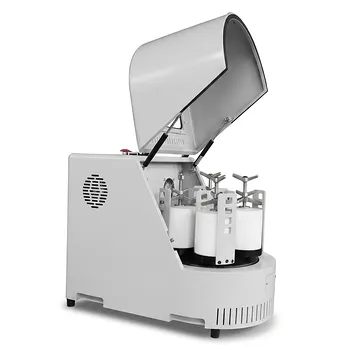
Vertical Semi Circular Planetary Ball Mill for Laboratory Precision Grinding

High Energy Planetary Ball Mill for Nano Scale Grinding and Mechanical Alloying

Vertical Production Planetary Ball Mill for High Throughput Powder Processing

Heavy Duty Horizontal Planetary Ball Mill for Efficient Industrial Grinding and Sample Preparation

360° Rotating Omnidirectional Laboratory Planetary Ball Mill for Homogeneous Ultra-Fine Grinding and Mixing

Vertical Square Planetary Ball Mill for Laboratory Sample Preparation and Nanoscale Grinding

Miniature Planetary Ball Mill with Vacuum Grinding and High Efficiency for Laboratory Sample Preparation

High Energy Laboratory Planetary Ball Mill for Nano Grinding and Material Science Sample Preparation

High Energy Omnidirectional Planetary Ball Mill 16L
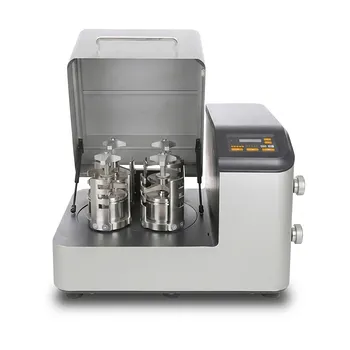
High Energy Planetary Ball Mill for Nano Scale Grinding and Colloidal Mixing in Material Science Research
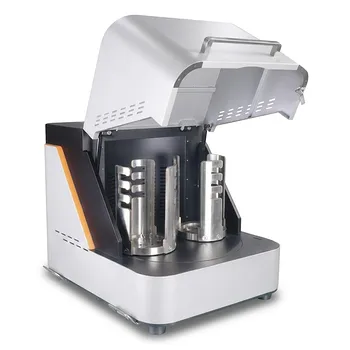
High Energy Laboratory Planetary Ball Mill for Nano Grinding and Colloidal Mixing of Hard and Brittle Materials
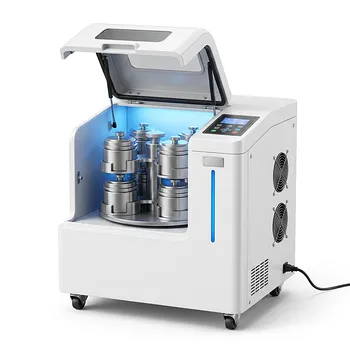
High Energy Omnidirectional Planetary Ball Mill 20L
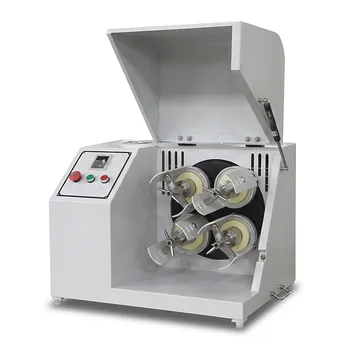
Horizontal Light Duty Planetary Ball Mill for Laboratory Sample Preparation

8L Planetary Ball Mill for Laboratory Grinding and Sample Preparation
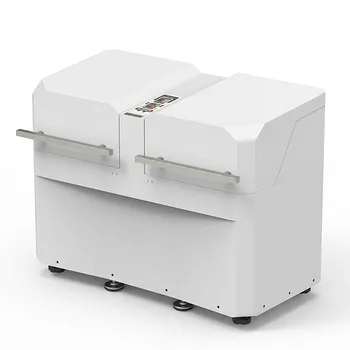
Dual Station Planetary Ball Mill 24L
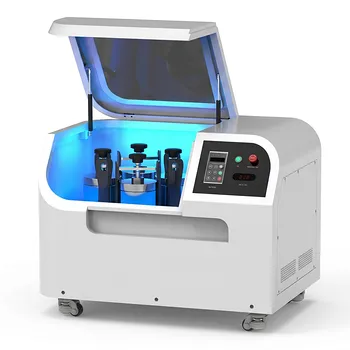
Planetary Ball Mill 12L
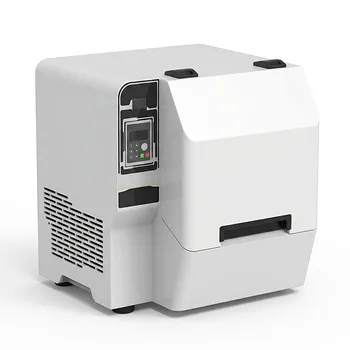
Nano High Energy Vibratory Ball Mill for Laboratory Sample Preparation
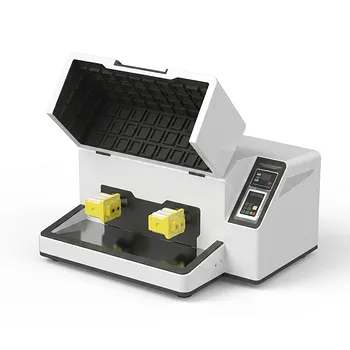
Multi-Platform Nanoscale High-Energy Vibratory Ball Mill
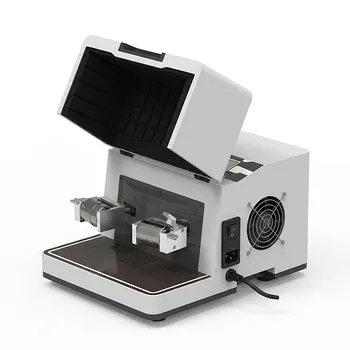
High Energy Hybrid Vibratory Ball Mill for Grinding Mixing and Cell Disruption