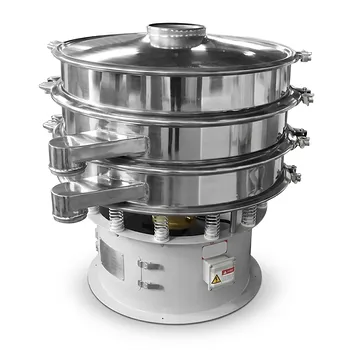
Why is a sieve shaker essential for coconut shell powder in composites? Optimize particle size for superior strength.
Updated 4 months ago
A sieve shaker is the primary tool for achieving particle size uniformity in coconut shell powder. It utilizes mechanical vibration across multiple layers of standard mesh screens to isolate specific particle ranges while removing coarse or excessively fine components. This precise classification is vital because it ensures the consistency of the filler, which directly dictates the mechanical stability and performance of the final composite material.
Effective composite manufacturing requires precise control over filler dimensions to prevent structural weaknesses. A sieve shaker provides the standardized classification necessary to optimize interfacial adhesion and ensure the repeatability of material properties.
Achieving Mechanical Stability through Precision Grading
Eliminating Stress Concentration Points
Oversized particles within a composite act as defect sites that can lead to stress concentration. By using a sieve shaker to strictly control the upper limit of particle size (such as 400 µm), manufacturers prevent these large particles from compromising the material's integrity.
Optimizing Particle Packing Density
Precise grading ensures that the powder falls within a specific technical range, which optimizes particle packing density. A uniform distribution allows particles to sit more closely together, reducing voids and increasing the overall density and strength of the hardened composite.
Ensuring Process Repeatability
In research and industrial production, repeatability is critical for quality control. Mechanical sieving provides a standardized method to ensure that every batch of coconut shell powder has the same physical specifications before it enters the mixing or ball-milling stage.
Enhancing Chemical and Physical Interactions
Improving Interfacial Adhesion
The bond between the filler (coconut powder) and the matrix (resin or polymer) is known as interfacial adhesion. Consistent particle fineness increases the available surface area for bonding, which significantly improves the load transfer capabilities of the composite.
Protecting Resin Stability and Shelf Life
Using improper particle sizes can lead to unstable resin performance or a significantly shortened shelf life for the composite mixture. Isolating specific fractions, such as the -150 to +250 mesh range, ensures that the chemical interaction between the organic waste and the resin remains predictable.
Preparing Materials for Nanocomposites
For high-performance applications, coconut shell powder may undergo high-energy ball milling to reach nano-scales. A sieve shaker acts as a critical pre-processing step, ensuring the raw materials entering the mill have a uniform size distribution, which is a prerequisite for controlling the final nano-reinforcement size.
Understanding the Trade-offs and Limitations
The Risk of Mesh Blinding
When processing organic materials like coconut shells, very fine particles can clog the screen openings, a phenomenon known as mesh blinding. This can lead to inaccurate grading if the shaker is not equipped with proper anti-blinding mechanisms or if the vibration frequency is poorly calibrated.
Material Loss and Yield
Strict sieving protocols naturally result in material rejection, as coarse and ultra-fine particles are discarded to maintain quality. While this ensures a high-performing final product, it requires manufacturers to account for lower yields from the raw crushed shell.
Limitations of Mechanical Vibration
While excellent for micro-scale particles (typically down to 45 or 75 micrometers), mechanical sieve shakers reach their limit at the sub-micron level. For extremely fine reinforcements, specialized air-jet sieving or wet-sieving methods may be required to overcome particle agglomeration.
How to Apply This to Your Project
To maximize the effectiveness of coconut shell powder in your composite materials, choose your sieving strategy based on your specific performance requirements.
- If your primary focus is Maximum Structural Strength: Use a multi-layer stack to isolate a narrow, mid-range particle size to ensure the highest interfacial adhesion and lowest stress concentration.
- If your primary focus is Cost-Effective Bulk Production: Implement a single-layer high-precision mesh (e.g., 400 µm) to quickly remove only the oversized "killer" particles while maintaining a higher yield.
- If your primary focus is Resin/Coating Stability: Focus on removing the "fines" (excessively small particles) that can cause unpredictable viscosity changes or premature curing in resin systems.
By treating the sieving process as a foundational step rather than an afterthought, you ensure the structural and chemical integrity of your composite materials.
Summary Table:
| Feature | Impact on Composite Materials | Key Benefit |
|---|---|---|
| Precision Grading | Eliminates oversized particles (defects) | Prevents stress concentration & failure |
| Packing Density | Optimizes how particles sit together | Increases overall density and strength |
| Surface Area | Improves interfacial adhesion with resin | Enhances load transfer capabilities |
| Repeatability | Ensures consistent batch specifications | Maintains high quality-control standards |
| Pre-processing | Prepares uniform feed for ball milling | Essential for consistent nano-scale results |
Elevate Your Material Research with Precision Sample Prep
Achieving the perfect particle size distribution is the first step toward high-performance composite materials. At our core, we provide complete laboratory sample preparation solutions for material science, specializing in the equipment you need to process powders with absolute accuracy.
Our extensive product line is designed to handle every stage of coconut shell powder processing:
- Sizing & Classification: Vibratory and air-jet sieve shakers with a full range of test sieves and meshes.
- Milling & Grinding: Planetary ball mills, jet mills, and liquid nitrogen cryogenic grinders for micro and nano-scale refinement.
- Crushing & Mixing: Jaw/roll crushers for raw materials, plus advanced powder and defoaming mixers.
- Compaction & Forming: A full spectrum of hydraulic presses, including Cold/Warm Isostatic Presses (CIP/WIP), vacuum hot presses, and XRF pellet presses.
Whether you are a researcher optimizing interfacial adhesion or a manufacturer ensuring batch repeatability, our experts are ready to help you select the right equipment for your specific application.
Contact us today to find your solution
References
- Fauzan Fauzan, Iqbal Iqbal. Kaji Eksperimental Kekuatan Tarik dan Kekuatan Impak Komposit Serbuk Sabut Kelapa-Polyster. DOI: 10.22236/metalik.v1i2.9765
Mentioned Products
- Vibratory Sieve Shaker Electromagnetic 3D Motion Powder Particle Size Analyzer for Dry and Wet Sieving
- 三维电磁微量振动筛分仪
- Stainless Steel Laboratory Vibratory Test Sieve Shaker
- Small Laboratory Vibrating Sieve Shaker for Precise Particle Size Analysis
- Dry Three Dimensional Vibratory Sieve Shaker
People Also Ask
- How does a vibratory sieve shaker contribute to optimizing the performance of activated carbon? Enhance Adsorption Precision
- Why is a laboratory vibratory sieve shaker necessary for processing magnesium-based borate precursor powders? Boost Activity
- Why use a vibratory sieve shaker to verify coarse aggregate grading in rubberized concrete? Ensure Structural Integrity
- What function do vibratory sieve shakers and standard test sieves serve in the preparation of adsorbents? Key Guide
- What role does a vibratory sieve shaker play in the particle size analysis of ground corn products? Enhance QC Precision

Tech Team · PowderPreparation
Last updated on Jun 03, 2026
Related Products
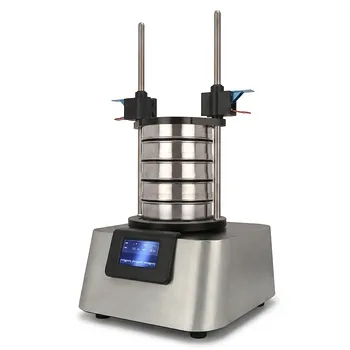
Vibratory Sieve Shaker Electromagnetic 3D Motion Powder Particle Size Analyzer for Dry and Wet Sieving
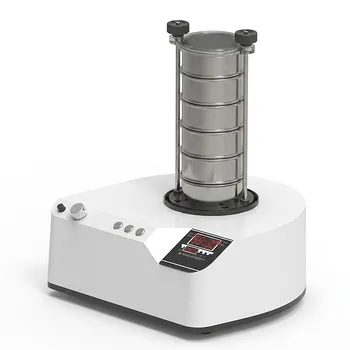
三维电磁微量振动筛分仪
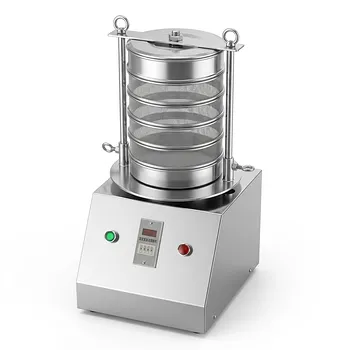
Stainless Steel Laboratory Vibratory Test Sieve Shaker
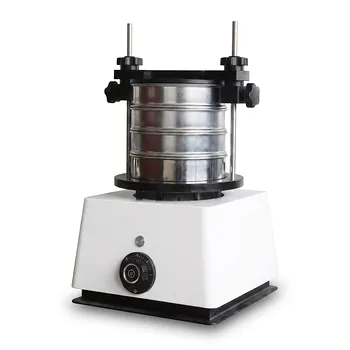
Small Laboratory Vibrating Sieve Shaker for Precise Particle Size Analysis

Dry Three Dimensional Vibratory Sieve Shaker

Heavy Duty Dry Three Dimensional Vibratory Sieve Shaker for Particle Separation
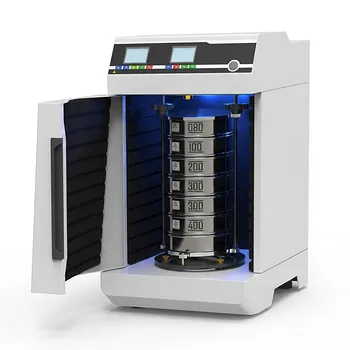
Laboratory Dry and Wet Three Dimensional Vibratory Sieve Shaker for Particle Analysis
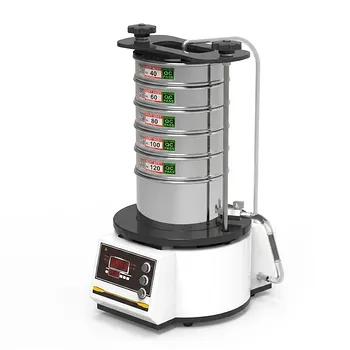
High Frequency Wet Three-Dimensional Vibrating Sieve Shaker for Dry and Wet Particle Size Analysis

Laboratory Vibratory Test Sieve Shaker for Precision Particle Size Analysis and Powder Grading
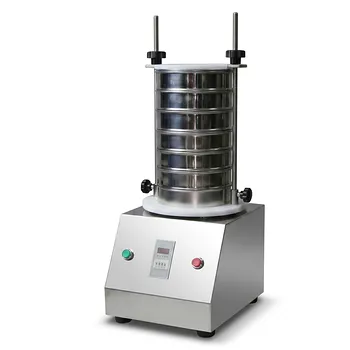
Small Laboratory Vibratory Sieve Shaker for Powder Gradation and Particle Size Analysis
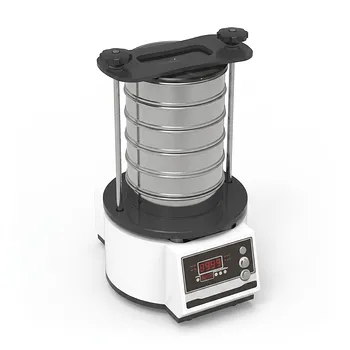
Tapping Oscillating Sieve Shaker for Dry and Wet Particle Size Analysis
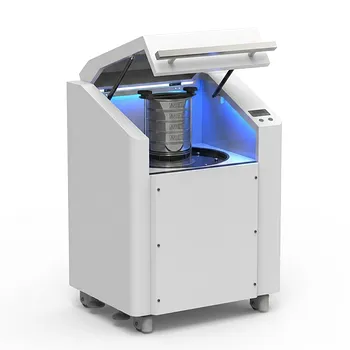
High Frequency Cabinet Type Three-Dimensional Rotary Vibrating Sieve Shaker for Dry Sieving and Particle Classification

Stainless Steel Rotary Vibrating Sieve High Precision Circular Vibratory Separator Industrial Powder Grading Machine Multi Layer Sifting Equipment
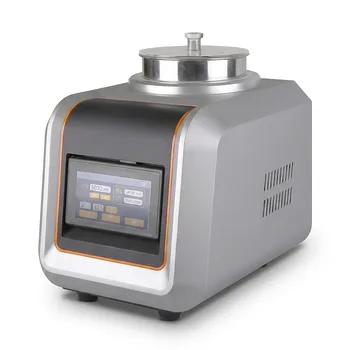
Laboratory Air Jet Sieving Machine for Fine Powder Particle Size Analysis and Deagglomeration