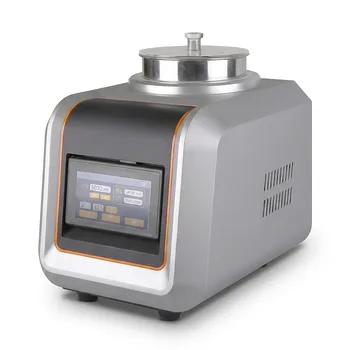
Why is a precision stainless steel sieve shaker necessary for processing bioactive glass powders? Optimize Bioactivity
Updated 5 months ago
Precision stainless steel sieve shakers are essential for bioactive glass processing because they provide the rigorous particle size classification required for material consistency. This level of control is necessary to optimize the rheological properties of printing inks, prevent mechanical failures in manufacturing equipment, and ensure predictable biological degradation rates when the glass is introduced to a clinical environment.
Precise particle size distribution is the fundamental variable that dictates the success of bioactive glass applications. By isolating specific fractions—often smaller than 32 micrometers—manufacturers can guarantee the structural integrity and chemical reactivity of the final medical or industrial product.
Precision Sieving for Advanced Manufacturing
Optimizing Rheology for Robocasting
Direct-write printing, or robocasting, relies on inks with specific flow characteristics. Precision sieving ensures the collection of fine particles (often less than 32 micrometers) which are critical for formulating inks with excellent rheological properties.
Preventing Nozzle Clogging
In additive manufacturing, even a small percentage of oversized particles can lead to nozzle clogging. A vibratory sieve shaker removes these outliers, ensuring a smooth, continuous extrusion process and improving the densification of the printed "green body."
Uniformity in Spray Coating
For processes like Atmospheric Plasma Spraying (APS), a narrow and consistent particle size range is vital. Precise control ensures consistent melting behavior within the plasma flame, which directly determines the adherence and quality of the final bioactive coating.
Enhancing Material Properties and Bioactivity
Controlling Biodegradation Rates
The surface area of a powder is a direct function of its particle size. By using high-precision shakers to isolate specific fractions (e.g., 20–32 µm or <20 µm), engineers can strictly control the dissolution kinetics and biodegradation rate of the glass in biological environments.
Maximizing Sintering Activity
Fine, well-sorted particles exhibit higher sintering activity and better crystallization kinetics. This precision allows for the creation of denser, stronger composite materials with predictable wettability and sealing performance.
Ensuring Volume Stability
In certain applications, such as glass-based additives, removing oversized particles is critical for preventing the Alkali-Silica Reaction (ASR). Smaller, uniform particles reduce the risk of expansion and cracking, ensuring the long-term volume stability of the matrix.
Standardizing Research and Quality Control
Eliminating Kinetic Variables
In scientific bioactivity assessments, variations in particle size can lead to misleading data regarding how a material reacts. Automated vibratory shakers provide the reproducibility needed to ensure that dissolution data is scientifically valid and not an artifact of inconsistent sizing.
Maintaining Chemical Purity
The use of stainless steel construction is non-negotiable for bioactive materials to prevent contamination. High-precision meshes ensure that the chemical integrity of the SnO–MgO–P2O5 or other glass chemistries is maintained throughout the mechanical sorting process.
Understanding the Trade-offs
Equipment Costs vs. Precision
High-precision vibratory shakers represent a higher initial investment than manual or low-frequency alternatives. However, the cost of failed batches due to nozzle clogs or inconsistent bioactivity often far exceeds the price of the equipment.
Mesh Wear and Calibration
Fine stainless steel meshes are delicate and can degrade over time, leading to "mesh blinding" or inaccurate sizing. Regular calibration and maintenance are required to ensure that a 32-micrometer screen continues to deliver particles within the specified tolerance.
How to Apply This to Your Process
Making the Right Choice for Your Goal
- If your primary focus is Robocasting or Ink Formulation: Prioritize a shaker that can accurately isolate particles below 32 micrometers to ensure smooth extrusion.
- If your primary focus is Clinical Bioactivity: Utilize automated vibratory sieving to create narrow size distributions (e.g., 37–44 microns) to ensure predictable dissolution and healing rates.
- If your primary focus is Industrial Coating: Focus on a system that ensures consistent melting behavior by strictly removing both oversized and undersized "fines" that could destabilize the plasma flame.
Achieving mastery over particle size distribution is the single most effective way to transition bioactive glass from a raw material to a high-performance functional component.
Summary Table:
| Application | Key Benefit of Precision Sieving | Typical Particle Size |
|---|---|---|
| Robocasting | Prevents nozzle clogging & optimizes ink flow | < 32 µm |
| Spray Coating | Ensures uniform melting & coating adherence | Narrow Distribution |
| Bioactivity | Controls dissolution kinetics & healing rates | 20–44 µm |
| Sintering | Maximizes densification & crystallization | Fine Fractions |
| Quality Control | Eliminates variables & ensures chemical purity | Mesh Specific |
Elevate Your Material Research with Precision Processing
Achieving exact particle size distribution is the most critical step in transforming bioactive glass into high-performance medical and industrial components. At [Brand Name], we provide complete laboratory sample preparation solutions specifically designed for material science.
We specialize in high-precision powder processing and compaction equipment, ensuring your materials maintain the highest purity and consistency. Our extensive product range includes:
- Sieving & Classification: Vibratory and air-jet sieve shakers with high-quality stainless steel meshes.
- Advanced Milling: Planetary ball mills, jet mills, and liquid nitrogen cryogenic grinders.
- Sample Compaction: A full spectrum of hydraulic presses, including Cold/Warm Isostatic Presses (CIP/WIP), vacuum hot presses, and XRF pellet presses.
- Homogenization: Specialized powder mixers and defoaming mixers for perfect ink formulations.
Ready to eliminate kinetic variables and enhance your production yields?
Contact our technical experts today to discover how our specialized equipment can optimize your laboratory workflow!
References
- Jacopo Barberi, Francesco Baino. Mechanical characterization of pore-graded bioactive glass scaffolds produced by robocasting. DOI: 10.1515/bglass-2019-0012
Mentioned Products
- Laboratory Vibratory Test Sieve Shaker for Precision Particle Size Analysis and Powder Grading
- Stainless Steel Laboratory Vibratory Test Sieve Shaker
- Stainless Steel Rotary Vibrating Sieve High Precision Circular Vibratory Separator Industrial Powder Grading Machine Multi Layer Sifting Equipment
- Small Laboratory Vibrating Sieve Shaker for Precise Particle Size Analysis
- Small Laboratory Vibratory Sieve Shaker for Powder Gradation and Particle Size Analysis
People Also Ask
- What role does a laboratory sieve shaker play in determining PDI? Achieve Precision in Biomass Quality Testing
- What are the functions of sieve shakers for coconut shell powder? Achieve Precise Particle Size & Quality Control.
- What function does a laboratory sieve shaker perform in the PSD analysis of residual soil? Ensure Precise Grading
- What is the role of a laboratory sieve shaker in the preparation of plantain peel adsorbents? Standardize Particle Size
- What is the function of a laboratory vibratory sieve shaker? Enhance Coal Particle Size Distribution (PSD) Analysis

Tech Team · PowderPreparation
Last updated on May 14, 2026
Related Products
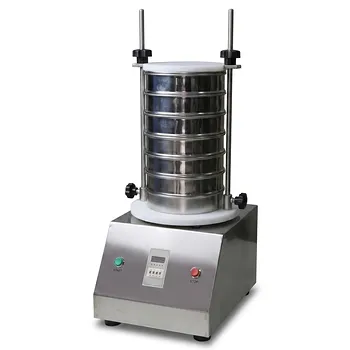
Laboratory Vibratory Test Sieve Shaker for Precision Particle Size Analysis and Powder Grading
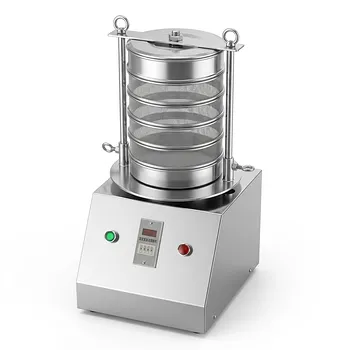
Stainless Steel Laboratory Vibratory Test Sieve Shaker
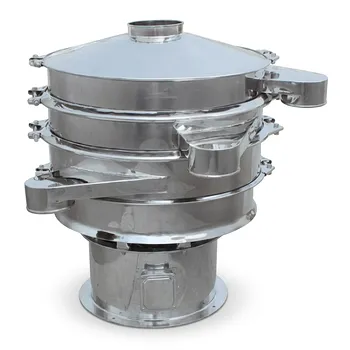
Stainless Steel Rotary Vibrating Sieve High Precision Circular Vibratory Separator Industrial Powder Grading Machine Multi Layer Sifting Equipment
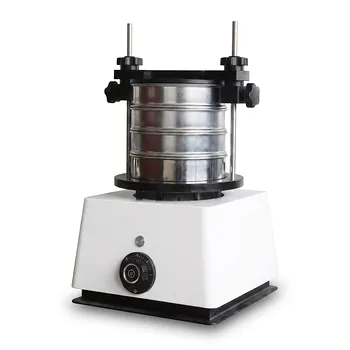
Small Laboratory Vibrating Sieve Shaker for Precise Particle Size Analysis
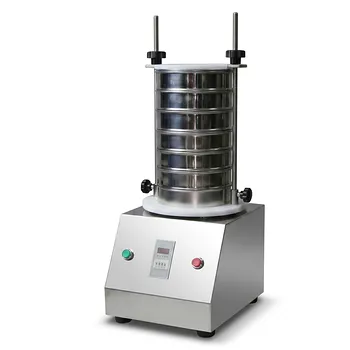
Small Laboratory Vibratory Sieve Shaker for Powder Gradation and Particle Size Analysis
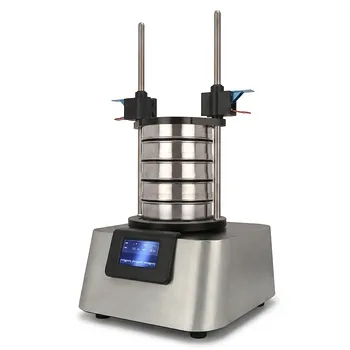
Vibratory Sieve Shaker Electromagnetic 3D Motion Powder Particle Size Analyzer for Dry and Wet Sieving
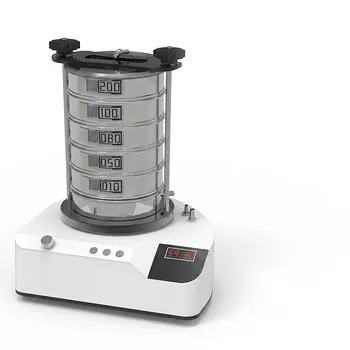
Heavy Duty Dry Three Dimensional Vibratory Sieve Shaker for Particle Separation
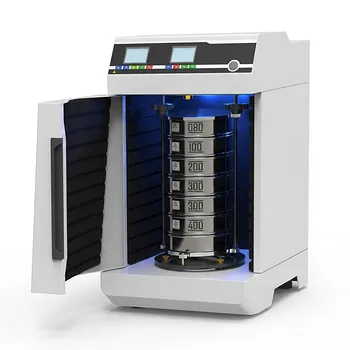
Laboratory Dry and Wet Three Dimensional Vibratory Sieve Shaker for Particle Analysis
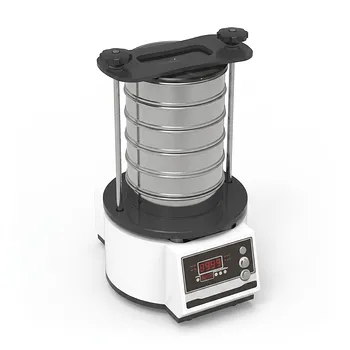
Tapping Oscillating Sieve Shaker for Dry and Wet Particle Size Analysis
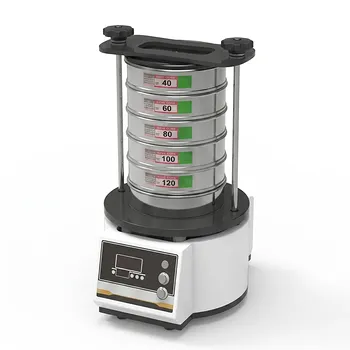
Dry Three Dimensional Vibratory Sieve Shaker
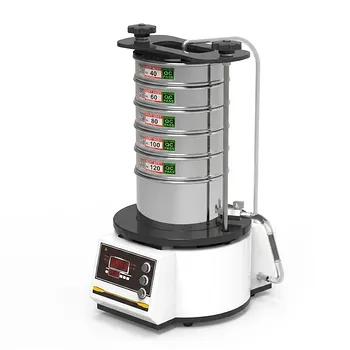
High Frequency Wet Three-Dimensional Vibrating Sieve Shaker for Dry and Wet Particle Size Analysis
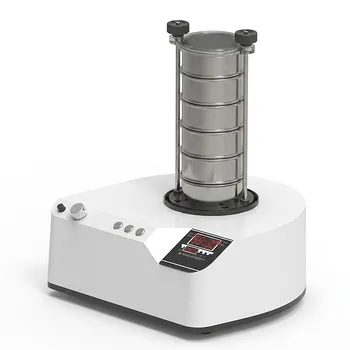
三维电磁微量振动筛分仪
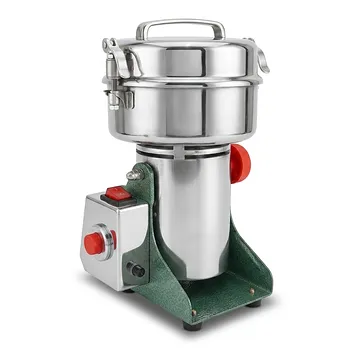
Small High-Speed Laboratory Grinder for Powder Processing
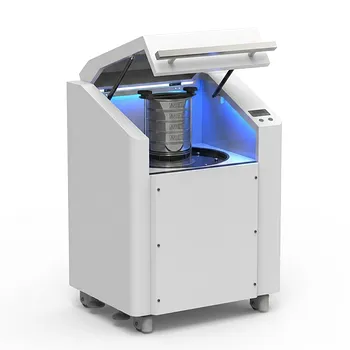
High Frequency Cabinet Type Three-Dimensional Rotary Vibrating Sieve Shaker for Dry Sieving and Particle Classification