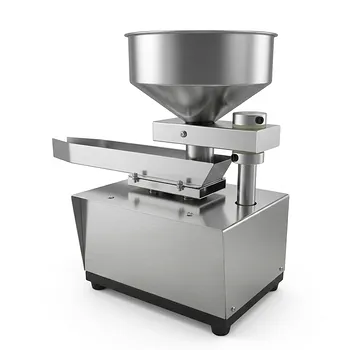
Why is a precision sieve shaker used in conjunction with test sieves for the analysis of coarse powder fractions? Ensure Accuracy
Updated 5 months ago
A precision sieve shaker is used with test sieves to provide mechanical verification and rigorous separation of coarse powder fractions. This process ensures that particles mis-classified by previous methods—often due to agglomeration or irregular shapes—are accurately sorted. By establishing a clear distinction between undersize and oversize components, the system maintains high data integrity for density, surface area, and mineralogical studies.
The core value of a precision sieve shaker lies in its ability to provide standardized, repeatable mechanical energy. It transforms manual sieving into a scientific process, ensuring that coarse fractions are classified with the accuracy required for complex material analysis and industrial process control.
Ensuring Analytical Accuracy and Verification
Correcting Classification Errors
In many workflows, coarse powders undergo preliminary pneumatic classification. However, air-based systems can struggle with agglomerated particles or those with irregular geometries that mimic the behavior of smaller fractions.
A precision shaker uses mechanical vibration to physically force these particles through the mesh. This serves as a final verification step, ensuring that the "oversize" and "undersize" designations are based on actual physical dimensions rather than aerodynamic behavior.
Supporting Mineralogical and Density Studies
Data accuracy in studies involving surface area, density, and mineralogy depends entirely on the purity of the size fraction. Even a small percentage of mis-classified coarse material can skew the results of chemical analyses or physical property tests.
By using standardized vibration, the shaker ensures that liberation patterns of specific minerals are documented accurately. This is critical for determining the optimal feed range for subsequent separation stages in mining and materials science.
Standardization and Process Control
Eliminating Manual Variability
Manual shaking is inherently inconsistent and prone to human error, leading to poor repeatability. A precision vibratory shaker provides constant and uniform mechanical energy, allowing particles to bounce and penetrate the mesh layers efficiently.
This automation ensures that the Fineness Modulus (FM) and other gradation metrics are comparable across different batches and laboratories. It moves the analysis from a subjective task to a standardized industrial protocol.
Optimizing Downstream Production
In industries like ceramics and battery manufacturing, the uniformity of coarse fractions dictates the quality of the final product. Precise sieving helps control the rheological properties of slurries and the packing density of pressed bodies.
Removing large aggregates ensures that electrode coatings remain consistent in thickness. It also prevents flow blockages and uneven heating during high-pressure processes like twin-screw extrusion.
Understanding the Trade-offs
The Risk of Mesh Blinding
While vibratory energy is efficient, certain materials may cause blinding, where particles become wedged in the sieve apertures. This effectively changes the mesh size and ruins the accuracy of the distribution data.
Material Degradation
High-intensity mechanical vibration can be abrasive. For friable materials, the shaking process itself might cause particles to break down into smaller fractions, resulting in a false reading that suggests a finer distribution than actually exists.
Limitations at Extreme Fineness
While precision shakers are excellent for coarse powders, their effectiveness diminishes as particle sizes drop below 38 micrometers. At these levels, electrostatic forces and surface tension often require specialized wet sieving or vacuum-assisted methods.
How to Apply This to Your Project
When integrating a precision sieve shaker into your analytical workflow, your specific goals should dictate your configuration and methodology.
- If your primary focus is quality control for extrusion or coating: Prioritize the removal of large aggregates to ensure stable rheological properties and prevent equipment blockages.
- If your primary focus is mineralogical or chemical analysis: Use a full stack of certified test sieves to create a detailed particle size distribution (PSD) and calculate the Span value for process stability.
- If your primary focus is standardized testing (like Los Angeles Abrasion): Ensure your shaker settings and sieve apertures strictly adhere to ASTM or ISO standards to maintain result comparability.
- If your primary focus is research and development of active materials: Use the shaker to classify powders post-annealing to ensure microstructural uniformity in your final sintered components.
By leveraging the repeatable mechanical energy of a precision shaker, you ensure that your coarse powder analysis is a reliable foundation for both scientific inquiry and industrial excellence.
Summary Table:
| Key Factor | Benefit of Precision Shakers | Impact on Results |
|---|---|---|
| Classification | Corrects aerodynamic & agglomeration errors | Physical size-based verification |
| Standardization | Provides uniform, repeatable energy | Eliminates manual variability |
| Data Integrity | High purity of size fractions | Accurate density & mineralogy studies |
| Process Control | Consistent particle distribution | Optimized rheology & packing density |
Maximize Your Analytical Precision with [Brand Name]
Achieving accurate particle size distribution is the foundation of excellence in material science. [Brand Name] provides complete laboratory sample preparation solutions, specializing in advanced powder processing and compaction equipment designed to meet the most rigorous standards.
Whether you are refining mineralogical studies or optimizing battery electrode coatings, our extensive product line supports your entire workflow:
- Precision Sieving: High-performance vibratory and air-jet sieve shakers with a full range of test sieves and meshes.
- Milling & Grinding: Planetary ball mills, jet mills, cryogenic grinders, and jaw/roll crushers for superior size reduction.
- Compaction Excellence: A full spectrum of hydraulic presses, including Cold/Warm Isostatic Presses (CIP/WIP), vacuum hot presses, and XRF pellet presses.
- Advanced Mixing: High-efficiency powder mixers and defoaming mixers for uniform material preparation.
Don't let manual inconsistency compromise your data. Contact our technical specialists today to discover how our high-precision equipment can enhance your lab's efficiency and ensure the success of your next project.
References
- Jurij Delihowski, Marcin Jarosz. Size fraction characterisation of highly-calcareous and siliceous fly ashes. DOI: 10.1007/s10973-024-13566-x
Mentioned Products
- Laboratory Vibratory Test Sieve Shaker for Precision Particle Size Analysis and Powder Grading
- Small Laboratory Vibrating Sieve Shaker for Precise Particle Size Analysis
- 三维电磁微量振动筛分仪
- Vibratory Sieve Shaker Electromagnetic 3D Motion Powder Particle Size Analyzer for Dry and Wet Sieving
- Stainless Steel Laboratory Vibratory Test Sieve Shaker
People Also Ask
- What role does a laboratory sieve shaker play in determining PDI? Achieve Precision in Biomass Quality Testing
- What are the functions of sieve shakers for coconut shell powder? Achieve Precise Particle Size & Quality Control.
- What function does a laboratory sieve shaker perform in the PSD analysis of residual soil? Ensure Precise Grading
- What is the role of a laboratory sieve shaker in the preparation of plantain peel adsorbents? Standardize Particle Size
- What is the function of a laboratory vibratory sieve shaker? Enhance Coal Particle Size Distribution (PSD) Analysis

Tech Team · PowderPreparation
Last updated on May 14, 2026
Related Products
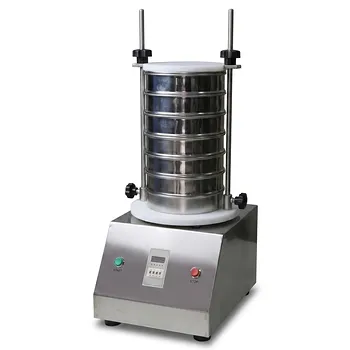
Laboratory Vibratory Test Sieve Shaker for Precision Particle Size Analysis and Powder Grading
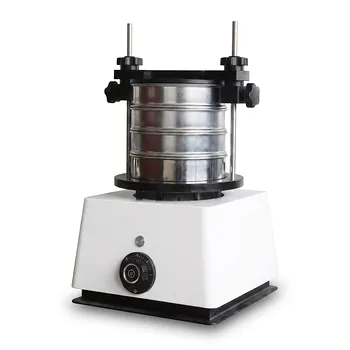
Small Laboratory Vibrating Sieve Shaker for Precise Particle Size Analysis
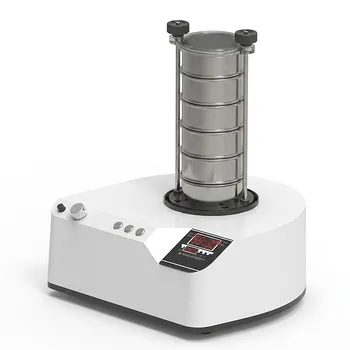
三维电磁微量振动筛分仪
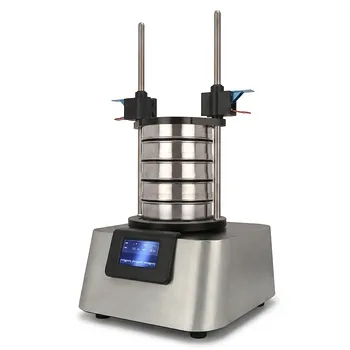
Vibratory Sieve Shaker Electromagnetic 3D Motion Powder Particle Size Analyzer for Dry and Wet Sieving
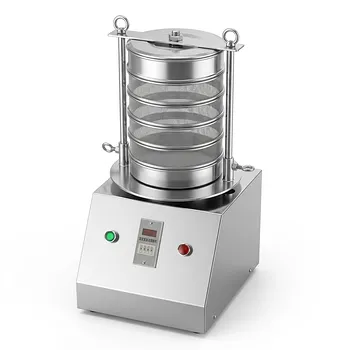
Stainless Steel Laboratory Vibratory Test Sieve Shaker
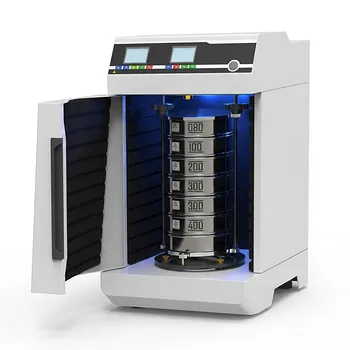
Laboratory Dry and Wet Three Dimensional Vibratory Sieve Shaker for Particle Analysis
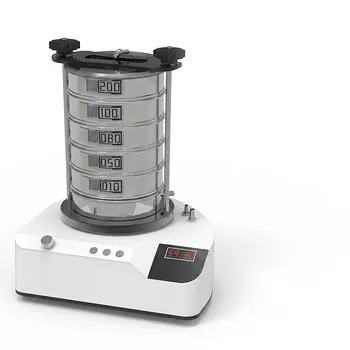
Heavy Duty Dry Three Dimensional Vibratory Sieve Shaker for Particle Separation
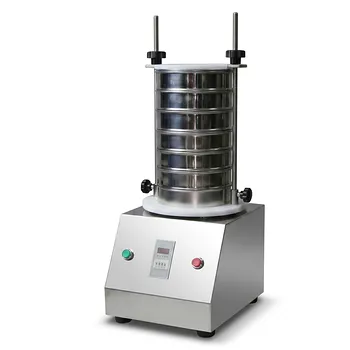
Small Laboratory Vibratory Sieve Shaker for Powder Gradation and Particle Size Analysis
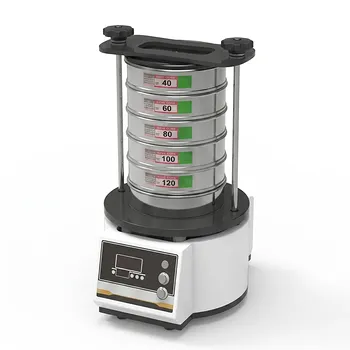
Dry Three Dimensional Vibratory Sieve Shaker
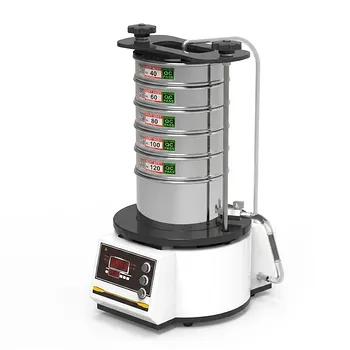
High Frequency Wet Three-Dimensional Vibrating Sieve Shaker for Dry and Wet Particle Size Analysis
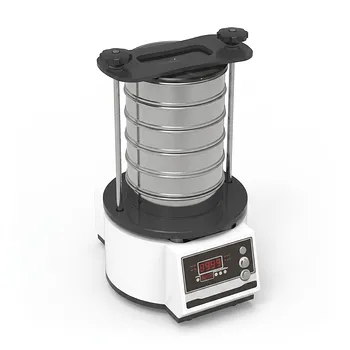
Tapping Oscillating Sieve Shaker for Dry and Wet Particle Size Analysis
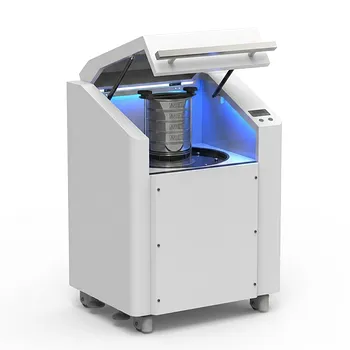
High Frequency Cabinet Type Three-Dimensional Rotary Vibrating Sieve Shaker for Dry Sieving and Particle Classification
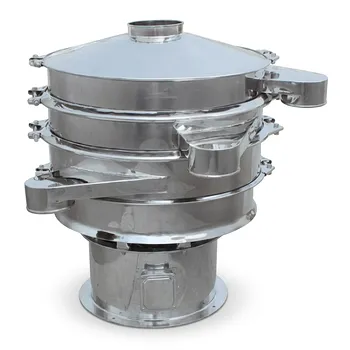
Stainless Steel Rotary Vibrating Sieve High Precision Circular Vibratory Separator Industrial Powder Grading Machine Multi Layer Sifting Equipment
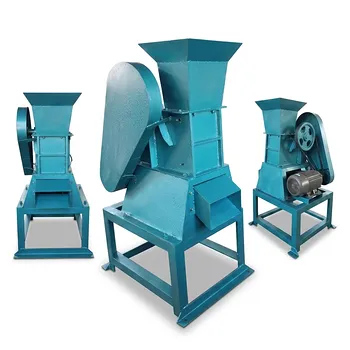
Custom Raised Height Laboratory Jaw Crusher for Precision Sample Preparation in Material Science
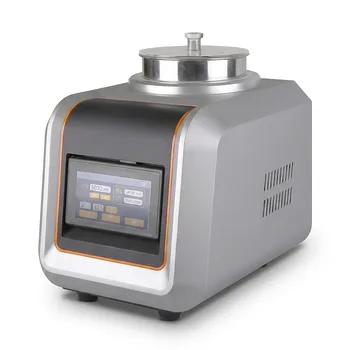
Laboratory Air Jet Sieving Machine for Fine Powder Particle Size Analysis and Deagglomeration