Why is a precision laboratory hydraulic press required for the formation of WC-Fe compacts? Optimize Green Strength.
Updated 4 months ago
The formation of WC-Fe powder compacts requires a precision laboratory hydraulic press to deliver the high, constant pressure necessary for structural transformation. This equipment facilitates particle rearrangement and plastic deformation, converting loose powder into a cohesive "green compact." The result is a preform with the exact mechanical strength and controlled porosity required for subsequent metallurgical processes, such as molten metal infiltration or sintering.
A precision hydraulic press is the foundational tool for ensuring WC-Fe powders reach the necessary density and structural integrity while maintaining the uniform porosity vital for successful downstream consolidation.
The Mechanics of Powder Transformation
Achieving Particle Rearrangement
In the initial stages of compaction, axial pressure forces loose WC and Fe particles to slide past one another. This movement fills internal voids and increases the initial packing density of the powder mix. Without precision control, irregular particle distribution can lead to weak spots in the final compact.
Facilitating Plastic Deformation
High pressures, such as 230 MPa, are required to exceed the elastic limits of the powder particles. This force causes plastic deformation, which increases the contact area between the tungsten carbide and iron particles. This intimate contact is the physical basis for the mechanical bonding that holds the compact together.
Eliminating Internal Voids
The application of static pressure significantly reduces the volume of air trapped between particles. By minimizing internal voids, the press establishes a dense physical foundation. This density is critical for ensuring efficient element diffusion if the compact is later subjected to thermal treatments.
Ensuring Structural Integrity and Density
Creating a Durable "Green Body"
The primary goal of the hydraulic press is to create a green compact with sufficient "green strength." This strength allows the parallelepiped or shaped preform to be handled and placed into casting molds without crumbling. Precision ensures the dimensions remain consistent across different production batches.
Controlling Porosity for Infiltration
For WC-Fe composites intended for molten metal infiltration, the press must achieve a specific balance of density and porosity. The pressure is tuned to leave an interconnected network of pores that will later "wick" the molten metal. A precision press allows for the repeatable control of this porosity volume.
Preventing Density Gradients
Precision hydraulic systems provide uniform axial pressure, which is vital for preventing density gradients within the compact. Uneven density can lead to "abnormal grain growth" or warping during subsequent heat cycles. Constant pressure ensures the top and bottom of the compact share the same structural characteristics.
Understanding the Trade-offs and Limitations
The Risk of Elastic Recovery
If pressure is released too quickly or if the powder is over-compacted, "springback" or elastic recovery can occur. This expansion can cause micro-cracking or "lamination" within the green body. Precision presses mitigate this by allowing for controlled pressure release and consistent loading rates.
Friction and Wall Effects
During compaction, friction between the powder and the mold walls can lead to pressure losses. This often results in a compact that is denser at the edges than in the center. Using precision-ground molds and lubricants is often necessary to complement the hydraulic press's force.
Limits of Static Compaction
While a hydraulic press is excellent for creating specific shapes, it may struggle with extremely complex geometries. Static axial pressure is most effective for simple geometric forms like discs, cubes, or parallelepipeds. Complex internal features may require alternative methods like isostatic pressing or advanced mold designs.
How to Apply This to Your Process
Making the Right Choice for Your Goal
To achieve the best results with WC-Fe powder compaction, tailor your press settings to your final manufacturing step:
- If your primary focus is molten metal infiltration: Prioritize a specific pressure (like 230 MPa) that yields the exact porosity percentage required for the secondary metal to penetrate the preform.
- If your primary focus is solid-state sintering: Focus on maximizing compaction pressure to increase particle contact area, which accelerates atomic diffusion and prevents cracking during heating.
- If your primary focus is dimensional accuracy: Utilize precision-ground molds in conjunction with the press to minimize density gradients and ensure the green body does not warp during consolidation.
By mastering the precise application of pressure, you ensure that the WC-Fe compact serves as a reliable and high-performance foundation for the final composite material.
Summary Table:
| Compaction Phase | Key Mechanism | Benefit for WC-Fe Compacts |
|---|---|---|
| Particle Rearrangement | Axial pressure application | Fills internal voids and increases initial packing density. |
| Plastic Deformation | High force (e.g., 230 MPa) | Creates mechanical bonding by increasing particle contact area. |
| Void Elimination | Static pressure reduction | Minimizes trapped air to ensure efficient element diffusion. |
| Uniform Density | Constant axial loading | Prevents density gradients, warping, and abnormal grain growth. |
| Porosity Control | Precise pressure tuning | Establishes interconnected pores required for metal infiltration. |
Maximize Your Material Performance with KINTEK
Precision is non-negotiable in powder metallurgy. KINTEK provides complete laboratory sample preparation solutions for material science, specializing in high-performance powder processing and compaction equipment.
Whether you are forming WC-Fe compacts for infiltration or sintering, our extensive range of hydraulic presses—including Standard Lab Presses, XRF Pellet Presses, Cold/Warm Isostatic Presses (CIP/WIP), and Vacuum Hot Presses—ensures the repeatable density and structural integrity your research demands.
Beyond compaction, we offer a full suite of preparation tools:
- Crushers & Mills: Jaw/roll crushers, planetary ball mills, jet mills, and cryogenic grinders.
- Sieving & Mixing: Vibratory sieve shakers and high-efficiency powder mixers.
Ready to elevate your lab's efficiency and results? Contact us today to find the perfect equipment solution for your application!
References
- Aida B. Moreira, Manuel F. Vieira. A Study on a Cast Steel Reinforced with WC–Metal Matrix Composite. DOI: 10.3390/ma15186199
Mentioned Products
- Enhanced 9 Punch Rotary Tablet Press for Powder Compaction
- Manual Tablet Press with Dual Scale Pressure Gauge for Pharmaceutical Food Chemical Laboratory Sample Preparation
- 6-Ton Small Single-Punch Tablet Press — Laboratory Powder & Granule Tableting Equipment / Tablet Forming Machine
- Automatic Vibrating Powder Feeder for Laboratory Material Processing Precision Vibratory Hopper Feeder for Granular and Powder Material Handling Industrial Grade Vibrating Tray Feeder for Consistent Material Sample Preparation
- High Speed Swing Type Laboratory Pulverizer for Fine Powder Grinding and Sample Preparation
People Also Ask
- What is the purpose of adding lubricants like zinc stearate during Al-Al2O3 powder pressing? Achieve Superior Density
- Why is a laboratory hydraulic press required for FT-IR KBr pellets? Achieve Precise Sample Clarity for ZrC–SiC Analysis
- What role does a high-strength stainless steel mold kit play in the uniaxial die compaction process? Ensuring Precision
- Why is a laboratory hydraulic press required to compress oyster shell powder before XRF analysis? Improve Data Accuracy.
- Why is vacuum sealing and flexible packaging necessary for Aluminum Titanate powders during CIP? Ensure Peak Density

Tech Team · PowderPreparation
Last updated on Jun 03, 2026
Related Products
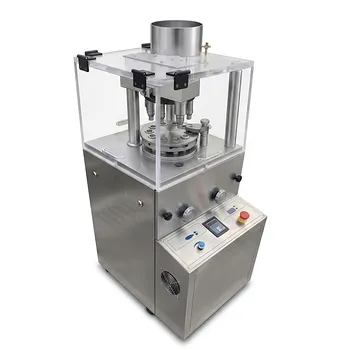
Enhanced 9 Punch Rotary Tablet Press for Powder Compaction
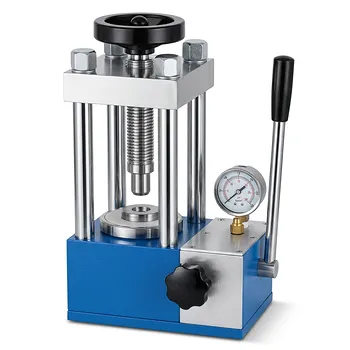
Manual Tablet Press with Dual Scale Pressure Gauge for Pharmaceutical Food Chemical Laboratory Sample Preparation
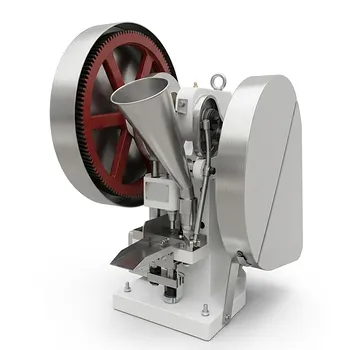
6-Ton Small Single-Punch Tablet Press — Laboratory Powder & Granule Tableting Equipment / Tablet Forming Machine

Automatic Vibrating Powder Feeder for Laboratory Material Processing Precision Vibratory Hopper Feeder for Granular and Powder Material Handling Industrial Grade Vibrating Tray Feeder for Consistent Material Sample Preparation
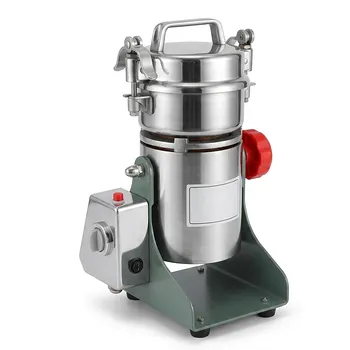
High Speed Swing Type Laboratory Pulverizer for Fine Powder Grinding and Sample Preparation
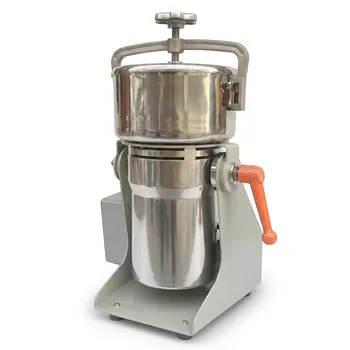
High Speed Laboratory Grinder Efficient Stainless Steel Powder Pulverizer Universal Material Science Mill for Sample Preparation
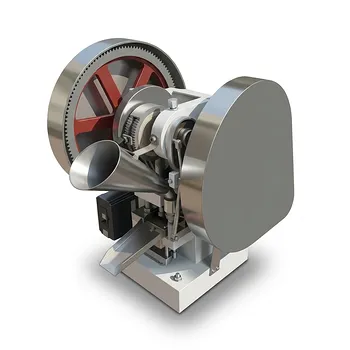
6 Ton Variable Frequency Single Punch Tablet Press
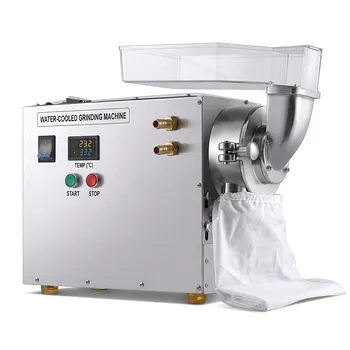
Water Cooled Graduated Continuous Feed Pulverizer for Industrial Powder Processing and Laboratory Material Preparation
Universal Laboratory Pulverizer Grinder for Small Batch Powder Processing and Material Science Research
Small High-Speed Grinder for Efficient Laboratory Sample Preparation