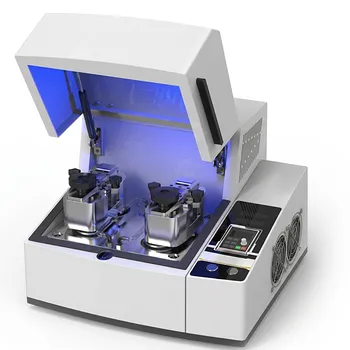
Why is a planetary ball mill utilized for the secondary grinding of calcined Strontium Titanate powder? Expert Guide
Updated 5 months ago
Planetary ball mills are essential for the secondary grinding of calcined Strontium Titanate because they effectively break down hard agglomerates formed during the heating process. This specific milling method uses complex planetary motion to apply high-energy, multi-directional stress that refines the powder to a sub-micron level. This ensures the material achieves the high sintering activity and consistent particle size distribution required for high-quality final components.
A planetary ball mill is utilized to overcome calcination-induced agglomeration by using high-energy impact and shear forces. This process transforms coarse, fused particles into a fine, high-surface-area powder that is optimized for sintering and shaping.
The Mechanics of Planetary Motion
Multi-Directional Stress Application
Unlike standard ball mills, a planetary system rotates the grinding jars while the entire sun disk revolves in the opposite direction. This complex planetary motion generates powerful centrifugal forces that subject the Strontium Titanate to intense, multi-directional stress.
High-Energy Impact and Shear
The simultaneous rotation and revolution create high-speed collisions between the grinding media and the powder. These impact and shear forces are significantly more energetic than gravity-based milling, allowing for the rapid reduction of hard, calcined materials.
Achieving Sub-Micron Refinement
Secondary grinding aims to move beyond simple pulverization to reach ultra-fine scales. Planetary milling can refine mixtures down to the sub-micron level, typically reaching ranges between 0.25 and 1.1 micrometers, which is critical for advanced ceramic applications.
Overcoming Calcination-Induced Challenges
Breaking Down Hard Agglomerates
During calcination, Strontium Titanate particles often undergo agglomeration, where they fuse into larger, irregular clusters. The high-energy collisions in a planetary mill are necessary to physically decouple these clusters back into individual primary particles.
Reversing Thermal Coarsening
High-temperature roasting can cause powder coarsening and hardening, which negatively impacts material flow. The planetary mill re-refines and homogenizes these coarsened powders, ensuring they are suitable for precision processes like cold-pressing or injection molding.
Improving Particle Size Distribution (PSD)
A consistent particle size distribution is vital for the structural integrity of the final product. Planetary milling can shift a monomodal distribution to a multimodal one, increasing the packing density of the powder for better mechanical properties.
Optimizing Material Performance
Enhancing Sintering Activity
By reducing particle size, the mill substantially increases the specific surface area of the Strontium Titanate powder. This higher surface area provides more energy for the sintering process, allowing the powder to fuse more efficiently at lower temperatures.
Improving Dispersion and Fluidity
High-energy milling ensures that the secondary phase of the powder is highly dispersed. This uniform dispersion is essential for achieving the ideal fluidity and filling rates required during the final shaping and molding stages.
Mechanical Activation
The intense friction and impact during milling can lead to mechanical activation of the powder surface. This activation accelerates subsequent chemical reactions or bonding processes during the final manufacturing stages.
Understanding the Trade-offs
Heat Generation and Thermal Stress
The high energy levels required for ultra-fine grinding generate significant internal heat within the grinding jars. If not managed through cooling cycles, this heat can potentially lead to unwanted phase changes or the oxidation of sensitive materials.
Risk of Media Contamination
Because the process relies on high-hardness grinding media and high-speed impacts, there is a risk of material wear from the balls or jar lining. This can introduce trace contaminants into the Strontium Titanate, which may alter its electrical or chemical properties.
Energy Consumption and Cost
Planetary ball mills are more complex and energy-intensive than traditional tumbling mills. The increased precision and speed come at a higher operational cost, making them most suitable for high-value technical ceramics where quality is paramount.
Applying This to Your Production Goals
Making the Right Choice for Your Goal
To maximize the effectiveness of your secondary grinding process, consider your primary objective for the Strontium Titanate powder.
- If your primary focus is Maximum Sintering Density: Prioritize longer milling times at moderate speeds to maximize specific surface area and sub-micron particle volume.
- If your primary focus is Minimizing Contamination: Utilize high-hardness grinding media, such as silicon nitride or zirconia, and implement intermittent cooling cycles to reduce wear.
- If your primary focus is Precise Powder Fluidity: Aim for a specific multimodal particle size distribution by adjusting the ratio of grinding media sizes within the jar.
By leveraging the high-energy dynamics of planetary milling, you ensure that your calcined Strontium Titanate is transformed into a highly reactive, uniform powder ready for high-precision manufacturing.
Summary Table:
| Key Feature | Impact on Strontium Titanate Processing |
|---|---|
| Planetary Motion | Generates high-energy impact and multi-directional shear forces. |
| Particle Refinement | Achieves sub-micron scales (0.25–1.1 μm) for better density. |
| Agglomerate Removal | Effectively breaks down hard clusters formed during calcination. |
| Sintering Activity | Increases specific surface area to lower required sintering temperatures. |
| Homogenization | Reverses thermal coarsening for uniform powder fluidity and filling. |
Elevate Your Material Research with Precision Powder Solutions
Achieving the perfect sub-micron refinement for Strontium Titanate requires high-performance equipment designed for technical ceramics. At our facility, we provide complete laboratory sample preparation solutions for material science, specializing in advanced powder processing and compaction.
Our extensive product lines are engineered to meet the rigorous demands of your lab:
- Milling & Grinding: High-energy planetary ball mills, jet mills, and cryogenic grinders for ultra-fine refinement.
- Powder Processing: Sieve shakers, powder mixers, and defoaming mixers for perfect homogeneity.
- Compaction Equipment: A full spectrum of hydraulic presses, including Cold/Warm Isostatic Presses (CIP/WIP), standard lab presses, and vacuum hot presses.
Whether you are refining calcined powders or preparing pellets for XRF, our equipment ensures consistent, high-quality results. Contact us today to optimize your lab's efficiency!
References
- Jan‐Helmut Preusker, Wolfgang Rheinheimer. Impact of AC and DC Electric Fields on the Microstructure Evolution in Strontium Titanate. DOI: 10.1002/adem.202201848
Mentioned Products
- Vertical Production Planetary Ball Mill for High Throughput Powder Processing
- Vertical Semi Circular Planetary Ball Mill for Laboratory Precision Grinding
- Vertical Square Planetary Ball Mill for Laboratory Sample Preparation and Nanoscale Grinding
- 8L Planetary Ball Mill for Laboratory Grinding and Sample Preparation
- 360° Rotating Omnidirectional Laboratory Planetary Ball Mill for Homogeneous Ultra-Fine Grinding and Mixing
People Also Ask
- What is the function of a high-performance planetary ball mill in AMZ laminates? Master Ceramic Homogenization.
- What is the role of a planetary ball mill in Al–Si3N4 nanocomposite prep? Achieve Uniform Homogenization
- What is the function of a planetary ball mill in lanthanum hexaaluminate synthesis? Master Micron-Level Homogenization
- What role does a planetary ball mill play in the synthesis of Er-doped PMN-PT ceramics? Enhancing Homogeneity & Purity
- What are the advantages of using a planetary ball mill for the fine grinding of barium silicate glass powder? Peak Results

Tech Team · PowderPreparation
Last updated on May 14, 2026
Related Products
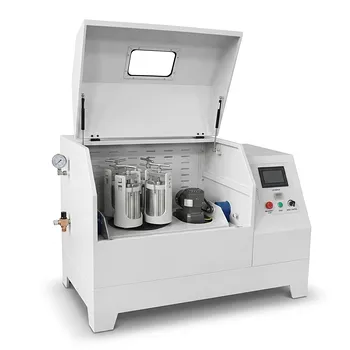
Vertical Production Planetary Ball Mill for High Throughput Powder Processing
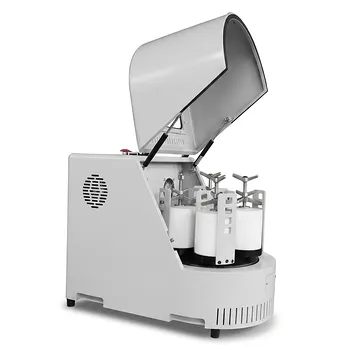
Vertical Semi Circular Planetary Ball Mill for Laboratory Precision Grinding
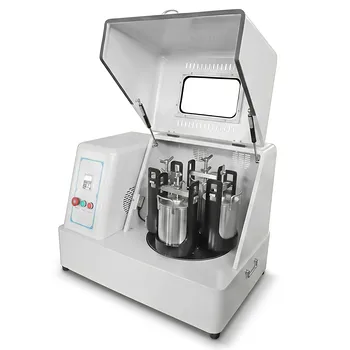
Vertical Square Planetary Ball Mill for Laboratory Sample Preparation and Nanoscale Grinding
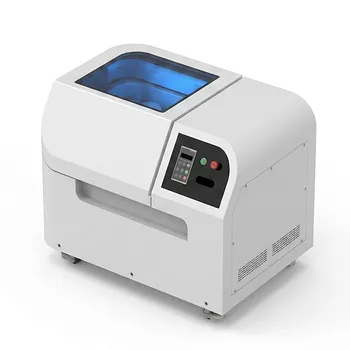
8L Planetary Ball Mill for Laboratory Grinding and Sample Preparation
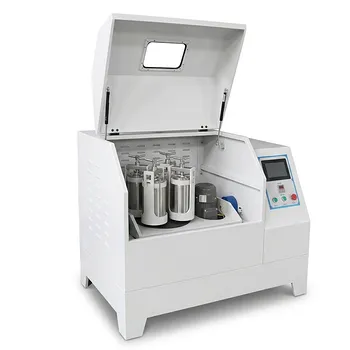
360° Rotating Omnidirectional Laboratory Planetary Ball Mill for Homogeneous Ultra-Fine Grinding and Mixing
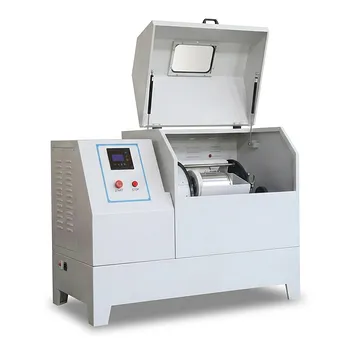
Heavy Duty Horizontal Planetary Ball Mill for Efficient Industrial Grinding and Sample Preparation
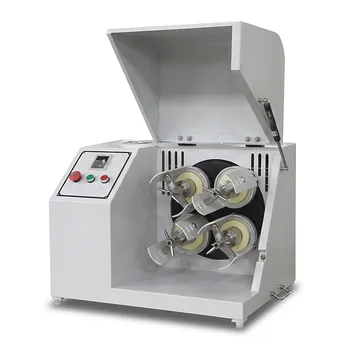
Horizontal Light Duty Planetary Ball Mill for Laboratory Sample Preparation
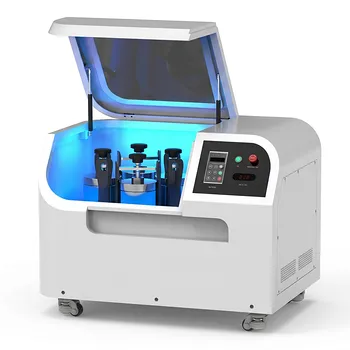
Planetary Ball Mill 12L
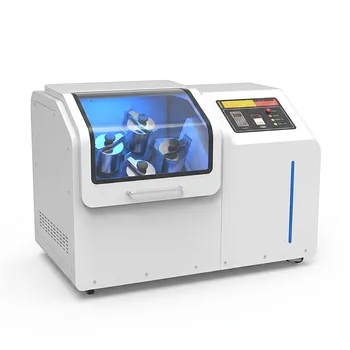
High Energy Omnidirectional Planetary Ball Mill 16L
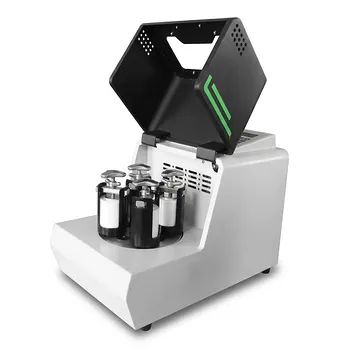
Miniature Planetary Ball Mill with Vacuum Grinding and High Efficiency for Laboratory Sample Preparation
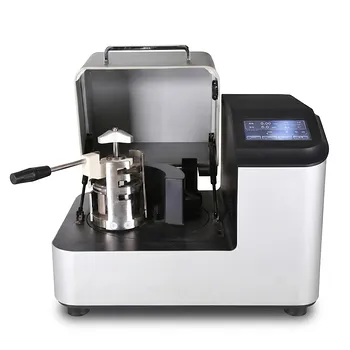
High Energy Laboratory Planetary Ball Mill for Nano Grinding and Material Science Sample Preparation
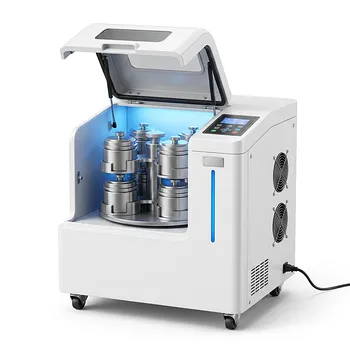
High Energy Omnidirectional Planetary Ball Mill 20L
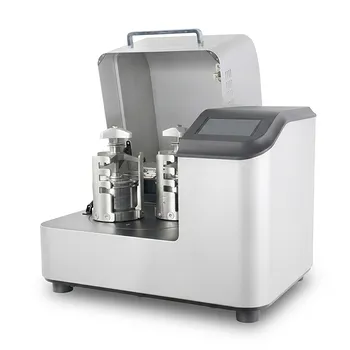
High Energy Planetary Ball Mill for Nano Scale Grinding and Mechanical Alloying
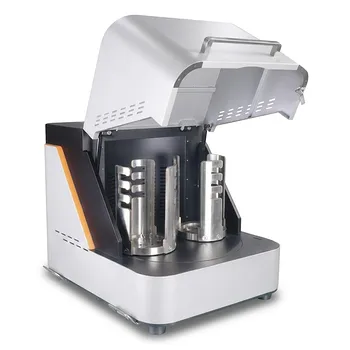
High Energy Laboratory Planetary Ball Mill for Nano Grinding and Colloidal Mixing of Hard and Brittle Materials
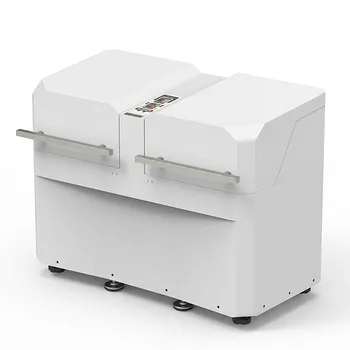
Dual Station Planetary Ball Mill 24L
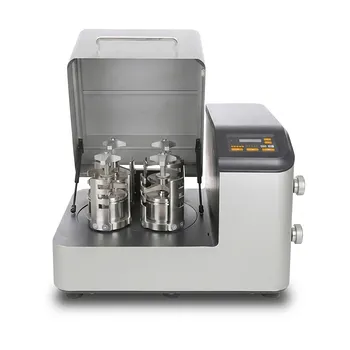
High Energy Planetary Ball Mill for Nano Scale Grinding and Colloidal Mixing in Material Science Research
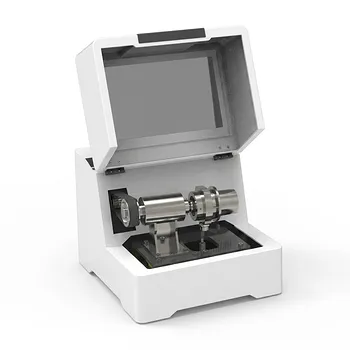
Single Tank High Energy Vibratory Ball Mill for Laboratory Grinding and Mixing
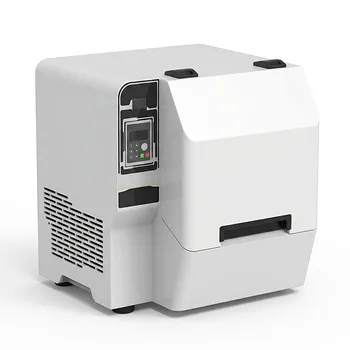
Nano High Energy Vibratory Ball Mill for Laboratory Sample Preparation
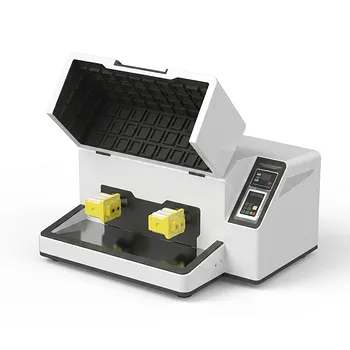
Multi-Platform Nanoscale High-Energy Vibratory Ball Mill