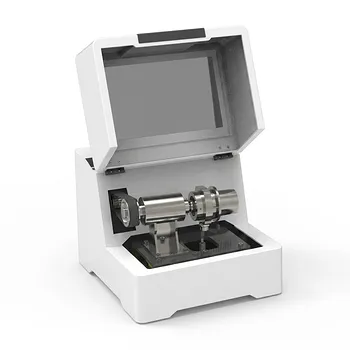
Why is a planetary ball mill required for nano-scale coconut shell particles? Achieve superior grinding precision.
Updated 4 months ago
A planetary ball mill is necessary because it generates the high-energy mechanical forces required to overcome the intermolecular bonds of coconut shell particles at a sub-micron level. Regular grinding equipment, which relies on gravity-based impacts, lacks the specific energy input to reduce fibrous biomass below the micron range. The planetary motion—combining jar rotation with sun disk revolution—creates intense shear and high-frequency impacts that are essential for achieving a true nano-scale distribution.
A planetary ball mill overcomes the "critical speed" limitations of standard mills by utilizing opposing rotational forces to exceed 1g of acceleration. This intense energy input is the only mechanical way to effectively refine tough, fibrous coconut shell material into the nano-scale particles required for advanced sintering, adsorption, and precision analytical applications.
The Energy Limitation of Conventional Equipment
The Problem of Critical Speed
Conventional tumbling mills rely primarily on gravity to drop grinding media onto the material. Once these mills reach a certain speed, centrifugal force eventually pins the media to the wall without falling, rendering the grinding process ineffective.
Exceeding 1g Acceleration
Planetary mills solve this by rotating the grinding jars in the opposite direction of the main sun disk. This dual-rotation generates forces many times greater than gravity, allowing for the massive energy transfer needed to produce sub-micron and nanoscale particles.
Mechanisms of Nano-Scale Refinement
High-Frequency Impact and Intense Shear
The planetary motion creates a high-energy environment where grinding media collide with particles at extremely high frequencies. This combination of multi-directional impact and friction is what finally breaks down micron-level powder into the 0.1 to 0.6 μm range.
Overcoming Intermolecular Forces
Refining particles to the nano-scale requires more than just crushing; it requires overcoming the chemical and structural forces holding the biomass together. Prolonged milling—often exceeding 16 hours—provides the sustained energy necessary to refine micron-level particles into the nano-scale.
Material-Specific Requirements for Coconut Shells
Disruption of Fibrous Biomass
Coconut shells are naturally tough and fibrous, designed by nature to resist mechanical breakdown. High-energy planetary milling is required to shatter these resilient structures, which significantly increases the specific surface area of the particles.
Enhancing Chemical Reactivity and Adsorption
Reducing particles to the nano-scale opens up previously occluded internal pore networks. This is critical for biochar production, as it substantially boosts the material's ability to adsorb contaminants like nitrate nitrogen.
Understanding the Trade-offs
Thermal Management and Media Wear
The high energy levels used in planetary milling generate significant heat, which can potentially affect the material properties if not monitored. Additionally, the intense friction causes wear on the grinding media, which could introduce trace contaminants from the jars or balls into the sample.
Processing Time and Energy Costs
Achieving nano-scale particles is an energy-intensive process that requires extended milling durations. While this produces superior particle fineness and uniformity, it represents a higher operational cost and longer lead time compared to simple micron-level crushing.
Making the Right Choice for Your Goal
Selecting the right milling strategy depends on your final particle size requirement and the intended application of the coconut shell material.
- If your primary focus is producing nano-scale biochar or pore-forming agents: Utilize a planetary ball mill for extended durations (up to 16 hours) to ensure the particles are refined enough to function correctly during sintering or adsorption.
- If your primary focus is standard chemical analysis or resin filling: A standard laboratory ball mill or shorter planetary cycles (30 minutes) will likely suffice to reach the micron range and increase surface area.
- If your primary focus is creating fine aggregates for concrete reinforcement: A high-efficiency planetary mill should be used to ensure uniform particle distribution and sub-millimeter consistency within the matrix.
Transforming resilient coconut shell biomass into a high-performance nano-material requires the unique, high-energy dynamics that only a planetary ball mill can provide.
Summary Table:
| Feature | Regular Grinding Equipment | Planetary Ball Mill |
|---|---|---|
| Motion Type | Gravity-based tumbling | Dual-rotation (Jar + Sun Disk) |
| Energy Input | Low (Limited by < 1g acceleration) | Ultra-high (Exceeds 1g acceleration) |
| Mechanism | Simple impact | High-frequency impact & intense shear |
| Material Suitability | Soft or brittle materials | Tough, fibrous biomass (Coconut shells) |
| Final Particle Size | Micron range (> 10 μm) | Nano-scale (0.1 - 0.6 μm) |
| Core Advantage | Low cost for coarse powders | Superior refinement & surface area |
Elevate Your Material Research with Precision Powder Solutions
Transforming resilient biomass like coconut shells into high-performance nano-materials requires the right technology. At our core, we provide complete laboratory sample preparation solutions tailored for material science.
Whether you need to shatter tough structures or achieve sub-micron consistency, our specialized equipment is designed to meet the most rigorous standards. Our extensive product line includes:
- Advanced Milling: Planetary ball mills, jet mills, sand/bead mills, and cryogenic grinders.
- Crushing & Sizing: Jaw/roll crushers and vibratory/air-jet sieve shakers.
- Mixing & Preparation: Powder mixers and defoaming mixers.
- Compaction Excellence: A full spectrum of hydraulic presses, including Cold/Warm Isostatic Presses (CIP/WIP), vacuum hot presses, and XRF pellet presses.
Ready to optimize your powder processing workflow? Our experts are here to help you select the ideal equipment for your specific applications, from adsorption studies to advanced sintering.
Contact us today to find your solution!
References
- Adedayo Deborah Adeyinka-Aderanti, Johnson Olumuyiwa Agunsoye. Effect of Process Parameters on the Properties of Clay-Based Composite Filter for Water Purification. DOI: 10.52968/72017829
Mentioned Products
- Vertical Semi Circular Planetary Ball Mill for Laboratory Precision Grinding
- High Energy Planetary Ball Mill for Nano Scale Grinding and Mechanical Alloying
- Vertical Production Planetary Ball Mill for High Throughput Powder Processing
- Heavy Duty Horizontal Planetary Ball Mill for Efficient Industrial Grinding and Sample Preparation
- 360° Rotating Omnidirectional Laboratory Planetary Ball Mill for Homogeneous Ultra-Fine Grinding and Mixing
People Also Ask
- What role does a planetary ball mill play in the synthesis of Li6PS5Cl (LPSCl)? Unlock High Ionic Conductivity
- Why is a planetary ball mill essential for SiBCN-rGO wet-spinning? Achieve Superior Dispersion and Spinnability
- Why is an intermittent grinding process required for perovskites in a planetary ball mill? Ensure Stability & Purity
- Why is a planetary ball mill required for PET micronization? Ensure Accurate Chemical Analysis of Reprocessed PET
- How does mechanized planetary ball milling compare to manual agate grinding? Optimize sulfide standard material precision.

Tech Team · PowderPreparation
Last updated on Jun 03, 2026
Related Products
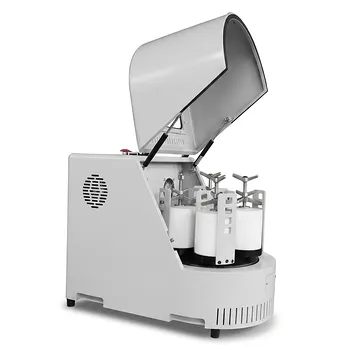
Vertical Semi Circular Planetary Ball Mill for Laboratory Precision Grinding

High Energy Planetary Ball Mill for Nano Scale Grinding and Mechanical Alloying

Vertical Production Planetary Ball Mill for High Throughput Powder Processing
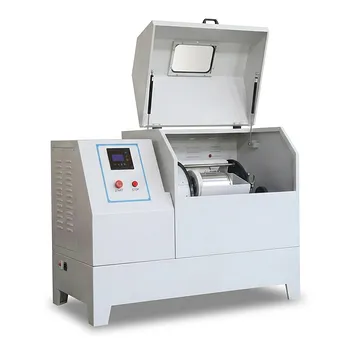
Heavy Duty Horizontal Planetary Ball Mill for Efficient Industrial Grinding and Sample Preparation
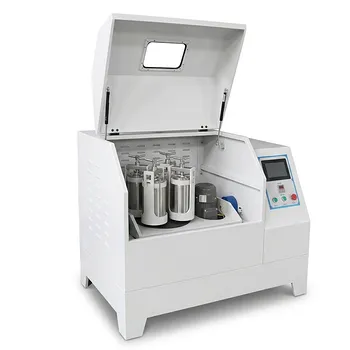
360° Rotating Omnidirectional Laboratory Planetary Ball Mill for Homogeneous Ultra-Fine Grinding and Mixing
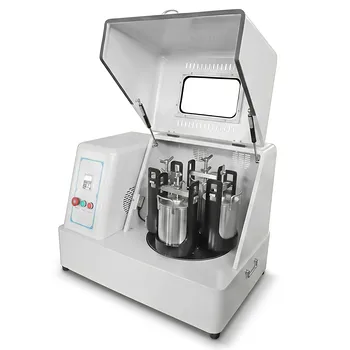
Vertical Square Planetary Ball Mill for Laboratory Sample Preparation and Nanoscale Grinding
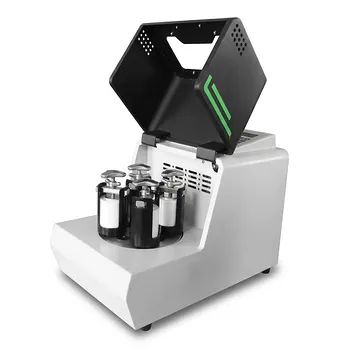
Miniature Planetary Ball Mill with Vacuum Grinding and High Efficiency for Laboratory Sample Preparation
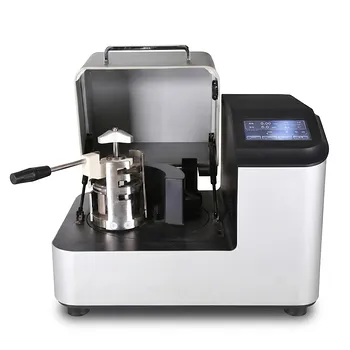
High Energy Laboratory Planetary Ball Mill for Nano Grinding and Material Science Sample Preparation

High Energy Omnidirectional Planetary Ball Mill 16L
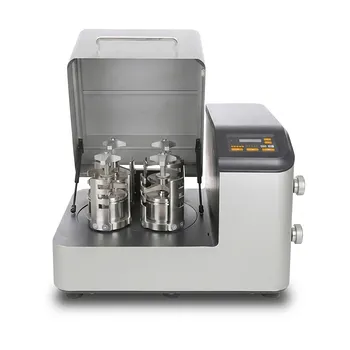
High Energy Planetary Ball Mill for Nano Scale Grinding and Colloidal Mixing in Material Science Research
High Energy Laboratory Planetary Ball Mill for Nano Grinding and Colloidal Mixing of Hard and Brittle Materials
High Energy Omnidirectional Planetary Ball Mill 20L
Horizontal Light Duty Planetary Ball Mill for Laboratory Sample Preparation

8L Planetary Ball Mill for Laboratory Grinding and Sample Preparation
Dual Station Planetary Ball Mill 24L
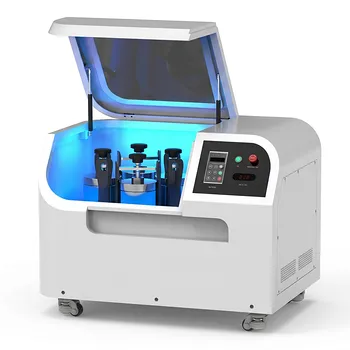
Planetary Ball Mill 12L

Nano High Energy Vibratory Ball Mill for Laboratory Sample Preparation

Multi-Platform Nanoscale High-Energy Vibratory Ball Mill

High Energy Hybrid Vibratory Ball Mill for Grinding Mixing and Cell Disruption