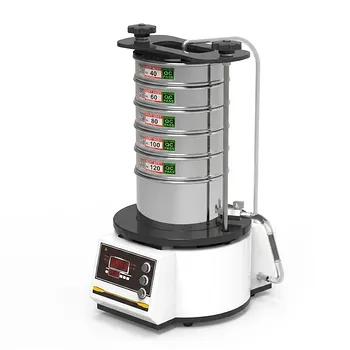
Why is a multi-stage laboratory sieve shaker necessary for the fine classification of groundnut shell fibers? Optimize PSD
Updated 5 months ago
A multi-stage laboratory sieve shaker is critical for groundnut shell fiber classification because it provides the precise control over particle size distribution (PSD) required to optimize the physical and chemical properties of the resulting material. By sorting fibers into specific fractions—typically ranging from 250 μm down to 63.5 μm—researchers can eliminate inconsistent variables, ensure uniform distribution in matrices, and accurately measure reaction kinetics.
The core value of a multi-stage shaker lies in its ability to transform heterogeneous groundnut waste into a standardized technical feedstock. This precision is the foundation for achieving predictable results in mechanical reinforcement, bio-adsorption, and chemical reactivity.
Enhancing Mechanical and Structural Performance
Optimizing Reinforcement in Composites
Precise classification allows for the optimization of reinforcement ratios in hybrid composites. By selecting specific size fractions, such as 177 μm or 149 μm, engineers can significantly improve the mechanical strength and processing flowability of the final polymer or resin.
Ensuring Matrix Uniformity
When groundnut shell ash is used as a cement additive, a multi-stage shaker ensures the material meets strict fineness requirements. This controlled fineness is essential for a uniform distribution within the concrete matrix, preventing structural weak points and ensuring a consistent pozzolanic reaction.
Standardizing Research and Experimental Data
Eliminating Particle Size Variables
In laboratory settings, inconsistent particle sizes can mask the true effects of experimental treatments. Using a vibratory shaker to isolate particles smaller than 270 mesh allows researchers to standardize samples, ensuring that subsequent surface modification analyses or specific surface area tests are not skewed by size discrepancies.
Quantifying Adsorption Kinetics
For applications in bio-filtration, particle size directly dictates film and pore diffusion. High-precision classification enables the quantitative study of how different sizes impact adsorption equilibrium and capacity, which is vital for scaling up industrial bio-filters.
Optimizing Industrial and Chemical Efficiency
Managing Mass Transfer and Pressure Drop
In industrial-scale bio-filters, the size of the groundnut shell particles determines the pressure drop across the system. Precise grading via multi-stage sieving allows for a balance between high surface area for mass transfer and the structural porosity needed to maintain efficient airflow or liquid flow.
Accelerating Pozzolanic Reactions
The rate of chemical reactions in treated groundnut shell ash is a function of its surface area. By using a mechanical shaker to achieve a specific micron-level fineness, the reaction rate between the ash and the cementitious components is maximized, leading to faster curing and higher material density.
Understanding the Trade-offs
The Risk of Sieve Blinding
Fine classification of organic fibers like groundnut shells often leads to sieve blinding, where particles become wedged in the mesh. This requires careful selection of vibration frequency and the potential use of anti-blinding aids to maintain accuracy.
Processing Time vs. Precision
While multi-stage shaking provides superior accuracy, it is a time-intensive process compared to simple bulk screening. Researchers must balance the need for extreme precision with the throughput requirements of the project, especially when processing large volumes of raw biomass.
How to Apply This to Your Project
Making the Right Choice for Your Goal
Depending on your specific application for groundnut shell fibers, your sieving strategy will change:
- If your primary focus is mechanical reinforcement: Prioritize the 149 μm to 250 μm range to ensure the best balance between fiber integrity and matrix flowability.
- If your primary focus is bio-adsorption or filtering: Use a full stack of sieves from 90 μm to 1000 μm to determine the exact point where surface area benefits are offset by excessive pressure drop.
- If your primary focus is chemical reactivity (ash/cement): Target the finest possible fractions (sub-63.5 μm) to maximize the surface area available for the pozzolanic reaction.
Precise classification via multi-stage sieving is the difference between treating groundnut shells as raw waste and utilizing them as a high-performance engineering material.
Summary Table:
| Application Focus | Target Size Range | Primary Benefit |
|---|---|---|
| Mechanical Reinforcement | 149 μm – 250 μm | Optimizes fiber integrity & polymer matrix flowability |
| Bio-adsorption/Filtering | 90 μm – 1000 μm | Balances surface area for mass transfer & pressure drop |
| Chemical Reactivity | < 63.5 μm | Maximizes pozzolanic reaction speed & material density |
| Research Standardization | Sub-270 mesh | Eliminates size variables for accurate kinetic analysis |
Elevate Your Material Science Research with Precision Equipment
Transform raw biomass into high-performance engineering materials with our professional laboratory solutions. We provide complete laboratory sample preparation solutions tailored for material science, specializing in high-precision powder processing and compaction.
Whether you need to optimize groundnut shell fibers or develop advanced composites, our extensive product line has you covered:
- Particle Classification: Vibratory and air-jet sieve shakers with a full range of test sieves.
- Size Reduction: Jaw/roll crushers, planetary ball mills, jet mills, and liquid nitrogen cryogenic grinders.
- Mixing & Compaction: Powder mixers, defoaming mixers, and a full spectrum of hydraulic presses, including Cold/Warm Isostatic Presses (CIP/WIP), hot presses, and vacuum hot presses.
Ready to achieve predictable, standardized results? Contact our technical experts today to find the perfect equipment configuration for your lab!
References
- Farhana Afroz, M. A. Gafur. Synthesis of Hybrid Composites from Bio-Based Fillers: Chicken Feather, Groundnut Shell, Sawdust. DOI: 10.37934/mjcsm.13.1.126135
Mentioned Products
- High Frequency Cabinet Type Three-Dimensional Rotary Vibrating Sieve Shaker for Dry Sieving and Particle Classification
- Small Laboratory Vibratory Sieve Shaker for Powder Gradation and Particle Size Analysis
- 三维电磁微量振动筛分仪
- Laboratory Vibratory Test Sieve Shaker for Precision Particle Size Analysis and Powder Grading
- Small Laboratory Vibrating Sieve Shaker for Precise Particle Size Analysis
People Also Ask
- Why are vibrating sieve shakers used with standard test sieves? Ensure Precise Grading for Recycled Aggregates
- What is the function of high-frequency vibratory sieve shakers in AMC powders? Master Particle Grading & PSD Control
- Why is it essential to use a vibrating sieve shaker for the final grading of dietary fiber products? Master Quality.
- What is the role of a high-frequency vibratory sieve shaker in Cold Mix asphalt design? Optimize RAP Gradation Accuracy
- Why is a high-frequency vibratory sieve shaker essential for Rice Husk Ash? Optimize Your Mineral Admixture Quality

Tech Team · PowderPreparation
Last updated on May 14, 2026
Related Products
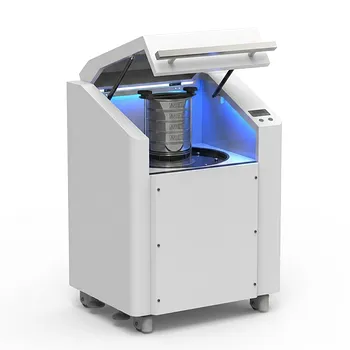
High Frequency Cabinet Type Three-Dimensional Rotary Vibrating Sieve Shaker for Dry Sieving and Particle Classification
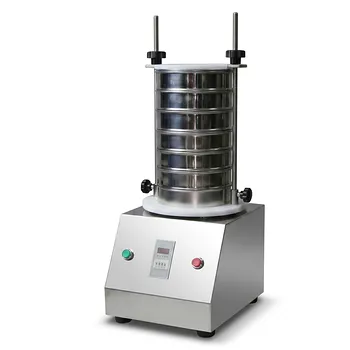
Small Laboratory Vibratory Sieve Shaker for Powder Gradation and Particle Size Analysis
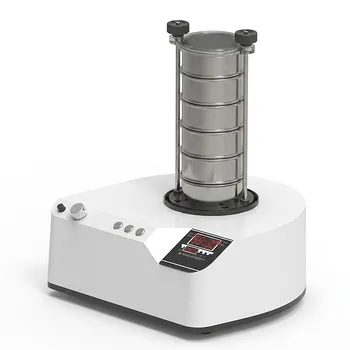
三维电磁微量振动筛分仪
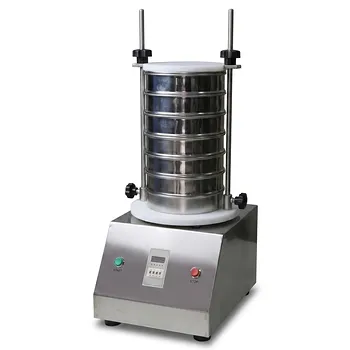
Laboratory Vibratory Test Sieve Shaker for Precision Particle Size Analysis and Powder Grading
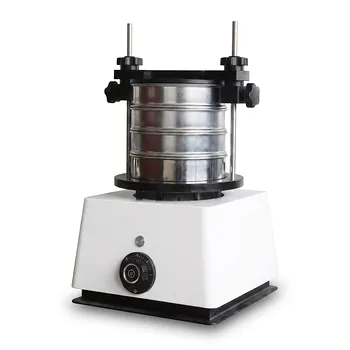
Small Laboratory Vibrating Sieve Shaker for Precise Particle Size Analysis
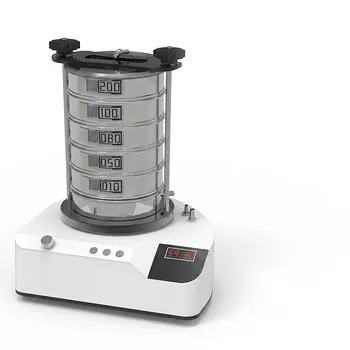
Heavy Duty Dry Three Dimensional Vibratory Sieve Shaker for Particle Separation
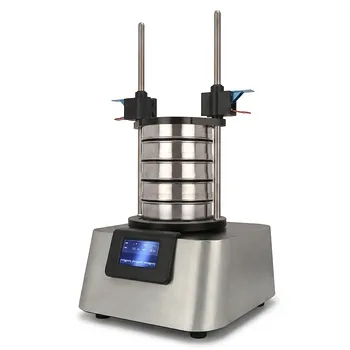
Vibratory Sieve Shaker Electromagnetic 3D Motion Powder Particle Size Analyzer for Dry and Wet Sieving
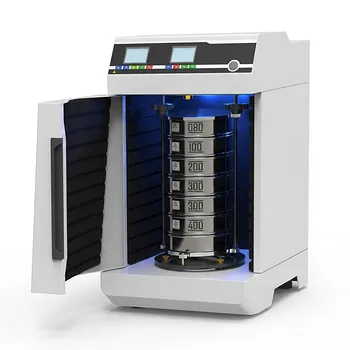
Laboratory Dry and Wet Three Dimensional Vibratory Sieve Shaker for Particle Analysis
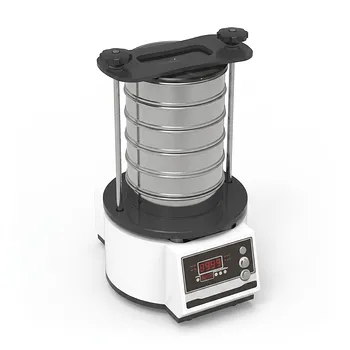
Tapping Oscillating Sieve Shaker for Dry and Wet Particle Size Analysis
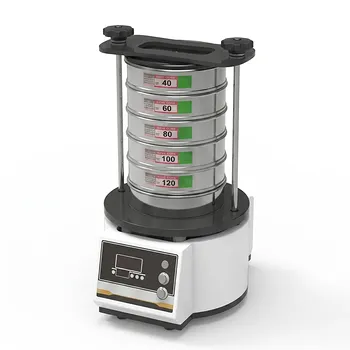
Dry Three Dimensional Vibratory Sieve Shaker
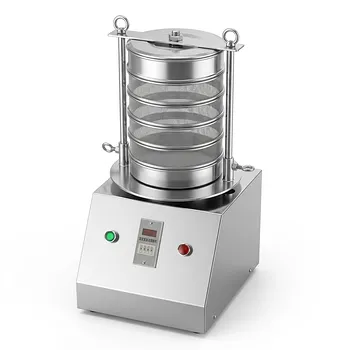
Stainless Steel Laboratory Vibratory Test Sieve Shaker