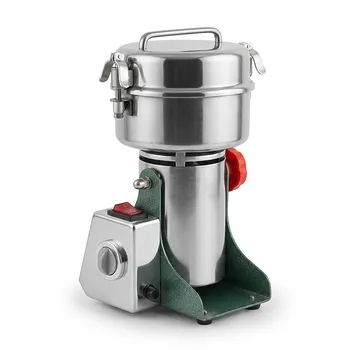
Why is a high-frequency vibratory sieve shaker essential for Rice Husk Ash? Optimize Your Mineral Admixture Quality
Updated 4 months ago
High-frequency vibratory sieve shakers are critical for processing Rice Husk Ash (RHA) because they ensure the removal of oversized, unburned, or non-uniform particles. By utilizing precise meshes, such as the standard 200-mesh (75-micron) sieve, these machines provide the homogeneity necessary for RHA to function effectively as a high-performance mineral admixture. This rigorous screening process prevents the formation of structural weak points and guarantees consistent strength and anti-shrinkage properties in the final concrete or composite material.
A high-frequency sieve shaker transforms raw, inconsistent Rice Husk Ash into a predictable mineral admixture by providing precise particle size control. This uniformity is the foundation for maximizing chemical reactivity and ensuring the structural integrity of the resulting material.
Eliminating Structural Weak Points
Removal of Coarse and Unburned Material
Raw Rice Husk Ash often contains large, unburned particles or non-uniformly ground fragments that do not possess pozzolanic properties. If left in the mix, these oversized particles act as impurities, creating stress concentrations and internal voids within the concrete matrix.
Ensuring Consistent Mechanical Strength
By filtering out particles that do not meet the 75-micron threshold, the sieve shaker ensures that the admixture remains highly homogeneous. This uniformity is essential for achieving predictable compressive strength and preventing the localized failures often caused by inconsistent material grading.
Optimizing Pozzolanic Reactivity
Maximizing Specific Surface Area
The performance of RHA as a mineral admixture depends heavily on its Specific Surface Area (SSA). High-frequency vibration allows for the extraction of fine particles (often as small as 6.0 µm) which significantly increases the surface area available for chemical reactions.
Enhancing Microstructural Density
Fine-graded RHA acts as a physical filler, occupying the microscopic pores between cement grains. This "filler effect" works in tandem with the chemical reaction to create a denser, less permeable microstructure, which is vital for anti-shrinkage performance.
Stabilizing Chemical Reactions
In applications involving chemical dissolution, such as reactions with potassium hydroxide (KOH), uniform particle size is mandatory. Consistent sizing ensures that the contact area between the RHA powder and the liquid phase remains stable, leading to reproducible results and controlled silicon dissolution.
Improving Composite Uniformity
Preventing Particle Agglomeration
Fine powders like RHA have a natural tendency to clump or "agglomerate" due to interparticle forces. The high-frequency mechanical energy of the sieve shaker breaks these bonds during the grading process, ensuring that the particles remain discrete and easy to disperse in a mix.
Improving Interfacial Bonding
In advanced composites, such as aluminum alloy matrices or porous ceramics, precise particle distribution improves the interfacial bonding strength. When particles are uniformly sized, they integrate more effectively with the surrounding matrix, leading to superior microstructural uniformity.
Understanding the Trade-offs
Mesh Blinding and Maintenance
While high-frequency vibration is efficient, extremely fine RHA particles can become trapped in the mesh, a phenomenon known as blinding. Frequent cleaning and the use of de-blinding aids (like plastic balls or ultrasonic attachments) are often necessary to maintain sieving accuracy.
Limitations of Dry Sieving
Dry sieving with a vibratory shaker is highly effective down to approximately 45–75 microns. For RHA applications requiring even finer sub-micron particles, dry sieving may reach a limit where air-jet sieving or wet-sieving methods become more appropriate to prevent particle "floating" and ensure total separation.
How to Apply This to Your Project
Making the Right Choice for Your Goal
- If your primary focus is Concrete Durability: Utilize a 200-mesh (75-micron) standard test sieve to ensure the removal of all coarse impurities that could cause internal cracking.
- If your primary focus is Chemical Reactivity: Aim for a tighter grading (e.g., extracting particles in the 6.0 µm range) to maximize the specific surface area and pozzolanic activity.
- If your primary focus is Porous Ceramics: Use multi-layer sieves to classify RHA into specific ranges (such as 125 µm to 250 µm) to precisely control internal pore distribution and physical density.
Precise particle size control via high-frequency vibration is the most effective way to unlock the full potential of Rice Husk Ash as a high-value mineral admixture.
Summary Table:
| Key Aspect | Processing Benefit | Material Outcome |
|---|---|---|
| Particle Grading | Removes >75µm unburned/coarse material | Prevents structural voids and weak points |
| Surface Area (SSA) | Extracts fine particles (down to 6.0 µm) | Maximizes chemical and pozzolanic reactivity |
| Agglomeration | High-frequency energy breaks particle bonds | Ensures uniform dispersion in composites |
| Microstructure | Facilitates the "filler effect" | Creates denser, less permeable concrete |
| Chemical Stability | Maintains stable particle-to-liquid contact | Produces reproducible silicon dissolution |
Elevate Your Material Research with Precision Processing
Unlock the full potential of Rice Husk Ash and other advanced mineral admixtures with our industry-leading laboratory solutions. We provide complete laboratory sample preparation solutions for material science, specializing in high-performance powder processing and compaction equipment.
From achieving the perfect particle size with our vibratory and air-jet sieve shakers to advanced material synthesis using our planetary ball mills, jet mills, and crushers, we empower your lab to produce consistent, high-quality results. Our expertise extends to a full spectrum of hydraulic presses, including Cold/Warm Isostatic Presses (CIP/WIP), vacuum hot presses, and XRF pellet presses, ensuring your materials meet the most rigorous standards.
Ready to enhance your lab's efficiency and material performance? Contact us today to discuss your project requirements!
References
- Muhammad Nasir Amin, Tayyaba Bibi. Pozzolanic Reactivity and the Influence of Rice Husk Ash on Early-Age Autogenous Shrinkage of Concrete. DOI: 10.3389/fmats.2019.00150
Mentioned Products
- High Frequency Wet Three-Dimensional Vibrating Sieve Shaker for Dry and Wet Particle Size Analysis
- High Frequency Cabinet Type Three-Dimensional Rotary Vibrating Sieve Shaker for Dry Sieving and Particle Classification
- 三维电磁微量振动筛分仪
- Vibratory Sieve Shaker Electromagnetic 3D Motion Powder Particle Size Analyzer for Dry and Wet Sieving
- Heavy Duty Dry Three Dimensional Vibratory Sieve Shaker for Particle Separation
People Also Ask
- Why are vibrating sieve shakers used with standard test sieves? Ensure Precise Grading for Recycled Aggregates
- What is the function of high-frequency vibratory sieve shakers in AMC powders? Master Particle Grading & PSD Control
- How does a vibratory sieve shaker contribute to optimizing the performance of activated carbon? Enhance Adsorption Precision
- Why is it essential to use a vibrating sieve shaker for the final grading of dietary fiber products? Master Quality.
- What is the role of a high-frequency vibratory sieve shaker in Cold Mix asphalt design? Optimize RAP Gradation Accuracy

Tech Team · PowderPreparation
Last updated on Jun 03, 2026
Related Products
High Frequency Wet Three-Dimensional Vibrating Sieve Shaker for Dry and Wet Particle Size Analysis
High Frequency Cabinet Type Three-Dimensional Rotary Vibrating Sieve Shaker for Dry Sieving and Particle Classification
三维电磁微量振动筛分仪
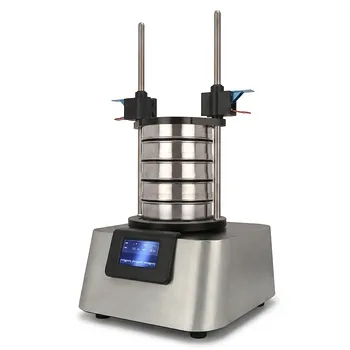
Vibratory Sieve Shaker Electromagnetic 3D Motion Powder Particle Size Analyzer for Dry and Wet Sieving
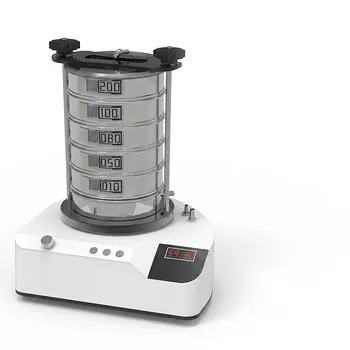
Heavy Duty Dry Three Dimensional Vibratory Sieve Shaker for Particle Separation
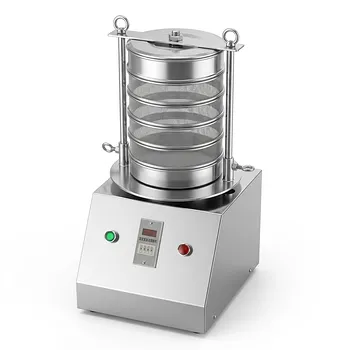
Stainless Steel Laboratory Vibratory Test Sieve Shaker
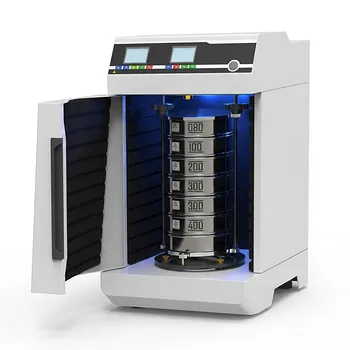
Laboratory Dry and Wet Three Dimensional Vibratory Sieve Shaker for Particle Analysis
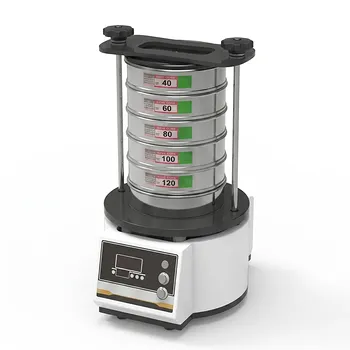
Dry Three Dimensional Vibratory Sieve Shaker
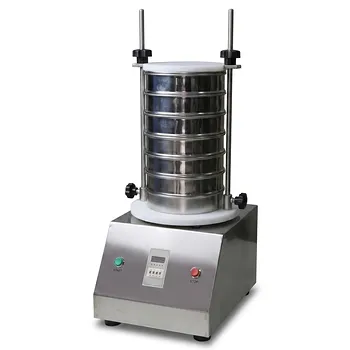
Laboratory Vibratory Test Sieve Shaker for Precision Particle Size Analysis and Powder Grading
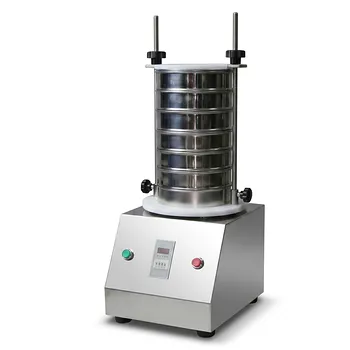
Small Laboratory Vibratory Sieve Shaker for Powder Gradation and Particle Size Analysis
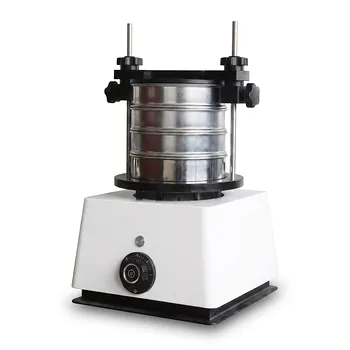
Small Laboratory Vibrating Sieve Shaker for Precise Particle Size Analysis
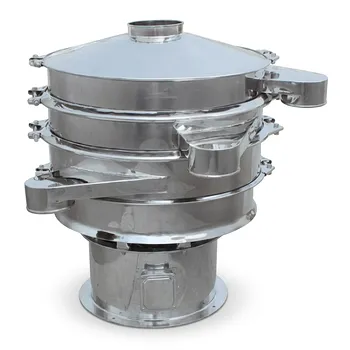
Stainless Steel Rotary Vibrating Sieve High Precision Circular Vibratory Separator Industrial Powder Grading Machine Multi Layer Sifting Equipment
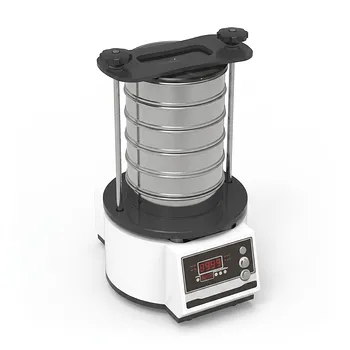
Tapping Oscillating Sieve Shaker for Dry and Wet Particle Size Analysis
High Speed Vibratory Disc Mill for Spectral Analysis Sample Preparation and Rapid Powder Grinding
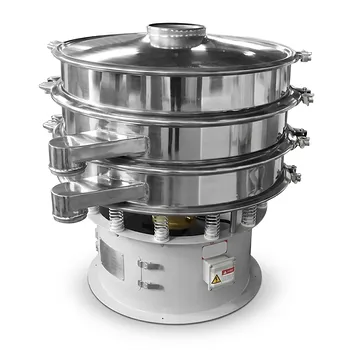
Three Dimensional Rotary Vibrating Sieve
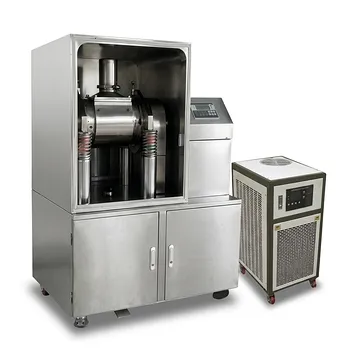
Small Vibrating Ultrafine Grinder for Traditional Chinese Medicine
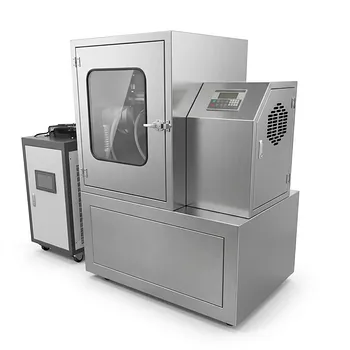
Vibratory Superfine Grinder for Ultra Fine Laboratory Powder Milling
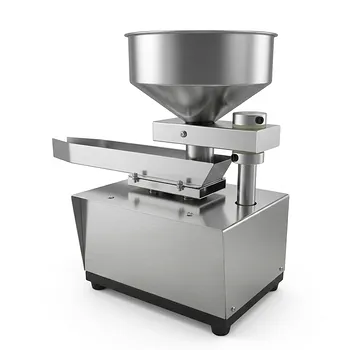
Automatic Vibrating Powder Feeder for Laboratory Material Processing Precision Vibratory Hopper Feeder for Granular and Powder Material Handling Industrial Grade Vibrating Tray Feeder for Consistent Material Sample Preparation
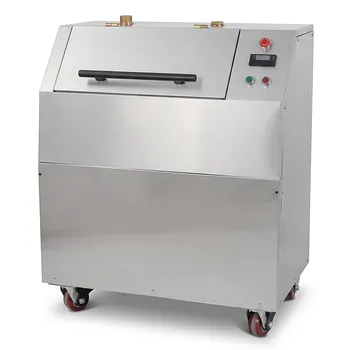
Vibratory Disc Mill for Rapid Fine Grinding and High Throughput Sample Preparation of Hard and Brittle Materials