What is the function of high-frequency vibratory sieve shakers in AMC powders? Master Particle Grading & PSD Control
Updated 5 months ago
High-frequency vibratory sieve shakers serve as the primary mechanism for the precise physical classification and grading of reinforcement particles within aluminum matrix composites (AMCs). By utilizing multi-layered, high-precision stainless steel mesh, these machines isolate specific particle size fractions—often ranging from 20μm to 125μm—to ensure that the reinforcement phase is uniform, free of oversized impurities, and optimized for integration into the aluminum alloy matrix.
The core function of high-frequency vibratory sieving is to establish a strict particle size distribution that prevents agglomeration and ensures the stable mechanical properties and wear resistance of the final composite material.
Precise Particle Size Distribution (PSD) Control
Micron-Level Grading Accuracy
High-frequency shakers use standardized mesh sizes to categorize powders like fly ash, silicon carbide (SiC), and alumina (Al2O3) into narrow, predefined ranges. This process allows manufacturers to isolate particles that meet specific requirements, such as those less than or equal to 75μm, which are critical for high-performance applications. By configuring specific vibration frequencies, the equipment achieves a level of accuracy that manual or low-frequency methods cannot replicate.
Multi-Layered Fractionation
The equipment often employs multiple sieve layers simultaneously to sort raw materials into several distinct categories, such as 40–75 µm, 76–100 µm, and 101–125 µm. This allows researchers and engineers to investigate how different inoculant particle sizes influence the microstructural refinement of the aluminum matrix. Physical classification ensures that each batch of composite material has a predictable and repeatable reinforcement profile.
Enhancing Composite Microstructure and Performance
Prevention of Particle Agglomeration
In the preparation of AMCs, reinforcement particles have a natural tendency to cluster together, particularly within the melt. By strictly controlling the upper limit of the particle size (e.g., 60-90μm), vibratory sieving helps ensure a uniform distribution of the reinforcement throughout the matrix. Removing secondary agglomerates before the mixing stage is essential to prevent structural weak points in the finished part.
Stability of Mechanical Properties
The consistency of the reinforcement phase directly dictates the mechanical properties and wear resistance of the composite. Consistent particle sizes ensure that the reinforcement is not concentrated in one area, which maintains the integrity of the material during mass production. This is vital for meeting the rigorous standards required in industries like aerospace and automotive manufacturing.
Operational Integrity in Downstream Processing
Removal of Impurities and Abnormal Agglomerates
Sieving acts as a final quality control step after mixing but before granulation or pressing. Using high-mesh test sieves (such as 100 mesh or 325 mesh) effectively removes large-particle impurities that could cause defects in the "green body" of the composite. This ensures a high-density, defect-free structure during the sintering or extrusion phases.
Optimization for 3D Printing and Extrusion
For composites used in additive manufacturing, particle size consistency is a prerequisite for equipment functionality. Vibratory sieving ensures that raw materials do not contain coarse particles that could clog 3D printing nozzles or cause fluctuations in filament diameter. By maintaining a strict upper size limit (e.g., 63μm), the shaker guarantees the flowability and reliability of the raw material.
Understanding the Trade-offs
Mesh Blinding and Maintenance
While high-frequency vibration helps clear the mesh, very fine powders (micron-sized) can still lead to mesh blinding, where particles become lodged in the openings. This requires regular maintenance and the potential use of ultrasonic de-blinding systems to maintain throughput. Over-sieving can also lead to material attrition, where the particles themselves are damaged or reduced in size due to prolonged mechanical stress.
Throughput vs. Precision
There is an inherent trade-off between the speed of classification and the precision of the cut. Higher vibration frequencies improve accuracy for fine powders but may reduce the volume of material processed per hour compared to coarse industrial scalping. Selecting the wrong mesh tension or frequency can lead to incomplete classification, where undersized particles remain in the coarse fraction.
Making the Right Choice for Your Goal
How to Apply This to Your Project
- If your primary focus is microstructural refinement: Utilize multi-layered sieving to isolate narrow fractions (e.g., 20-40μm) to study the exact impact of particle size on grain growth.
- If your primary focus is preventing manufacturing defects: Implement a final sieving stage immediately before pressing to remove secondary agglomerates and large-scale impurities.
- If your primary focus is 3D printing or extrusion: Use a high-mesh sieve (e.g., 325 mesh) to establish a strict maximum particle diameter to prevent nozzle clogging.
- If your primary focus is mass production stability: Prioritize high-precision stainless steel standard sieves to ensure that reinforcement distribution remains identical across different production batches.
Precise high-frequency sieving is the foundational step that transforms raw reinforcement powders into engineered materials capable of delivering superior mechanical performance.
Summary Table:
| Key Function | Benefit to AMC Production | Typical Particle Range |
|---|---|---|
| PSD Control | Ensures consistent mechanical properties and wear resistance. | 20μm – 125μm |
| Agglomeration Prevention | Eliminates clustering for uniform reinforcement distribution. | < 75μm fractions |
| Impurity Removal | Clears large-particle defects before sintering or extrusion. | 100 – 325 Mesh |
| Process Optimization | Prevents nozzle clogging in 3D printing and extrusion. | < 63μm (High-mesh) |
Elevate Your Material Research with Professional Sample Prep Solutions
At our company, we provide complete laboratory sample preparation solutions tailored for material science and powder processing. Whether you are developing advanced aluminum matrix composites or high-performance ceramics, our specialized equipment ensures the precision and repeatability your research demands.
Our extensive product line supports your entire workflow:
- Powder Processing: High-efficiency crushers (jaw/roll), liquid nitrogen cryogenic grinders, and advanced mills (planetary ball, jet, sand/bead, disc, rotor).
- Classification & Mixing: High-precision vibratory and air-jet sieve shakers with standardized meshes, alongside powder and defoaming mixers for perfect homogeneity.
- Compaction & Sintering: A full spectrum of hydraulic presses, including Cold/Warm Isostatic Presses (CIP/WIP), XRF pellet presses, and vacuum hot presses.
Ready to optimize your powder classification and material performance? Contact our experts today to find the perfect equipment for your lab!
References
- Stella Isioma Monye, Lukeman Lawal. Corrosion and Tribology- Interaction Between Wear and Environmental Degradations. DOI: 10.37933/nipes/7.4.2025.si499
Mentioned Products
- High Frequency Wet Three-Dimensional Vibrating Sieve Shaker for Dry and Wet Particle Size Analysis
- High Frequency Cabinet Type Three-Dimensional Rotary Vibrating Sieve Shaker for Dry Sieving and Particle Classification
- 三维电磁微量振动筛分仪
- Vibratory Sieve Shaker Electromagnetic 3D Motion Powder Particle Size Analyzer for Dry and Wet Sieving
- Heavy Duty Dry Three Dimensional Vibratory Sieve Shaker for Particle Separation
People Also Ask
- Why are vibrating sieve shakers used with standard test sieves? Ensure Precise Grading for Recycled Aggregates
- How does a vibratory sieve shaker contribute to optimizing the performance of activated carbon? Enhance Adsorption Precision
- Why is it essential to use a vibrating sieve shaker for the final grading of dietary fiber products? Master Quality.
- What is the role of a high-frequency vibratory sieve shaker in Cold Mix asphalt design? Optimize RAP Gradation Accuracy
- Why use high-frequency vibratory sieve shakers for graphite nucleation research? Ensure Particle Size & Data Precision

Tech Team · PowderPreparation
Last updated on May 14, 2026
Related Products
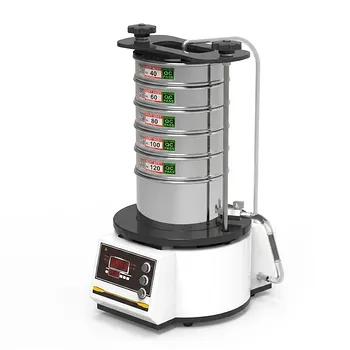
High Frequency Wet Three-Dimensional Vibrating Sieve Shaker for Dry and Wet Particle Size Analysis
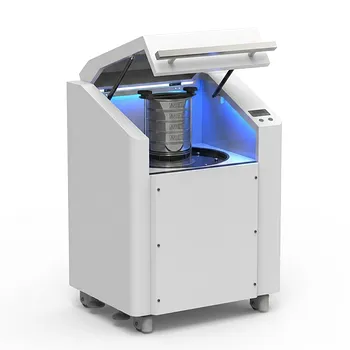
High Frequency Cabinet Type Three-Dimensional Rotary Vibrating Sieve Shaker for Dry Sieving and Particle Classification
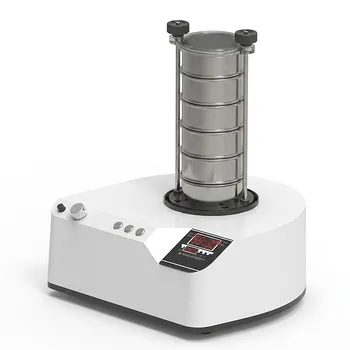
三维电磁微量振动筛分仪
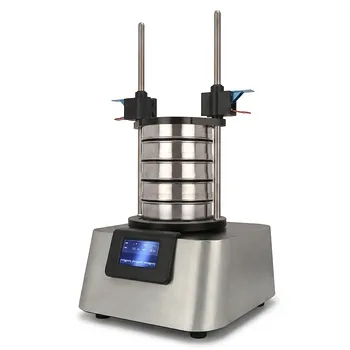
Vibratory Sieve Shaker Electromagnetic 3D Motion Powder Particle Size Analyzer for Dry and Wet Sieving
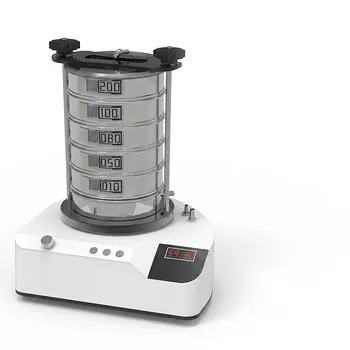
Heavy Duty Dry Three Dimensional Vibratory Sieve Shaker for Particle Separation

Dry Three Dimensional Vibratory Sieve Shaker
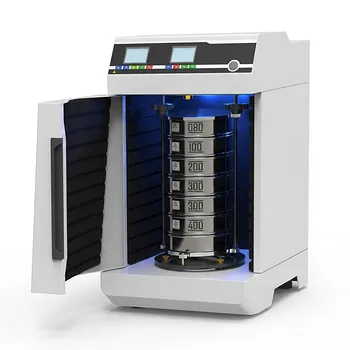
Laboratory Dry and Wet Three Dimensional Vibratory Sieve Shaker for Particle Analysis
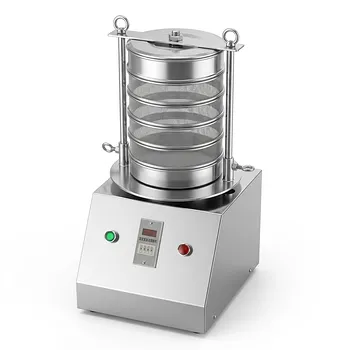
Stainless Steel Laboratory Vibratory Test Sieve Shaker

Small Laboratory Vibratory Sieve Shaker for Powder Gradation and Particle Size Analysis

Small Laboratory Vibrating Sieve Shaker for Precise Particle Size Analysis

Laboratory Vibratory Test Sieve Shaker for Precision Particle Size Analysis and Powder Grading
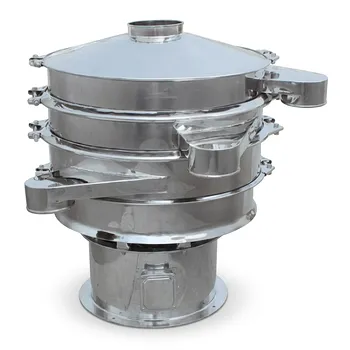
Stainless Steel Rotary Vibrating Sieve High Precision Circular Vibratory Separator Industrial Powder Grading Machine Multi Layer Sifting Equipment
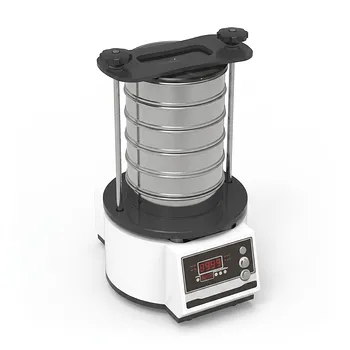
Tapping Oscillating Sieve Shaker for Dry and Wet Particle Size Analysis
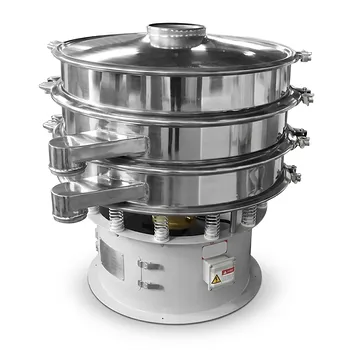
Three Dimensional Rotary Vibrating Sieve
High Speed Vibratory Disc Mill for Spectral Analysis Sample Preparation and Rapid Powder Grinding
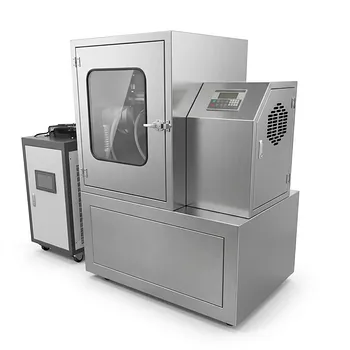
Vibratory Superfine Grinder for Ultra Fine Laboratory Powder Milling
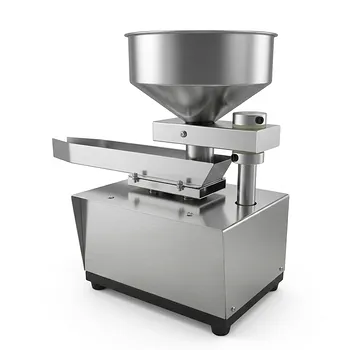
Automatic Vibrating Powder Feeder for Laboratory Material Processing Precision Vibratory Hopper Feeder for Granular and Powder Material Handling Industrial Grade Vibrating Tray Feeder for Consistent Material Sample Preparation
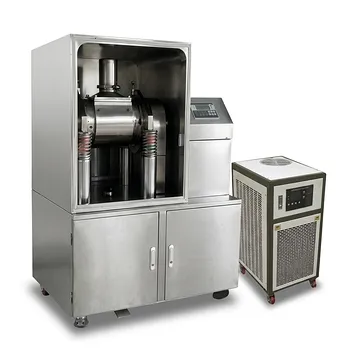
Small Vibrating Ultrafine Grinder for Traditional Chinese Medicine
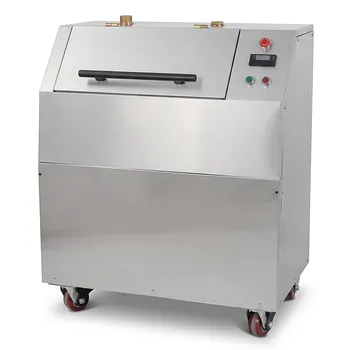
Vibratory Disc Mill for Rapid Fine Grinding and High Throughput Sample Preparation of Hard and Brittle Materials