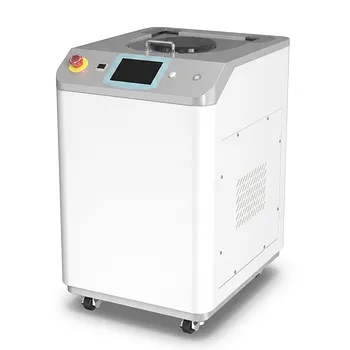
Why is a media-free and ball-free V-type powder mixer used for Al2O3/Inconel 718? Preserve Purity & Shape
Updated 5 months ago
A media-free and ball-free V-type powder mixer is specifically chosen to ensure high chemical purity and to preserve the spherical integrity of the Inconel 718 powder. This equipment uses multi-dimensional tumbling to distribute nano-alumina ($\text{Al}_2\text{O}_3$) particles uniformly across the metal surfaces without the use of grinding media, which would otherwise introduce contaminants and deform the particles. By maintaining the powder’s original shape and composition, the process significantly enhances the flowability and consistency required for high-performance additive manufacturing.
The core advantage of using a V-type mixer for $\text{Al}_2\text{O}_3$/Inconel 718 composites is the ability to achieve a homogeneous distribution of nanoparticles while avoiding the structural damage and impurity contamination inherent in high-energy ball milling. This balance is critical for maintaining the material properties necessary for subsequent laser-based processing.
Preventing Contamination and Preserving Particle Integrity
The Elimination of Grinding Media
Standard milling processes rely on ceramic or metallic balls to blend materials, but these media inevitably wear down over time. In the preparation of $\text{Al}_2\text{O}_3$/Inconel 718, a "media-free" approach ensures that no foreign debris from the grinding tools enters the composite. This maintains the precise chemical signature of the nickel-based superalloy, which is vital for its high-temperature performance.
Maintaining Spherical Morphology
Inconel 718 powders used in additive manufacturing are typically spherical to ensure optimal flow and packing density. A "ball-free" V-type mixer uses low-energy gravity diffusion rather than high-impact collisions. This ensures the metal powders do not become flattened or misshapen, preserving the "rollability" of the powder during the 3D printing recoating process.
The Mechanism of Uniform Nanoparticle Adhesion
Multi-Dimensional Tumbling and Shearing
The V-type mixer operates by rotating a V-shaped vessel, which forces the powder to split and recombine repeatedly. This action creates a combination of convection, diffusion, and shear forces. These movements are gentle enough to prevent particle fracturing but energetic enough to promote the microscopic distribution of nano-alumina.
Surface Coating through Geometric Dilution
The mixer utilizes geometric dilution to ensure that a small volume of nanoparticles is evenly spread across a much larger volume of metal powder. As the powders tumble, the nano-alumina particles adhere to the surface of the larger Inconel 718 spheres. This "tacking" effect creates a composite powder where every metal grain carries a uniform load of reinforcement phase.
Enhancing Powder Flowability
The uniform distribution of nanoparticles on the surface of the metal spheres can actually reduce inter-particle friction. By preventing the formation of large clusters (agglomerates) of nano-alumina, the V-type mixer ensures the final composite powder flows smoothly. This consistency is essential for achieving a stable melt pool during laser cladding or selective laser melting.
Understanding the Trade-offs and Limitations
Processing Time vs. Energy Input
Because V-type mixing is a low-energy process, it often requires longer processing times—sometimes up to 27 hours—to achieve true microscopic homogeneity. It lacks the "mechanical alloying" capability of high-energy ball milling, meaning it cannot force particles into a solid solution. It is strictly a blending and surface-adhesion tool.
De-agglomeration Challenges
While excellent at distributing loose powders, V-type mixers may struggle to break apart pre-existing, tightly bound clusters of nanoparticles. If the starting $\text{Al}_2\text{O}_3$ is heavily clumped, the mixer might distribute the clumps rather than individual particles. In such cases, a specialized pre-treatment of the nanoparticles may be necessary before they enter the V-mixer.
Making the Right Choice for Your Goal
When deciding on a mixing strategy for metal-matrix nanocomposites, your specific production requirements should dictate the equipment used.
- If your primary focus is Chemical Purity: A media-free V-type mixer is the optimal choice to eliminate wear-related contamination.
- If your primary focus is Additive Manufacturing Flowability: Use a V-type mixer to preserve the spherical morphology of the gas-atomized metal powders.
- If your primary focus is Mechanical Alloying or Grain Refinement: You may need to accept the risks of ball milling, as a V-type mixer does not provide enough energy to alter internal grain structures.
- If your primary focus is Large-Scale Consistency: The V-type mixer’s predictable gravity-driven mechanism provides excellent batch-to-batch repeatability for complex powder blends.
By prioritizing the physical and chemical integrity of the base alloy, the V-type mixer establishes the necessary foundation for high-quality, defect-free nanocomposite parts.
Summary Table:
| Key Feature | Functional Benefit | Impact on Al2O3/Inconel 718 |
|---|---|---|
| Media-Free Design | Prevents wear-related debris | Ensures high chemical purity of the superalloy |
| Ball-Free Tumbling | Low-energy gravity diffusion | Preserves spherical shape for better flowability |
| Multi-Dimensional Motion | Uniform nanoparticle coating | Creates a homogeneous composite without clumps |
| Gentle Shearing | Surface adhesion vs. fracturing | Maintains integrity for additive manufacturing |
Elevate Your Material Research with Precision Powder Solutions
Achieving the perfect balance of purity and homogeneity in nanocomposites requires more than just mixing—it requires the right technology. At [Your Brand Name], we provide complete laboratory sample preparation solutions tailored for the demanding needs of material science.
We specialize in high-performance powder processing and compaction equipment, ensuring your materials maintain their critical properties for additive manufacturing and advanced metallurgy. Our extensive product line includes:
- Advanced Milling: Planetary ball mills, jet mills, and liquid nitrogen cryogenic grinders for controlled particle size.
- Precision Mixing: V-type powder mixers, powder mixers, and defoaming mixers for uniform distribution.
- Compaction Excellence: A full spectrum of hydraulic presses, including Cold/Warm Isostatic Presses (CIP/WIP), vacuum hot presses, and XRF pellet presses.
- Preparation & Sizing: Jaw/roll crushers and vibratory/air-jet sieve shakers for consistent feedstock.
Don't compromise on the integrity of your Inconel 718 or ceramic-reinforced composites. Contact our technical experts today to discover how our specialized solutions can optimize your laboratory workflow and enhance your material performance!
References
- Haozhe Zhang, Kun Liu. Effect of Laser Energy Density on the Microstructure and Mechanical Properties of Al2O3/Inconel 718 Nanocomposites Fabricated by SLM. DOI: 10.3390/coatings15010081
Mentioned Products
- V-Type Powder Mixer for Uniform Blending of Dry Powders and Granules
- High Efficiency Vacuum Planetary Centrifugal Mixer and Defoaming Machine for Industrial Material Research and Precise Laboratory Powder Dispersion
- 非介入式材料均质机真空脱泡行星搅拌高粘度混合设备
- Multi Dimensional Universal Mixer for High Uniformity Powder Blending
- Industrial Planetary Centrifugal Vacuum Defoaming Mixer for High Viscosity Paste and Powder Homogenization
People Also Ask
- How does a V-type powder mixer facilitate the blending of oxidizers and catalysts? Safe & Uniform Mixing Solutions
- Why is it necessary to consider the influence of static walls in powder mixing experiment design? Optimize Uniformity.
- What role does powder mixing play in Al2O3-Er3Al5O12 ceramics? Achieve Precise Homogeneity and Phase Control
- How do powder mixers and additives influence ZTA ceramics? Optimize microstructure for superior toughness and density
- What is the function of laboratory milling equipment in Sc2SnC synthesis? Achieve High-Purity MAX Phase Ceramics

Tech Team · PowderPreparation
Last updated on May 14, 2026
Related Products
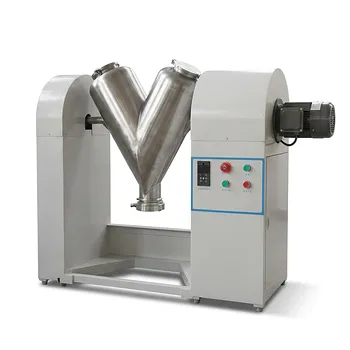
V-Type Powder Mixer for Uniform Blending of Dry Powders and Granules
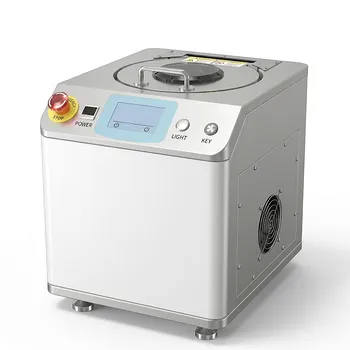
High Efficiency Vacuum Planetary Centrifugal Mixer and Defoaming Machine for Industrial Material Research and Precise Laboratory Powder Dispersion
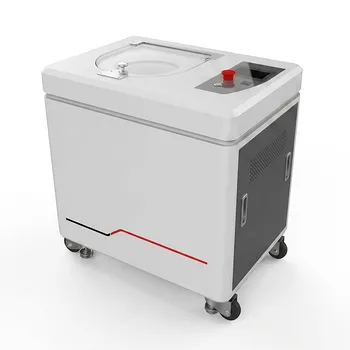
非介入式材料均质机真空脱泡行星搅拌高粘度混合设备
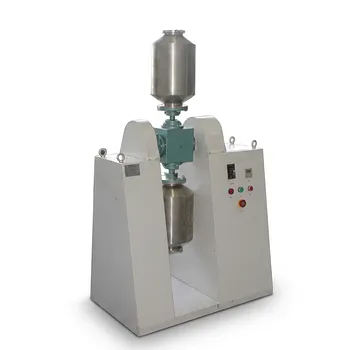
Multi Dimensional Universal Mixer for High Uniformity Powder Blending
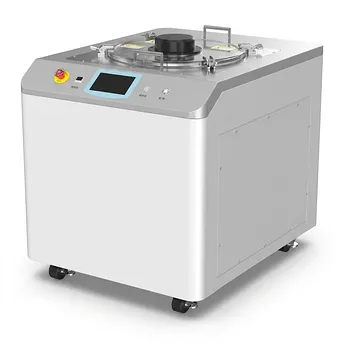
Industrial Planetary Centrifugal Vacuum Defoaming Mixer for High Viscosity Paste and Powder Homogenization
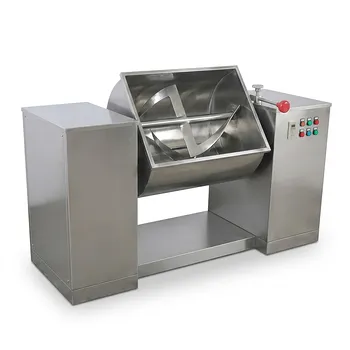
Horizontal Trough Mixer for Uniform Powder and Paste Blending
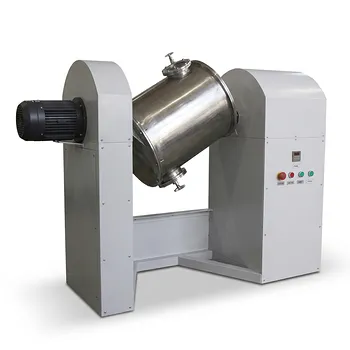
Inclined Mixer for Homogeneous Powder Blending and Grinding
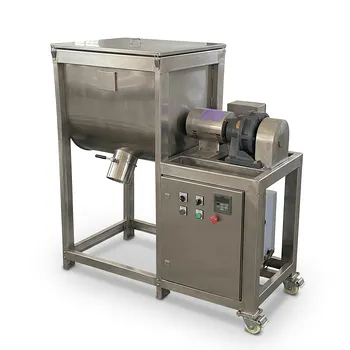
Horizontal Ribbon Mixer for Dry Powder and Slurry Blending
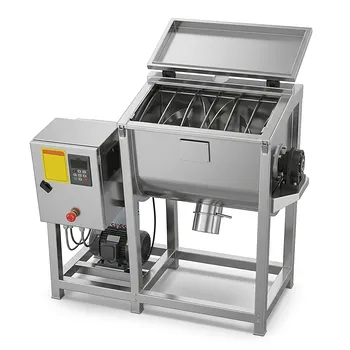
Horizontal Ribbon Mixer for Uniform Powder and Slurry Mixing
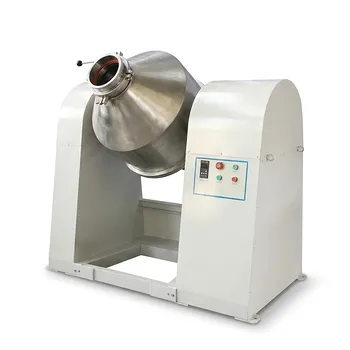
Industrial Double Cone Mixer for Powder Blending and Homogeneous Mixing
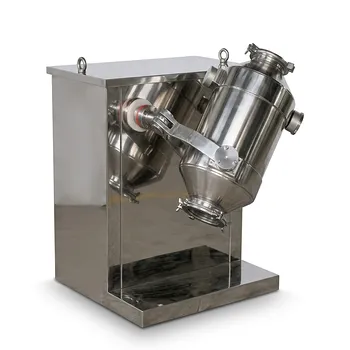
Three-Dimensional Motion Mixer for Laboratory Powder and Granule Blending
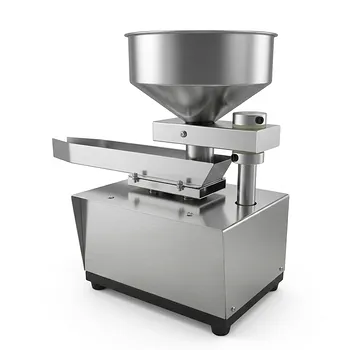
Automatic Vibrating Powder Feeder for Laboratory Material Processing Precision Vibratory Hopper Feeder for Granular and Powder Material Handling Industrial Grade Vibrating Tray Feeder for Consistent Material Sample Preparation
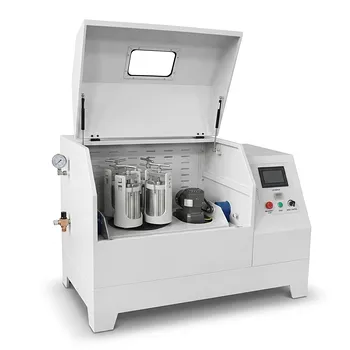
Vertical Production Planetary Ball Mill for High Throughput Powder Processing
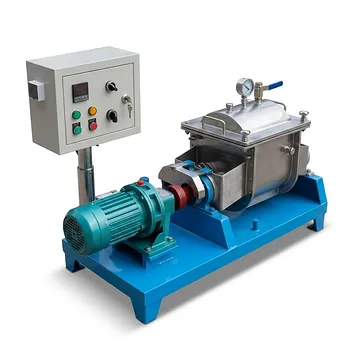
Industrial Vacuum Kneader for High-Viscosity Silicone, Rubber, and Compound Mixing
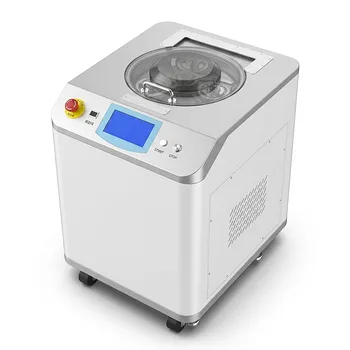
Dual Cup Vacuum Centrifugal Mixer Planetary Paste Defoaming Machine Industrial Material Processor
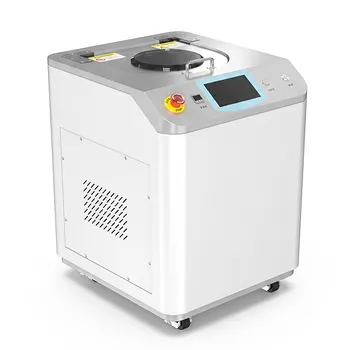
High Speed Vacuum Planetary Centrifugal Mixer and Defoamer for Industrial Paste Processing
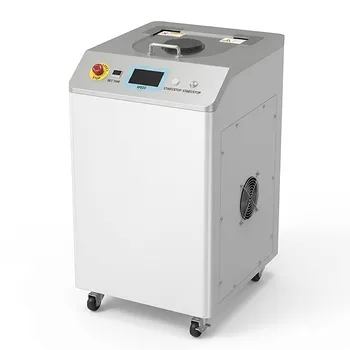
High Viscosity Planetary Centrifugal Vacuum Mixer for Material Defoaming and Uniform Mixing
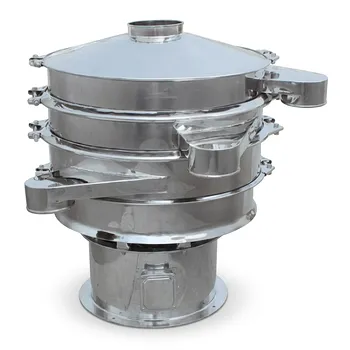
Stainless Steel Rotary Vibrating Sieve High Precision Circular Vibratory Separator Industrial Powder Grading Machine Multi Layer Sifting Equipment
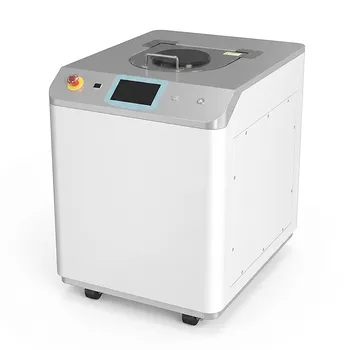
Industrial Planetary Centrifugal Vacuum Defoaming Mixer for High Viscosity Paste and Advanced Material Science