What role does powder mixing play in Al2O3-Er3Al5O12 ceramics? Achieve Precise Homogeneity and Phase Control
Updated 5 months ago
The powder mixing process is the fundamental stage that ensures chemical homogeneity and achieves the precise eutectic composition required for high-performance $\text{Al}_2\text{O}_3$-$\text{Er}_3\text{Al}5\text{O}{12}$ ceramic raw materials. By utilizing mechanical forces to blend high-purity $\text{Al}_2\text{O}_3$ and $\text{Er}_2\text{O}_3$ powders, the process establishes a uniform distribution that prevents localized compositional imbalances. This level of control is essential for maintaining the stability of the directional solidification process and preventing microstructure defects in the final sintered material.
Effective powder mixing transitions discrete raw components into a homogenized precursor, ensuring that the critical 81 mol% $\text{Al}_2\text{O}_3$ and 19 mol% $\text{Er}_2\text{O}_3$ ratio is maintained at the micro-level. This uniformity is the prerequisite for stable phase formation and the elimination of structural weaknesses during subsequent high-temperature processing.
Stoichiometric Precision and Phase Control
Achieving the Critical Eutectic Ratio
The primary role of mixing is to secure a precise ratio of 81 mol% $\text{Al}_2\text{O}_3$ and 19 mol% $\text{Er}_2\text{O}_3$. This specific eutectic composition is vital for the formation of the $\text{Er}_3\text{Al}5\text{O}{12}$ (Erbium Aluminum Garnet) phase in equilibrium with Alumina.
Prevention of Localized Compositional Imbalance
Mechanical force ensures that different oxide particles are distributed evenly throughout the volume. Without this forced uniform distribution, "pockets" of excess alumina or erbia would occur, leading to the formation of undesirable secondary phases or localized defects.
Homogeneity as a Foundation for Sintering
A high degree of microscopic uniformity ensures that during the heating phase, the chemical reactions occur simultaneously across the entire compact. This consistency is fundamental for forming dense, homogeneous microstructures and reducing strength fluctuations in the final ceramic product.
Impact on Manufacturing Stability
Securing Directional Solidification Stability
Homogeneous powders ensure a stable melt chemistry during the directional solidification process. If the composition varies locally, the solidification front becomes unstable, which can lead to eutectic microstructure defects that compromise the material's performance.
Accelerating Solid-State Reaction Kinetics
By maximizing the contact area between $\text{Al}_2\text{O}_3$ and $\text{Er}_2\text{O}_3$ particles, mixing facilitates more efficient atomic diffusion. This allows the solid-state reactions required to form the garnet phase to proceed more quickly and completely at high temperatures.
Improving Green Body Consistency
In the early stages of preparation, mixing establishes a uniform particle size distribution and consistent moisture penetration. This creates a stable "green body" (the unsintered shape), which directly influences the shrinkage behavior and final density of the ceramic.
Understanding the Trade-offs
The Risk of Media Contamination
While high-intensity mixing or ball milling improves uniformity, it introduces the risk of impurities from the mixing equipment or grinding media. Any foreign particles introduced at this stage can shift the eutectic point or create stress concentrators in the final ceramic rod.
Energy Intensity vs. Agglomeration
Increasing mixing energy can improve dispersion, but excessive mechanical action may lead to powder re-agglomeration. Finding the balance between thorough blending and maintaining a processable powder flow is a critical technical challenge.
Cost and Scalability
High-efficiency equipment, such as 3D powder mixers or high-energy ball mills, provides superior uniformity but increases the cost per kilogram of raw material. Manufacturers must weigh the necessity of extreme precision against the economic requirements of the specific application.
How to Apply This to Your Project
Recommendations for Material Success
- If your primary focus is microstructural stability: Prioritize high-energy mechanical mixing to ensure the 81:19 mol% ratio is maintained at the micron level, preventing defects during directional solidification.
- If your primary focus is maximizing reaction speed: Use high-efficiency milling to refine particle sizes and increase the contact surface area between components, which accelerates atomic diffusion during sintering.
- If your primary focus is material purity: Select high-purity mixing media (such as alumina-based balls) and limit mixing duration to the minimum required for homogeneity to avoid contaminating the eutectic melt.
By mastering the powder mixing phase, you establish the chemical and physical foundation necessary to produce high-strength, defect-free $\text{Al}_2\text{O}_3$-$\text{Er}_3\text{Al}5\text{O}{12}$ ceramic components.
Summary Table:
| Key Role | Impact on Material Quality | Technical Consideration |
|---|---|---|
| Stoichiometric Precision | Maintains 81:19 mol% eutectic ratio | Prevents undesirable secondary phases |
| Chemical Homogeneity | Eliminates localized compositional imbalances | Ensures stable directional solidification |
| Reaction Kinetics | Maximizes particle contact area | Accelerates atomic diffusion & garnet formation |
| Structural Integrity | Improves green body consistency | Reduces shrinkage & strength fluctuations |
Optimize Your Ceramic Preparation with Precision Equipment
Achieving the perfect eutectic composition in Al2O3-Er3Al5O12 ceramics requires more than just raw materials—it requires absolute process control. At [Brand Name], we provide complete laboratory sample preparation solutions for material science, specializing in the powder processing and compaction equipment you need for high-performance results.
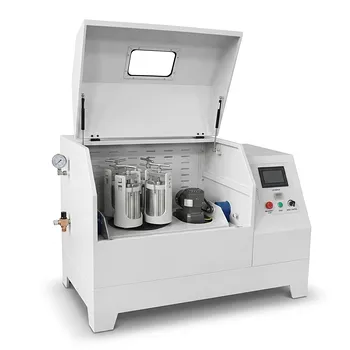
From achieving microscopic uniformity with our planetary ball mills, jet mills, and 3D powder mixers, to forming high-density green bodies using our Cold/Warm Isostatic Presses (CIP/WIP) and vacuum hot presses, our technology is designed to eliminate structural defects and ensure chemical homogeneity.
Ready to enhance your lab's efficiency and material performance? Contact our experts today to find the ideal crushing, milling, and pressing solutions tailored to your research requirements.
References
- Ying Nie, R.I. Merino. Influence of microstructural size on the thermal shock behavior of Al2O3-Er3Al5O12 directionally solidified eutectics. DOI: 10.1016/j.scriptamat.2018.09.036
Mentioned Products
- Multi Dimensional Universal Mixer for High Uniformity Powder Blending
- V-Type Powder Mixer for Uniform Blending of Dry Powders and Granules
- Inclined Mixer for Homogeneous Powder Blending and Grinding
- Horizontal Trough Mixer for Uniform Powder and Paste Blending
- Industrial Double Cone Mixer for Powder Blending and Homogeneous Mixing
People Also Ask
- What is the role of a multi-dimensional powder mixer in the preparation of Ce-TZP ceramics? Optimize Homogenization
- What is the importance of using a high-efficiency powder mixer when preparing sand and soil mixtures? Accurate Results.
- What is the role of a powder mixer in SiC mechanical seal ring production? Ensure Homogeneity and Structural Integrity
- Why is high-uniformity powder mixing essential for antibacterial ceramic glazes? Ensure Consistent Bioactive Protection
- How do powder mixers and additives influence ZTA ceramics? Optimize microstructure for superior toughness and density

Tech Team · PowderPreparation
Last updated on May 14, 2026
Related Products
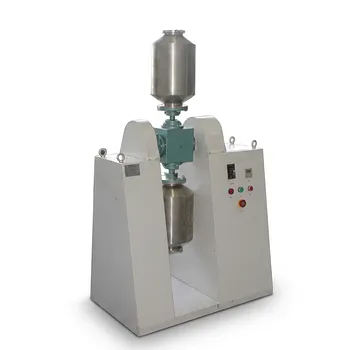
Multi Dimensional Universal Mixer for High Uniformity Powder Blending
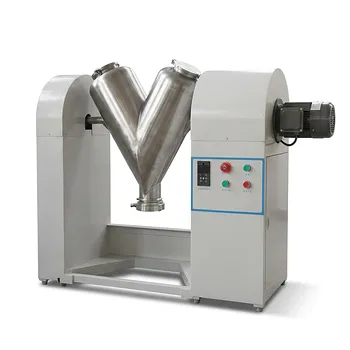
V-Type Powder Mixer for Uniform Blending of Dry Powders and Granules
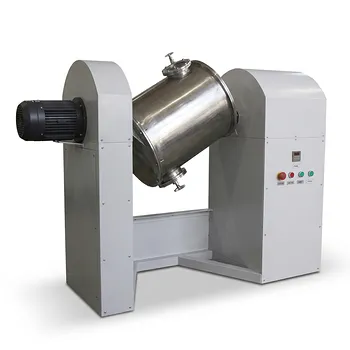
Inclined Mixer for Homogeneous Powder Blending and Grinding
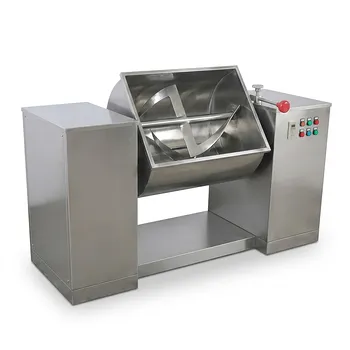
Horizontal Trough Mixer for Uniform Powder and Paste Blending
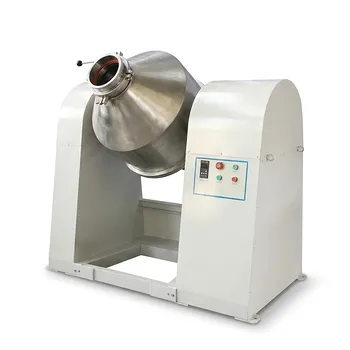
Industrial Double Cone Mixer for Powder Blending and Homogeneous Mixing
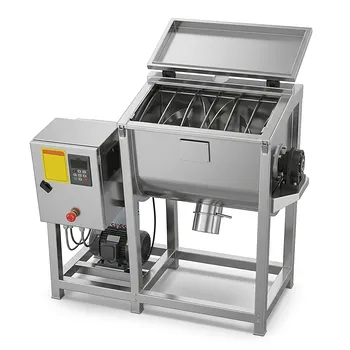
Horizontal Ribbon Mixer for Uniform Powder and Slurry Mixing
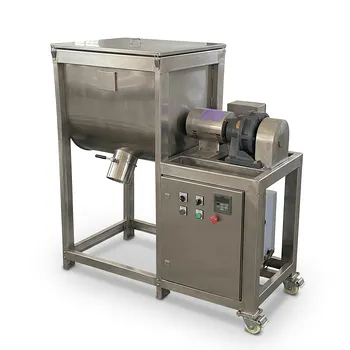
Horizontal Ribbon Mixer for Dry Powder and Slurry Blending
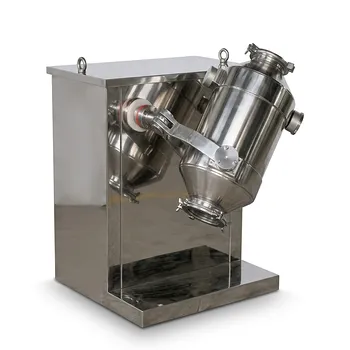
Three-Dimensional Motion Mixer for Laboratory Powder and Granule Blending
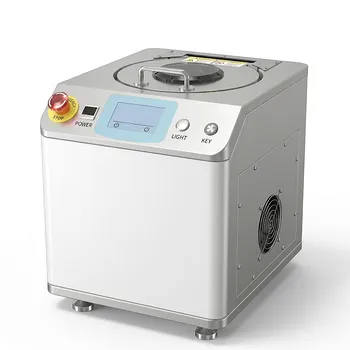
High Efficiency Vacuum Planetary Centrifugal Mixer and Defoaming Machine for Industrial Material Research and Precise Laboratory Powder Dispersion
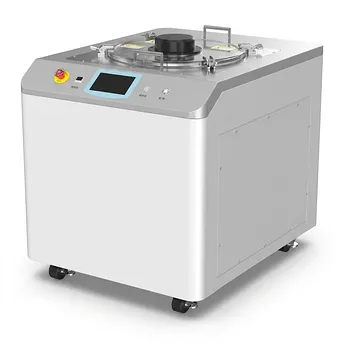
Industrial Planetary Centrifugal Vacuum Defoaming Mixer for High Viscosity Paste and Powder Homogenization
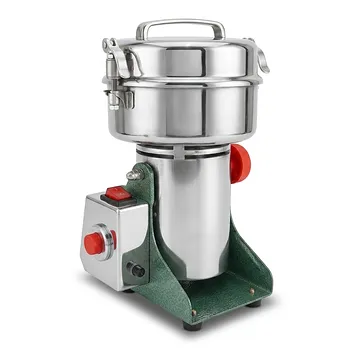
Small High-Speed Laboratory Grinder for Powder Processing
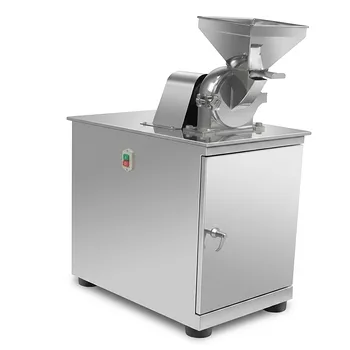
Universal Laboratory Pulverizer Grinder for Small Batch Powder Processing and Material Science Research
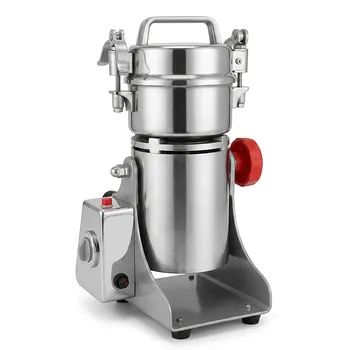
Industrial High Speed Small Sample Pulverizer Swing Type Laboratory Grinder for Powder Processing
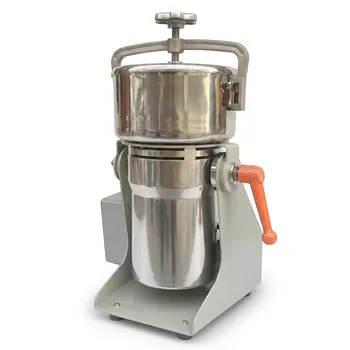
High Speed Laboratory Grinder Efficient Stainless Steel Powder Pulverizer Universal Material Science Mill for Sample Preparation
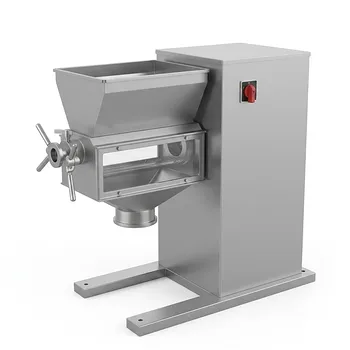
Industrial Swing Granulator for Powder Processing in Pharma Food and Chemical Industries
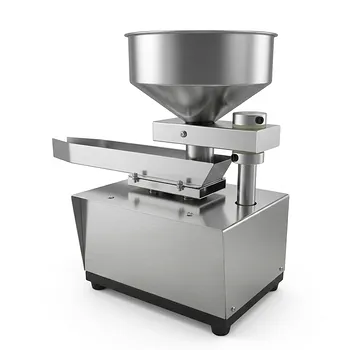
Automatic Vibrating Powder Feeder for Laboratory Material Processing Precision Vibratory Hopper Feeder for Granular and Powder Material Handling Industrial Grade Vibrating Tray Feeder for Consistent Material Sample Preparation
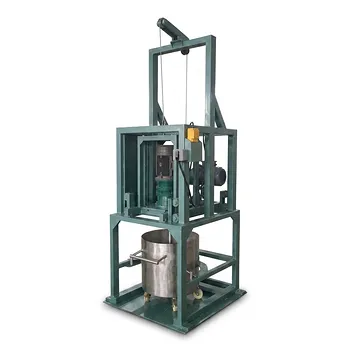
High-Speed Simple Disperser for Efficient Mixing, Dispersion, and Emulsification
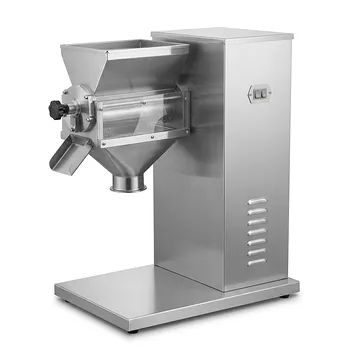
Small Swing Granulator Efficient Powder Granulation for Pharmaceutical Chemical Food Industries
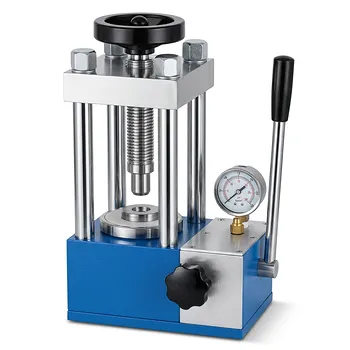
Manual Tablet Press with Dual Scale Pressure Gauge for Pharmaceutical Food Chemical Laboratory Sample Preparation