Why is it necessary to consider the influence of static walls in powder mixing experiment design? Optimize Uniformity.
Updated 4 months ago
Static walls serve as more than just containers; they are active mechanical and fluidic boundaries. Accounting for them is essential because they introduce boundary friction, create stagnant "dead zones," and manage pressure gradients that prevent material bypass, all of which are critical for ensuring every particle undergoes the intended mixing process.
Considering static walls in experiment design allows researchers to simulate real-world mechanical resistance and fluid dynamics. This identifies potential flow failures—such as dead zones or material bypass—ensuring that the final equipment design produces a uniform and stable mixture.
The Physics of Boundary Friction and Material Consolidation
Simulating Real-World Resistance
Static walls, such as a cavity bottom, provide boundary friction that mimics the resistance encountered in industrial mixing equipment. Without accounting for this friction, experimental models fail to reflect the actual energy required to move powder through a system. This simulation is vital for translating laboratory results into functional, large-scale machinery.
The Role of Combined Stresses
The static nature of a cavity bottom causes particles to undergo consolidation under the combined influence of normal and shear stresses. These stresses compress the powder bed, altering its density and flow characteristics compared to a free-flowing state. Understanding this consolidation helps engineers predict how materials will behave when resting against or moving along stationary surfaces.
Identifying Stagnant "Dead Zones"
A primary consequence of wall friction is the formation of dead zones, where particle flow velocity drops to near zero. Identifying these zones during the design phase is crucial for reducing non-uniformity in the final processed material. By recognizing where material stops moving, designers can adjust geometry to ensure a continuous, active flow throughout the entire volume.
Managing Gas Flow and Pressure Differentials
Mitigating the Bernoulli Effect
In static powder mixers utilizing high-speed gas flow, the design of the bottom height is used to mitigate the Bernoulli effect. This effect creates high-velocity, low-pressure zones at the outlet that can disrupt the intended movement of the powder. Proper wall and bottom design isolates these low-pressure zones, preventing them from interfering with the initial jet section of the mixer.
Preventing Material Bypass
Effective static wall design ensures that powder does not escape directly through the outlet without first entering the mixing zone. If the wall geometry is ignored, "short-circuiting" can occur, where component powders bypass the active mixing process entirely. This structural isolation is key to ensuring that all components participate in the mix, improving the stability and quality of the output.
Understanding the Trade-offs
The Tension Between Containment and Flow
While walls are necessary for containment and simulating friction, they are the primary source of process inefficiency. Increased wall surface area improves the realism of the simulation but simultaneously increases the risk of material buildup and cross-contamination. Engineers must balance the need for boundary friction with the goal of minimizing stagnant areas that trap expensive materials.
Complexity in Modeling Fluid-Solid Interactions
Introducing specific bottom heights and wall geometries increases the complexity of the experimental setup. While these features prevent the Bernoulli effect from causing bypass, they can also create secondary pressure drops that require higher energy input. Designers must weigh the benefit of perfect mixing uniformity against the energy costs of overcoming added resistance.
How to Apply This to Your Project
When designing a powder mixing experiment or equipment, your approach to static walls should align with your specific performance metrics.
- If your primary focus is material uniformity: Prioritize the identification and elimination of dead zones by optimizing the geometry of the cavity bottom to maintain velocity.
- If your primary focus is process stability: Use specific bottom height designs to isolate low-pressure zones at the outlet, ensuring no powder bypasses the mixing stage.
- If your primary focus is industrial scaling: Focus on accurately modeling boundary friction to ensure that power requirements and shear stresses are correctly estimated for larger motors.
Ultimately, treating static walls as active components rather than passive boundaries is the only way to ensure an experiment yields a predictable, high-quality industrial mixture.
Summary Table:
| Factor | Influence on Mixing | Key Benefit of Consideration |
|---|---|---|
| Boundary Friction | Mimics real-world industrial resistance | Accurate energy & motor power estimation |
| Consolidation | Compresses powder bed via normal/shear stress | Predicts material behavior under pressure |
| Dead Zones | Creates areas of zero particle velocity | Eliminates non-uniformity and material waste |
| Gas Pressure | Mitigates Bernoulli effect at outlets | Prevents material bypass (short-circuiting) |
| Wall Geometry | Directs material flow and containment | Ensures every particle enters the mixing zone |
Optimize Your Powder Processing with Expert Laboratory Solutions
Achieving a uniform, stable mixture requires more than just an experiment—it requires the right equipment designed for real-world physics. We provide complete laboratory sample preparation solutions for material science, specializing in high-performance powder processing and compaction equipment.
Our extensive product lines are designed to help you overcome the challenges of boundary friction and stagnant dead zones:
- Advanced Mixing & Milling: Powder mixers, defoaming mixers, and a full range of mills (planetary ball, jet, sand/bead, disc, rotor).
- Precision Compaction: A full spectrum of hydraulic presses, including Cold/Warm Isostatic Presses (CIP/WIP), standard lab presses, XRF pellet presses, and vacuum hot presses.
- Preparation & Sizing: Jaw/roll crushers, liquid nitrogen cryogenic grinders, and vibratory/air-jet sieve shakers.
Whether you are refining a new material formula or scaling up to industrial production, our tools ensure your research is accurate and reproducible. Contact our technical team today to discuss your specific powder mixing requirements and find the perfect equipment solution for your lab!
References
- Mauricio E. Robledo, Luis Obregón Quiñones. Simulation of a Compressible Powder Flow under Oscillatory Shear Stress Modeled as a Non - Linear Fluid by Using an Explicit Solution Method. DOI: 10.25103/jestr.114.11
Mentioned Products
- Multi Dimensional Universal Mixer for High Uniformity Powder Blending
- V-Type Powder Mixer for Uniform Blending of Dry Powders and Granules
- Inclined Mixer for Homogeneous Powder Blending and Grinding
- Horizontal Trough Mixer for Uniform Powder and Paste Blending
- Industrial Double Cone Mixer for Powder Blending and Homogeneous Mixing
People Also Ask
- What is the role of a multi-dimensional powder mixer in the preparation of Ce-TZP ceramics? Optimize Homogenization
- What is the importance of using a high-efficiency powder mixer when preparing sand and soil mixtures? Accurate Results.
- What is the role of a powder mixer in SiC mechanical seal ring production? Ensure Homogeneity and Structural Integrity
- Why is high-uniformity powder mixing essential for antibacterial ceramic glazes? Ensure Consistent Bioactive Protection
- How do powder mixers and additives influence ZTA ceramics? Optimize microstructure for superior toughness and density

Tech Team · PowderPreparation
Last updated on Jun 03, 2026
Related Products
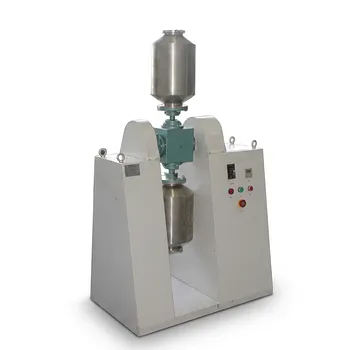
Multi Dimensional Universal Mixer for High Uniformity Powder Blending
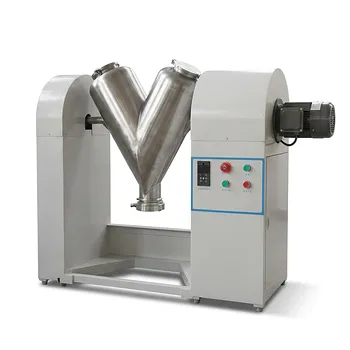
V-Type Powder Mixer for Uniform Blending of Dry Powders and Granules
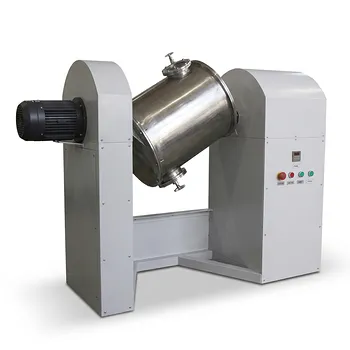
Inclined Mixer for Homogeneous Powder Blending and Grinding
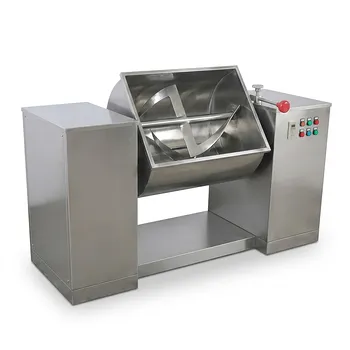
Horizontal Trough Mixer for Uniform Powder and Paste Blending
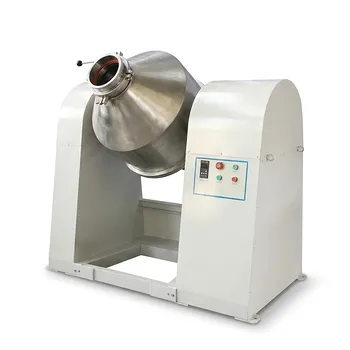
Industrial Double Cone Mixer for Powder Blending and Homogeneous Mixing
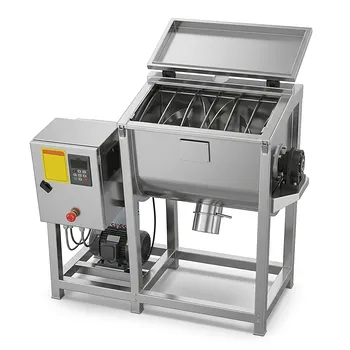
Horizontal Ribbon Mixer for Uniform Powder and Slurry Mixing
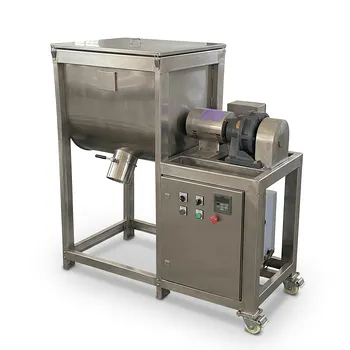
Horizontal Ribbon Mixer for Dry Powder and Slurry Blending
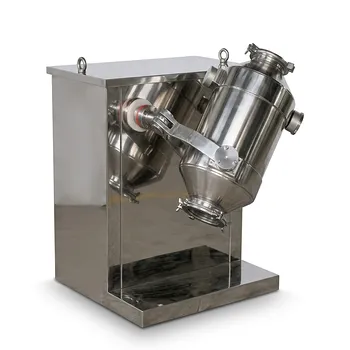
Three-Dimensional Motion Mixer for Laboratory Powder and Granule Blending
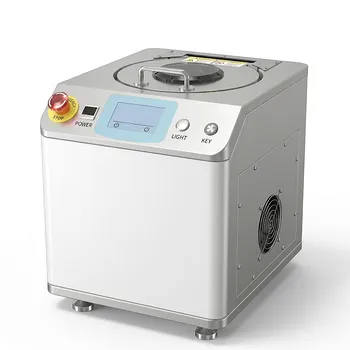
High Efficiency Vacuum Planetary Centrifugal Mixer and Defoaming Machine for Industrial Material Research and Precise Laboratory Powder Dispersion
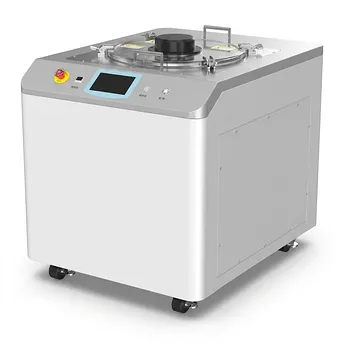
Industrial Planetary Centrifugal Vacuum Defoaming Mixer for High Viscosity Paste and Powder Homogenization
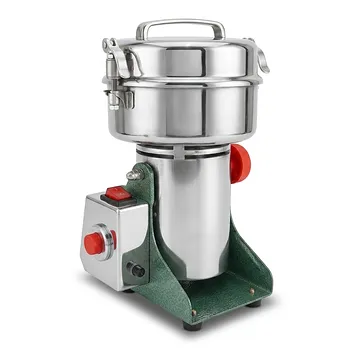
Small High-Speed Laboratory Grinder for Powder Processing
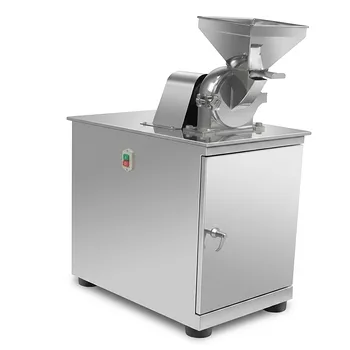
Universal Laboratory Pulverizer Grinder for Small Batch Powder Processing and Material Science Research
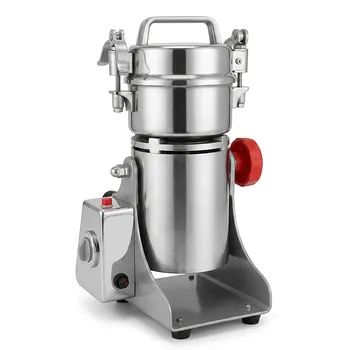
Industrial High Speed Small Sample Pulverizer Swing Type Laboratory Grinder for Powder Processing
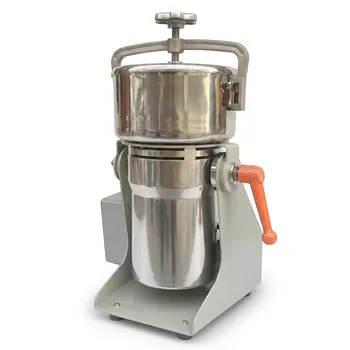
High Speed Laboratory Grinder Efficient Stainless Steel Powder Pulverizer Universal Material Science Mill for Sample Preparation
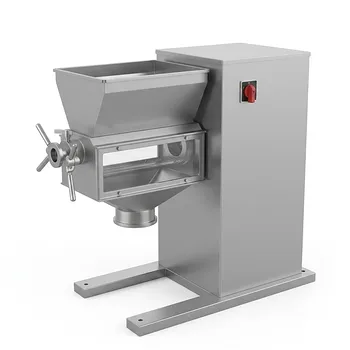
Industrial Swing Granulator for Powder Processing in Pharma Food and Chemical Industries
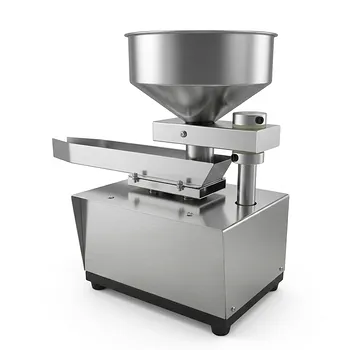
Automatic Vibrating Powder Feeder for Laboratory Material Processing Precision Vibratory Hopper Feeder for Granular and Powder Material Handling Industrial Grade Vibrating Tray Feeder for Consistent Material Sample Preparation
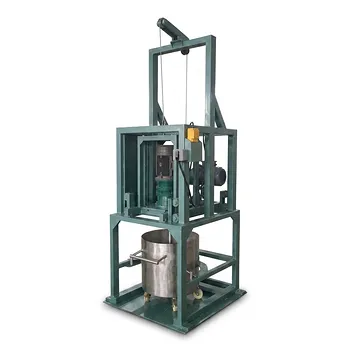
High-Speed Simple Disperser for Efficient Mixing, Dispersion, and Emulsification
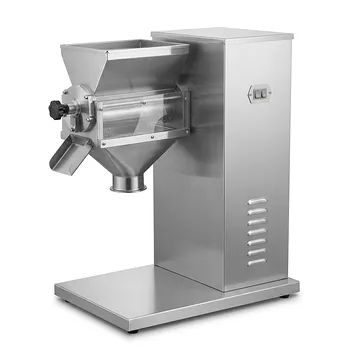
Small Swing Granulator Efficient Powder Granulation for Pharmaceutical Chemical Food Industries
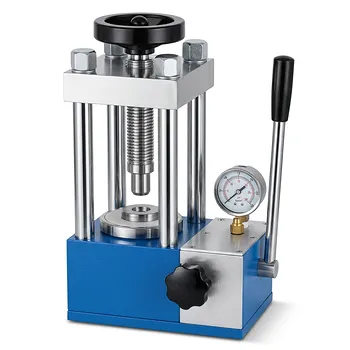
Manual Tablet Press with Dual Scale Pressure Gauge for Pharmaceutical Food Chemical Laboratory Sample Preparation
