Why is a Mechanical Vibratory Sieve Shaker used to process excipients? Optimize Powder Flow and Research Accuracy
Updated 3 months ago
The primary reason for using a mechanical vibratory sieve shaker is to standardize the particle size distribution (PSD) of excipient powders. By isolating a specific size range—typically between 200 and 355 µm—researchers eliminate the "noise" caused by uneven particle sizes. This ensures that any measured variations in flowability or tablet strength are the result of the material's chemical composition and deformation mechanisms rather than random physical dimensions.
Core Takeaway: Mechanical vibratory sieving acts as a critical normalization step that isolates particle size as a variable. This allows for an objective evaluation of a powder's inherent flow characteristics and mechanical properties, ensuring consistent performance in downstream manufacturing processes like tableting.
Isolating Material Variables for Precise Analysis
Eliminating Distribution Noise
Raw excipient powders often possess a wide and unpredictable range of particle sizes. This inconsistency directly skews flowability metrics, such as the Carr Index, making it difficult to determine the powder's true behavior.
Using a mechanical shaker to limit the powder to a narrow, predefined range creates a level playing field. This process ensures that the physical geometry of the particles does not mask the underlying properties of the material being tested.
Focusing on Chemical and Mechanical Strength
Once the influence of size is removed, researchers can accurately study how different excipients interact. This is vital for understanding how a material's chemical structure contributes to the mechanical strength of a final tablet.
Without this standardization, a researcher might mistakenly attribute a tablet's durability to its chemical makeup when it was actually caused by a specific particle size. Sieving provides the empirical clarity needed for high-level pharmaceutical development.
Enhancing Manufacturing Predictability
Ensuring Content Uniformity and Reducing Segregation
Beyond simple research, sieving is a vital tool for assessing the fine powder fraction within composite materials. Identifying the amount of material that passes through a 200-mesh sieve helps manufacturers predict the risk of powder segregation.
If a powder separates during processing, the resulting tablets will lack content uniformity. Monitoring these fine fractions allows for the optimization of drying parameters and ensures a consistent, high-quality batch every time.
Improving Die Filling and Compressibility
In high-speed manufacturing, powders must flow into die cavities with absolute consistency. A vibratory sieve shaker evaluates the particle size distribution across multiple layers (from 20 to 100 mesh) to predict how well granules will fill a pellet press.
By maintaining a uniform particle size, manufacturers reduce weight variations in the final product. This precision is essential for ensuring that each dose is accurate and that the material compresses predictably under pressure.
Ensuring Reliability in Advanced Processing
Preparation for Downstream Milling and Sintering
In many technical applications, sieving is a prerequisite for subsequent stages like high-energy ball milling. Ensuring that raw materials have a uniform initial size distribution—such as an average of 53 µm—is critical for controlling the final dimensions of nano-reinforcements.
Consistency at this stage directly impacts the microstructure of the final material. In ceramic production, for example, precise size control reduces the dispersion of material strength, allowing engineers to rely on the Weibull distribution model to predict the material's reliability.
Applications in Additive Manufacturing
For processes like Selective Laser Melting (SLM), removing oversized particles or aggregates is a non-negotiable safety and quality step. A stable melt pool depends on a consistent particle size distribution to prevent porosity defects.
By using a vibratory shaker to classify powders before printing, manufacturers can achieve a superior surface finish. This level of control is what makes advanced additive manufacturing both repeatable and scalable.
Understanding the Trade-offs and Pitfalls
The Risk of Particle Attrition
While mechanical vibration is necessary for separation, excessive or overly aggressive shaking can lead to particle attrition. This occurs when particles collide with each other or the sieve mesh, unintentionally breaking down into smaller fragments.
If attrition occurs during the sieving process, the resulting data will reflect a finer distribution than what actually exists in the bulk material. Operators must carefully calibrate vibration intensity and duration to avoid compromising the integrity of the sample.
Real-World vs. Laboratory Conditions
Standardizing a powder to a specific size range is excellent for scientific isolation, but it may not fully reflect "real-world" behavior. In a production environment, powders are used in their raw, polydisperse state.
Relying solely on data from sieved, uniform samples can lead to a "blind spot" regarding how the material handles in bulk. Engineers should use sieved data for mechanistic understanding while still conducting bulk flow tests to ensure practical manufacturing success.
How to Apply Sieving to Your Project
Making the Right Choice for Your Goal
To maximize the value of mechanical vibratory sieving, align your process with your specific objective:
- If your primary focus is Material Research: Use a narrow size range (e.g., 200-355 µm) to isolate chemical and deformation variables from physical size effects.
- If your primary focus is Quality Control: Measure the fine fraction (passing through 200 mesh) to monitor for segregation risks and ensure content uniformity across batches.
- If your primary focus is Manufacturing Efficiency: Utilize a full series of sieves (20 to 100 mesh) to calculate average particle size and predict flowability for uniform die filling.
- If your primary focus is Advanced Material Synthesis: Ensure a uniform input size (e.g., 53 µm) to guarantee consistent results in downstream milling or sintering processes.
Effective use of a mechanical vibratory sieve shaker transforms unpredictable raw powders into a standardized, high-performance medium for both science and industry.
Summary Table:
| Application Goal | Sieve Shaker Function | Key Benefit |
|---|---|---|
| Material Research | Isolate specific size (200-355 µm) | Eliminates physical noise to study chemical properties |
| Quality Control | Fine fraction monitoring (<200 mesh) | Prevents segregation and ensures batch content uniformity |
| Manufacturing | Full distribution analysis (20-100 mesh) | Predicts die filling and reduces tablet weight variation |
| Advanced Synthesis | Input size normalization (e.g., 53 µm) | Guarantees consistent results in milling and sintering |
Elevate Your Material Analysis with Precision Sample Prep
Achieving repeatable results in material science starts with standardized powder preparation. We provide complete laboratory sample preparation solutions tailored for pharmaceutical and industrial R&D. Our expertise spans the entire powder processing workflow, ensuring your materials meet the strictest requirements for flowability and compressibility.
Our specialized equipment includes:
- Sieve Shakers: Vibratory and air-jet models with precision test sieves for PSD standardization.
- Milling & Grinding: Planetary ball mills, jet mills, and liquid nitrogen cryogenic grinders.
- Powder Processing: High-efficiency powder mixers and vacuum defoaming mixers.
- Compaction Excellence: A full spectrum of hydraulic presses, including Cold/Warm Isostatic Presses (CIP/WIP), XRF pellet presses, and vacuum hot presses.
Whether you are isolating variables for excipient research or scaling up for additive manufacturing, our solutions provide the empirical clarity you need.
Contact our technical team today to optimize your powder workflow!
References
- MCIM Amin, Muhammad Wahab Amjad. A Comparative Study of the Compaction Properties of Binary and Bilayer Tablets of Direct Compression Excipients. DOI: 10.4314/tjpr.v11i4.9
Mentioned Products
- Vibratory Sieve Shaker Electromagnetic 3D Motion Powder Particle Size Analyzer for Dry and Wet Sieving
- Laboratory Dry and Wet Three Dimensional Vibratory Sieve Shaker for Particle Analysis
- Small Laboratory Vibratory Sieve Shaker for Powder Gradation and Particle Size Analysis
- Heavy Duty Dry Three Dimensional Vibratory Sieve Shaker for Particle Separation
- Stainless Steel Laboratory Vibratory Test Sieve Shaker
People Also Ask
- How does a vibratory sieve shaker contribute to optimizing the performance of activated carbon? Enhance Adsorption Precision
- Why is a laboratory vibratory sieve shaker necessary for processing magnesium-based borate precursor powders? Boost Activity
- Why use a vibratory sieve shaker to verify coarse aggregate grading in rubberized concrete? Ensure Structural Integrity
- What function do vibratory sieve shakers and standard test sieves serve in the preparation of adsorbents? Key Guide
- What role does a vibratory sieve shaker play in the particle size analysis of ground corn products? Enhance QC Precision

Tech Team · PowderPreparation
Last updated on Jun 03, 2026
Related Products

Vibratory Sieve Shaker Electromagnetic 3D Motion Powder Particle Size Analyzer for Dry and Wet Sieving

Laboratory Dry and Wet Three Dimensional Vibratory Sieve Shaker for Particle Analysis

Small Laboratory Vibratory Sieve Shaker for Powder Gradation and Particle Size Analysis

Heavy Duty Dry Three Dimensional Vibratory Sieve Shaker for Particle Separation

Stainless Steel Laboratory Vibratory Test Sieve Shaker

Dry Three Dimensional Vibratory Sieve Shaker

High Frequency Cabinet Type Three-Dimensional Rotary Vibrating Sieve Shaker for Dry Sieving and Particle Classification

Small Laboratory Vibrating Sieve Shaker for Precise Particle Size Analysis

Laboratory Vibratory Test Sieve Shaker for Precision Particle Size Analysis and Powder Grading

High Frequency Wet Three-Dimensional Vibrating Sieve Shaker for Dry and Wet Particle Size Analysis

三维电磁微量振动筛分仪

Tapping Oscillating Sieve Shaker for Dry and Wet Particle Size Analysis

Stainless Steel Rotary Vibrating Sieve High Precision Circular Vibratory Separator Industrial Powder Grading Machine Multi Layer Sifting Equipment

Three Dimensional Rotary Vibrating Sieve
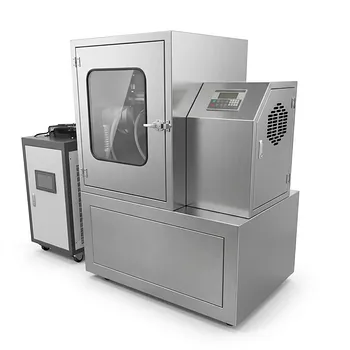
Vibratory Superfine Grinder for Ultra Fine Laboratory Powder Milling

Automatic Vibrating Powder Feeder for Laboratory Material Processing Precision Vibratory Hopper Feeder for Granular and Powder Material Handling Industrial Grade Vibrating Tray Feeder for Consistent Material Sample Preparation
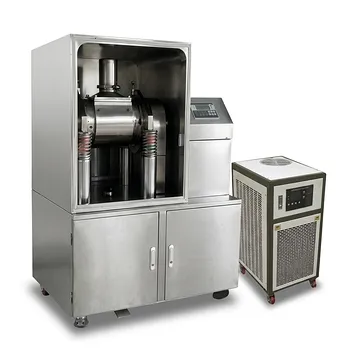
Small Vibrating Ultrafine Grinder for Traditional Chinese Medicine