Why use a vibratory sieve shaker for plastering soil analysis? Ensure Accurate Grading and Soil Classification.
Updated 5 months ago
Analyzing the particle size distribution of plastering soil requires a mechanical vibratory sieve shaker to provide the consistent mechanical force necessary for accurate separation. By vibrating a stack of standard test sieves, the shaker ensures particles move through mesh openings ranging from 200 mm down to 0.075 mm. This process eliminates the variables of manual sieving, providing the reliable data needed for scientific soil classification and engineering assessments.
The mechanical vibratory sieve shaker standardizes the sieving process by applying constant mechanical energy over a fixed duration, typically 10 to 15 minutes. This precision is essential for calculating critical soil parameters and ensuring the material meets the specific technical requirements for construction, stabilization, and material performance.
Eliminating Human Error through Standardization
Uniform Mechanical Power
A vibratory shaker provides continuous and uniform mechanical power that manual operation cannot replicate. This consistency ensures that every soil sample is subjected to the same energy, making the results repeatable and scientifically valid.
Fixed Duration and Amplitude
Standardized shakers apply a constant vibration amplitude for a set period, usually 10 to 15 minutes. This timeframe allows particles sufficient opportunities to orient themselves and pass through the mesh apertures, ensuring a complete separation based on physical dimensions.
Wide Aperture Range
The equipment accommodates a series of sieves with apertures ranging from 200 mm down to 0.075 mm. This broad range allows for the comprehensive analysis of diverse soil components, from coarse gravel to fine silts and powders.
Quantifying Engineering and Physical Properties
Acquisition of Key Grading Parameters
The mechanical process is vital for accurately calculating the grading curve parameters, specifically D10, D30, and D60. These values represent the particle diameters at which 10%, 30%, and 60% of the sample pass through the sieves, respectively.
Mathematical Soil Classification
By determining these parameters, engineers can calculate the coefficient of uniformity (Cu). These metrics are required for the scientific engineering classification of soil, such as identifying a material as clayey sand (SC) or sandy silt.
Predicting Material Behavior
Accurate grading ensures a well-graded powder, which improves packing density and minimizes void formation during molding. In plastering and clay-based materials, this data is critical for enhancing sintering performance and structural integrity.
Understanding the Trade-offs
Limitations with Fine Particles
While vibratory shakers are excellent for dry sieving coarse to medium grains, very fine particles (less than 0.063 mm) can sometimes stick together due to electrostatic forces or moisture. In these cases, dry sieving may underestimate the proportion of fines unless specialized anti-blinding agents or wet sieving methods are used.
Risk of Sieve Overloading
If too much soil is placed on the top sieve, particles can "blind" the mesh, preventing smaller grains from falling through. This leads to inaccurate gradation data where the sample appears coarser than it actually is; strict adherence to sample weight limits is required.
Mechanical Wear and Calibration
The high-frequency vibrations can cause mesh deformation over time, especially when processing abrasive soils like lateritic or sandy samples. Regular calibration and inspection of the standard test sieves are mandatory to maintain the integrity of the particle size distribution curve.
Making the Right Choice for Your Goal
How to Apply This to Your Project
To achieve the most accurate particle size distribution analysis, align your equipment usage with your primary technical objective:
- If your primary focus is engineering classification: Use the shaker to strictly determine the D10, D30, and D60 values to calculate the coefficient of uniformity (Cu) according to standard soil mechanics.
- If your primary focus is material performance and density: Focus on achieving a well-graded fine powder where at least 90% of the particles pass through a 150 μm mesh to maximize packing density.
- If your primary focus is evaluating soil additives: Use the shaker to plot comparative grading curves before and after the introduction of stabilizers like cement, urea, or ash to quantify changes in grain size.
The mechanical vibratory sieve shaker is the definitive tool for transforming raw soil samples into the precise quantitative data required for professional engineering and construction applications.
Summary Table:
| Feature | Benefit to Soil Analysis | Key Metrics Obtained |
|---|---|---|
| Uniform Vibration | Eliminates manual error & ensures repeatability | Consistent grading curves |
| Standardized Timing | Allows particles to orient and pass mesh | Accurate size distribution |
| 0.075mm - 200mm Range | Analyzes everything from fine silt to gravel | D10, D30, D60 values |
| Mechanical Energy | Overcomes particle friction and resistance | Coefficient of Uniformity (Cu) |
Precision Sample Preparation for Superior Material Performance
Accurate particle size distribution is critical for scientific soil classification and high-quality construction materials. At [Your Brand Name], we provide complete laboratory sample preparation solutions for material science, specializing in high-precision powder processing and compaction equipment.
Whether you are analyzing plastering soil or developing advanced ceramics, our extensive product line supports your entire workflow:
- Sieving & Grading: Professional vibratory and air-jet sieve shakers with a full range of test sieves.
- Milling & Grinding: Planetary ball mills, jet mills, and cryogenic grinders for ultra-fine powder production.
- Advanced Pressing: A full spectrum of hydraulic presses, including Cold/Warm Isostatic Presses (CIP/WIP), vacuum hot presses, and XRF pellet presses.
- Mixing Solutions: High-efficiency powder mixers and vacuum defoaming mixers.
Enhance your research accuracy and laboratory efficiency today.
Contact our technical team for a customized solution!
References
- Chukwubude, L.N, Nwakaire, C.M. Geotechnical, Physicochemical, and Mineralogical Characterization of Locally Available Plaster Soils in Awka Municipality, Anambra State, Nigeria. DOI: 10.36348/sjet.2025.v10i12.003
Mentioned Products
- Vibratory Sieve Shaker Electromagnetic 3D Motion Powder Particle Size Analyzer for Dry and Wet Sieving
- Laboratory Dry and Wet Three Dimensional Vibratory Sieve Shaker for Particle Analysis
- Dry Three Dimensional Vibratory Sieve Shaker
- Heavy Duty Dry Three Dimensional Vibratory Sieve Shaker for Particle Separation
- Stainless Steel Laboratory Vibratory Test Sieve Shaker
People Also Ask
- How does a vibratory sieve shaker contribute to optimizing the performance of activated carbon? Enhance Adsorption Precision
- Why is a laboratory vibratory sieve shaker necessary for processing magnesium-based borate precursor powders? Boost Activity
- Why use a vibratory sieve shaker to verify coarse aggregate grading in rubberized concrete? Ensure Structural Integrity
- What function do vibratory sieve shakers and standard test sieves serve in the preparation of adsorbents? Key Guide
- What role does a vibratory sieve shaker play in the particle size analysis of ground corn products? Enhance QC Precision

Tech Team · PowderPreparation
Last updated on May 14, 2026
Related Products
Vibratory Sieve Shaker Electromagnetic 3D Motion Powder Particle Size Analyzer for Dry and Wet Sieving

Laboratory Dry and Wet Three Dimensional Vibratory Sieve Shaker for Particle Analysis

Dry Three Dimensional Vibratory Sieve Shaker

Heavy Duty Dry Three Dimensional Vibratory Sieve Shaker for Particle Separation
Stainless Steel Laboratory Vibratory Test Sieve Shaker

Small Laboratory Vibratory Sieve Shaker for Powder Gradation and Particle Size Analysis

Small Laboratory Vibrating Sieve Shaker for Precise Particle Size Analysis
High Frequency Cabinet Type Three-Dimensional Rotary Vibrating Sieve Shaker for Dry Sieving and Particle Classification

Laboratory Vibratory Test Sieve Shaker for Precision Particle Size Analysis and Powder Grading
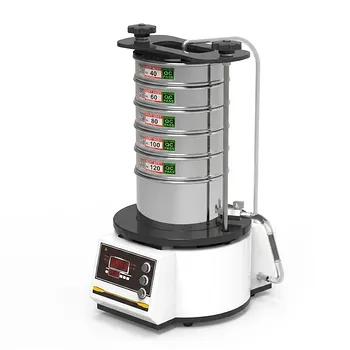
High Frequency Wet Three-Dimensional Vibrating Sieve Shaker for Dry and Wet Particle Size Analysis

三维电磁微量振动筛分仪

Stainless Steel Rotary Vibrating Sieve High Precision Circular Vibratory Separator Industrial Powder Grading Machine Multi Layer Sifting Equipment

Tapping Oscillating Sieve Shaker for Dry and Wet Particle Size Analysis

Three Dimensional Rotary Vibrating Sieve
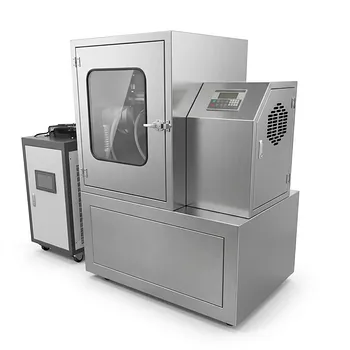
Vibratory Superfine Grinder for Ultra Fine Laboratory Powder Milling
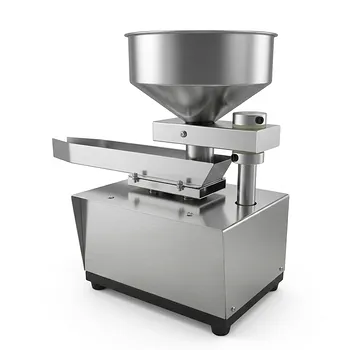
Automatic Vibrating Powder Feeder for Laboratory Material Processing Precision Vibratory Hopper Feeder for Granular and Powder Material Handling Industrial Grade Vibrating Tray Feeder for Consistent Material Sample Preparation
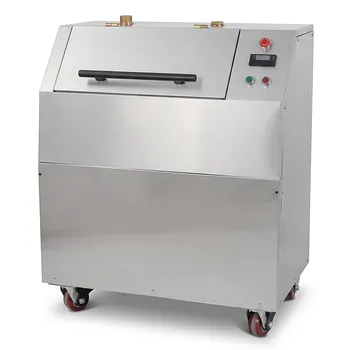
Vibratory Disc Mill for Rapid Fine Grinding and High Throughput Sample Preparation of Hard and Brittle Materials