Why is a mechanical vibratory sieve shaker required for bamboo, pine & tea? Ensure Precise Particle Classification
Updated 4 months ago
Precision particle size classification is the primary reason a mechanical vibratory sieve shaker is required for processing bamboo, pine, and mate tea. By utilizing continuous high-frequency vibration across a stack of standard sieves, the equipment isolates specific particle diameters—typically ranging from 1.397mm to 2.362mm—to ensure material uniformity. This consistency is essential because it directly dictates the bulk density, aspect ratio, and mechanical properties of the final manufactured product.
The mechanical vibratory sieve shaker serves as a critical quality control gate that transforms raw, heterogeneous biomass into a standardized industrial feedstock. By ensuring a narrow particle size distribution, manufacturers can guarantee predictable mechanical strength in composites and optimized chemical yields during extraction.
Ensuring Structural Integrity in Bio-Composites
The Role of Aspect Ratio and Bulk Density
Precise classification of bamboo and pine particles is vital for determining the aspect ratio—the ratio of a particle's length to its width. This geometric factor directly influences how particles interlock during the pressing of high-density particleboards.
Uniform particles ensure a consistent bulk density, which allows for an even distribution of resin and pressure. Without this uniformity, the final board may suffer from structural weak points or inconsistent density.
Optimizing the Compaction Ratio
The compaction ratio of a material is heavily dependent on the size of the individual flakes or particles. Using a sieve shaker to extract specific fractions, such as 8 mesh to 12 mesh, allows manufacturers to reach the ideal density for mechanical performance.
If particles are outside the target range (e.g., 1.41mm to 4.76mm for bamboo flakes), the stability of the board structure is compromised. The shaker removes oversized impurities and undersized dust that would otherwise weaken the final product.
Enhancing Extraction Kinetics and Yields
Surface Area and Solvent Penetration
For materials like mate tea or pine bark, the surface area of the particle determines how efficiently a solvent can penetrate the biomass. A mechanical sieve shaker ensures that the raw material falls within a specific, narrow range, often less than 2mm.
Smaller, uniform particles increase the available surface area for extraction. This leads to higher yields of both lipophilic and hydrophilic components by ensuring kinetic uniformity throughout the batch.
Preventing Incomplete Reactions
In processes like extraction or depolymerization, variations in particle size can lead to "local over-reaction" or incomplete processing. Large particles may not be fully depleted, while fine particles may degrade from over-exposure.
By isolating a specific narrow fraction (such as 1mm to 3.15mm for bark), the vibratory shaker prevents these inefficiencies. This ensures that every particle in the reactor behaves predictably under the same chemical conditions.
The Technical Necessity of Mechanical Vibration
Consistency Over Manual Methods
Unlike manual sieving, a mechanical vibratory shaker provides constant amplitude and a uniform processing time. This eliminates human error and ensures that the classification process is repeatable across different production shifts.
High-frequency vibrations cause particles to tumble and reorient themselves continuously. This increases the probability that each particle will encounter a mesh opening that matches its geometric size, leading to more accurate separation.
Analyzing Particle Size Distribution (PSD)
The shaker is often used to quantitatively analyze the mass percentage of material at various size levels. This data is critical for calibrating upstream equipment like grinders or hammer mills.
By understanding the PSD, engineers can optimize rotor speed and screen apertures in the grinding phase. This feedback loop ensures that the milling process is as efficient as possible, reducing waste and energy consumption.
Understanding the Trade-offs
Screen Blinding and Wear
One common pitfall is screen blinding, where damp or resinous particles (common in pine or tea) clog the mesh openings. This requires periodic cleaning or the use of de-blinding accessories like bouncing balls to maintain accuracy.
Additionally, the high-frequency vibration causes mechanical wear on the wire woven meshes. Regular calibration and inspection are required to ensure that a "12 mesh" screen has not stretched or frayed, which would invalidate the classification.
Material Degradation
Excessive shaking time or intensity can cause attrition, where the particles themselves break down into smaller pieces during the test. This can lead to a "false" reading of the original particle size distribution if the vibration settings are not properly standardized for the specific material.
How to Apply This to Your Process
Choosing the right sieving parameters depends entirely on your end-use case for the bamboo, pine, or tea.
- If your primary focus is mechanical strength (e.g., Particleboard): Prioritize the 8 to 14 mesh range to ensure a high aspect ratio and optimal compaction during the pressing phase.
- If your primary focus is chemical extraction (e.g., Tea/Bark): Target a finer, highly uniform fraction (less than 2mm) to maximize surface area and ensure consistent solvent penetration.
- If your primary focus is milling efficiency: Use a multi-stage sieve stack to perform a full PSD analysis, then adjust your grinder’s rotor speed based on the mass percentage of "overs" and "fines."
Precision in particle classification is the difference between a high-performance industrial product and a collection of inconsistent raw materials.
Summary Table:
| Application Segment | Key Materials | Primary Benefit | Critical Metric |
|---|---|---|---|
| Bio-Composites | Bamboo, Pine | Enhanced Structural Integrity | Aspect Ratio & Bulk Density |
| Chemical Extraction | Mate Tea, Bark | Optimized Yield & Kinetics | Surface Area & Uniformity |
| Process Engineering | All Biomass | Grinding Efficiency | Particle Size Distribution (PSD) |
| Quality Control | All Biomass | Repeatable Consistency | Mass Percentage per Fraction |
Elevate Your Material Processing with Precision Solutions
Consistency in particle size is the foundation of high-quality material science. Whether you are optimizing biomass for structural composites or maximizing yields in chemical extraction, the right equipment makes the difference.
Our Expert Solutions Include:
- Sieve Shakers: Vibratory and air-jet shakers with precision test sieves for accurate classification.
- Sample Preparation: High-performance crushers, cryogenic grinders, and planetary ball mills.
- Advanced Compaction: A full spectrum of hydraulic presses, including Cold/Warm Isostatic Presses (CIP/WIP), vacuum hot presses, and XRF pellet presses.
From powder processing to final compaction, we provide complete laboratory sample preparation solutions tailored to your specific research or production needs.
Ready to optimize your process? Contact our technical team today for a customized consultation!
References
- Fernando Rusch, Gabriel de Magalhães Miranda. Particleboard experimental production with bamboo, pine and mate for one product of new applications. DOI: 10.4067/s0718-221x2023000100414
Mentioned Products
- Vibratory Sieve Shaker Electromagnetic 3D Motion Powder Particle Size Analyzer for Dry and Wet Sieving
- Laboratory Dry and Wet Three Dimensional Vibratory Sieve Shaker for Particle Analysis
- Small Laboratory Vibratory Sieve Shaker for Powder Gradation and Particle Size Analysis
- Stainless Steel Laboratory Vibratory Test Sieve Shaker
- Heavy Duty Dry Three Dimensional Vibratory Sieve Shaker for Particle Separation
People Also Ask
- How does a vibratory sieve shaker contribute to optimizing the performance of activated carbon? Enhance Adsorption Precision
- Why is a laboratory vibratory sieve shaker necessary for processing magnesium-based borate precursor powders? Boost Activity
- Why use a vibratory sieve shaker to verify coarse aggregate grading in rubberized concrete? Ensure Structural Integrity
- What function do vibratory sieve shakers and standard test sieves serve in the preparation of adsorbents? Key Guide
- What role does a vibratory sieve shaker play in the particle size analysis of ground corn products? Enhance QC Precision

Tech Team · PowderPreparation
Last updated on Jun 03, 2026
Related Products
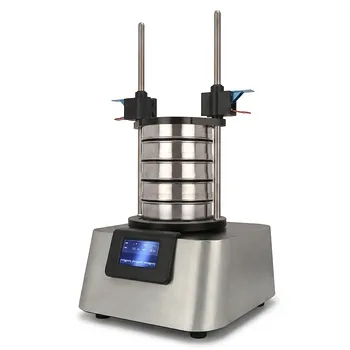
Vibratory Sieve Shaker Electromagnetic 3D Motion Powder Particle Size Analyzer for Dry and Wet Sieving
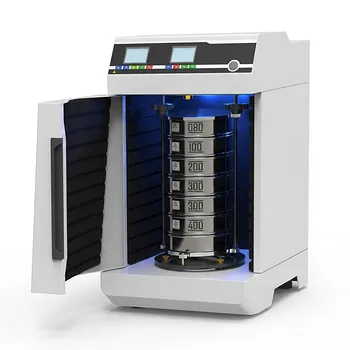
Laboratory Dry and Wet Three Dimensional Vibratory Sieve Shaker for Particle Analysis
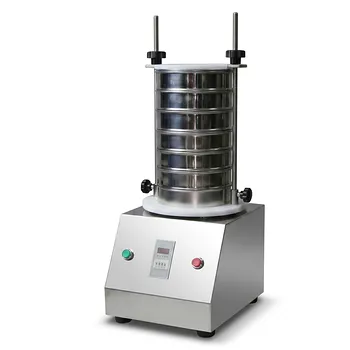
Small Laboratory Vibratory Sieve Shaker for Powder Gradation and Particle Size Analysis
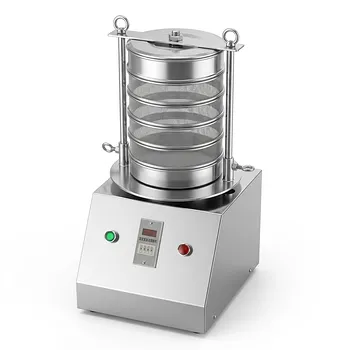
Stainless Steel Laboratory Vibratory Test Sieve Shaker
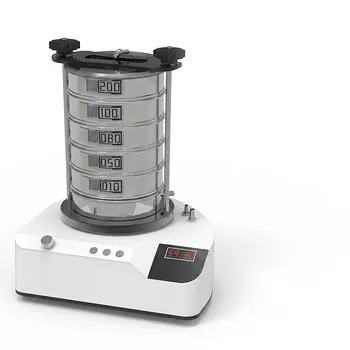
Heavy Duty Dry Three Dimensional Vibratory Sieve Shaker for Particle Separation
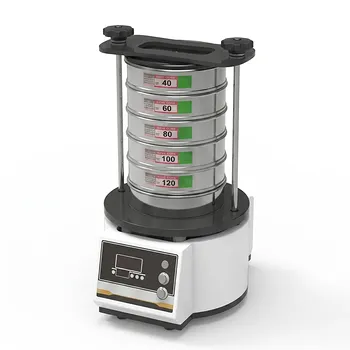
Dry Three Dimensional Vibratory Sieve Shaker
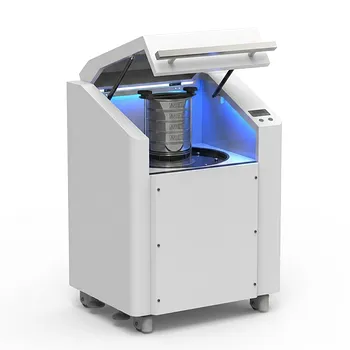
High Frequency Cabinet Type Three-Dimensional Rotary Vibrating Sieve Shaker for Dry Sieving and Particle Classification
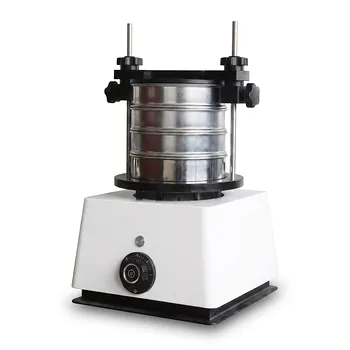
Small Laboratory Vibrating Sieve Shaker for Precise Particle Size Analysis
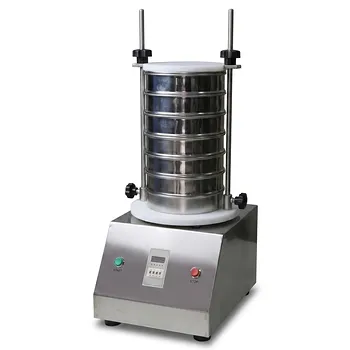
Laboratory Vibratory Test Sieve Shaker for Precision Particle Size Analysis and Powder Grading
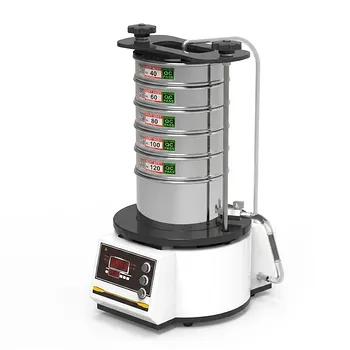
High Frequency Wet Three-Dimensional Vibrating Sieve Shaker for Dry and Wet Particle Size Analysis
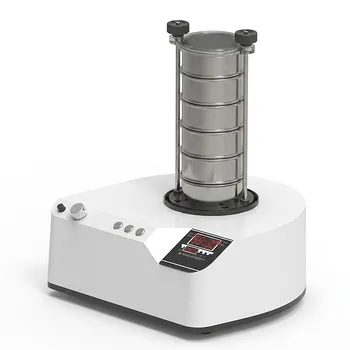
三维电磁微量振动筛分仪
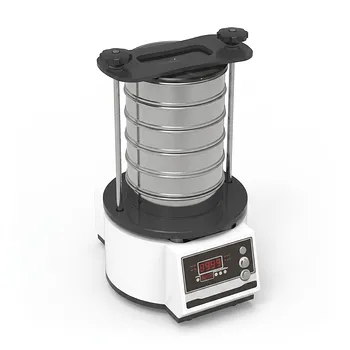
Tapping Oscillating Sieve Shaker for Dry and Wet Particle Size Analysis
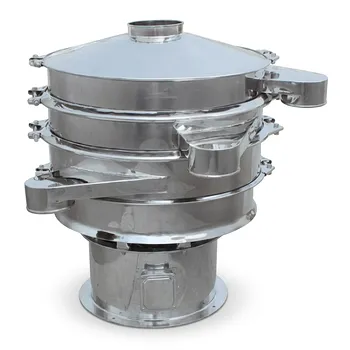
Stainless Steel Rotary Vibrating Sieve High Precision Circular Vibratory Separator Industrial Powder Grading Machine Multi Layer Sifting Equipment
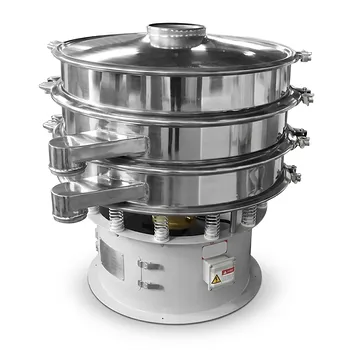
Three Dimensional Rotary Vibrating Sieve
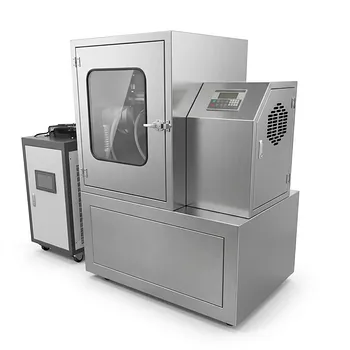
Vibratory Superfine Grinder for Ultra Fine Laboratory Powder Milling
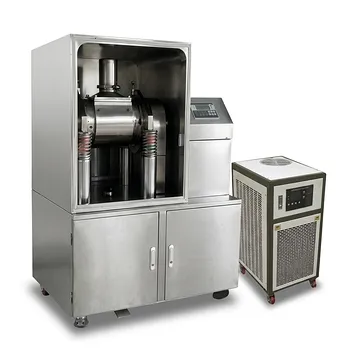
Small Vibrating Ultrafine Grinder for Traditional Chinese Medicine
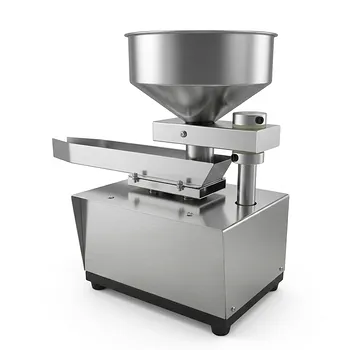
Automatic Vibrating Powder Feeder for Laboratory Material Processing Precision Vibratory Hopper Feeder for Granular and Powder Material Handling Industrial Grade Vibrating Tray Feeder for Consistent Material Sample Preparation